
News
SLPP MP draws attention of parliament to many shortcomings in election process


By Saman Indrajith
The election deposit that must be submitted by an independent candidate to contest an election had remained the same since 1981 while no deposits were required for recognised political parties, Parliament was told on Wednesday (23).
Opening the adjournment debate on the performance report of the Election Commission, SLPP National List MP Sagara Kariyawasam told Parliament that independent candidates had been required to deposit just Rs. 2,000 when contesting an election since 1981 while recognised political parties did not have to make any deposit. “We need to increase the amount to be deposited by a candidate,” Kariyawasam insisted.
MP Kariyawasam thanked the Election Commission and its staff for having conducted the 2020 parliamentary election in a free and fair manner and in a peaceful atmosphere. “In addition, the election was held in the midst of the COVID-19 pandemic and measures were adopted to ensure that the election did not result in the spread of the disease within the country is laudable.”
Nevertheless, he noted that the gazetting of the candidates’ preferential vote numbers had been delayed due to disagreements among the three members of the Election Commission. “The Commission has three members and the quorum for a meeting is also three. As such, it is clear that increasing the number of members of the commission to five is sensible.”
Kariyawasam stressed that due to the severe restrictions imposed on election propaganda, only candidates who had enough financial resources could advertise on electronic and print media.
MP Kariyawasam also pointed out that many of those engaged in essential services continued to be disenfranchised as they were required to remain at work on election days. “As per current election laws, even those in the health sector such as doctors and nurses, employees working on expressways, staff of aviation services and those in the hotel industry are not entitled to postal voting. As such, it would be better to introduce advance voting for such persons on a day closer to the polling day at their places of work.”
The MP, however, pointed out that a large amount of funds was needed to carry out advance voting, which was one reason why the deposit money should be increased.
He said that given the massive workforce and effort that is needed to hold an election, it was time to explore the possibility of launching a pilot project on introducing electronic voting.
The Government Printer, Department of Posts, police and Government employees were yet to be paid for work they had done during the elections, Kariyawasam said.
Kariyawasam drew the attention of Parliament to a large number of rejected votes.



The Socialist Alliance, comprising the Lanka Sama Samaja Party, the Communist Party of Sri Lanka, the Democratic Left Front and the Sri Lanka Mahajana Party, in a statement issued yesterday (02) strongly and unequivocally condemned the US and Israel for killing the Supreme Leader of Iran, Ayatollah Ali Khamenei, and the latest acts of military aggression carried out by those two countries against Teheran.
“These attacks represent a grave violation of international law, an assault on the sovereignty of a United Nations member state, and a threat for uncontrollable conflict, which may escalate into a third World War,” the Socialist Alliance said.
Text of the statement: ‘The Socialist Alliance is alarmed with the growing military contacts between Sri Lanka and United States in evolving geo-political developments in the context of middle – east war and beyond.
“The Socialist Alliance condemns strongly the National People’s Power (NPP) government’s deepening military cooperation with the United States. The recent transfers of US naval and aviation assets and operational integration into US-led commands represent a dangerous abandonment of the country’s longstanding non-aligned foreign policy. It may lead to Sri Lanka being involved in US President Trump’s illegal aggression against Iran.
“According to the Ministry of Defence the United States has now provided a total of four former US Coast Guard cutters and 10 TH-57 Sea Ranger (Bell 206) helicopters to the Sri Lanka Navy (SLN) and Sri Lanka Air Force (SLAF). These acquisitions have transformed Sri Lanka into one of the largest operators of former US Coast Guard vessels in the Indo-Pacific. While the government frames the transfers as enhancing humanitarian assistance and disaster relief capabilities, the vessels’ operational history and specifications are evidence of a darker purposes.
“The two high endurance cutters of the Hamilton class are offshore patrol vessels (OPVs) most suited for deep-sea surveillance and high-seas operations. They are not merely for coastal defense, the type being commonly deployed with US Navy carrier battle groups. They are designed for power projection and are being used to integrate Sri Lanka into U.S. Central Command (CENTCOM) operations in the Middle East.
The operational deployment of these assets has already begun. The Sri Lanka Navy has committed an OPV to the US-led “Operation Prosperity Guardian” in the Red Sea and Gulf of Aden, operating under Combined Task Force 153 (CTF 153). This task force falls under the Combined Maritime Forces (CMF), which is commanded by a US Navy Vice Admiral who simultaneously serves as Commander of U.S. Naval Forces Central Command (NAVCENT) and the US Fifth Fleet, headquartered in Manama, Bahrain.
“This means Sri Lankan naval officers and ships now operate directly under US-led command structures. It provides the US with a Navy that can operate within its command framework, freeing US assets for higher-end missions, effectively making our forces a subordinate component of the American war machine.
“In a significant escalation of this integration, Sri Lanka assumed command of Combined Task Force 154 (CTF 154) in January 2025. This multinational maritime training task force, operating under the US Fifth Fleet, is responsible for training personnel across the Middle East. This is not as a sign of national prestige, but a mechanism that gives the US-led coalition greater legitimacy and deepens Sri Lanka’s entanglement in American strategic objectives.
“This must also be seen in context of the recent signing of a Defence Memorandum of Understanding (MoU) under the State Partnership Programme (SPP) between the Sri Lankan Armed Forces and the Montana National Guard in November 2025, which is a pretext for embedding US military structures within Sri Lanka.
“This is not non-alignment. This is alignment. It is a complete subservience to the US Indo-Pacific strategy, making a mockery of the principles of sovereignty and peaceful coexistence that once defined our foreign policy.
“This alignment with the US poses an immediate danger, Sri Lanka risks being dragged into the illegal US–Israeli aggression against Iran, our long-standing friend.
“The Socialist Alliance calls for,
1. The immediate disassociation of the Government of Sri Lanka and the Armed Forces from the illegal US-Israeli aggression against Iran.
2. The immediate cessation of all joint military operations with US forces, including the withdrawal of Sri Lankan personnel from US-led commands in Bahrain and the Red Sea.
3. A full public disclosure of all agreements, including the India-Sri Lanka defence MoU and the recent US State Partnership Programme agreement, whose contents remain secret.
4. A parliamentary inquiry into whether these military pacts will lead to a full Status of Forces Agreement (SOFA), potentially granting US forces access to Sri Lankan ports, airports, and military infrastructure.
5. A return to a genuine non-aligned foreign policy that serves the interests of the Sri Lankan people, not the geopolitical ambitions of foreign powers.
“The NPP government was elected on a platform of change, yet it is presiding over the most significant erosion of our sovereignty in decades. We call upon all anti-imperialist, patriotic, and democratic forces to unite in opposition to this drift toward war and the surrender of our national independence.”

Frontline Socialist Party (FSP) Propaganda Secretary Duminda Nagamuwa has said that establishment of self- governing regions, bicameral legislature consisting of two Houses and recognition of upcountry Tamils as Sri Lankans would be necessary to solve the national issue. Nagamuwa declared that the FSP was ready to spearhead the fight to achieve those objectives.
Nagamuwa, a senior member of the breakaway faction of the JVP, said so at the fourth annual convention of the party held at the Sugathadasa Indoor stadium on Sunday (01). Nagamuwa stressed that a bicameral legislature was necessary to prevent the passage of laws targeting a particular community.
Alleging that the JVP had disregarded the FSP’s advice not to pursue UNP leader Ranil Wickremesinghe’s strategy, Nagamuwa emphasised that the national problem couldn’t be resolved under the present system.
Declaring that daunting challenges couldn’t be addressed by pursuing neo-liberal policies, the FSPer reiterated their commitment to, what he called, a people-centric economic agenda.
At the onset of his speech, Nagamuwa said that the FSP launched political activities, under extremely difficult circumstances, more than one and half decades ago. Referring to the abduction and the disappearance of Lalith Kumar Weeraraja and Kugan Muruganandan, in Jaffna, on Dec, 9, 2011, Nagamuwa said that they wouldn’t give up their struggle, regardless of the continuing threats.
Commenting on its role in the Aragalaya protest that forced President Gotabaya Rajapaksa out of office, in July 2022, Nagamuwa said that the FSP joined the people at a time some declared their inability to participate in a leaderless campaign. Nagamuwa was referring to the JVP’s initial reaction to the protest campaign. According to Nagamuwa, Ranil Wickremesinghe, having received the presidency through illegal means, sought to proscribe the FSP as he resented their role in Aragalaya.
Nagamuwa also found fault with the JVP for backing Maithripala Sirisena’s candidature at the 2015 presidential election. The ex-JVPer said that his former party simply joined the group that declared that Sirisena’s victory would pave the way for the abolition of the executive presidency. The FSP Propaganda Secretary accused Anura Kumara Dissanayake of following Wickremesinghe’s harmful IMF policy that may cause significant damage to the EPF and ETF funds.
The FSP also attacked the JVP-led NPP government over the ongoing moves to introduce a new anti-terrorism law, in place of the Prevention of Terrorism Act (PTA). That move was meant to suppress democratic rights of the people and right to dissent, Nagamuwa said, while questioning, what he called, the incumbent government’s undisclosed agreements with the US and India. Nagamuwa also pointed out that those who campaigned on an anti-corruption platform were now struggling to cope up with such accusations regarding the coal procurement deal.
Nagamuwa said that either the government should take tangible measures against corruption or the crooks will take hold of the current dispensation. Anti-corruption actions wouldn’t be on political platform at any future election, Nagamuwa predicted.
Nagamuwa said that the NPP had been fragmented and it was only a question of time the current dispensation faced public protests over its policies, particularly giving in to IMF demands and India. The SJB’s Sajith Premadasa and SLPP’s Namal Rajapaksa couldn’t fill the political vacuum caused by the disintegration of the NPP, Nagamuwa said that their move was to empower the people.
Nagamuwa said that those who propagated racism to grab power couldn’t succeed again. According to him such projects couldn’t achieve political objectives, Nagamuwa said while referring to several incidents, including the burning of the Jaffna library and violence in Darga town.
By Shamindra Ferdinando

The Government Medical Officers’ Association (GMOA) has called for the immediate establishment of a dedicated service category, titled the “Sri Lanka Medical Service,” to resolve the long-standing crisis within the country’s health sector.
In a media release, following a crucial General Committee meeting, the Association emphasised that while strengthening the free health service is a primary responsibility of any government, the current administration is deliberately evading this duty.
The GMOA alleged that the government has violated written agreements previously reached to address the grievances of medical professionals and the hospital system, leaving them with no choice but to resort to trade union action.
The primary demand of the Association is the granting of Cabinet approval for the proposed “Sri Lanka Medical Service,” a draft of which has already been prepared with the consensus of all relevant stakeholders. In addition to this structural change, the GMOA is pushing for several financial and administrative updates, including the revision of the Disturbance, Availability, and Transport (DAT) allowance and the stabilisation of the extra duty allowance. They also demand solutions for transport issues, in accordance with Circular 22/99, the resolution of research and postgraduate study-related problems, and an urgent update of the approved medical cadre, within the health system. The Association has called for immediate discussions with the Ministry of Finance to resolve these matters within a specific timeframe.
The Association pointed out that despite providing ample time for the Minister of Health, and other responsible parties, to seek solutions through dialogue, the lack of sincere intervention has led to seven ongoing island-wide professional actions. These measures include refusing to issue prescriptions for medicines, equipment, or laboratory tests that are unavailable within the hospital, and withdrawing from voluntary health camps organised by political groups. Furthermore, doctors have ceased being deployed to new wards or units opened without an approved cadre and are refraining from examining patients where adequate facilities and support staff are unavailable to ensure safety and privacy. Specialist doctors have also withdrawn from “covering-up” duties, while official community health data, under the supervision of Medical Officers of Health, is being withheld from the Ministry.
The Association expressed its strong disapproval of the government’s “arrogant” conduct, accusing officials of using mainstream and social media to level false allegations and insults against doctors, instead of engaging in productive discussions. This behaviour was a central topic of discussion during the General Committee meeting held on 25 February, 2026.
Consequently, the GMOA has unanimously decided to intensify its professional struggle, which includes the official withdrawal from the “Arogya” project, starting Monday, March 2, 2026. They characterised “Arogya” as a political showpiece, disguised as a primary healthcare reform, claiming it misuses public tax money and Ministry resources without clear objectives or transparency.
To address the underlying issues in primary healthcare, the GMOA has appointed a special working committee to study existing facility shortages and recommend appropriate service standards. This Committee is expected to submit its report to the Executive Committee within two weeks to determine future steps regarding patient care. While reaffirming its readiness to resolve these grievances through direct discussions with the President and the Health Minister, the GMOA warned that it is prepared to launch a broader, integrated campaign with all health sector stakeholders if the government continues to neglect its responsibility toward the free health service.
By S.K. Samaranayake

Trump says Iran war projected to last 4 to 5 weeks, could go ‘far longer’

Qatar downs two Iranian fighter jets as conflict widens

Jammu and Kashmir’s long road to India cricketing glory

Rembrandt painting worth millions rediscovered after 65 years

Zimbabwe, West Indies delayed from returning home following West Asia airspace closure

Dry weather will prevail in most parts of the island

‘Dates have the highest sugar content to fight Coronavirus’

Sunday Island 27 December – Headlines

#SundayIsland 17th December – Headlines

Sunday Island – 28th March

Sunday Island Headlines – 21 March

Sunday Island – 21st February – Headlines
-
 Opinion4 days ago
Jamming and re-setting the world: What is the role of Donald Trump?
-
 Features4 days ago
An innocent bystander or a passive onlooker?
-
 Features5 days ago
Ratmalana Airport: The Truth, The Whole Truth, And Nothing But The Truth
-
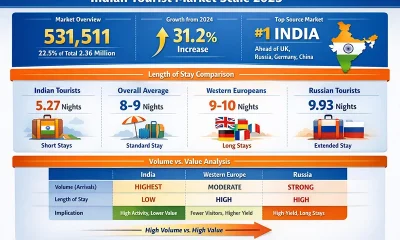
 Features6 days ago
Building on Sand: The Indian market trap
-
 Opinion6 days ago
Future must be won
-

 Business6 days ago
Dialog partners with Xiaomi to introduce Redmi Note 15 5G Series in Sri Lanka
-
 Business5 days ago
IRCSL transforms Sri Lanka’s insurance industry with first-ever Centralized Insurance Data Repository
-
 Opinion1 day ago
Sri Lanka – world’s worst facilities for cricket fans