
Sports
Jammu and Kashmir’s long road to India cricketing glory

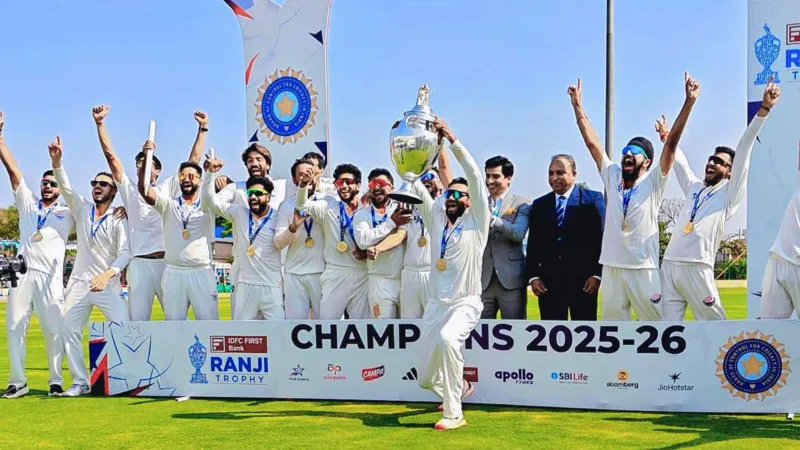
Jammu and Kashmir’s maiden triumph in India’s premier domestic championship last week is more than a sporting milestone – it is one of the most stirring stories in the country’s cricket.
The Ranji Trophy, one of the oldest first-class competitions in the sport, sits at the heart of the game in the world’s most powerful cricketing nation.
To win it is to claim a place in the country’s cricketing mainstream; for Jammu and Kashmir, it marks a breakthrough that was decades in the making.
Cricket in the disputed region dates back to the colonial era, when the Kashmir Willow – prized for its strength and resilience – helped craft bats that powered the sport across India.
For decades, the region was scarred by insurgency, political turmoil and a deep sense of alienation – tensions that culminated in 2019 when Delhi revoked Jammu and Kashmir’s autonomy and split the state into two new federally-administered territories.
Yet, even through these upheavals, passion for cricket ran deep. Success, however, proved elusive.
That changed over a remarkable fortnight.
In a season overshadowed by the ongoing high-voltage T20 World Cup, where India are defending champions, it was this unfancied northern side that quietly commanded attention.
After defeating seven-time champions Delhi to enter the knockouts, Jammu and Kashmir gathered momentum.
Former champions Madhya Pradesh fell in the quarter-finals. Bengal were subdued in the semi-finals. In the final, stood eight-time winners Karnataka, boasting four current internationals – KL Rahul, Mayank Agarwal, Karun Nair and Prasidh Krishna – and overwhelming experience.
Jammu and Kashmir were the underdogs and most expected them to falter. Instead, they produced cricket of composure, skill and steel, outplaying their decorated opponents to claim India’s premier first-class title.
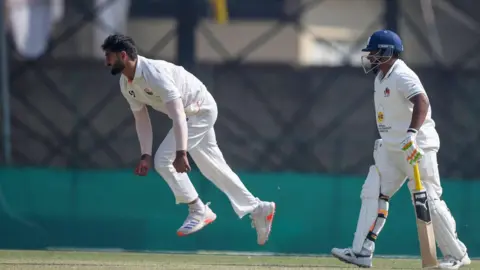
The breakthrough did not come out of nowhere.
Over the past decade, the team has flirted with history, reaching the quarter-finals three times and missing last year’s semi-final by the slimmest of margins – a one-run first-innings deficit against Kerala.
The Jammu and Kashmir Cricket Association was formed in 1959-60. It has taken nearly 67 years – marked by political upheaval, institutional neglect and chronic underinvestment – for the region to complete the circle and reach the summit of Indian domestic cricket.
For decades, cricket’s real power centres lay elsewhere: Mumbai, Delhi, Kolkata, Chennai and Bengaluru. Proximity to these hubs – of money, infrastructure and influence – often determined how quickly cricket flourished in a state.
Jammu and Kashmir, geographically and politically distant from these nerve centres, remained on the margins – a cricketing outpost far removed from the game’s corridors of power.
A lack of basic infrastructure, scant coaching facilities and self-serving administration stunted cricket’s growth for decades. That Jammu and Kashmir won their first Ranji match only in 1982-83 – more than 20 years after gaining state association status – underlines how halting that progress was.
In 1983, during a match in Srinagar city against Clive Lloyd’s touring West Indies, Indian players were booed and jeered – a spectacle that prompted authorities to sideline the state from hosting major fixtures.
The hostility reflected a deepening political alienation in the Muslim-dominated Kashmir region, where resentment against Delhi over autonomy and governance was already simmering. Though a full-blown insurgency against Indian rule would erupt only in 1989, the faultlines were visible.
In 1986, Allan Border’s Australians played what would prove to be the last international match in Kashmir. Four decades on, top-level cricket has yet to return.
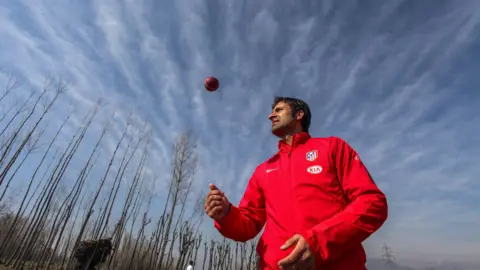
Cricket in Jammu and Kashmir began to turn a corner over the past 15 years as militancy ebbed and political volatility eased. With greater stability came long-missing attention to development and structure.
Three clear inflection points underpin the team’s rise.
The first came between 2011 and 2013, when former India captain Bishen Singh Bedi took charge as coach. He transformed a side burdened by diffidence into one that believed it belonged – urging players long overawed by reputation to compete as equals on the national stage.
Pervez Rasool, the first cricketer from Jammu and Kashmir to play for India, was among the chief beneficiaries of Bedi’s confidence-building approach – a debt he has acknowledged in recent years.
The second inflection point came in 2018-19, when the state association brought in former India all-rounder Irfan Pathan as player-cum-mentor. During his two seasons with the side, Pathan said his central message was simple: shed regional faultlines and play as one team.
That phase unearthed notable talent, including batsman Abdul Samad and the explosive fast bowler Umran Malik – only the second cricketer from Jammu and Kashmir to represent India.
The third inflection point came about five years ago, when the state association was replaced by an Apex Council to oversee the game. It was headed by Mithun Manhas, a former Delhi stalwart born in Jammu who had also played a season for J&K – blending administrative authority with local roots and top-tier experience.
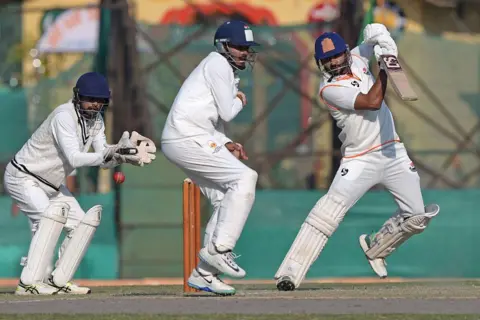
Manhas, now the head of the Indian cricket board, professionalised the set-up, appointing his former Delhi teammate Ajay Sharma as coach and tightening structures around the team.
Top-tier infrastructure followed, along with modern coaching methods – scientific fitness, nutrition planning and structured mental conditioning – bringing the set-up in line with national standards.
Paras Dogra, a seasoned and prolific domestic batsman, was drafted in as captain to anchor the rebuild. Selectors then cast the net wide, scouting both established and emerging talent.
At 41, Dogra proved a natural leader – delivering his own best while elevating those around him, a journey that culminated in this year’s coveted title.
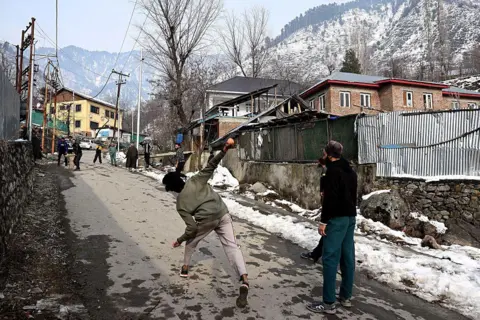
Several batsmen and bowlers stood out, but the spearhead was fast bowler Aquib Nabi, who finished the season with 60 wickets. He had claimed 44 the previous year, earning an IPL contract with the Delhi Daredevils.
Many observers believe he is ready for the highest level – the national team. Former India captain Sourav Ganguly was among those who publicly endorsed him, saying Nabi has the tools to play Test cricket for India.
Whether, and how soon, that leap to the international stage comes remains uncertain.
What is beyond doubt is the significance of Jammu and Kashmir’s surge as a cricketing force – a rise that, in its improbable sweep, recalls Afghanistan’s ascent in the global game.
For India, it matters in at least two profound ways.
First, it underscores how deeply and widely cricket’s footprint now runs across the country – a key reason India stands as the pre-eminent force in the global game.
Second, this triumph offers the beleaguered federally-administered territory and its people something long yearned for: a meaningful stake in the national mainstream through shared pride and sporting excellence.
[BBC]

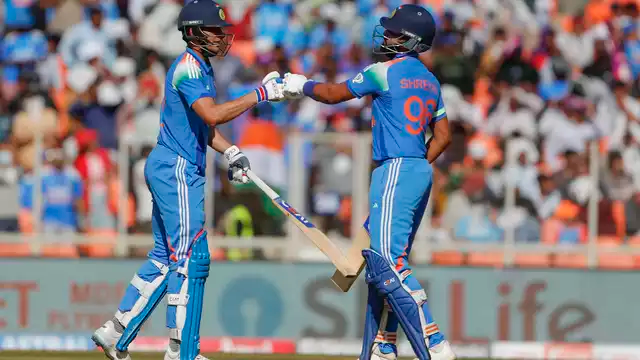
Squad for the first three ODIs: Shubman Gill [C], Rohit Sharma, Virat Kohli, Shreyas Iyer [VC], KL Rahul [WK], Nitish Kumar Reddy, Axar Patel, Naman Dhir, Anshul Kamboj, Gurnoor Brar, Ruturaj Gaikwad, Arshdeep Singh, Ishan Kishan [WK], Mohammed Siraj, Prasidh Krishna*, Kuldeep Yadav
Squad for fourth and fifth ODIs: Shreyas Iyer [C], Rohit Sharma, Virat Kohli, Tilak Varma, Ishan Kishan [WK, VC], Nitish Kumar Reddy, Axar Patel, Naman Dhir, Auqib Nabi, Gurnoor Brar, Ruturaj Gaikwad, Arshdeep Singh, Kumar Kushagra [WK], Mohammed Siraj, Yash Thakur, Kuldeep Yadav
[Cricbuzz]
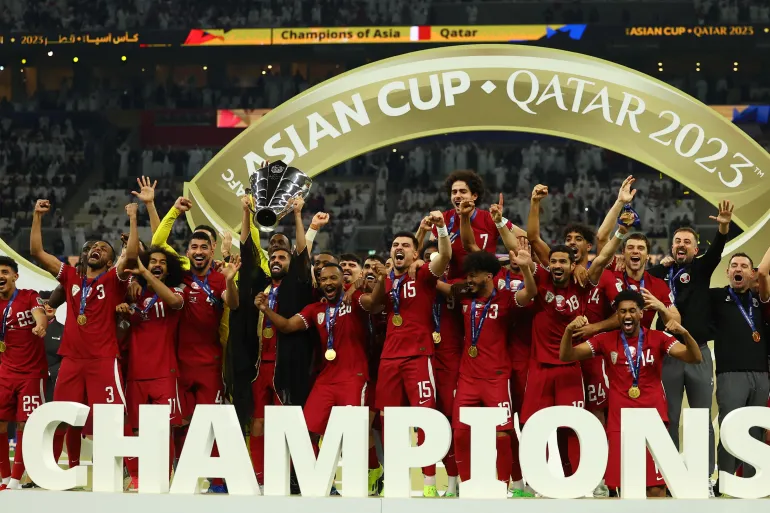
Football’s Asian Cup, hosted by Saudi Arabia, could be moved back a year to 2028 following a series of attacks on the country by Yemen’s Houthis.
The continental tournament will be rescheduled “if we need to” but the organisers are in “no hurry” to make a decision, Asian Football Confederation President Sheikh Salman bin Ebrahim Al Khalifa said on Thursday.
The 2027 Asian Cup is supposed to kick off on January 7 in the Saudi cities of Jeddah, Riyadh and al-Khobar.
The kingdom has in recent days come under sustained attack in a dramatic escalation from the Houthis.
“We can wait until the end of November,” Al Khalifa told reporters in Zurich on Wednesday about a decision on the fate of the Asian Cup.
“Things can change very quickly for better or worse in the region, and it is a question of seeing what happens,” he added.
“If we need to make a decision then we will, but we could move back a year to 2028 if we need to.
“But at the moment we are monitoring the situation and everything is on schedule.”
Cristiano Ronaldo’s Al-Nassr saw their Asian Champions League match delayed by an hour on Monday after Saudi Arabia’s Civil Defence said it had intercepted a missile fired towards Riyadh.
Three matches in Saudi domestic football, including one involving Al-Nassr, were postponed this week.
(Aljazeera)


All Island Schools Games Athletics Championships
by Reemus Fernando
The Under 18 boys’ shot put meet record will be under severe threat today, when the most talked-about thrower of the last All Island Schools Games Athletics Championships takes to the field on the opening day at Diyagama.
Mayon Rajasinghe, now competing for his third school in four years, has shown steady progress this season and appears to be peaking at the right time to attempt another record-breaking performance on the junior circuit.
Having recently set a new meet record of 17.31m at the Western Province Schools Games, Mayon will now try to surpass the All Island Schools Games Under 18 record of 17.15m.
The first two age-category records in the Games’ shot put event already bear his name. He set the current Under 14 record of 15.13m while representing Prince of Wales College, Moratuwa. Last year, while attending St. Joseph’s College, Darley Road, he shattered the Under 16 meet record with a throw of 18.57m using the 4kg shot. It is the furthest any Sri Lankan has thrown in the Under 16 category at any meet, from the Junior National Championships to the Sir John Tarbat Senior Championships to the Schools Games.
Yet the outstanding performance did not receive the recognition it deserved. His father, who also trains him, was adamant that the then 16-year-old deserved the meet’s Best Athlete title. The organisers disagreed, citing the differing weights of implements across age categories as their reason for setting the performance aside. No clear criteria had been announced before the meet, which made such disappointment all but inevitable. Senior Rajasinghe’s outburst after the presentation ceremony, and the social media backlash that followed, have had an effect: the Ministry of Education has now published criteria for selecting the meet’s best athlete. However, it remains doubtful whether the criteria in the competition manual can offer athletes in different age categories and disciplines an equal opportunity to have their performances assessed fairly.
This year Mayon represents Holy Cross College, Kalutara. He has picked up where he left off last year, breaking record after record, and is poised to make an impact once again.
The championship begins with a card of eight finals. Around 5,000 athletes in the Under 14, 16, 18 and 20 age categories, representing all nine provinces, will take part in the five-day event after qualifying through house, divisional, zonal and provincial competitions.

Iyer to lead in last two New Zealand ODIs, Kushagra earns maiden call-up

Pope pictured for first time since surgery and cancer diagnosis

Qatar announces ‘massive’ solar plant project in Lebanon

Samagi Spice Exports to launch Ceylon Cinnamon based beverage range

Asian Cup in Saudi Arabia could be postponed by a year amid Houthi attacks

Houthi missile attack on Yemeni presidential palace kills five, minister says

‘Dates have the highest sugar content to fight Coronavirus’

Sunday Island 27 December – Headlines

#SundayIsland 17th December – Headlines

Sunday Island – 28th March

Sunday Island Headlines – 21 March

Sunday Island – 21st February – Headlines
-

 News6 days ago
Sri Lanka escalates anti-graft drive with Shiranthi’s jailing
-
 News7 days ago
NPP govt. reminded of its responsibilities as US warship leaves Colombo
-

 Latest News5 days ago
Farhan and Sadaqat help Pakistan seal series in style
-
 News6 days ago
Iranian ships stranded, Lanka fears US sanctions
-

 Latest News4 days ago
Nissanka’s return headlines Sri Lanka’s Test squad against Pakistan
-
 News7 days ago
Interdicted top House official Kularatne receives special recognition in Mexican Parliament
-
 Features5 days ago
Intake 16: 45 years of duty and honour
-
 News5 days ago
Malwathu Chapter issues statement on talks with President over Gnanasara Thera’s robes