
News
Socialist Alliance expresses concern over GoSL’s growing military ties with US


The Socialist Alliance, comprising the Lanka Sama Samaja Party, the Communist Party of Sri Lanka, the Democratic Left Front and the Sri Lanka Mahajana Party, in a statement issued yesterday (02) strongly and unequivocally condemned the US and Israel for killing the Supreme Leader of Iran, Ayatollah Ali Khamenei, and the latest acts of military aggression carried out by those two countries against Teheran.
“These attacks represent a grave violation of international law, an assault on the sovereignty of a United Nations member state, and a threat for uncontrollable conflict, which may escalate into a third World War,” the Socialist Alliance said.
Text of the statement: ‘The Socialist Alliance is alarmed with the growing military contacts between Sri Lanka and United States in evolving geo-political developments in the context of middle – east war and beyond.
“The Socialist Alliance condemns strongly the National People’s Power (NPP) government’s deepening military cooperation with the United States. The recent transfers of US naval and aviation assets and operational integration into US-led commands represent a dangerous abandonment of the country’s longstanding non-aligned foreign policy. It may lead to Sri Lanka being involved in US President Trump’s illegal aggression against Iran.
“According to the Ministry of Defence the United States has now provided a total of four former US Coast Guard cutters and 10 TH-57 Sea Ranger (Bell 206) helicopters to the Sri Lanka Navy (SLN) and Sri Lanka Air Force (SLAF). These acquisitions have transformed Sri Lanka into one of the largest operators of former US Coast Guard vessels in the Indo-Pacific. While the government frames the transfers as enhancing humanitarian assistance and disaster relief capabilities, the vessels’ operational history and specifications are evidence of a darker purposes.
“The two high endurance cutters of the Hamilton class are offshore patrol vessels (OPVs) most suited for deep-sea surveillance and high-seas operations. They are not merely for coastal defense, the type being commonly deployed with US Navy carrier battle groups. They are designed for power projection and are being used to integrate Sri Lanka into U.S. Central Command (CENTCOM) operations in the Middle East.
The operational deployment of these assets has already begun. The Sri Lanka Navy has committed an OPV to the US-led “Operation Prosperity Guardian” in the Red Sea and Gulf of Aden, operating under Combined Task Force 153 (CTF 153). This task force falls under the Combined Maritime Forces (CMF), which is commanded by a US Navy Vice Admiral who simultaneously serves as Commander of U.S. Naval Forces Central Command (NAVCENT) and the US Fifth Fleet, headquartered in Manama, Bahrain.
“This means Sri Lankan naval officers and ships now operate directly under US-led command structures. It provides the US with a Navy that can operate within its command framework, freeing US assets for higher-end missions, effectively making our forces a subordinate component of the American war machine.
“In a significant escalation of this integration, Sri Lanka assumed command of Combined Task Force 154 (CTF 154) in January 2025. This multinational maritime training task force, operating under the US Fifth Fleet, is responsible for training personnel across the Middle East. This is not as a sign of national prestige, but a mechanism that gives the US-led coalition greater legitimacy and deepens Sri Lanka’s entanglement in American strategic objectives.
“This must also be seen in context of the recent signing of a Defence Memorandum of Understanding (MoU) under the State Partnership Programme (SPP) between the Sri Lankan Armed Forces and the Montana National Guard in November 2025, which is a pretext for embedding US military structures within Sri Lanka.
“This is not non-alignment. This is alignment. It is a complete subservience to the US Indo-Pacific strategy, making a mockery of the principles of sovereignty and peaceful coexistence that once defined our foreign policy.
“This alignment with the US poses an immediate danger, Sri Lanka risks being dragged into the illegal US–Israeli aggression against Iran, our long-standing friend.
“The Socialist Alliance calls for,
1. The immediate disassociation of the Government of Sri Lanka and the Armed Forces from the illegal US-Israeli aggression against Iran.
2. The immediate cessation of all joint military operations with US forces, including the withdrawal of Sri Lankan personnel from US-led commands in Bahrain and the Red Sea.
3. A full public disclosure of all agreements, including the India-Sri Lanka defence MoU and the recent US State Partnership Programme agreement, whose contents remain secret.
4. A parliamentary inquiry into whether these military pacts will lead to a full Status of Forces Agreement (SOFA), potentially granting US forces access to Sri Lankan ports, airports, and military infrastructure.
5. A return to a genuine non-aligned foreign policy that serves the interests of the Sri Lankan people, not the geopolitical ambitions of foreign powers.
“The NPP government was elected on a platform of change, yet it is presiding over the most significant erosion of our sovereignty in decades. We call upon all anti-imperialist, patriotic, and democratic forces to unite in opposition to this drift toward war and the surrender of our national independence.”



Latest News
Advisory for High Waves for the sea areas extending from Colombo to Pottuvil via Galle, Matara and Hambantota

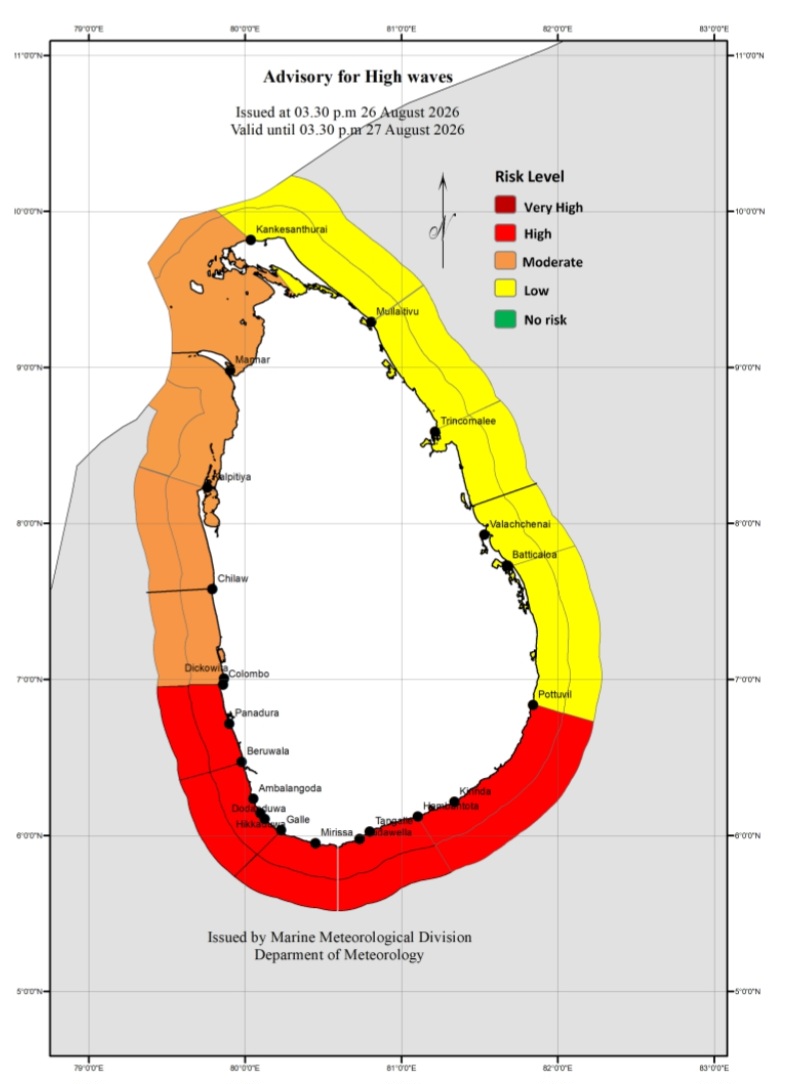
Advisory for High Waves
Issued by the Natural Hazards Early Warning Centre Issued at 03.30 p.m. on 26 August 2026 Valid for the period until 03.30 p.m. 27 August 2026
An advisory for high waves has been issued for the sea areas extending from Colombo to Pottuvil via Galle, Matara and Hambantota and naval and fishing communities engaged in activities in the aforementioned sea areas, as well as coastal communities living in the aforementioned nearshore areas, are advised to remain vigilant in this regard
The swell waves (about 2.0 m – 3.0 m) height (This is not for land area) may increase in the sea areas off the coast extending from Colombo to Pottuvil via Galle, Matara and Hambantota. There is a possibility that near shore sea areas off the coast extending from Beruwala to Matara via Galle, may experience surges due to swell waves.
News
We must create social awareness to ensure the physical and mental well-being of children with disabilities – PM
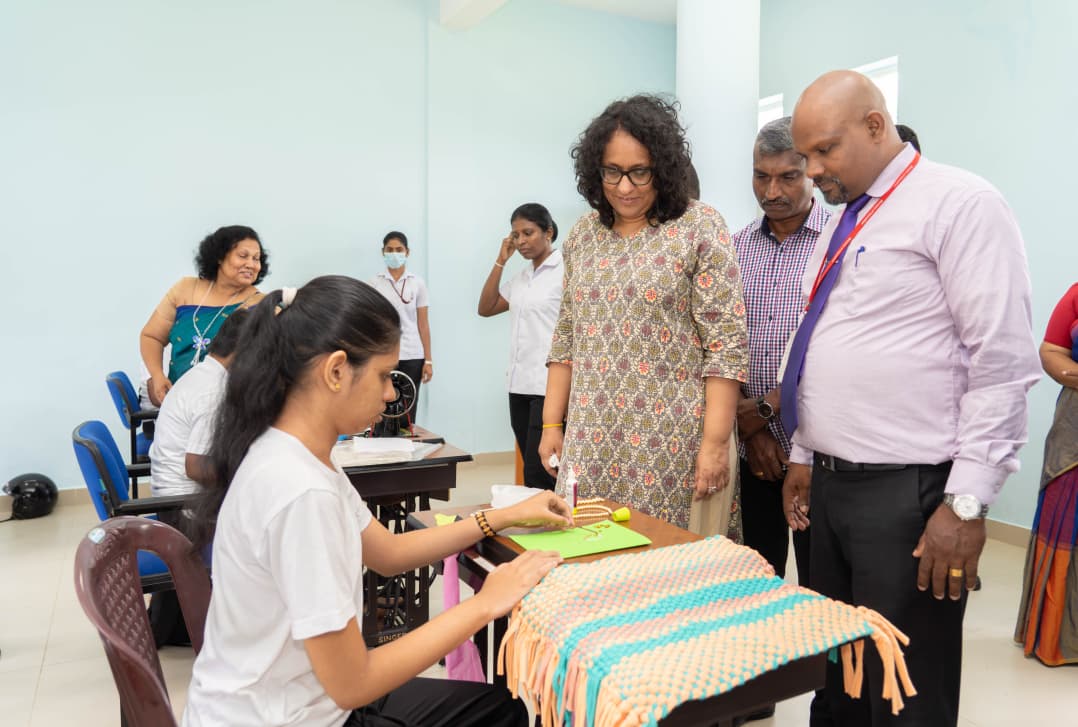
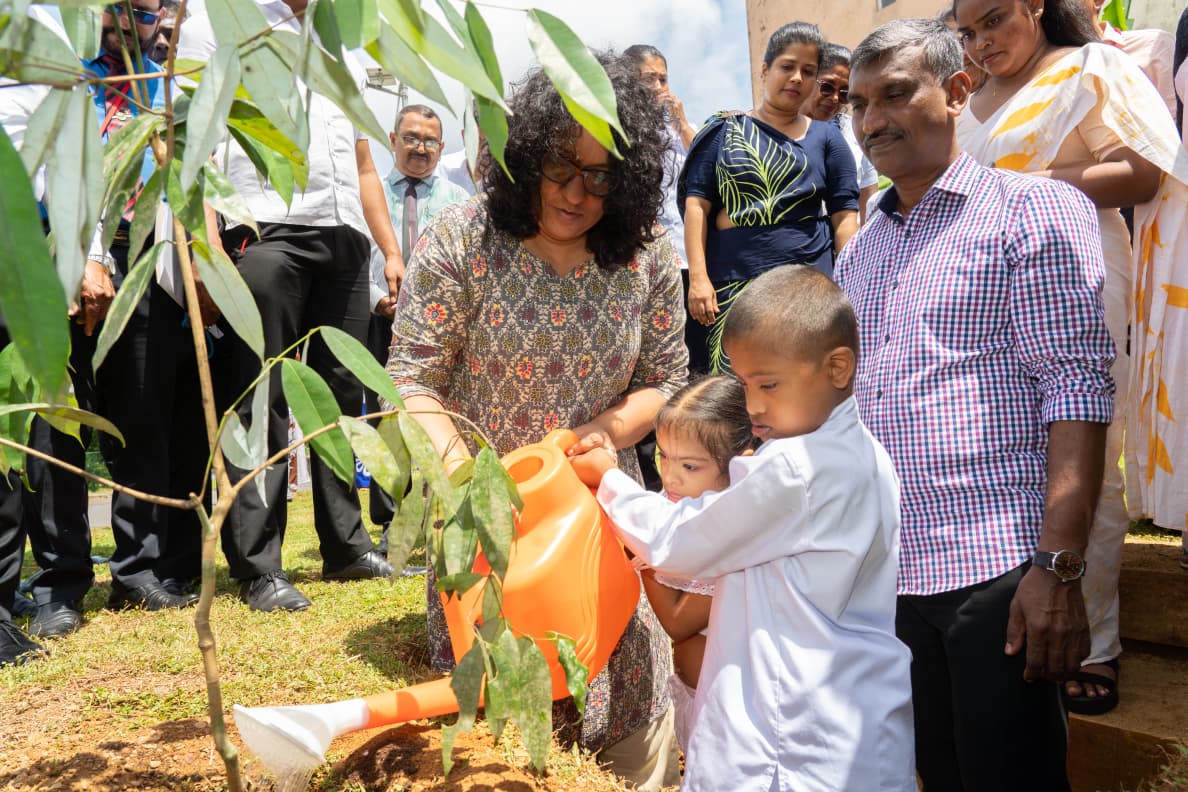
Prime Minister Dr. Harini Amarasuriya stated that, given their particular vulnerability children with disabilities require protection, and stressed the need to foster social awareness to protect them from negative social influences while promoting their physical and mental well-being. She emphasized the need to implement awareness programmes for parents, teachers and other members of society towards this end.
The Prime Minister made these remarks on Tuesday [August 25] while visiting and observing the National Institute of Special and Inclusive Education – Shishyodaya, located in Veniwelkola.
The purpose of the Prime Minister’s visit was to observe the institutional structure and gain an understanding of the areas that require further development.
The Prime Minister emphasized that a systematic mechanism should be established to transform the institution, which was established in 2019 outside the basic standards and plans for Inclusive Education, into an institution that provides quality education to children and fulfills the targeted objectives of inclusive education. She also proposed appointing a special committee to make the necessary recommendations in this regard.
The Prime Minister further stated that steps would be taken in coordination with the Ministry of Health to address the shortage of therapists and medical professionals required to provide clinical services to students at the institution. She also stressed that the maintenance of equipment and buildings should be carried out properly using the financial allocations provided for such purposes.
The Prime Minister further noted that finding sustainable solutions to the issues faced by the institution is essential, while immediate interventions should be made to address issues that can be resolved without delay. The welfare of the teachers serving at the institution was also discussed during the visit.
Member of Parliament Anura Panagoda, Chairman of the Homagama Pradeshiya Sabha Kasun Rathnayake, Secretary to the Ministry of Education, Higher Education and Vocational Education Nalaka Kaluwewa, ministry officials, parents and students were present.
[Prime Minister’s Media Division]

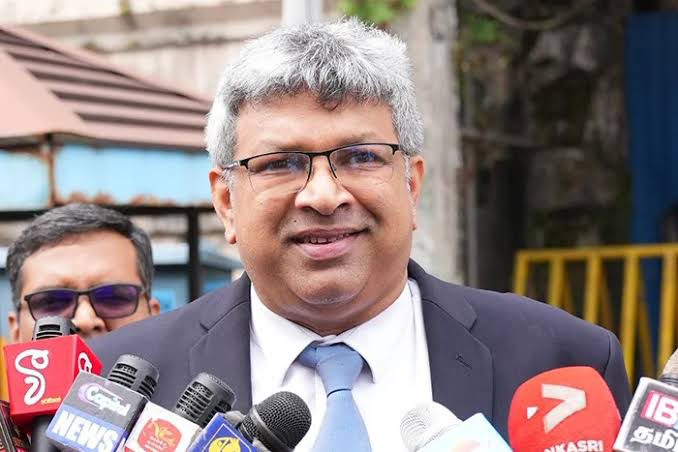
By Shamindra Ferdinando
Justice and National Integration Minister Harshana Nanayakkara said yesterday that the government would proceed with both the 22nd Amendment to the Constitution, and the Judicature (Amendment) Bill, because the government could not achieve its goal by increasing the retirement ages of a section of the judges.
The Attorney-at-Law declared that the government would go ahead with both Bills, whatever the obstacles. The Minister was responding to The Island query whether the government would go ahead with the Judicature (Amendment) Bill that hadn’t been so far challenged in the Supreme Court, pending the decision on the controversial 22nd Amendment facing tough legal challenge.
Nanayakkara emphasised the importance of the enactment of both Bills. The 22nd Amendment seeks to increase the retirement ages of Supreme Court judges to 67 from 65 and Court of Appeal judges from 63 to 65. The Judicature (Amendment) Bill seeks to increase the retirement ages of the High Court judges to 63 from 61, and that of the District court judges and and Magistrates to 62.
Minister Nanayakkara said that the enactment of both Bills simultaneously would make a significant contribution to improve the overall situation, particularly dealing with a backlog of 1.1 million cases.
Joint Opposition and the Bar Association of Sri Lanka (BASL), too, acknowledged that petitions against the Judicature (Amendment) Bill were yet to be filed.

At least eight killed, hundreds missing after Nepal flash flood

India close in despite Sooriyabandara, Kamindu fifties

Advisory for High Waves for the sea areas extending from Colombo to Pottuvil via Galle, Matara and Hambantota

We must create social awareness to ensure the physical and mental well-being of children with disabilities – PM

BCCI AGM set for September 18 in Mumbai

Three franchises sold in Afghanistan Premier League T20

‘Dates have the highest sugar content to fight Coronavirus’

Sunday Island 27 December – Headlines

#SundayIsland 17th December – Headlines

Sunday Island – 28th March

Sunday Island Headlines – 21 March

Sunday Island – 21st February – Headlines
-
 News6 days ago
Country’s first woman Surveyor General appointed
-
 Business5 days ago
SriLankan Airlines makes ShakthiSAT Mission possible for talented Sri Lankan student
-

 Sports7 days ago
Tharanga, Weber headline stellar Lausanne javelin field
-

 Features6 days ago
Medical education in Sri Lanka: Then and now
-
 Business7 days ago
Mannar’s offshore opportunity: the dollar question behind Sri Lanka’s oil and gas search
-
 Latest News5 days ago
Imran Khan moved to private hospital amid deteriorating health
-

 Latest News5 days ago
Government has declared 21, 22 and 23 August 2026 as national days of mourning
-
Latest News4 days ago
Tharanga edges out Chopra in 88m javelin battle