
News
SLPP MP asks FM for clarification


21-A prerequisite for IMF loan:
By Shamindra Ferdinando
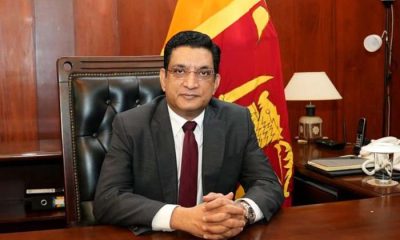
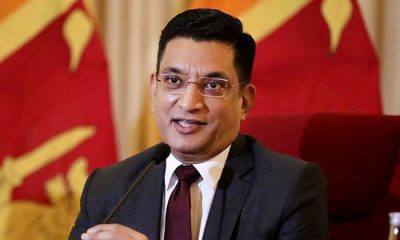
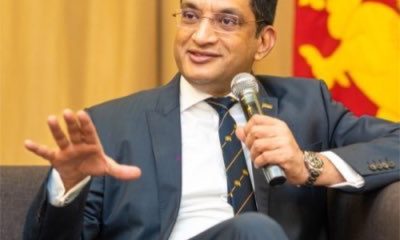
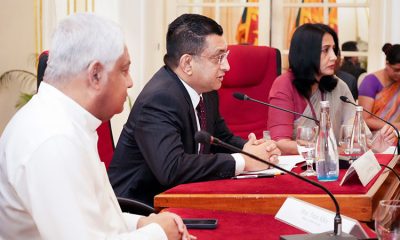
Foreign Minister Ali Sabry, PC, owed an explanation as regards his claim that the International Monetary Fund (IMF) had demanded the enactment of 21 Amendment to the Constitution as a prerequisite for the finalisation of USD 2.9 bn Extended Fund Facility Arrangement (EFFA) with Sri Lanka, retired Rear Admiral Sarath Weerasekera, MP, said yesterday.
The SLPP MP said that the much-touted IMF loan hadn’t materialised yet though Sri Lanka had enacted the 21st Amendment on 21 Oct. In fact, there was no clear indication when the IMF facility would be made available in the coming year, the former Public Security Minister said.
MP Weerasekera said that he had voted against the 21st Amendment as he couldn’t under any circumstances support it after having voted for 20th Amendment. Of the 225-member parliament, 179 voted in favour, one against while 45 skipped the vote.
Weerasekera said that Minister Sabry had declared 21 Amendment as being a prerequisite for the IMF loan at a parliamentary group meeting chaired by President Ranil Wickremesinghe at the Presidential Secretariat.
According to Weerasekera, Minister Sabry underscored the need for the enactment of the Amendment in response to his strong opposition to the move.
Lawmaker Weerasekera told The Island: “The government should make its position clear on the draft constitution prepared by a team led by Romesh de Siva PC. When the parliamentary group discussed the 21st Amendment, I pointed out the availability of constitutional proposals prepared by Romesh de Silva’s team that included Manohara de Silva, PC. That team undertook the project on the then Justice Minister Sabry’s request soon after the last parliamentary elections.”
MP Weerasekera opted out of the cabinet of ministers when the then President Gotabaya Rajapaksa re-constituted the cabinet in April amidst political turmoil.
The former minister said that he expected the IMF to set the record straight. The IMF couldn’t justify interfering in purely a domestic matter, MP Weerasekera said while acknowledging there had been constant external interventions beginning with the 13th Amendment introduced at India’s behest.
Referring to Geneva-based United Nations Human Rights Council (UNHRC) taking up the constitution making process during yahapalana administration and India raising the 13th Amendment at Geneva, MP Weerasekera said that interested parties seemed to be exploiting continuing economic-political-social crisis here to pursue their agendas.
“There is no point in denying the fact that we are vulnerable to foreign interference. Instead of reaching agreement on a workable plan to stabilize the economy, we are bending backwards to appease the Tamil National Alliance. Having recognized the LTTE as the sole representative of Tamil speaking people way back in 2001, the TNA today has the audacity to demand accountability on the part of the government,” MP Weerasekera said.
All political parties have also conveniently forgotten how the TNA jointly called for Northerners to boycott the 2005 presidential election, MP Weerasekera said.
The former Minister appreciated President Ranil Wickremesinghe’s readiness to reexamine his decision to grant Divisional Secretaries the power to deal with state land, including Mahaweli lands.
President Wickremesinghe assured the parliament on Dec 07 that a legal committee would be appointed to examine the issues at hand after MP Weerasekera, on a request made by him, got an opportunity to discuss the matter with the President.
The State giving up its authority on land should be examined against the backdrop of constant pressure being exerted on Sri Lanka for the full implementation of the 13th Amendment, MP Weerasekera said.
Responding to another query, Weerasekera warned that external interventions would be intensified in the New Year as Sri Lanka sought further assistance to cope up with the economic crisis. If Minister Sabry’s declaration as regards IMF insistence on 21st Amendment is accepted, then the Washington headquartered organisation wanted some other demand or demands met, MP Weerasekera asked.






News
Establishment of an Institutional Framework to Inagurate Upper Hydro Catchment Areas Management Authority

Policy approval of the Cabinet of Ministers was granted at their meeting held on 08.06.2026 to establish the Upper Hydro Catchment Areas Management Authority for identification and
execution of a formal and long – lasting remedy to secure the central hills including the upper hydro catchment areas enabling them to sustain amidst extreme weather conditions
due to natural calamities and human activities as well as to be used for the sustainable development of the country.
Accordingly, a concept paper has been prepared including
institutional structure, activities, powers, active subject area as well as administrative and coordination mechanism for the proposed authority by an expert technical committee appointed by the Secretary to the President.
Based on the said concept paper, the Cabinet of Ministers granted approval to the resolution furnished by the President to instruct the Legal Draftsman to prepare a draft bill including legal provisions required for the establishment of Upper Hydro Catchment Areas Management Authority.
News
Introduction of Flora and Fauna (Regulation of actions of the Indigenous Community within the nominated areas) Regulations
With the objective of securing the traditional livelihood and the eco system of the indigenous community, it has been recognized the necessity of introducing a formal regulation methodology to secure their engagement in livelihood activities by being more sensitive to the existing laws.
Thereby, the Fauna and Flora (regularizing) regulations under the Fauna and Flora Protection Ordinance (Authority 469) have been prepared so that nominated activities within the prescribed area to a member of the indigenous community
who has been registered for securing the rights acquired from law or custom or usage or traditional stance to execute an act within a certain state land that is fundamental to the survival of the indigenous community permission can be granted
Accordingly, the Cabinet of Ministers granted approval to the resolution furnished by the Minister of Environment to publish the said regulations in the government gazette notification and thereby submit to the Parliament for its concurrence.
Latest News
M. M. D. J. Senarathne, appointed Director General of the Department of National Botanical Gardens
The Cabinet of Ministers approved the resolution furnished by the Minister of Environment to appoint M. M. D. J. Senarathne, who is the senior most officer in Grade I of Sri Lanka Scientific Service se

Establishment of an Institutional Framework to Inagurate Upper Hydro Catchment Areas Management Authority
Introduction of Flora and Fauna (Regulation of actions of the Indigenous Community within the nominated areas) Regulations
M. M. D. J. Senarathne, appointed Director General of the Department of National Botanical Gardens

Harmanpreet Kaur steps down as India captain

Turkiye, Pakistan agree Saudi Arabia military deployment under Mecca pact

Rumesh Tharanga among nominees announced for World Athlete of the Year 2026

‘Dates have the highest sugar content to fight Coronavirus’

Sunday Island 27 December – Headlines

#SundayIsland 17th December – Headlines

Sunday Island – 28th March

Sunday Island Headlines – 21 March

Sunday Island – 21st February – Headlines
-

 Latest News7 days ago
Gold winner Tharanga gets brand-new Honda Vezel from SLAAJ
-

 News6 days ago
US-assisted ‘Ice’ detection: NPC to examine IGP’s move to transfer drug-busting team
-

 Features7 days ago
Why Sri Lanka needs an Inclusive Civic Nationalism – urgently
-

 Editorial5 days ago
Colombo Port drug bust: The plot thickens
-

 News7 days ago
Civil society activist accuses govt. of favouring Ven. Gnanasara
-
 Midweek Review7 days ago
Dappula’s Easter Sunday ‘grand conspiracy’ claim demolished
-

 Editorial7 days ago
When crime bosses rise above law and shrines
-
Editorial6 days ago
Drug busting, transfers and trust deficit