
News
SLFP dissidents boycott talks with Prez over defection as PM rules out resignation


Udaya says treachery caused irreparable damage
By Shamindra Ferdinando
Ongoing efforts to reach a consensus among those political parties that contested the last parliamentary election on the SLPP ticket have suffered a double setback over the SLFP-led demand for Premier Mahinda Rajapaksa’s resignation and a rebel MP accepting a state ministry. Former President Maithripala Sirisena, in his capacity as the leader of the SLFP, has asked President Gotabaya Rajapaksa to constitute an interim Cabinet leaving all other Rajapaksas out.
The SLFP has received the backing of the 11-party dissident group to push for an interim Cabinet, sans the Rajapaksas, sources say. The President received 41 lawmakers of the dissident group at the President’s House on Sunday (10). However, Premier Mahinda Rajapaksa on the following day responded to the SLFP’s request made on the previous day in talks with President Gotabaya Rajapaksa, in his address to the nation.
Without referring to the demand for his removal made by a section of those elected on the SLPP ticket, Premier Rajapaksa declared he was confident of resolving the crisis though it couldn’t be possible within the next few days.
The SLFP parliamentary group has resolved to accept the formation of an interim cabinet under President Gotabaya Rajapaksa, who holds the defence portfolio. The SLFP, in line with the 11-party dissident group’s strategy, has also asked for the restoration of the 19th Amendment at the expense of the 20th.
However, swearing in of Kurunegala District MP Shantha Bandara, one of the 14 SLFPers in Parliament as State Minister of Promoting the Production & Regulating the Supply of Organic Fertilizer, and Paddy and Grains, Organic Foods, Vegetables, Fruits, Chilies, Onion and Potato Cultivation Promotion, Seed Production and Advanced Technology Agriculture, on Monday late afternoon has undermined the talks between the SLFP and the President, SLFP sources told The Island. The SLFP has also removed Shantha Bandara from the positions he held in the party.
Pivithuru Hela Urumaya (PHU) leader Udaya Gammanpila yesterday told The Island that the grouping decided to call off the second meeting with the President scheduled for 7 pm Tuesday (12) following the swearing in of Shantha Bandara in place of Shasheendra Rajapaksa. “We never expected the President to engineer a defection at a time we are engaged in discussions. In fact, we discussed a way out of the crisis and with the greatest difficulty managed to secure the support of all political parties, represented in Parliament except the JVP, to explore the possibility of an interim administration. We had no option but to pull out of talks. We are really disappointed in the President’s action,” the former Energy Minister said.
Lawmaker Gammanpila said that the dissident group engaged in talks with other political parties on behalf of the President and was largely successful in reaching a consensus before swearing in of Shantha Bandara derailed negotiations.
Former Deputy Governor of the Central Bank Dr. W.A. Wijewardena on Monday declared that political stability and a government with at least a simple majority was nothing but a prerequisite for talks with the IMF scheduled to begin in Washington on Monday (18).
Responding to another query, MP Gammanpila said that though names of three lawmakers had been mentioned as possible defectors, finally only Shantha Bandara received the State ministerial position. Blaming Highways Minister Johnston Fernando, who is also the Chief Government Whip for the unexpected defection, lawmaker Gammanpila said that current uncertainty couldn’t be addressed by such treachery.
MP Gammanpila said that the defection couldn’t have taken place at a worst time as the Opposition, too, took a courageous stand to avert further deterioration. But, utterly foolish political move on the part of the government ruined everything, the former minister said. Meanwhile, the SLPP leadership has adopted a wait and see policy in the wake of its founder being deprived of the finance portfolio. Authoritative sources said that the SLPP was watching the situation in the wake of a section of those elected on its ticket and appointed through its National List deciding to operate as a separate group. The dissidents included about a dozen SLPP members, including Susil Premjayanth, who was sacked from the state ministry he held last year following his criticism of the SLPP policies.



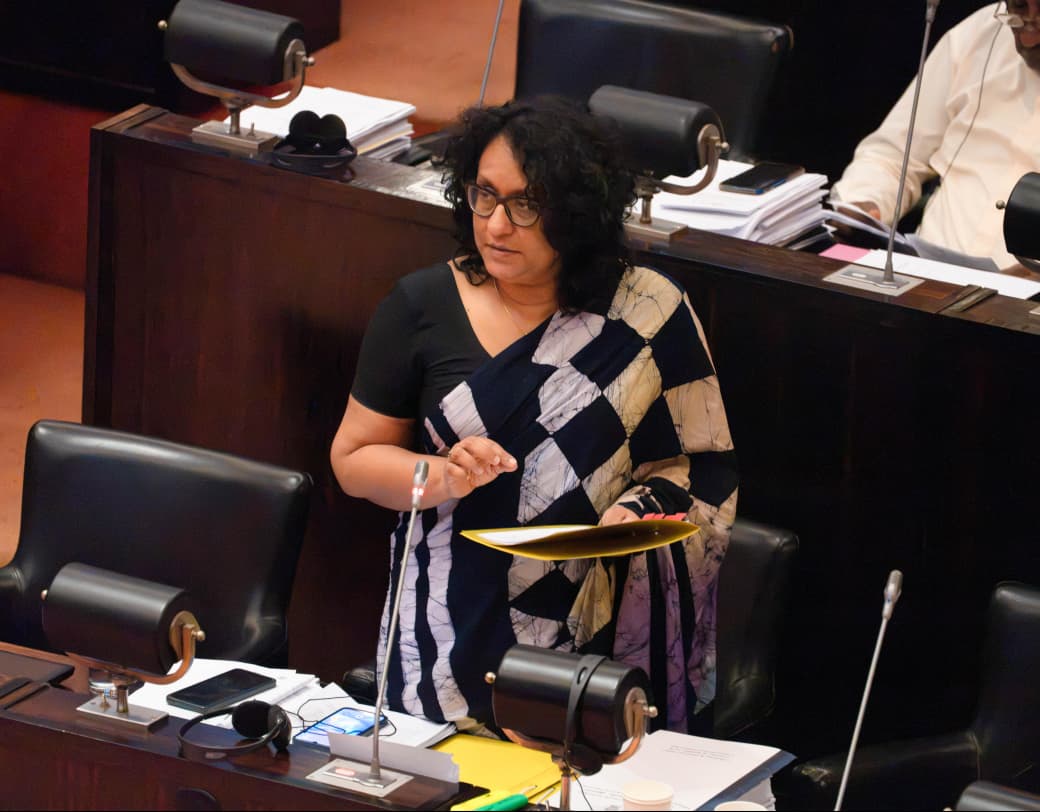
Prime Minister Dr. Harini Amarasuriya emphasised in Parliament that the Government has taken steps to amend the Anti-Corruption Act not to weaken its objectives, but to further strengthen the anti-corruption process by addressing practical, institutional and human resource challenges identified during its implementation.
The Prime Minister made these remarks during the parliamentary debate on the Anti-Corruption (Amendment) Bill held on Thursday [8 October]. The Prime Minister pointed out that although discussions on anti-corruption laws and institutions had been ongoing since 1994, those institutions had existed largely in name only, without the necessary human resources, financial allocations, resources and infrastructure required for their effective functioning. She further noted that although the new Anti-Corruption Act was introduced in 2023, the practical challenges associated with its implementation became apparent only after it began to be actively enforced in 2025.
Accordingly, the current amendments have been proposed to facilitate the recruitment of the required human resources, rectify inconsistencies between the Sinhala and English versions of the Act, and resolve practical difficulties encountered in its implementation. She also noted that discussions had taken place regarding the need to consider the privacy of public officials and all other parties connected with the State in relation to asset and liability declarations made under the Anti-Corruption Act.
However, neither the original Act nor the current amendments had, at any point, exempted elected representatives from these obligations. “The Opposition’s statements clearly reveal its agitation and discomfort regarding the establishment of an anti-corruption culture in the country and its effective implementation,” the Prime Minister stated.
Recalling that one of the key demands of the people’s struggle was not merely to punish those who had misappropriated public funds, but also to recover those funds for the State, the Prime Minister stated that the current amendments also seek to strengthen mechanisms for achieving this objective. She pointed out that, in addition to ensuring that individuals involved in corruption are brought to justice, another objective of the amendments is to strengthen the mechanisms necessary to recover losses incurred by the State.
“This is not an attempt to weaken the anti-corruption process. It is an effort to resolve the practical, institutional and human resource challenges that arise in its implementation. We have nothing to gain by abandoning the fight against corruption. If we were to abandon it, that would be our defeat,” the Prime Minister emphasised. The Prime Minister further stated that it was deeply regrettable that, in a country where a significant protest of people had taken place against corruption, the Opposition was attempting to mislead the public by presenting false arguments. She noted that such actions only served to demonstrate that the Opposition was once again attempting to protect a corrupt political culture.
[Prime Minister’s Media Division]
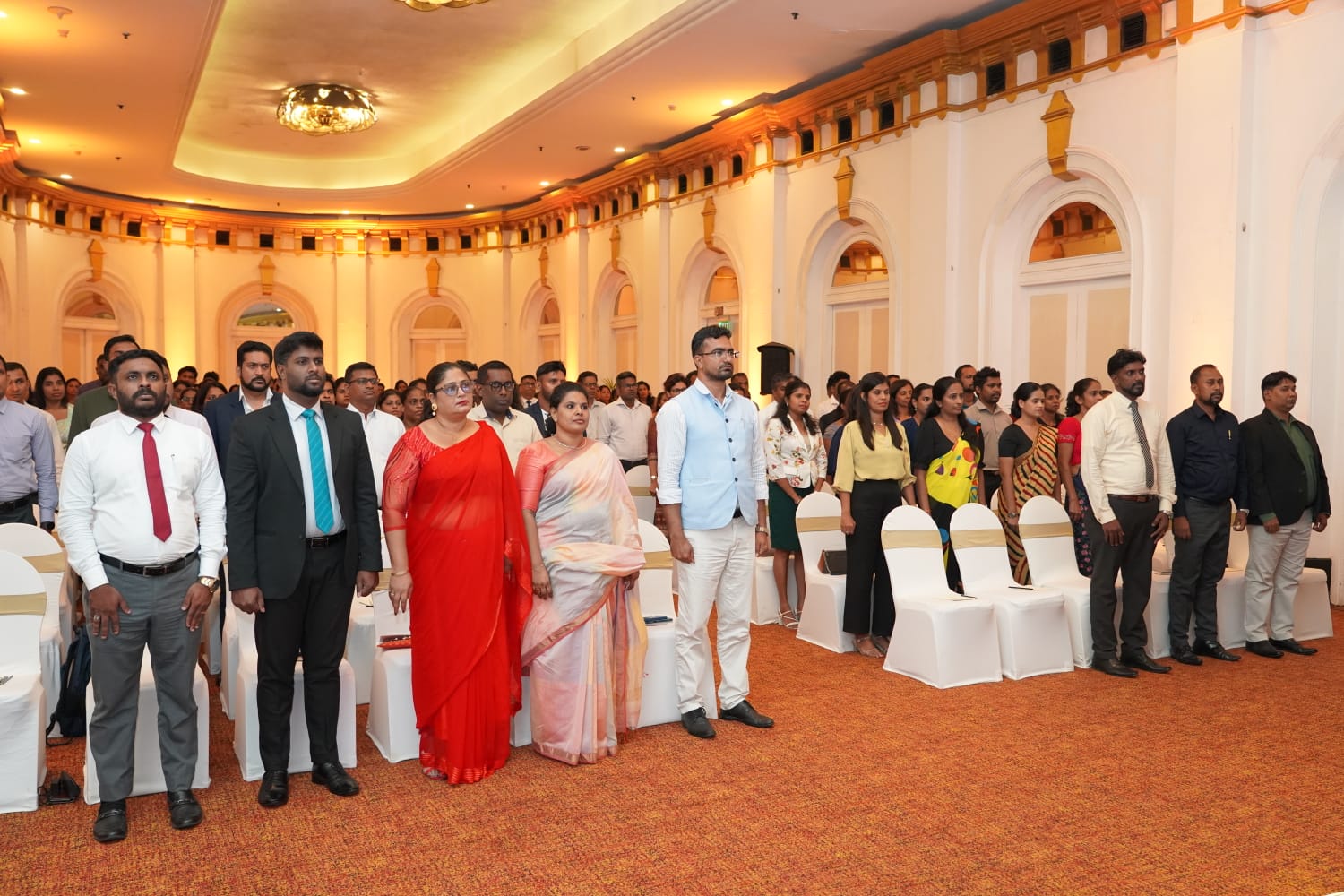
Sri Lankan professionals trained in India under the Indian Technical and Economic Cooperation (ITEC) programme have formed a national alumni association. The Sri Lanka ITEC Alumni Association was formally launched at its inaugural meeting on Thursday, 8 October 2026, at the Grand Crystal Ballroom of Hotel Taj Samudra, Colombo.
The Association is a unique initiative of the Education Wing of the High Commission of India in Sri Lanka. The Wing oversees India’s education and scholarship programmes for Sri Lanka, including the ITEC programme. The initiative was led by Sandeep Chaudhary, First Secretary (Education), High Commission of India. His vision and support were key to bringing Sri Lanka’s ITEC alumni together under one platform for the first time.
The Government of India launched ITEC in 1964, and it has since become one of the cornerstones of India’s development partnership with countries of the Global South. The programme is fully funded by the Government of India and offers civilian training in a wide range of fields, including public administration, finance, information technology, engineering, management, agriculture, health and the environment. Courses are delivered at leading Indian institutions. Over six decades, ITEC has trained officials and professionals from more than 160 partner countries. Sri Lanka has been one of its most active participants, and thousands of Sri Lankan public servants and professionals have benefited from the programme.
The new Association brings these alumni together from government, semi-government and private sector institutions. Its aims are to foster professional networking, knowledge sharing, capacity development and community service. It will also encourage collaboration among alumni and guide and support future Sri Lankan participants in ITEC programmes. In doing so, the Association seeks to deepen the long-standing friendship and people-to-people ties between Sri Lanka and India.
At the meeting, members elected an Executive Committee to lead the Association. Ms. Gayathri Suveendran was elected President. The other office-bearers are:
Vice Presidents: P.B. Hasith Sandaruwan and Leo Darshan
General Secretary: Anupa Weerarathne
Assistant Secretary: Vimukthi Dushantha
Treasurer: S. Rubadharshan
Assistant Treasurer: I. Ravikumar
Four sectoral committees will carry the Association’s work forward:
Establishment, Administration and Finance: Prof. M.I.M. Mujahid Hilal, M. Farwis, Milroy Aluthwatta, W.P. Suraweera, M.S. Thayaraj and Asinsala Senevirathne.
ICT, Digital Transformation and Innovation: Sujah Ameer, Danushka Diunugala, T.M.M. Perera, Tharanga, M.K.H.P. De Silva, Pubuditha Madushan and Arulkumaran Mahalingam.
Coordination, Organising and Legal Affairs: T. Srirajeevan, Theja Jayathilaka, Eng. A. Lingeswaran, Chaminda K. Uda, Kumuduni, S. Sinthujan and Ananda Arasu.
Media, Public Relations and Publications: Rahul Samantha Hettiarachchi, Dr. Gayani Kaushalya, Anandi Premarathne, Vimukthi Dushantha, R. Suhanthan and Shyam Nuwan Ganewatta.
The founding of the Association marks a significant milestone for the ITEC community in Sri Lanka. It turns individual training experiences in India into a shared national resource, and it adds a new professional dimension to the enduring partnership between the two neighbours.
The government is taking all necessary measures to protect the Diyagama forest area located in Homagama within the Colombo District, Deputy Minister of Environment, Anton Jayakody,
stated on Friday (9) while delivering a special address in Parliament.
Originally an abandoned plot of land, it has regenerated naturally over the past two decades into a sensitive ecosystem bearing the characteristics of a rainforest. With rapid urbanization, numerous wildlife species displaced across
the Colombo District have now migrated to and found sanctuary in this ecological haven.
Citing field research conducted by a team of scholars from the University of Colombo—including Prof. S.W. Ranwala, Prof. Ileperuma, and Prof. Abeykoon—the Deputy Minister pointed out that nearly 120 species of flora and fauna have been identified in the area. Among them are species endemic to Sri Lanka, as well as rare wildlife such as the red slender loris and pregnant animals close to giving birth, clearly testifying to the rich biodiversity thriving within this habitat.
Located adjacent to the Mahinda Rajapaksa International Stadium and the Japan–Sri Lanka Friendship Baseball Ground, this green zone serves as a vital ecosystem for absorbing carbon
dioxide emitted by athletes and residents in the vicinity.
In addition to directly contributing toward Sri Lanka’s commitments under the Paris Agreement to achieve net-zero emissions by 2050, the forest also functions as a vital catchment area feeding into the Bolgoda water basin.
Accordingly, following the approval of the Colombo District Coordinating Committee (DCC) with the participation of the Divisional Secretary, government officials, and environmentalists, steps will be taken to submit a Cabinet paper to formally declare this valuable woodland a forest reserve, the Deputy Minister emphasized.

The Anti-Corruption Act is being amended to strengthen It, not to weaken it – PM

Renshaw 190 lifts Australia to 390 before Hazlewood strikes

Pope says death penalty ‘inadmissible’ as US plans to livestream execution

Attack on airport in Saudi capital, Riyadh, leaves several injured

Hurricane Isaias downgraded after making landfall in Florida

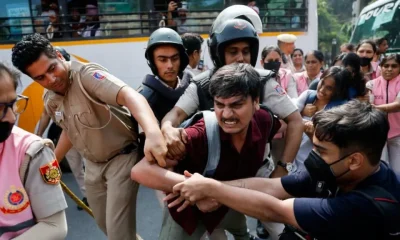
‘Cockroach’ group leaders among hundreds detained in Delhi protest

‘Dates have the highest sugar content to fight Coronavirus’

Sunday Island 27 December – Headlines

#SundayIsland 17th December – Headlines

Sunday Island – 28th March

Sunday Island Headlines – 21 March

Sunday Island – 21st February – Headlines
-

 News6 days ago
Geneva takes up Sallay’s case and govt. ignores opportunity to answer accusations
-

 Features7 days ago
The first woman in the foreign service or Ceylon Overseas Service it was then called
-

 News7 days ago
Nearly 20 Iranian tankers stranded off Lanka amid US sanctions
-

 Features5 days ago
Preventing grievances from becoming communal
-

 Sports3 days ago
Nissanka absence opens door for Sri Lanka’s young guns
-

 News4 days ago
Gnansara Thera to be assigned to prison printing section: Officials
-

 Features6 days ago
Sri Lanka Cricket Bill: Governance reform is not yet a cricket strategy
-

 Features3 days ago
The Sri Lankan who made Scottish history