
News
Lanka points out flaws in Geneva process, disputes Canada’s genocide claim

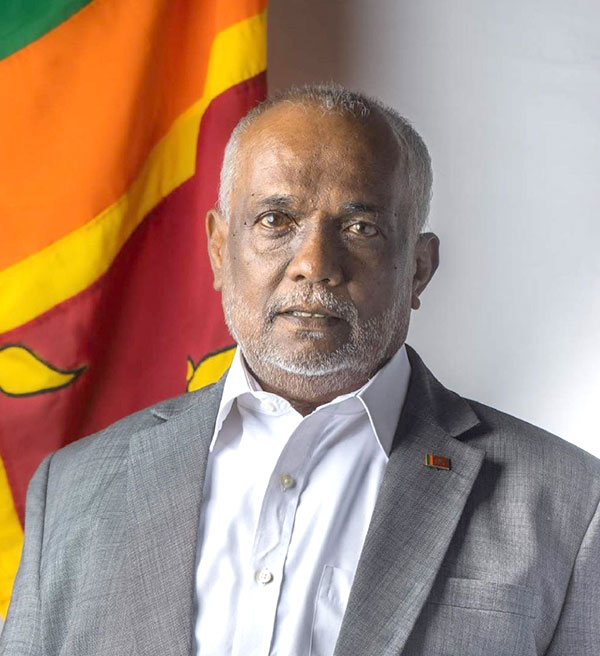
HC Navaratne responds to Ontario’s politico’s allegation 140,000 killed in Vanni war
Sri Lanka has pointed out flaws in the process adopted by the Geneva-based United Nations Human Rights Council (UNHRC) to pursue unsubstantiated war crimes accusations, which paved the way for the 2015 accountability resolution. In spite of serious concerns expressed by the then Opposition and the armed forces, the yahapalana government co-sponsored the controversial resolution against Sri Lanka.
Sri Lanka’s High Commissioner in Ottawa Harsha Kumara Navaratne has pointed out glaring inadequacies in the Geneva process exploited by interested parties, including those in Canada, to accuse Sri Lanka of causing genocide in the final phase of the conflict.
There hasn’t been a previous instance of Sri Lanka directly disputing the Geneva process since the adoption of the 2015 accountability resolution. The much-anticipated position has been taken ahead of the next Geneva sessions scheduled to begin later this month.
The following is the text of the statement titled ‘Refuting the allegation of ‘Tamil Genocide’ in the final phase of the conflict in Sri Lanka issued by the Sri Lankan mission in Ottawa requesting those interested in genuine post-war national reconciliation to initiate a dialogue with HC Navaratne: The term genocide is used to describe one of the gravest crimes against humanity, comprising of specific acts committed with intent to destroy, in whole or in part, a national, ethnical, racial or religious group. Therefore, the Sri Lanka High Commission in Canada notes with serious concern attempts by certain parties in Canada trying to portray the final phase of the conflict in Sri Lanka which ended in 2009 as ‘genocide’ against the Tamil people of Sri Lanka. The Sri Lanka community in Canada is multi-ethnic and multi-religious. In this context, the Private Member Bill 104 on ‘Tamil Genocide Education Week’ passed in Canadian province of Ontario has caused strain in intercommunity relations among the Sri Lankan community by the depiction of a false narrative against one community.
In addition, while appreciating the various Canadian Government focused programs for Sri Lankan Tamil Canadians, we are disappointed to note that on January 31, 2022, at an event announcing funding for Tamil students with targeted mental health and wellness programs and resources, Mr. Stephen Lecce, Ontario’s Minister of Education made comments including “we are very deliberate in our choice of words that we recognize a genocide that transpired against the innocent Tamil people” and “in a genocide that has left over 140,000 innocents perished at the hands of the regime in Colombo”. Mr. Vijay Thanigasalam, MPP Scarborough – Rouge Park, who was also present, referred to “Tamil genocide’ in his remarks.
We are appreciative that the Department of Foreign Affairs, Trade and Development in a
Diplomatic Note dated 7 th April 2021 responding to a clarification stated “that the Department of Foreign Affairs, Trade and Development clarify Canada’s official position with regard to allegations of genocide in Sri Lanka, the department can officially confirm that the Government of Canada has not made a finding that there was genocide in Sri Lanka”. Further, the Government of Canada has proscribed the Liberation Tamil Tigers Eelam Organisation (LTTE) as a Terrorist organization.
In this background, the repeated use of the word “Tamil Genocide” only generates dissention and prejudice amongst the children and community of Sri Lankan Canadians living in Ontario. Therefore, such allegations need to be refuted in the interest of social harmony and to prevent the spread of fallacies about Sri Lanka in the international community.
During the final phase of the conflict in Sri Lanka, the government forces confronted the internationally proscribed terrorist group Liberation Tigers of Tamil Eelam (LTTE), one of the most brutal terror groups the world has witnessed. The aim of the LTTE was to divide Sri Lanka on ethnic lines and carve out a separate State. With this objective, they conducted a three decades long terrorist campaign which brought much suffering and destruction on all communities.
During the last stages of the military conflict in 2009, when the LTTE was facing inevitable defeat, it resorted to holding Tamil civilians hostage as a human shield and refused all efforts to move civilians away from conflict areas. The allegation of civilian casualties and the exaggeration of the numbers was the means by which the LTTE sought to force foreign intervention to halt the government advance.
Nevertheless, the government forces managed to rescue approximately 290,000 Tamil civilians from the clutches of the LTTE, cared for them and resettled them. In addition, over 12,000 armed LTTE cadres were rehabilitated and released, proving thereby that the Sri Lankan government had avoided causing unnecessary deaths even among enemy combatants, not to speak of noncombatant civilians.
Therefore, there is absolutely no evidence to suggest any act and/or intent of the spurious allegations of “genocide” during the military engagement with the LTTE. Neither was there a pattern of events even to suggest “genocide”. Military experts have noted that the tactical options were justifiable and proportionate given the situation in the last phase of the military conflict.
Some parties, including LTTE remnant groups and sympathizers, have seized on hypothetical figures of civilian casualties contained in certain seriously flawed Reports commissioned by the UN, to push a claim of genocide of Tamil people in Sri Lanka during the final stage of the military conflict. However, not even the much-disputed UN Secretary General’s Panel of Experts report (PoE) carry the accusation of “genocide” against the Government of Sri Lanka. The principal findings of the OHCHR Investigation on Sri Lanka (OISL), in 2015 in to the alleged “war crimes” of Sri Lanka do not even suggest “genocide”.
Groups espousing the claim of genocide have seized the claim, made without any proof, in the PoE report “that there could have been as many as 40,000 civilian deaths” during the final months of the conflict. The PoE report came up with the hypothetical figure of 40,000 civilian deaths by setting off the actual number of people finally rescued by the Sri Lanka Army which was approximately 290,000 against the hypothetical figure of 330,000 which they deemed to be the number of civilians who had been in the area (Vanni) before military operations commenced in that region. This hypothetical number of 330,000 civilians used by the PoE is a purely arbitrary construct. Nobody, in Sri Lanka or outside, really knew exactly how many civilians the LTTE was holding in captivity during those months in 2009.
In addition, the PoE report mentions a lower figure of 7,721 deaths (up until 13 May 2009) reported by the United Nations Country Team in Sri Lanka. However, this figure is later disputed by the PoE report without explaining how it is that over 30,000 people could have been killed in the final days up until 18 May 2009 when the conflict ended, if the figure of 40,000 is ever to be correct and accurate.
It may be noted that in July 2011, the data collected by Department of Census and Statistics of Sri Lanka in the Northern Province, found that in 2008 and 2009 when the final battles raged in the Northern Province, the total number of persons who died of causes other than natural causes, was 9,283. The field data collection required for the project, the first enumeration of its kind in that part of the country since the census of 1981, was carried out by the predominantly ethnic Tamil government employees serving in the Northern Province. The number of fatalities suffered by the Sri Lanka Army during the final war against the LTTE between July 2006 and May 2009 was 5,876. It would only be logical to assume that the LTTE would have suffered a greater number of fatalities than the armed forces of Sri Lanka, and that of those reported (9,283) to have died in the Northern Province due to other than natural causes in 2008 and 2009, the vast majority would have been LTTE cadres or those directly involved in hostilities.
Legal experts have identified that the use of the disputed figure, which is the central weakness in the PoE report, is exacerbated by the standard of proof that it professed to adopt. A non-legal analysis (‘I felt sure’, I felt reasonably confident’, I was absolutely convinced’, ‘I had my suspicions’ etc.) is used in a document dealing with alleged criminality on a major scale – that name those who may be responsible and who merit further judicial and other process. They note that international courts and tribunals have not placed reliance on reports of this nature as being probative evidence to prove allegations in trials for war crimes and crimes against humanity.
Since the end of the conflict in 2009, Sri Lanka has pursued a policy of restoration, reparation, re –integration, rehabilitation and reconciliation within the overall concept of restorative justice. At a time when Sri Lanka is moving ahead with these processes, certain groups, including remnants of LTTE international network, have been trying to discredit and destabilize the efforts undertaken by Sri Lanka by pushing agendas such as ‘Tamil genocide’.
As seen in the comments made by Mr. Stephen Lecce, who cited a figure of 140,000 deaths, the contents of unverified reports have succeeded in misleading the international community and influencing opinion-formers and decision makers. If, with the passage of time, the dubious nature of the evidence on which the UN reports are based is forgotten, their accusations, which are in fact unproven, may become potent over repeated use.
The allegations of genocide impact on Sri Lanka’s relations with the international community, at a time when it is engaged in a long-standing cooperation with the UN human rights mechanisms and the UN Human Rights Council and is delivering on its commitment to address accountability and reconciliation through domestic processes and institutions.
Therefore, the High Commissioner of Sri Lanka extends an open invite to all those who are committed to the peace and reconciliation process of Sri Lanka to visit, meet and have a dialogue with him on this subject.”

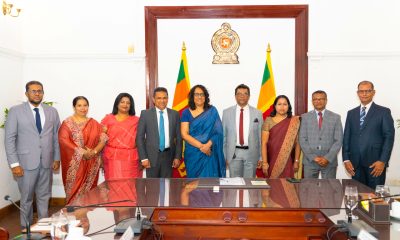


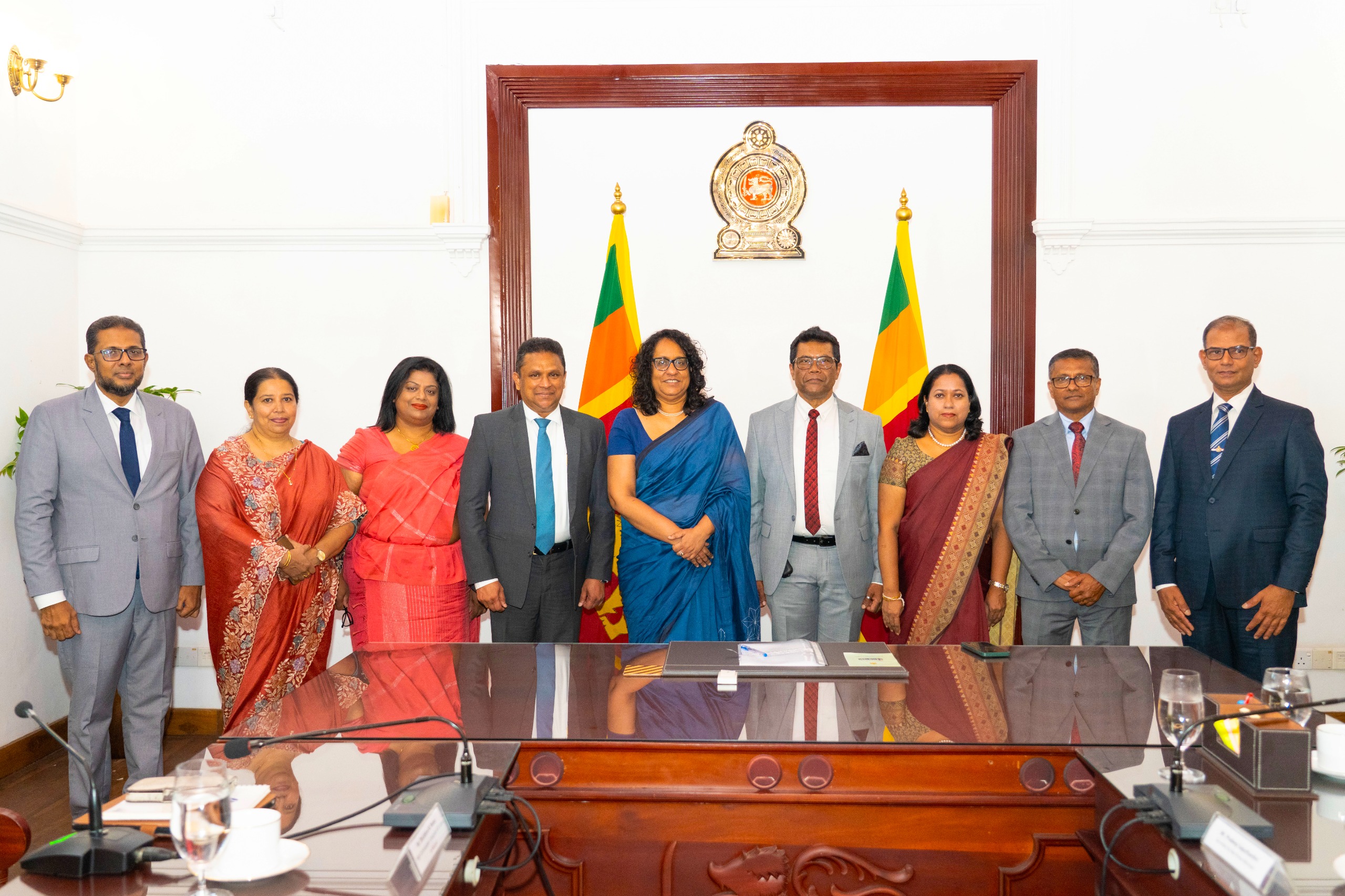
The heads of mission designate to Sri Lanka paid a courtesy call on Prime Minister Dr. Harini Amarasuriya on 26th of March at the Prime Minister’s office.
The delegation comprised Dharshana M. Perera, High Commissioner – designate of Sri Lanka to Malaysia, Ms. Dayani Mendis, Ambassador and PRUN – designate of Sri Lanka to Austria, Ms. N.I.D. Paranavitana, Ambassador – designate of Sri Lanka to Ethiopia & African Union, Prof. (Ms.) M.I. Fazeeha Azmi,Ambassador – designate of Sri Lanka to Iran, Saman Kumara Chandrasiri, Ambassador – designate of Sri Lanka to Israel, and M. Farook M. Fawzer, Representative – designate of Sri Lanka to Palestine.
The Prime Minister, Dr. Harini Amarasuriya, extended her best wishes to the Heads of Mission–designate and underscored the importance of their forthcoming assignments in advancing Sri Lanka’s national interests emphasizing their collective role in contributing towards the socio-economic upliftment of Sri Lanka.
The Prime Minister further highlighted the importance of projecting a positive and credible image of Sri Lanka internationally, through consistent, professional, and strategic engagement in their respective host countries and multilateral platforms.
She encouraged the Heads of Mission to actively identify and facilitate high-quality investment opportunities, particularly in sectors aligned with Sri Lanka’s development priorities, with a focus on sustainability, innovation, and long-term value addition.
Particular emphasis was placed on the promotion and diversification of Sri Lanka’s exports, including the exploration of new markets and strengthening trade linkages.
The meeting was attended by the Secretary to the Prime Minister, Additional Secretary to the Prime Minister Ms. Sagarika Bogahawatta and heads of mission-designate.
[Prime Minister’s Media Division]
News
SC finds Keheliya, others, guilty of violating FRs of public through corrupt drug procurement deal

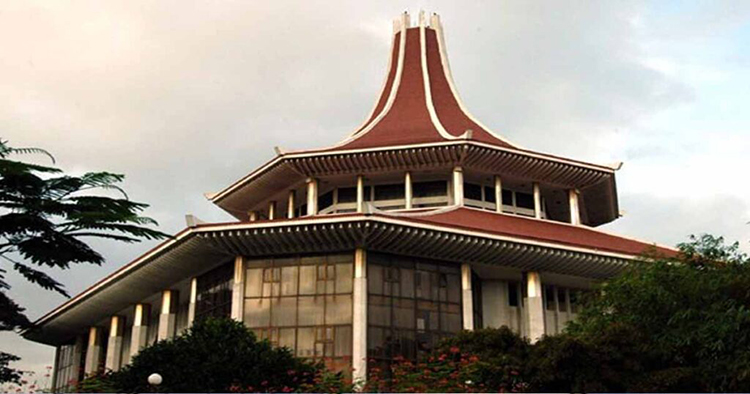
The Supreme Court yesterday held former Health Minister Keheliya Rambukwella and several senior health officials liable for violating the fundamental rights of the public over a controversial drug procurement carried out under the 2022 Indian Credit Line.
Delivering the judgment, a three-judge bench, headed by Chief Justice Preethi Padman Surasena, and comprising Justice Kumudini Wickremasinghe and Justice Janak de Silva, found that the procurement of medical supplies from an unregistered company, in breach of established procedures, had resulted in a serious infringement of public rights.
The Court ruled that the granting of a Waiver of Registration by the authorities was “wrongful, arbitrary and capricious,” and held that the direct procurement carried out on an unsolicited basis was unlawful. The transaction was accordingly declared null and void.
In a significant order, the Court directed Rambukwella to pay Rs. 75 million in compensation to the State from his personal funds.
The then Health Ministry Secretary Janaka Chandragupta and former Chairman of the National Medicines Regulatory Authority (NMRA), Prof. S. D. Jayaratne, were each ordered to pay Rs. 50 million.
The Court further directed NMRA Chief Executive Officer Dr. Wijith Gunasekara and former Director of the Medical Supplies Division Dr. Thusitha Sudarshana to pay Rs. 50 million each as compensation.
The ruling followed the hearing of a fundamental rights petition filed by Transparency International Sri Lanka and two other parties.
The Court also instructed the Commission to Investigate Allegations of Bribery or Corruption to initiate appropriate action under the Anti-Corruption Act against those found responsible.
Senior Counsel Senany Dayaratne, with Nishadi Wickramasinghe, Lasanthika Hettiarachchi, Janani Abeywickrema and Maheshika Bandara, appeared for the petitioners.
News
Sajith nudges govt. to follow India’s example in giving relief to consumers by slashing taxes on fuel
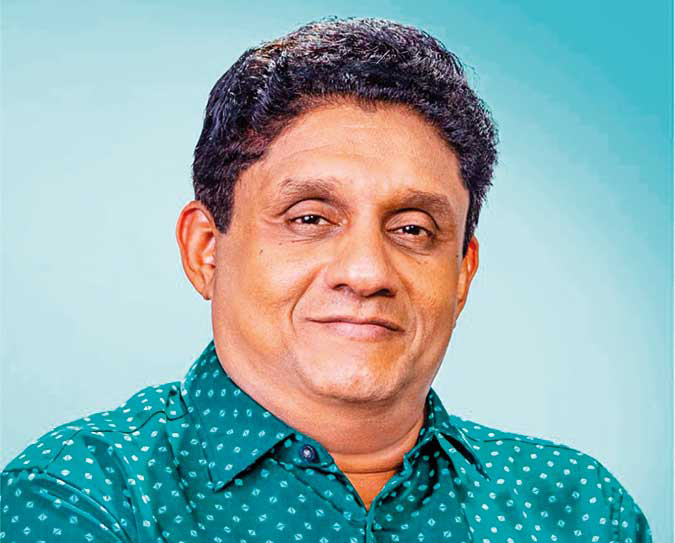
Opposition and SJB Leader Sajith Premadasa yesterday urged President Anura Kumara Dissanayake to reduce taxes on fuel, just as the Indian government has done.
He said in a post on X that “Modi government has decided to reduce the Special Additional Excise Duty on petrol and completely remove it for diesel in order to cushion the hardship on the Indian consumer. High time for Anura Kumara Dissanayake to keep up to his election promise and follow suit.”
Meanwhile foreign media reported that India has slashed excise duties on petrol and diesel to protect consumers and rein in a potential spike in inflation, while imposing windfall taxes on aviation fuel and diesel exports, amid volatile global oil markets, as a result of the Iran war.
Global oil prices have surged past $100 per barrel after the near closure of the Strait of Hormuz, which serves as a conduit for 40% of India’s crude oil imports, since the US and Israel first struck Iran on February 28.
In a government order, released late on Thursday, India’s Finance Ministry reduced the special excise duty on petrol to three Indian rupees ($0.0318) per litre from 13 Indian rupees earlier. It also cut the duty on diesel to zero from INR 10 rupees per litre.
The government did not say how much the duty cuts would cost. The move comes ahead of elections next month in four Indian states and one federal territory, with Indian voters known to be extremely sensitive to higher prices.
“Government has taken a huge hit on its taxation revenues to ensure very high losses of oil companies, approximately 24 rupees a litre for petrol and 30 rupees a litre for diesel, at this time of sky high international prices, are reduced,” Indian Oil Minister Hardeep Singh Puri said in a post on X.

Courtesy call by the Heads of Mission- Designate on Prime Minister

Three dead after helicopter crash in Hawaii

Woods charged with driving under influence after crash

Showers may occur at a few places in the Rathnapura, Kaluthara, Galle, and Matara districts during the evening or night

SC finds Keheliya, others, guilty of violating FRs of public through corrupt drug procurement deal

Sajith nudges govt. to follow India’s example in giving relief to consumers by slashing taxes on fuel

‘Dates have the highest sugar content to fight Coronavirus’

Sunday Island 27 December – Headlines

#SundayIsland 17th December – Headlines

Sunday Island – 28th March

Sunday Island Headlines – 21 March

Sunday Island – 21st February – Headlines
-

 News4 days ago
Senior citizens above 70 years to receive March allowances on Thursday (26)
-

 Features16 hours ago
A World Order in Crisis: War, Power, and Resistance
-

 Features6 days ago
Trincomalee oil tank farm: An engineering marvel
-

 News2 days ago
Energy Minister indicted on corruption charges ahead of no-faith motion against him
-

 News3 days ago
US dodges question on AKD’s claim SL denied permission for military aircraft to land
-

 Features6 days ago
The scientist who was finally heard
-

 Business3 days ago
Dialog Unveils Dialog Play Mini with Netflix and Apple TV
-

 Sports2 days ago
SLC to hold EGM in April