
Latest News
Siraj six-for hands India huge lead despite Smith and Brook hundreds


Day Three’s claim on the “moving day” moniker in a Test match was given extra credence at Edgbaston. Because while the situation in this second Test at stumps was not all that different to how it began – India ahead by plenty, England ruing various mistakes with ball and then bat – this was as stirring, emotional and mesmerising as this format gets.
It began Mohammed Siraj prising out Joe Root and Ben Stokes with successive deliveries in the second over of the day, and he would close England’s innings with the final three to finish with 6 for 70. This was Siraj’s fourth five-wicket haul, and first on these shores, confirming a first-innings lead of 180 that would eventually swell to 244 by the close, for the loss of just Yashasvi Jaiswal, trapped lbw by Josh Tongue.
In between, however,Jamie Smith’s unbeaten 184, of which the first century clocked in at a joint-third fastest 80 deliveries, alongside Harry Brook’s 158 dared England to believe they might wipe out India’s opening effort of 587 despite having to rise from the canvas. From 84 for 5, Smith struck Siraj’s hat-trick delivery back past him for four and did not look back, while Brook occupied his slipstream for an initial retaliation that turned into a calculated occupation of the crease and time.
They were eventually parted for 303 in the evening session, England’s second-highest stand for the sixth wicket. On a new-ball pitch, the second one had done the trick, as Akash Deep seamed one through Brook’s bat and pad off a length, disturbing the timber. That would be the first of the final five wickets to fall for just 20 runs in 7.2 overs. As KL Rahul’s 28 not out led a quick dart to 64 for 1 with dark clouds looming, England had snapped out of their Smith-inspired fever dream and were back in cold, dank reality.
And it was Smith inspired. Siraj set the scene with jeopardy Smith used to fuel a second Test century and new top score for an English wicketkeeper, beating his Surrey mentor Alec Stewart’s 173 against New Zealand back in 1997.
Root’s demise was a boost for its earliness – nine balls into Friday – and ease; over-balancing to tickle an edge down the leg side through to Rishabh Pant. If that was a little bit of good fortune for Siraj, it was all him for the next delivery, as a snorter – leaping off a short length, scorching the gloves as Stokes attempted to protect his neck – gave England’s Test captain his first golden duck in the format. It was only the second time England’s top six had provided three noughts.
It was immediately from that point of disarray, with England trailing by 503 in the 22nd over, that Smith unleashed his astonishing counterattack. Smith was more or less a-run-a-ball up until he locked horns with Prasidh Krishna in the over before the drinks break. With Shubman Gill chasing the match earlier than he needed to, Krishna was ordered to bounce Smith, who cashed handsomely with four fours and a six smashed high over fine leg, taking the over for 23.
Remarkably, Gill persisted with Krishna and the short-ball tactic and, as expected, Smith tonked the first ball of this new over for another six over backward square leg. The previous over had seen Smith move to his sixth fifty-plus score from 43 deliveries.
Further shifts came with consecutive boundaries off spinners Washington Sundar (two fours through cover) and Ravindra Jadeja (a cut through point, then a launch back over the left-armer’s head), bringing Smith in with a shout of taking the record for England’s fastest Test century.
He was 84 from 62 deliveries, needing 16 from nine deliveries to take the record outright with the uncertainty of whether Gilbert Jessop achieved the feat from 72 or 76 deliveries. Alas a slowdown as lunch approached, while sensible, meant that opportunity passed him by.
Nevertheless, the century within the session came with three deliveries to go, as Smith lifted Jadeja down the ground and then smeared a 17th boundary through midwicket to take him to three-figures. Edgbaston roared and then roared again as he walked off with Brook unbeaten on 91, the pair of them smashing 165 of the 172 scored in the first 27 overs between them – the third-most India have conceded in a session.
Brook’s ninth Test century came up four overs into the afternoon, with a controlled guide through the cordon – his 13th boundary, off his 137th ball – between gully and second slip off Krishna. It was Brook’s first century against India, and only his second at home, having fallen for 99 in his first innings of the series at Headingley.
By tea, Smith and Brook had eaten further into India’s lead – 232 by this point – but they had started to slow down, taking 101 deliveries to move their partnership to 250 from 200, which had only taken 192. A combination of Siraj, Jadeja and Sundar could claim responsibility for prompting that deceleration with wider, more consistent lines. Nitish Kumar Reddy did find Smith’s edge on 121, but Pant could only get fingertips to the chance, allowing the 24-year-old to pass 150 – off 144 balls – for the third time in his first-class career.
The 12 runs off the penultimate over of the second session, bowled by Sundar, who was reverse swept with ease by Brook, spoke of the ability of both batters to shift back up the gears. However, India pinned their hopes on the second new ball, which arrived five overs and one warm-up delivery from Akash Deep into the evening and proved their saviour.
Brook was cramping up, needing the physio – and a banana – eight deliveries before he was dismissed. He could score no runs during this period considering he only faced up to one of these deliveries, the one that dismissed him, prompting Smith to switch back to sicko mode. The wicket-taker Akash Deep was lifted gorgeously over long-on, then clouted through long-off for four. But with that second boundary coming at the end of the over, Smith watched on as Siraj trapped Josh Tongue lbw, put a sickening bouncer on Shoaib Bashir’s temples, before castling the No.11, who had opted to leave a delivery that moved in off the deck.
Smith rushed off, cursory waves of his bat for a quite incredible innings that ran India ragged and thrilled a large home support. At various points, you needed the scoreboard to show you who was actually in charge. By the end, it was clear as day, as Rahul drove pristinely and Jaiswal, while he was there for 22 deliveries, smoked 28, punishing both Woakes and Brydon Carse when they dropped short.
There was almost a moment of controversy when, having been pinned by Tongue, Jaiswal seemed to run out of time before calling for his review, which was given to him by standing umpire Sharfuddoula, who had given the decision as out on the field. Stokes immediately stormed over to remonstrate after watching intently as the big screen ticked from from 15 to zero before Jaiswal’s late signal.
In the end, it did not matter, and resulted in India losing a review as three reds were confirmed on the big screen. A small victory for England in a mini session that, not unlike this Test match so far, belongs to India.
Brief scores: [Day 3 stumps]
India 587 in 151 overs (Shubman Gill 269, Ravindra Jadeja 89, Yashasvi Jaiswal 87, Washington Sundar 42; Shoaib Bashir 3-167, Chris Woakes 2-81, Josh Tongue 2-119) and 64 for 1 in 13 overs (Yashasvi Jaiswal 28, KL Rahul 28*; Josh Tongue 1-12) lead England 407 in 89.3 overs (Jamie Smith 184*, Harry Brook 158; Mohammed Siraj 6-70, Akash Deep 4-88) by 244 runs
[Cricinfo]

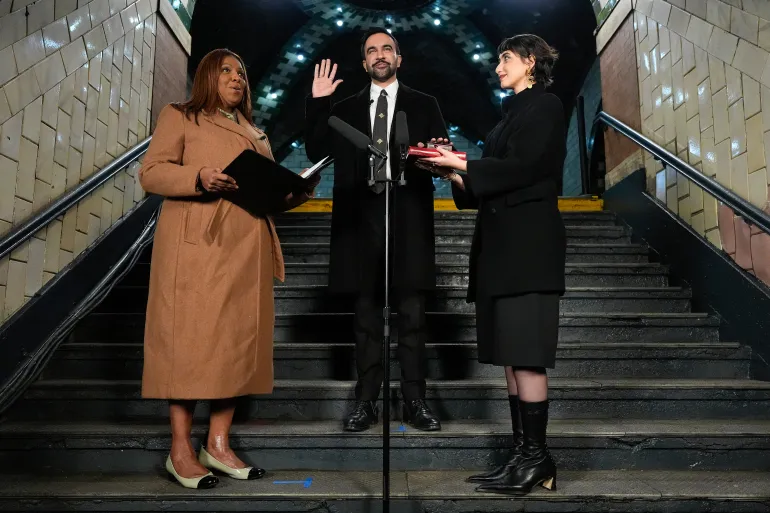
Zohran Mamdani has been sworn in as mayor of New York City, becoming the first Muslim and the youngest person in generations to take the oath of office in the United States’ biggest city.
Mamdani, a Democrat, was sworn in at a historic, decommissioned subway station in Manhattan just after midnight on Thursday, placing his hand on a Quran as he took his oath.
(Aljazeera)
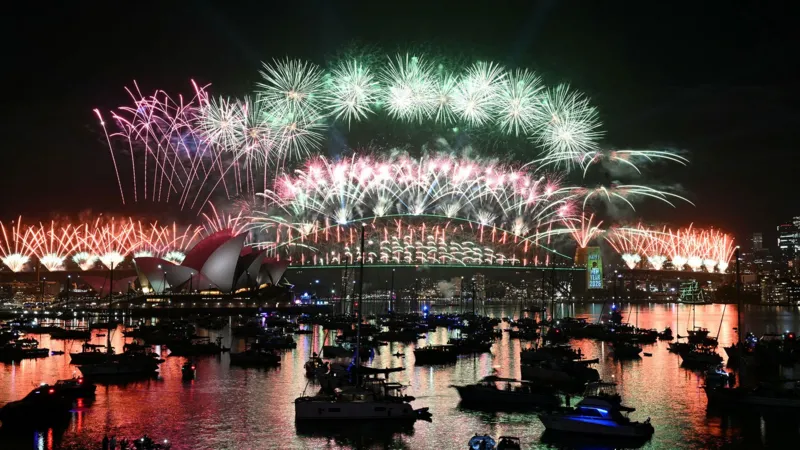
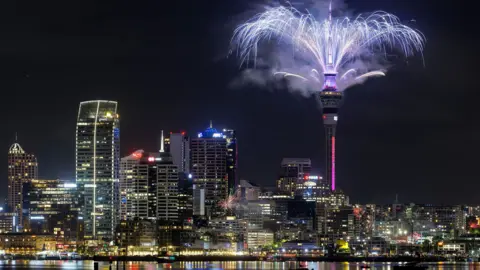
Countries around the world are welcoming the New Year as midnight strikes from time zone to time zone.
The island of Kiritimati – an atoll in the remote Pacific nation of Kiribati – became the first place to enter 2026. One tourist there told us he marked it “on a beach with no satellites, no signs of human life, complete darkness and countless crabs”.
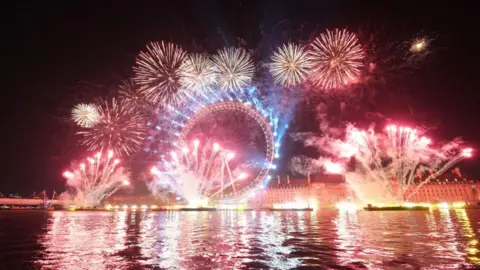
Spectators in the UK have enjoyed thousands of fireworks light up London skies, while in Edinburgh, crowds gathered in true Hogmanay fashion despite weather warnings.




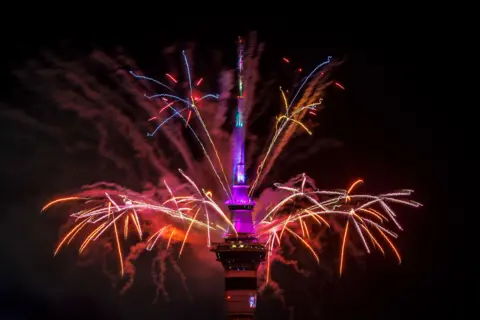
Then Australia lit up the sky over the Sydney Opera House and Sydney Harbour Bridge.
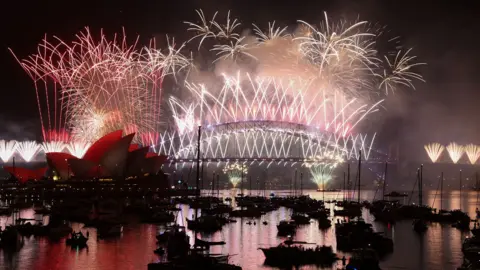
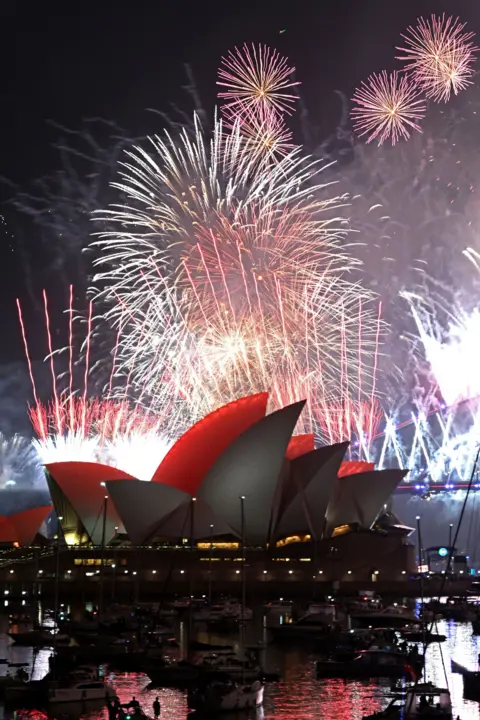
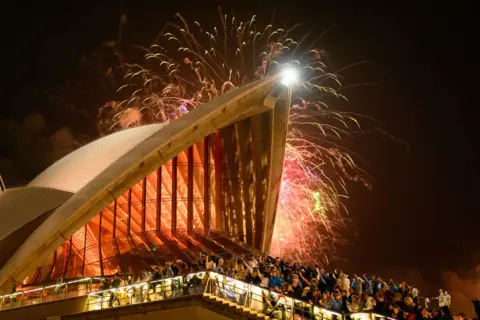
In Sydney, celebrations were tempered by sadness as the nation reflected on the Bondi Beach attack on 14 December in which 15 people were killed.
At 23:00 local time, Sydney Harbour fell silent for a minute, with crowds holding lights to remember the victims of Bondi. A Jewish menorah was projected on to the pylons of the Harbour Bridge.
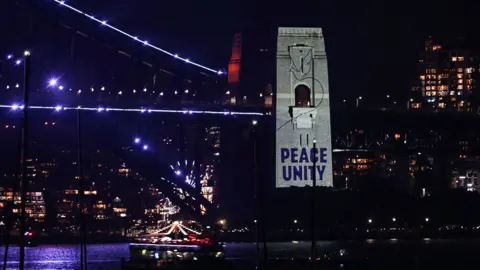
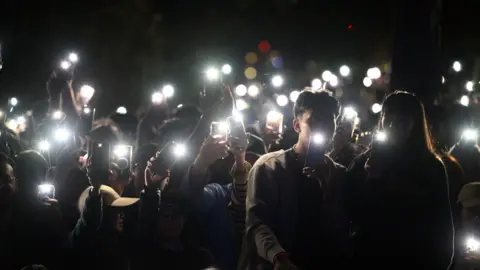
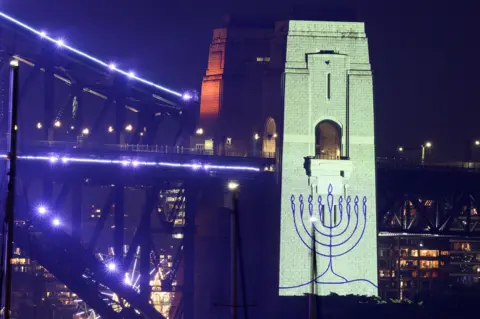
Elsewhere, there were more fireworks at Marina Bay Waterfront in Singapore.

Fireworks matched the brilliance of skyscraper lights in Makati, Metro Manila, Philippines. [BBC]
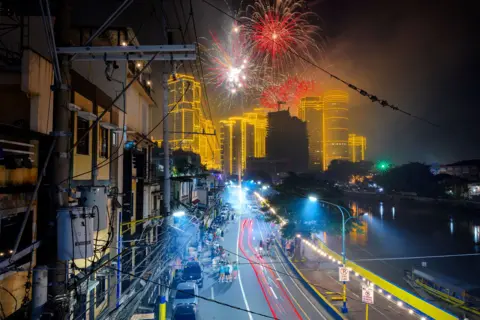
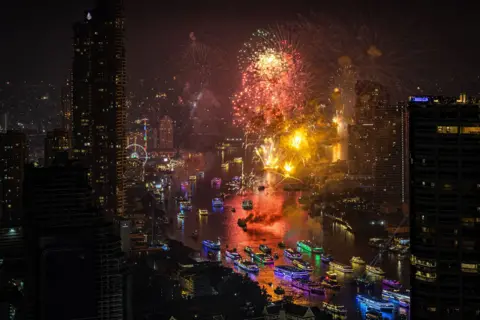
Thousands lined the Chao Phraya river in Bangkok as Thailand welcomed the New Year.
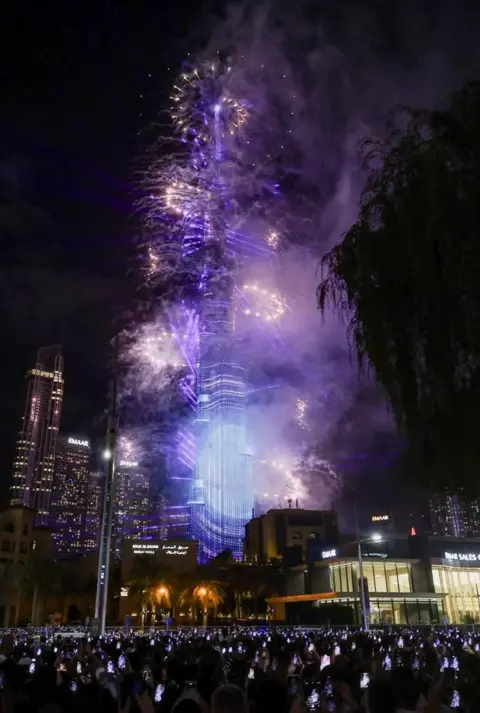
In Dubai, people watched fireworks from the world’s tallest building, the Burj Khalifa, following a performance with light displays, music and water jets.
[BBC]
In Hong Kong, spectators enjoyed live performances with fetching headwear.

The Juyongguan Great Wall was lit up in Beijing.

[BBC]
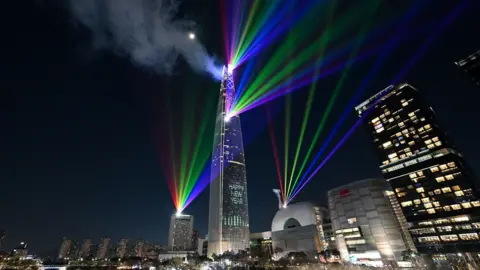
Laser lights dominated the night sky over the Lotte World Tower, South Korea’s tallest building in Seoul.
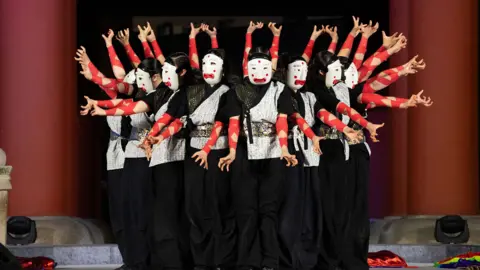
At the Bosingak pavilion in Seoul, artists performed during the New Year countdown.
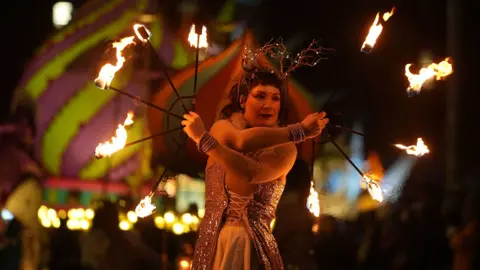
A street performer showed off her fiery skills as part of the Procession of Light in Dublin before heading to the Matinee Countdown Concert in Dublin Castle.
In other parts of the world, nations marked the coming New Year with their own traditions.
On a nudist beach in Le Cap d’Agde, southern France, clothed and unclothed revellers took part in a traditional sea dip to mark the New Year’s celebrations.

Swimmers at Islands Brygge Harbour Bath in Copenhagen, Denmark, also braved the cold waters for a traditional splash, known as Nytaarsbad.

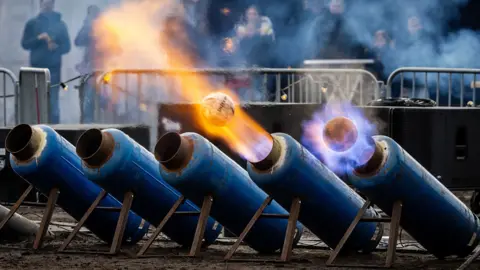
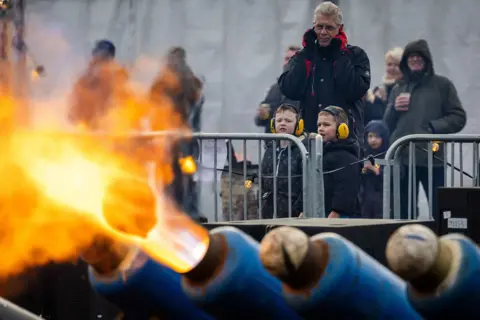
In Ommen, the Netherlands, local residents watched the annual carbide shooting – a New Year’s Eve tradition of turning milk cans into cannons.
In Osaka, Japan, young women dressed in traditional kimono took part in a Shinto ritual procession to mark the end of the year at Sumiyoshi Taisha, one of Japan’s oldest Shinto shrines.

Colourful runners braved the December air in Krakow, Poland, for the traditional Krakow New Year’s Run in the Old Town.


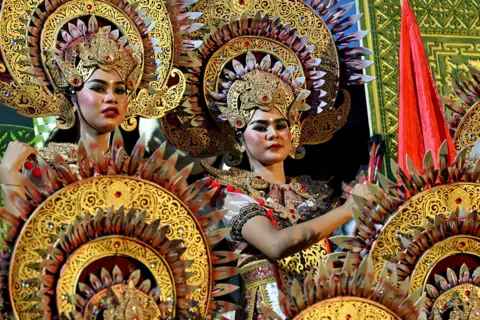
Adults and children performed a traditional dance to release the sun of 2025, and to welcome the sun of 2026, in in Denpasar, Bali, Indonesia.
 AFP via Getty Images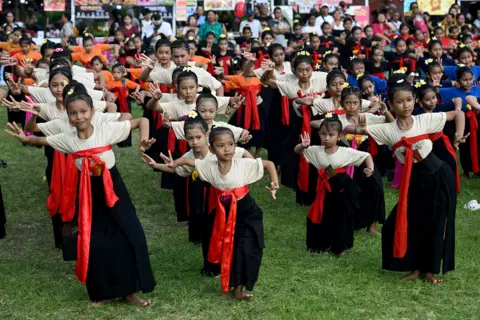
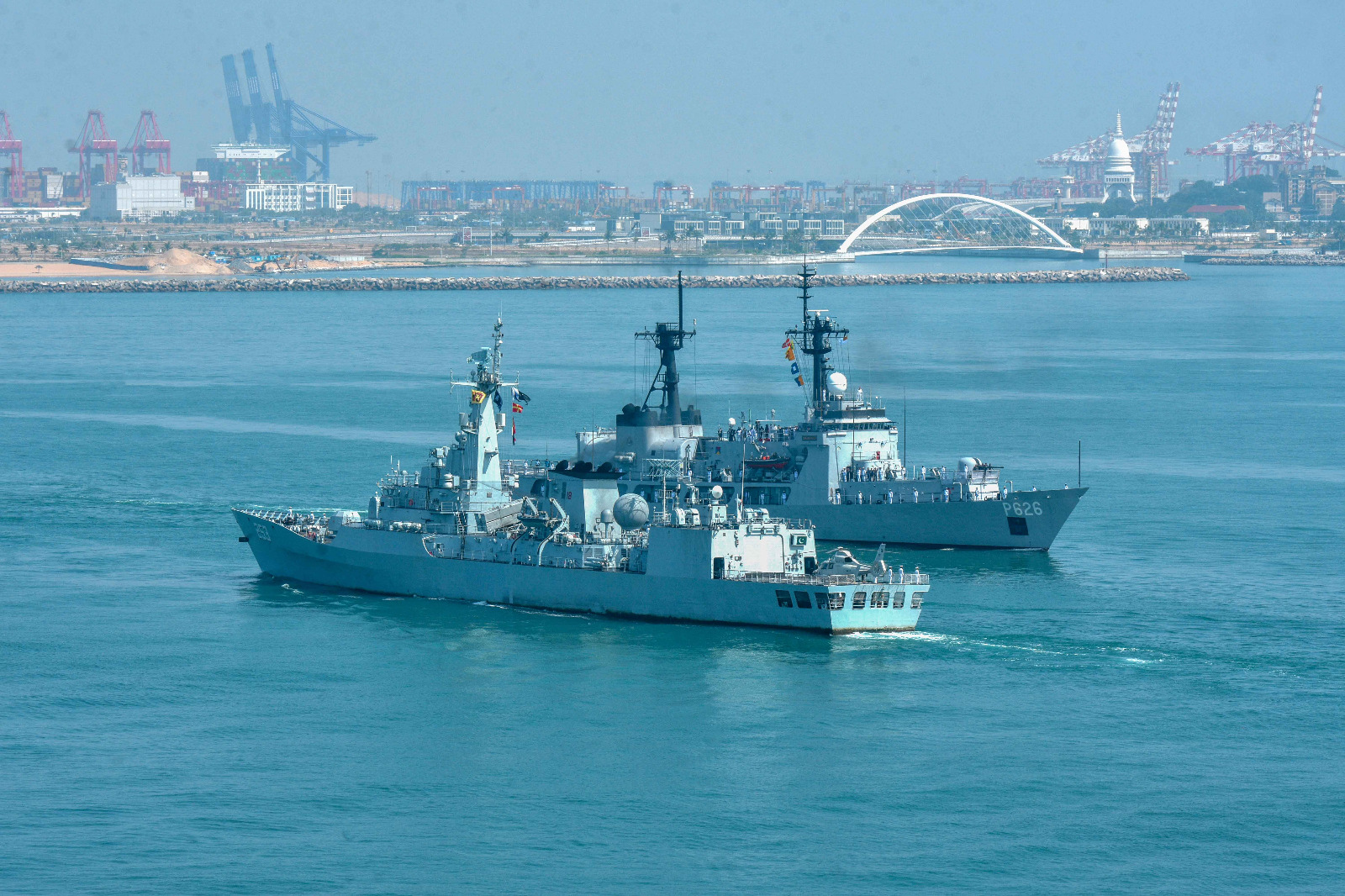
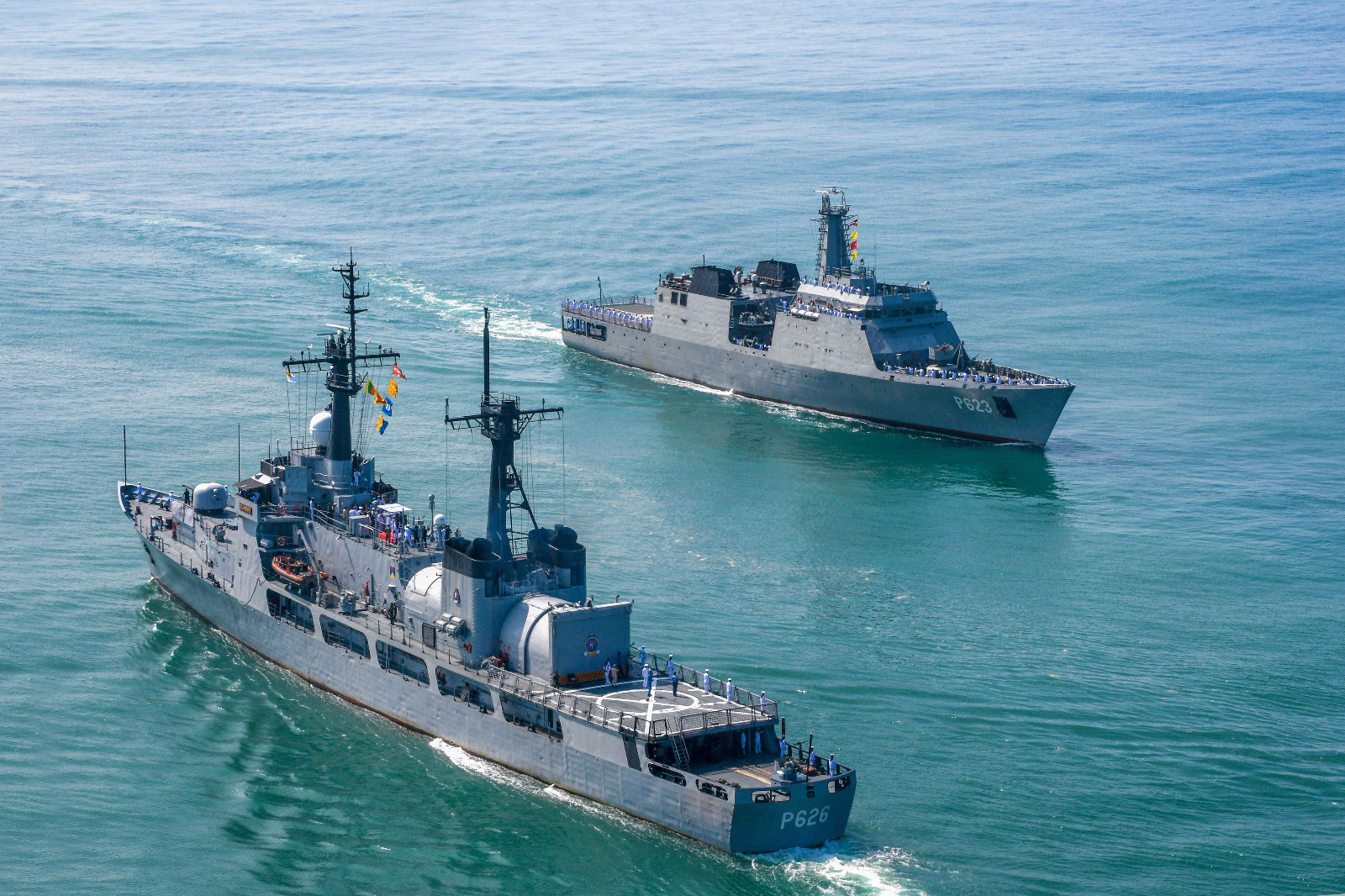
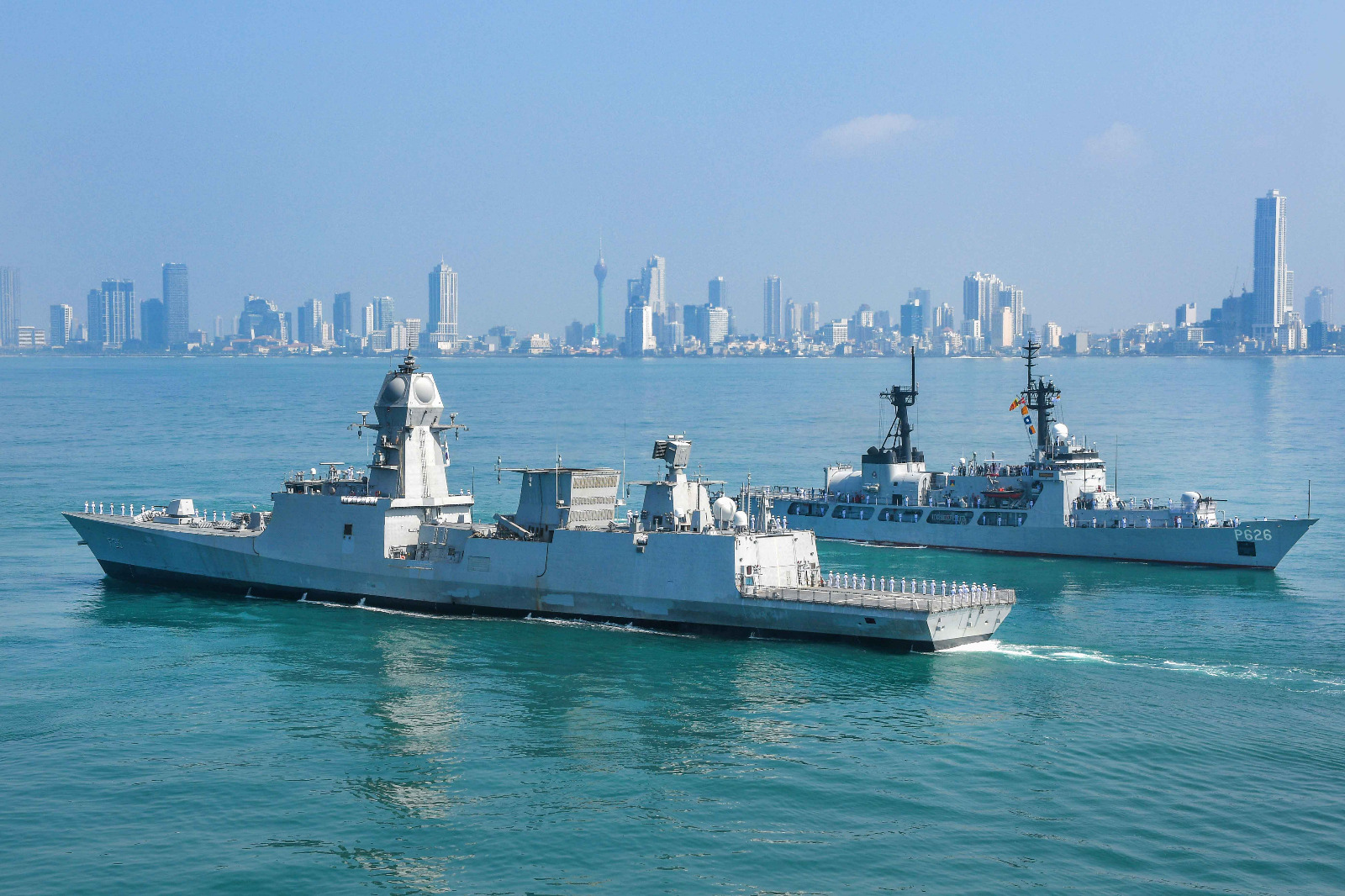
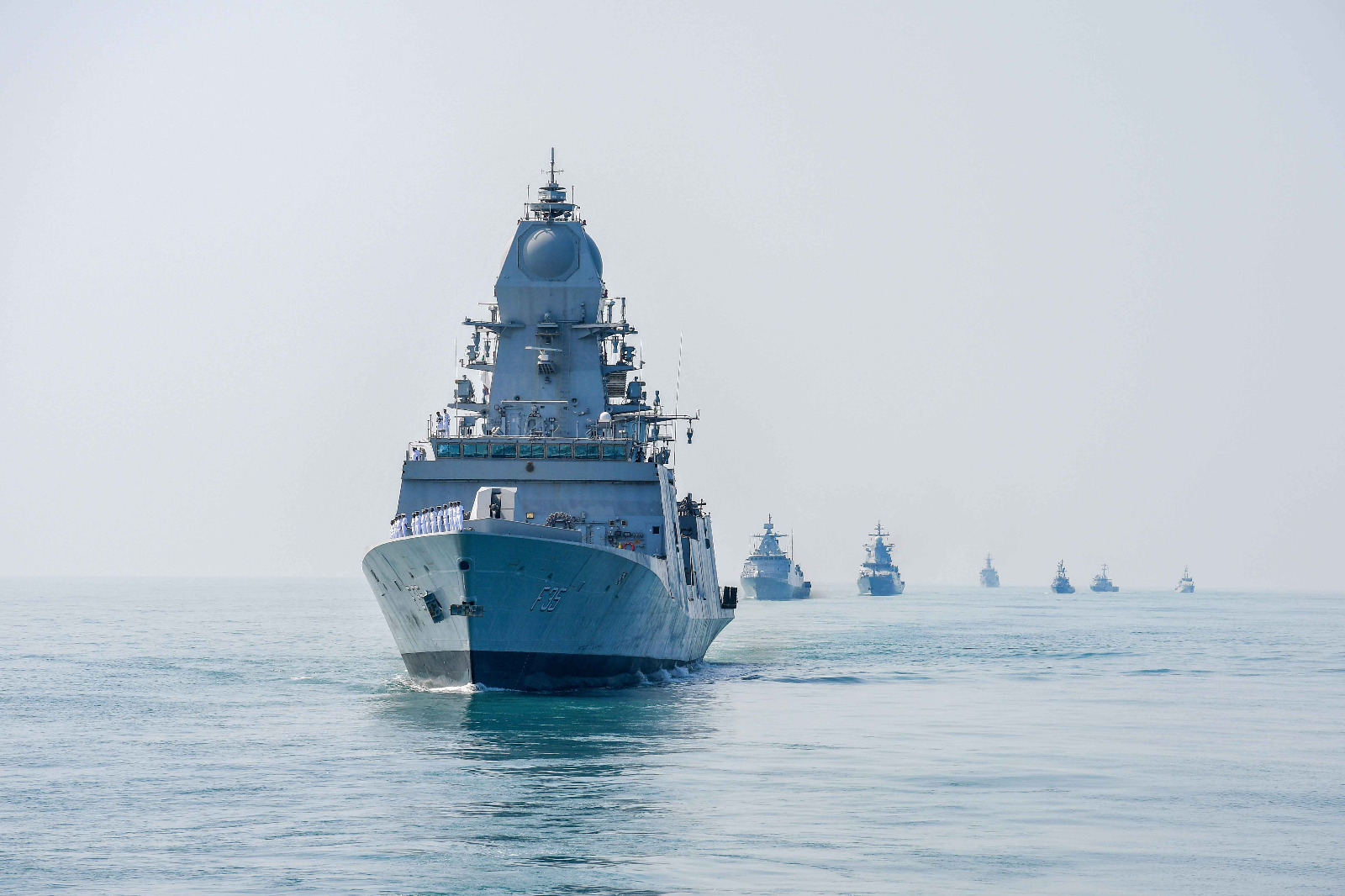
Highlighting the spirit of global and regional cooperation, the Sri Lanka Navy acknowledged the invaluable support by foreign warships, which had arrived to take part in the International Fleet Review (IFR) 2025, extending much-needed Humanitarian Assistance and Disaster Relief (HADR) operations, during the recent weather disaster in Sri Lanka.
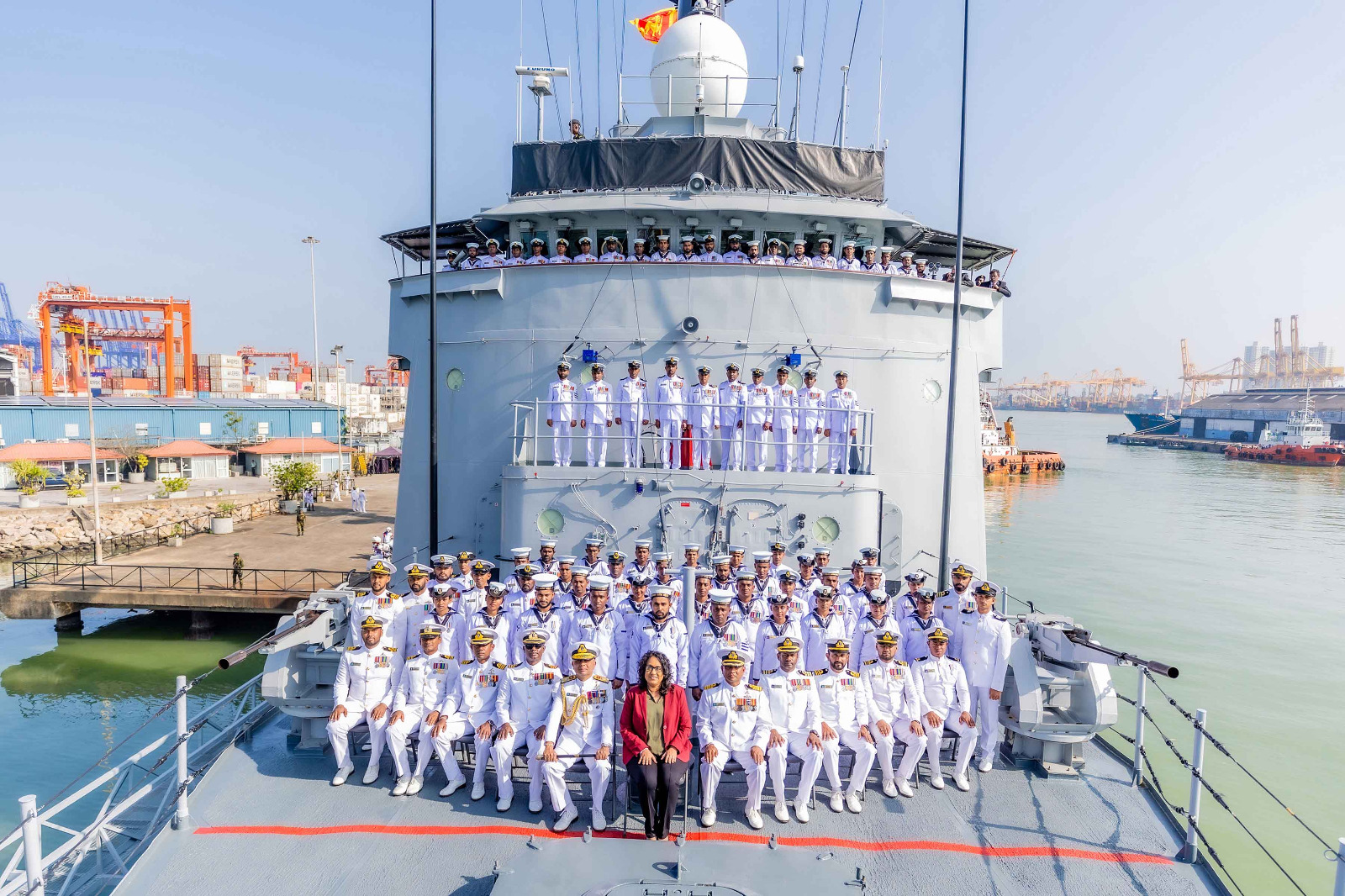
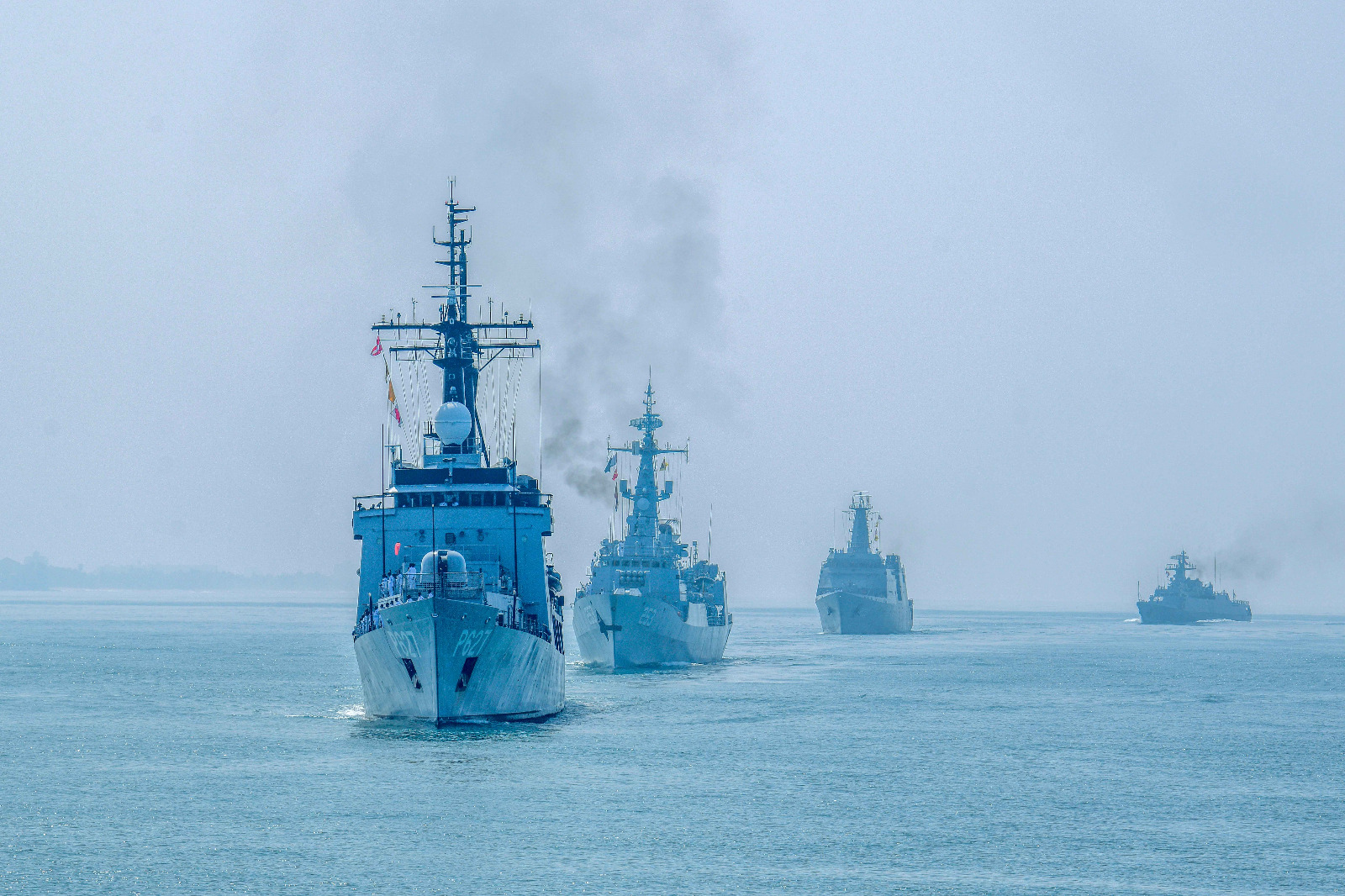
The IFR 2025 was held off the Galle Face seas, marking the milestone 75th anniversary celebrations of the Sri Lanka Navy.
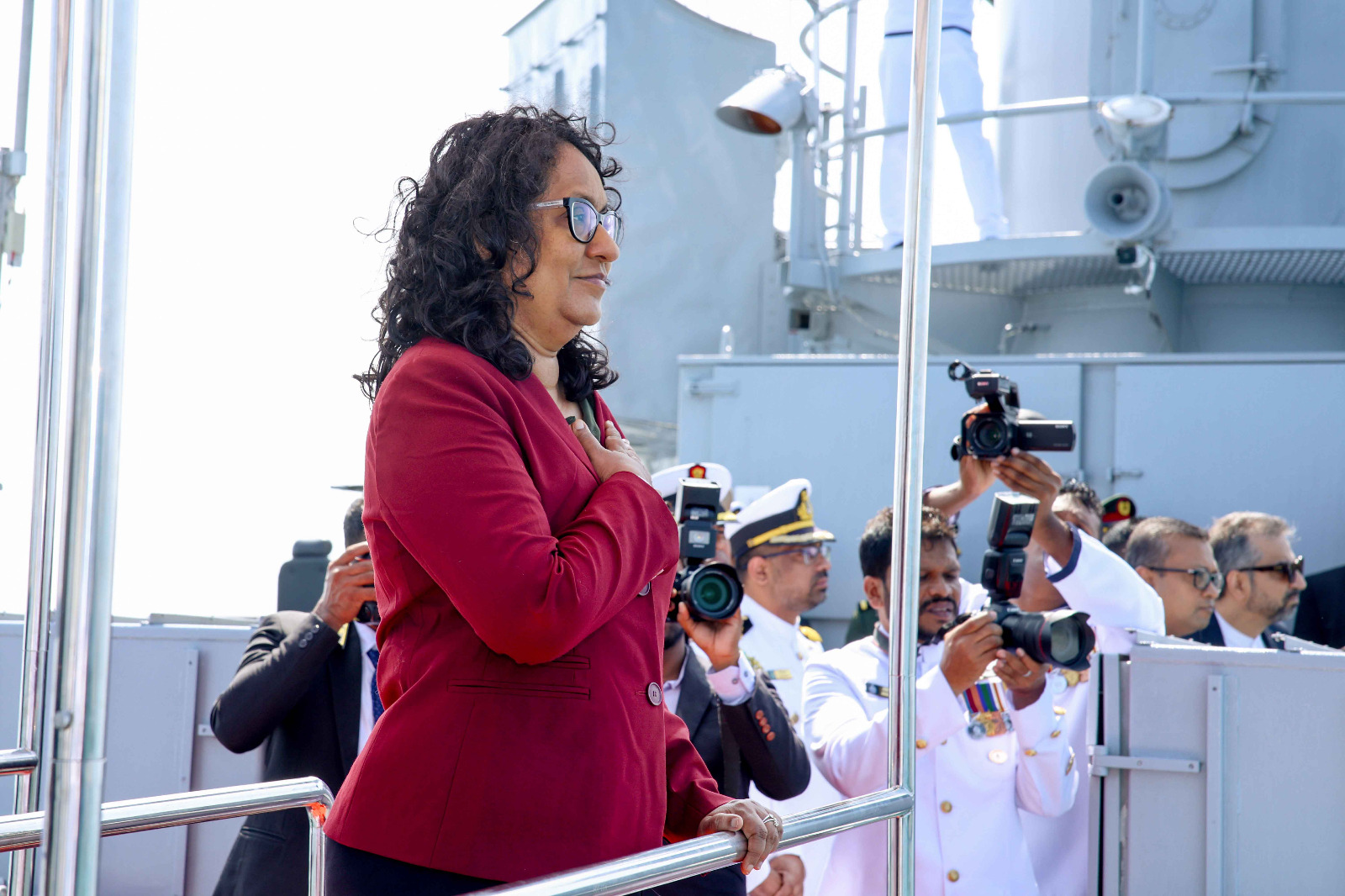
Representing the Government of Sri Lanka, Prime Minister Dr. Harini Amarasuriya graced the event and received the traditional naval salute from onboard SLNS Gajabahu, as the participating foreign warships paid their honours.
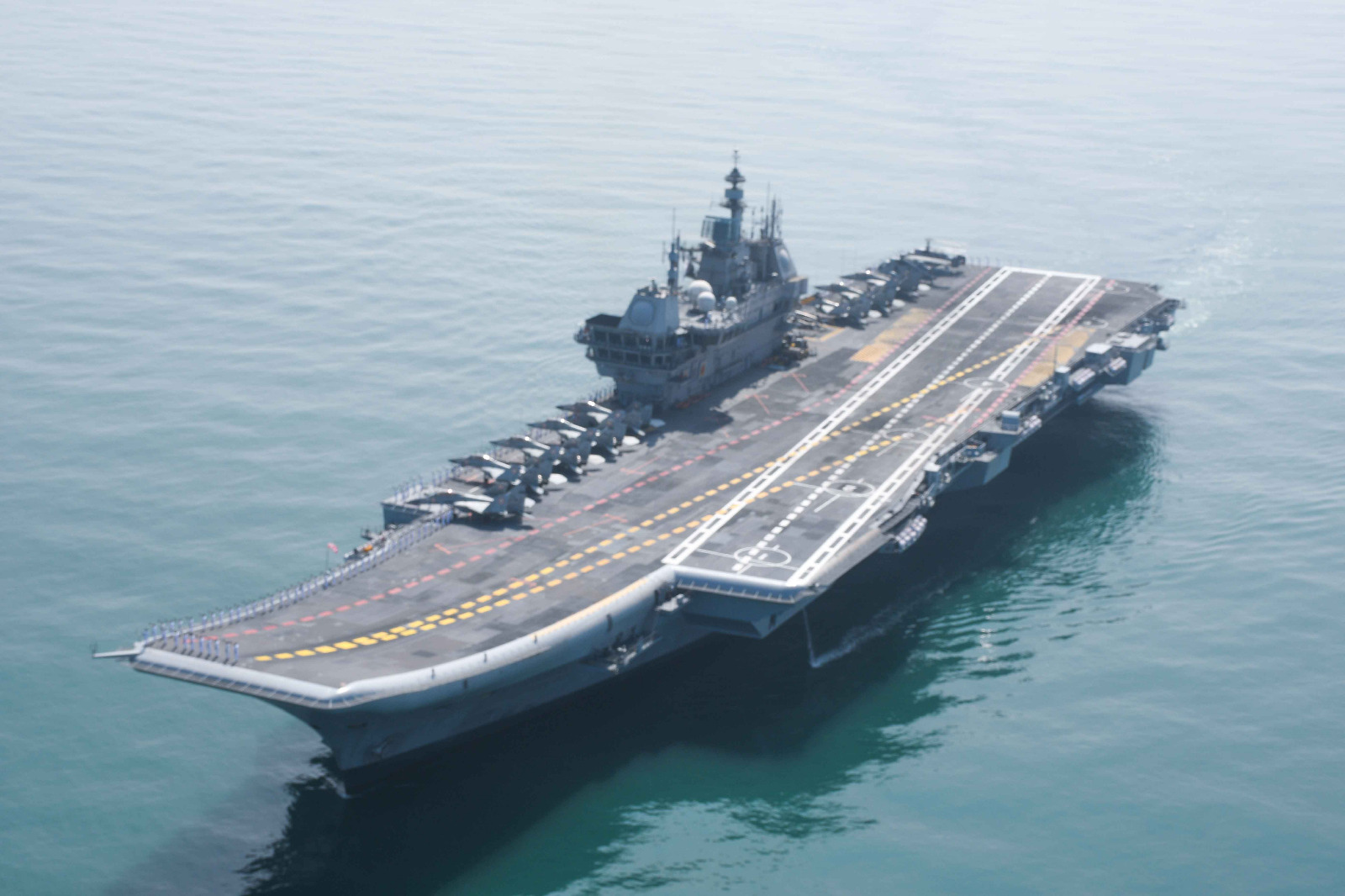
Eight (08) foreign naval warships arrived in Sri Lanka by 27 November to take part in the IFR under the theme “Sailing Strong – Together”. The participating warships included the Bangladesh Navy’s BNS PROTTOY, the Indian Navy’s aircraft carrier INS VIKRANT and INS UDAYGIRI, Iran Navy’s IRIS NAGHDI, the Maldivian Coast Guard’s CGS HURAVEE, the Royal Malaysian Navy’s KD TERENGGANU, Pakistan Navy’s PNS SAIF and Russian Navy’s GREMYASCHCHY.
Due to the disaster-situation triggered by severe weather conditions across the island, foreign warships that arrived for the event were promptly redirected to support humanitarian efforts. Particularly, helicopters deployed from the Indian Navy’s aircraft carrier INS VIKRANT and Pakistan Navy’s PNS SAIF played a praiseworthy role in search and rescue missions for affected communities.
Accordingly, the warships representing each nation joined the IFR, honouring proud maritime traditions and in acknowledgement of Sri Lanka and its Navy. Their participation also reinforced collective cooperation and partnership needed to address non-traditional maritime threats in the region, as well as natural disasters driven by climate change.
The Prime Minister expressed gratitude to a group of diplomatic officials, present on this occasion, for their support in the disaster relief operations. The officials, who were present on the occasion, represented the High Commissions and Embassies of Bangladesh, India, Iran, Maldives, Malaysia, Pakistan, and Russia in Sri Lanka.

Zohran Mamdani sworn in as New York City mayor

In pictures: New Year welcomed around the world

Foreign warships commended for their assistance during weather disaster in Sri Lanka

Machu Picchu train crash leaves one dead and dozens injured

I invite you to step into 2026 with renewed energy, hope, and determination – PM

Fairly heavy showers about 75 mm are likely at some places in the Central and Uva provinces and in Batticaloa and Ampara districts

‘Dates have the highest sugar content to fight Coronavirus’

Sunday Island 27 December – Headlines

#SundayIsland 17th December – Headlines

Sunday Island – 28th March

Sunday Island Headlines – 21 March

Sunday Island – 21st February – Headlines
-
 News7 days ago
Street vendors banned from Kandy City
-

 Sports4 days ago
Gurusinha’s Boxing Day hundred celebrated in Melbourne
-

 News7 days ago
Lankan aircrew fly daring UN Medevac in hostile conditions in Africa
-
 News2 days ago
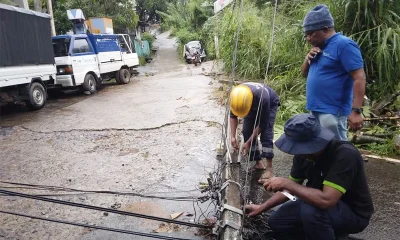
Leading the Nation’s Connectivity Recovery Amid Unprecedented Challenges
-

 Sports5 days ago
Time to close the Dickwella chapter
-

 Features3 days ago
It’s all over for Maxi Rozairo
-

 Features7 days ago
Rethinking post-disaster urban planning: Lessons from Peradeniya
-

 Opinion7 days ago
Are we reading the sky wrong?