
Foreign News
Singapore hangs drug trafficker, third such execution in a week

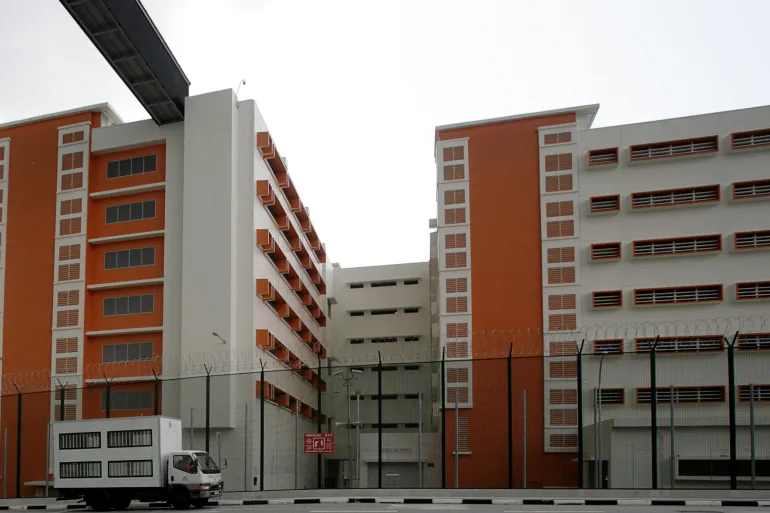
Singapore has carried out its third hanging of a convicted drug trafficker in a week despite appeals for clemency from the United Nations.
Rosman Abdullah, 55, was executed for trafficking 57.43 grams of heroin into the Southeast Asian city-state, Singapore’s drug enforcement agency said on Friday.
Rosman, a Singaporean, was “accorded full due process under the law, and was represented by legal counsel throughout the process,” the Central Narcotics Bureau said in a statement.
“Capital punishment is imposed only for the most serious crimes, such as the trafficking of significant quantities of drugs which cause very serious harm, not just to individual drug abusers, but also to their families and the wider society,” the CNB added.
UN experts had called on Singaporean authorities to spare Rosman, arguing that the death penalty does little to deter crime and that authorities had not made proper accommodations for his intellectual disabilities.
“We are gravely concerned that Mr. Rosman bin Abdullah does not appear to have had access to procedural accommodations, including individualised assistance, for his disability during his interrogation or trial,” the experts said in a statement released by the Office of the UN High Commissioner for Human Rights on Wednesday.
Amnesty International had condemned Rosman’s scheduled execution as “chilling” and “extremely alarming”.
Rosman’s hanging at Singapore’s Changi Prison comes exactly a week after the execution of a 39-year-old Malaysian and a 53-year-old Singaporean for drug trafficking.
Despite its reputation as a modern city-state and international business hub, Singapore ranks among only a handful of countries, including China and North Korea, that impose the death penalty for drug offences.
Under the country’s laws, anyone trafficking more than 500 grams of cannabis or 15 grams (0.5 ounces) of heroin faces mandatory capital punishment.
Since resuming executions in March 2022 following a hiatus due to the COVID-19 pandemic, Singaporean authorities have carried out 24 executions, including eight so far this year.
Singapore’s government, which keeps a tight rein on public protest and the media, has defended the death penalty as a deterrent against drug abuse, citing surveys that show most citizens support the law.
[Aljazeera]

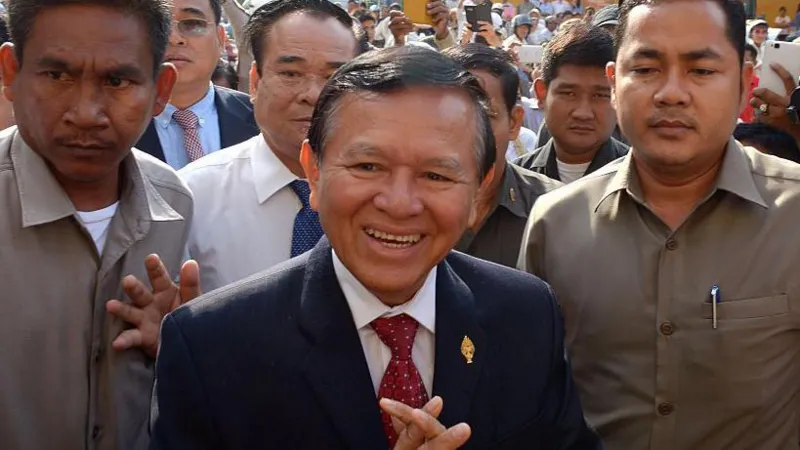
Cambodia’s former opposition leader Kem Sokha, who was serving a 27-year sentence for treason, has been pardoned, the country’s former prime minister said.
Hun Sen, who is currently Cambodia’s acting head of state, said he signed a decree pardoning Sokha on behalf of King Norodom Sihamoni.
Sokha, the former leader of the now-dissolved Cambodian National Rescue Party (CNRP), was first arrested in 2017 over a video where he said he had received support from US pro-democracy groups.
He has been held under house arrest since he was found guilty of treason in 2023. The charges have been widely derided as politically motivated by human rights groups.
Hun Sen posted on Facebook that Sokha had been “pardoned”, alongside a photo of the royal decree signed by him.
The pardon came after an appeal against Sokha’s sentence was rejected last month. But it did not include overturning a ban on the politician leaving Cambodia for five years.
Hun Sen, who ruled Cambodia for nearly four decades, has been accused of weaponising the country’s courts to target his opponents. He stepped down as prime minister in 2023 and handed power to his eldest son, Hun Manet.
However, Hun Sen still wields immense power in Cambodia and is acting head of state while King Norodom Sihamoni receives medical treatment abroad.
Sokha’s CNRP party came close to securing a shock victory in the 2013 general election victory over Hun Sen’s Cambodian People’s Party (CPP).
The opposition leader was arrested in 2017, less than a year ahead of the next general election, which the CNRP was banned from contesting.
[BBC]
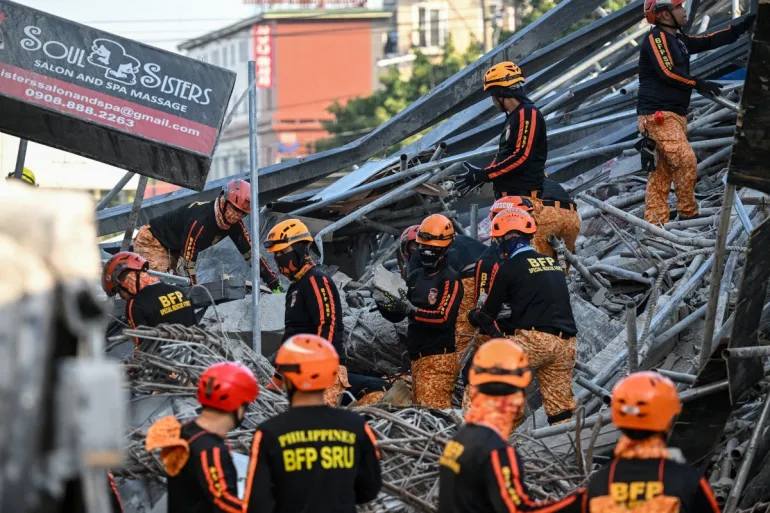
At least four people have been killed and 17 are missing after a building under construction collapsed in the Philippines, authorities say as search and rescue efforts are under way.
Rescuers retrieved at least three people on Monday from the rubble of the nine-storey building in the city of Angeles, north of the capital, Manila.
One of the victims had a pulse when he was retrieved but later died while another suffered cardiac arrest while still trapped, Maria Leah Sajili, an information officer at the Bureau of Fire Protection, said in a phone interview with the Reuters news agency.
Crews pulled the body of another person from the rubble, but it was not immediately clear if the unidentified body belonged to a person listed among the missing, rescuers said in an updated toll.
Due to that uncertainty, authorities said about 17 people were still considered missing, mostly construction workers who were sleeping at the building site when the disaster struck on Sunday.
The fourth person killed was a Malaysian tourist trapped in a budget inn, part of which was hit by an avalanche of debris from the collapsed building. Another guest at the inn was injured but managed to dash out, officials said.
At least 26 people have been rescued from the site.
Reporting from Angeles, Al Jazeera’s Barnaby Lo said hopes of finding more survivors were beginning to fade.
“Authorities are still saying the operation is a search and rescue. They will be using thermal detectors to try and find more signs of life, but if they don’t, they’re saying they will start using heavy equipment to clear the debris and retrieve people they believe are trapped under the rubble,” he said.
Officials said up to 70 people were employed at the construction site although most had gone home for the weekend.
[Aljazeera]
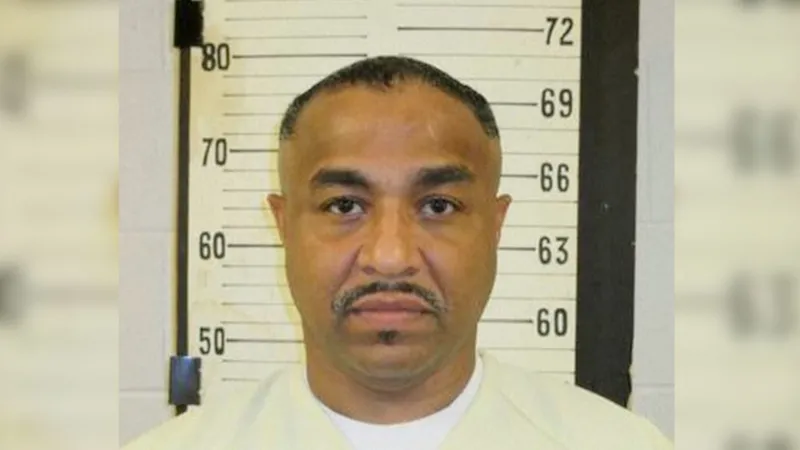
The execution of a Tennessee death row inmate has been postponed after staff were unable to find a vein to administer a lethal drug.
Tony Carruthers, convicted of kidnapping and murdering three people in 1994, was set to be executed on Thursday.
But the state’s Department of Corrections said that while its medical team did find a primary IV line to carry out the lethal injection, they could not find a suitable second vein to establish a backup line, which is required under lethal injection execution protocol.
In response, Tennessee Governor Bill Lee said he would grant Carruthers a temporary reprieve from execution for one year.
After finding the primary injection line, “the team continued to follow the protocol, but could not find another suitable vein”, the corrections department said in a statement.
“The team attempted to insert a central line pursuant to the protocol, but the procedure was unsuccessful,” the statement continued. “The execution was then called off.”
Carruthers was convicted in 1996 for the kidnapping and murders of Marcellos Anderson, his mother Delois Anderson, and Frederick Tucker.
The men were beaten and shot and the three were buried alive in a Memphis cemetery.
Carruthers’ case has drawn national attention as advocates like the American Civil Liberties Union (ACLU) have argued there were significant problems with his trial, including that he was forced to represent himself.
Carruthers himself has consistently maintained his innocence.
“His trial was riddled with errors. He was denied legal counsel. There was no physical evidence linked to him,” the ACLU said in a press release demanding the “wrongful execution” of Carruthers be called off.
“The evidence against him that was presented at trial came from informants who have since recanted their statements or been discredited,” the ACLU continued.
The nonprofit group also collected more than 130,000 signatures calling for the execution to be halted to allow for “necessary fingerprint and DNA testing”.
Advocates and community groups delivered that petition to the governor’s office at the Tennessee capitol on Monday, but Gov Lee announced the following day that Carruthers’ execution would go forward as planned.
Last week, Kim Kardashian took up Carruthers’ cause, urging her fans in a social media post to call the governor’s office and demand the DNA evidence be tested “before it’s too late”, according to US media.
In a petition for clemency filed on Wednesday, attorneys for Carruthers argued that his current mental state – resulting from Schizoaffective Disorder, Bipolar Type, and brain damage – is too impaired for him to be executed.
“These disorders manifest in current symptoms of unending, synergistic, and complex delusions that thwart a rational understanding of his imminent execution,” his lawyers argued.
In response to the news of the temporary reprieve, Maria DeLiberato, senior counsel at the ACLU’s Capital Punishment Project, said the ACLU will continue fighting on Carruthers’ behalf.
“Tennessee cannot continue torturing a man while refusing to answer serious questions about his innocence,” DeLiberato said.
[BBC]

Cambodia’s former opposition leader receives royal pardon for 27-year sentence

Death toll rises to four in Philippines building collapse; 17 missing

India gifts 134 cabs to Sri Lanka Police

Landslide Early Warnings issued to the Districts of Colombo, Gampaha, Kalutara, Kegalle, Nuwara Eliya and Ratnapura extended till 1600 hrs on Tuesday [26]

Attacks on Ebola centres intensify in eastern DRC amid outbreak fears

Oil prices fall amid mixed signals on US-Iran peace deal

‘Dates have the highest sugar content to fight Coronavirus’

Sunday Island 27 December – Headlines

#SundayIsland 17th December – Headlines

Sunday Island – 28th March

Sunday Island Headlines – 21 March

Sunday Island – 21st February – Headlines
-

 Features6 days ago
Octopus, Leech, and Snake: How Sri Lanka’s banks feast while the nation starves
-
 Sports6 days ago
Sri Lanka women’s volleyball team ready for Central Asian challenge
-
 Opinion5 days ago
Murder of Ehelepola family, Bogambara Wewa and Sightings of Wangediya
-
 News5 days ago
Steps underway to safeguard Sri Lanka’s maritime heritage
-
 Features2 days ago
The NPP’s pivot to the past
-

 Editorial5 days ago
A play without its protagonist
-

 Business4 days ago
Historic launch of CCWE Fashion Week & International Summit 2026
-

 Opinion4 days ago
The need to reform Buddhist ecclesiastical order