
Features
Significance of Ceylon-China Trade Agreement of 1952

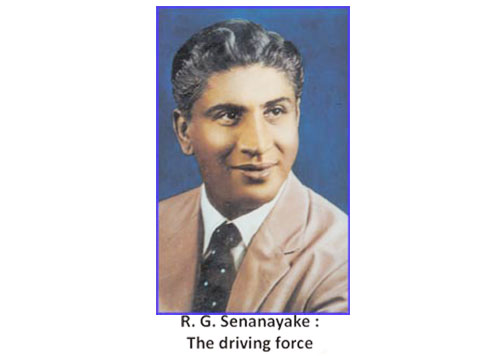
by Dr. J. B. Kelegama
Excerpts from the keynote address at the 50 th anniversary celebrations of the historic “Rubber-Rice Pact” between Sri Lanka and China at the BMICH on December 20, 2002
I am honoured by the invitation of the Sri Lanka-China Business Cooperation Council and the Sri Lanka-China Society to deliver today the keynote address on the occasion of the golden jubilee celebrations of the historic Rubber-Rice Pact between Sri Lanka and China signed in December 1952.
I accepted this invitation with alacrity and pleasure, firstly because I have conducted negotiations with China and actually implemented the Agreement over a period of about 12 years in my capacity as a senior government official, secondly, because I have visited China seven or eight times both as a government official and a UN consultant and thirdly, because I have been a student of China’s economic development for many years and written and published several articles on China’s economic and trade issues, under my own name as well as under pen-names.
Further, I had the privilege of speaking on this subject at the death anniversary of Mr. R. G. Senanayake some years back, on the invitation of no less a person than Mrs. R. G. Senanayake herself.
The Ceylon-China Trade Agreement of 1952 was undoubtedly the most useful trade agreement negotiated by Sri Lanka and one of the most successful and durable trade agreements in the world, having been in operation for 30 years. It is therefore useful to assess the significance of the agreement and to refresh our memory regarding the circumstances that led to it and the person who played the key role in bringing it about – R. G. Senanayake.
Rice shortage
1952 was a very bad year for Sri Lanka. Premier D. S. Senanayake had died and Dudley Senanayake had just formed a new government when the country had to face a world shortage of rice.
The Government was committed at that time to provide every adult person with two measures of rice per week at a subsidised price, but rice was not available from the traditional suppliers – Burma, Thailand and Indo-China – and the world market price of rice had risen by 38 per cent between 1951 and 1952.
Sri Lanka was therefore compelled to buy 60,000 tons of rice from the USA and 10,000 tons from Ecuador at high prices, although this variety of rice was not suitable to the Sri Lankan palate. She was however not in a position to buy all the rice she needed at this high price as her foreign exchange resources were limited; besides, distribution of this rice would have pushed the food subsidy bill to intolerable levels.
The country was also facing a foreign exchange crisis in 1952 caused by a dramatic fall in her export prices brought about by the quick end of the Korean War boom. The end of the Korean War and the drastic reduction of commodity purchases by the West – in particular, of natural rubber by the United States – led to a collapse of Sri Lanka’s export prices by 23 per cent between 1951 and 1952.
The price of natural rubber declined by 36 per cent, of tea by 10 per cent, and of coconut oil by 40 per cent. Import prices increased by 8 per cent and terms-of-trade fell by 28 per cent. The trade surplus of Rs. 345 million in 1951 turned into a trade deficit of Rs. 200 million in 1952 and external assets fell by 30 per cent. In this critical situation Sri Lanka attempted to negotiate with the USA for a loan of US$50 million and for favourable prices for rubber exports and rice imports, but failed. The country was facing an unprecedented crisis: she could not find enough rice to feed her people and she had no prospect of a favourable market for her rubber exports.
It was in this grim setting that R. G. Senanayake, the then Minister of Commerce, played his master stroke. He found out that China was prepared to sell rice to Sri Lanka in exchange for rubber. At that time China was unable to obtain rubber as a result of prohibition of rubber exports from Malaya following a UN resolution preventing the sale of rubber to China. Thus China wanted rubber as badly as Sri Lanka wanted rice. R. G. Senanayake was quick to realise the mutual benefits of trade with China, and negotiated the Ceylon-China Trade Agreement or the Rubber-Rice Pact in Beijing towards the end of 1952. He stated in Parliament.
“We waited for foreign aid, foreign assistance. As you know Sir, over and over again, we made appeals for Point Four aid, we waited four long years. We have got in the form of assistance only a cook for the Kundasale Girls’ School. Therefore in these circumstances, it was necessary that we should go where it was possible to get our requirements.”
Opposition
The Agreement was negotiated in the teeth of opposition from some of his own colleagues in the Cabinet. Indeed, the opposition of J. R. Jayewardene, the Minister of Finance, was well known. The Cabinet was advised by the newly created Central Bank under an American Governor. Opposition also came from R. G. Senanayake’s predecessor in the ministerial post, from the American Government, and from some of the local newspapers which carried on a virulent press campaign against any dealings with Communist China. S. P. Amarasingham’s informative book “Rice and Rubber: The Story of China-Ceylon Trade” provides a detailed account of the strong opposition R. G. Senanayake had to face in negotiating the Agreement.
The American Government invoked the Battle Act which prevented it from giving aid to countries selling strategic materials to Communist countries and cut off aid to Sri Lanka. In addition, she stopped selling sulphur needed by Sri Lanka’s rubber plantations. This was the price that had to be paid for trading with China.
Prime Minister, Dudley Senanayake, however, fully backed his Minister of Commerce and was prepared to pay this price; he realised that the benefits to Sri Lanka from the agreement far outweighed losses consequent to the cutting-off of American aid. He argued:
“Ceylon’s old trade pattern has been knocked out by changes in the world market and we have to seek new markets for our needs of essential foodstuffs and for our exports.”
Rebutting the charges that the Trade Agreement was opening the door to communist influences in Sri Lanka, he pointed out:
“Communism thrives in many places not through an understanding of that particular ideology but through poverty and want. I am confident that our Trade Agreement with China will instead of opening doors to communism help us to stand firmer against it.”
It is a tribute to the two Senanayakes that they displayed remarkable pragmatism and courage in negotiating the Trade Agreement. They did not allow their prejudices or ideological considerations to stand in the way of deciding what was in the best interests of the Country; nor were they intimidated by threats of big powers.
R. G. Senanayake stated:
“I have always held the view that political ideologies should not stand in the ways of countries trading with each other if that trade is to their mutual advantage.”
He foresaw as far back as 1952, the emergence of China as a world power. He stated in a speech: “Talking of China in particular, it would be unrealistic to ignore a nation of 500 million in our continent with a united and cohesive government for the first time in many centuries. She is bound to be a major factor in world trade.”
As he foresaw, China has now become the seventh largest exporter in the world and the largest trader among developing countries whose purchases and sales influence the world markets. In 2000 for instance, her exports were US$249 billion and imports US$225 billion. If we include Hong Kong’s trade with China (as the greater part of Hong Kong’s trade is entrepot trade with China) then China becomes the fourth largest exporter in the world after the USA, Germany and Japan, its exports amounting to $452 billion.
The Agreement
The Trade Agreement signed in 1952 was for five years and renewable; there was, however, an annual Trade Protocol specifying the quantities of commodities to be exchanged in the ensuing year, which had to be negotiated every year. The trade was based on barter – exports and imports to balance every year; only the outstanding balance at the end-of-the-year was to be settled in foreign exchange.
Trade however was rarely balanced in the following years but the outstanding balance was generally carried forward to the next year without settlement in foreign exchange.
In the first part of the agreement there were specific commitments by Sri Lanka to purchase rice, and for China to buy rubber; the values were to balance. Thus in 1953, Sri Lanka agreed to buy 270,000 tons of rice from China which in turn agreed to purchase 50,000 tons of rubber; these quantities were exchanged on the basis of world market prices and were equal in value. In addition, China agreed to pay a premium price for rubber over the world market (Singapore) price and further, handling charges for rubber exports in Colombo.
Thus in 1953, China paid for Sri Lanka rubber Rs. 1.74 per lb. whereas the average world market price was Rs. 1.05 per lb. This premium varied with every five-year agreement. The handling charge which was fixed at five cents per lb. too varied in subsequent years. China also agreed to supply rice to Sri Lanka below market prices – at 54 pounds or Rs. 720 per ton in 1953.
Thus Sri Lanka benefited both ways from the agreement. The second part of the agreement covered trade in other commodities – those Sri Lanka and China wanted to buy and sell – but without specific commitments; the total value of exports and imports however were expected to balance every year. In view of the substantial mutual benefits, the Trade Agreement was renewed every five years by R. G. Senanayake’s successors in his ministerial post – in 1958, 1962, 1967, 1972 and 1977 – and was wound up, in the sense that the barter element was given up, in 1982 when it was found that the barter of rice and rubber was no longer in mutual interest. Sri Lanka had almost reached self-sufficiency in rice and needed only very small quantities from abroad while China was able to purchase rubber from several rubber producing countries without restriction and without paying a premium.
R. G. Senanayake paid an important tribute to China after negotiating the Trade Agreement, when he concluded his Cabinet paper on the subject in the following words:
“We noted on the Chinese side the absence of the spirit of bargaining and haggling on comparatively small points. On the other hand, they gave us the impression of being large-minded and forthright in their dealings.”
I can confirm this as I conducted trade negotiations with China over a dozen times. Benefits
The significance of the Ceylon-China Trade Agreement lies in the positive benefits Ceylon received during the thirty years of its duration. Those benefits exceeded expectation as China expressed her gratitude to Sri Lanka for supplying her rubber when other rubber producers were not prepared to do so and in spite of the opposition and denial of aid by the US Government. These benefits are discussed in detail below.
(1) The premium over world market price for rubber was estimated between Rs. 68 and Rs. 95 million in 1953 alone. It was about 56 per cent more than the world market price in that year. No estimates are available for successive years, but the premium was substantial, for even a ten cents premium meant Rs. 200 per metric ton and Rs. 10 million for 50,000 tons.
(2) The handling charge of 5 cents per lb., in 1953 was equal to Rs. 100 per metric ton or Rs. 5 million for 50,000 metric tons of rubber. As the charge and quantity varied from year-to-year the total sum too changed, but it was significant.
(3) The sale of rice by China to Sri Lanka at prices below the world market resulted in a net benefit of about Rs. 92 million in 1953 alone. Although there was a net benefit in the following years, no estimates have been made. China agreed to sell rice at the same price Burma sold rice to Sri Lanka with certain adjustments for differences in quality and transport costs. China never tried to exploit the rice market to her advantage.
Even when she did not have an exportable surplus, she supplied Sri Lanka with rice direct from Burma under a triangular trade arrangement, but charged us only the price she paid Burma – not a cent more – even when she had reason to charge something more.
(4) As a result of the agreement a grant of about Rs. 125 million was extended by China during the ten-year period 1958-68 to meet part of the costs of rubber replanting. Thousands of acres of uneconomic rubber land were replanted thereby revitalizing our rubber industry.
(5) China continued to purchase Sri Lanka’s rubber at a premium even when other markets were prepared to sell her rubber at lower prices.
(6) Sri Lanka found an assured market for her rubber and an assured source of supply for her rice and insured herself to a great extent against vagaries in the world market. She also diversified her export and import markets.
(7) The Trade Agreement benefitted the Ceylonese traders as against non-national traders by creating a new market for them. In spite of the opposition from non-national trading establishments – particularly British managing agency houses – R.G. Senanayake reserved the export of rubber to China for the Ceylonese traders. He also reserved China for the Ceylonese importer under his policy of Ceylonizing the external trade of the country.
(8) The Trade Agreement laid the foundation for expanding trade between Sri Lanka and China even after the barter agreement ceased to operate. In 2001 for instance China and Hong Kong (which mainly re-exports China’s products) constituted the largest supplier of imports valued at Rs. 64 billion to Sri Lanka.
(9) Economic co-operation between Sri Lanka and China began with the Trade Agreement. It was expanded by leaps and bounds with establishment of diplomatic relations with China by S.W.R.D. Bandaranaike and closer relations under Sirimavo Bandaranaike as symbolised by the Bandaranaike Memorial International Conference Hall (BMICH), textile mills at Veyangoda and Pugoda, other grants and interest-free loans. Economic co-operation thereafter is demonstrated by the superior courts complex, Gin ganga scheme and assistance to restore Abayagiri dagaba.
(10) The Ceylon-China Trade Agreement with its price concessions for both Sri Lanka’s exports and imports and assistance to rubber replanting by China was perhaps the first instance of a developing country giving economic assistance to another developing country. In other words, it was the first time where economic co-operation among developing countries or South-South co-operation took place.
(11) Finally, Ceylon-China Trade Agreement and closer commercial and economic relations laid the foundations for a firm friendship between Sri Lanka and China, which was strengthened, expanded, and cemented by the Bandaranaike governments. China’s friendship for Sri Lanka has been demonstrated not only in trade and economic co-operation but also in times of national crisis. There was only China to warn other countries to ‘keep their hands off Sri Lanka’ at the height of the Indo-Lanka crisis in June-July 1987. This friendship was demonstrated again thereafter by the visit of Prime Minister of China and his offer of Rs. 375 million in economic assistance.

Features
Matrimony in crisis: Economic volatility, youth outflow, and changing fabric of Sri Lankan families – I


by Prof. M. W. Amarasiri de Silva
Sri Lanka’s official crude divorce rate is among the lowest in the world, sitting at roughly 0.15 divorces per 1,000 people per year, which translates to about nine legally finalised divorces, daily, nationwide. However, legal scholars and sociologists emphasise that this figure does not reflect a lack of marital distress or separation. Instead, the low official number is primarily a result of the country’s stringent legal framework, complex judicial procedures, and deep-seated socio-cultural factors that prevent couples from seeking formal legal dissolutions.
A primary driver of the low official rate is Sri Lanka’s fault-based legal framework under general civil law. Unlike jurisdictions that allow “no-fault” divorce or swift mutual consent dissolutions, Sri Lankan civil law requires a petitioning spouse to legally prove specific statutory grounds in court, such as adultery, malicious desertion, or incurable impotence present at the time of marriage. Proving these fault grounds often leads to protracted, emotionally exhausting, and financially draining court battles, discouraging many individuals from pursuing a final decree. Furthermore, personal status matters for Muslim Sri Lankans are governed separately under the Quazi court system via the Muslim Marriage and Divorce Act, which operates under distinct statutory procedures.
Because navigating the formal legal system is so cumbersome and costly, hundreds of couples choose informal separation rather than court litigation. Living apart without legally dissolving the marriage on paper remains a common alternative, meaning official marriage registries undercount the true rate of domestic breakdown. Additionally, strong cultural norms, family expectations, economic dependencies, and social stigma—particularly affecting women—exert significant pressure on spouses to remain legally married even when cohabitation has permanently ceased.
Sri Lanka and other countries
Comparing Sri Lanka, India, and the United States reveals stark contrasts in divorce rates, legal frameworks, and societal attitudes toward marital dissolution. Statistically, Sri Lanka reports an official crude divorce rate of approximately 0.15 divorces per 1,000 people, annually, while India reports a rate of roughly 1 per 1,000. In contrast, the United States records a significantly higher crude divorce rate of around 2.5 per 1,000 people, with roughly 40% to 45% of first marriages ending in divorce. However, these figures reflect distinct judicial mechanisms and cultural expectations rather than a simple measure of marital harmony.
The primary legal distinction lies in the availability of “no-fault” divorce mechanisms. All 50 US.states allow no-fault divorce, enabling either party to dissolve a marriage by citing irreconcilable differences without assigning blame. India occupies a middle ground, where major personal law codes—such as the Hindu Marriage Act—permit divorce by mutual consent, provided the couple undergoes a court-mandated waiting period intended for potential reconciliation. Sri Lanka maintains the most restrictive regime among the three, requiring a petitioning spouse under general civil law to prove specific statutory faults, such as adultery or malicious desertion, through formal adversarial court proceedings.
Pluralistic personal law systems also shape how marital disputes are handled in South Asia compared to North America. Both Sri Lanka and India apply distinct personal status laws, based on religious or ethnic identity, such as Kandyan and Muslim laws in Sri Lanka, or Hindu, Muslim, and Christian personal codes in India. In contrast, the US relies strictly on uniform state civil codes for property division, spousal maintenance, and child custody, eliminating religious adjudication from the legal process.
Official divorce rates in Sri Lanka and India significantly undercount actual marital breakdowns. High legal costs, protracted court battles, and strong social stigma often lead estranged couples in both South Asian nations to choose informal, permanent separation over formal legal proceedings. In the United States, clear statutory procedures for asset distribution and custody arrangements encourage individuals to formally conclude their marriages through the judicial system rather than living in legal limbo.
Unmarried Sri Lankans
Data from the Department of Census and Statistics reveals that the proportion of the population that has never married has risen dramatically to over 40 percent. This shift reflects a major demographic transition characterised by delayed marriages, changing socio-economic priorities, and economic instability that has led many young adults to postpone or forego marriage altogether.
While both men and women are increasingly remaining unmarried, the trend manifests differently across genders due to distinct socio-demographic factors. Men generally marry at an older age than women—with the average age at first marriage rising toward 29 years for men compared to around 25 to 26 years for women. As a result, in younger adult cohorts, a noticeably higher percentage of men remain single at any given time.
Conversely, a different demographic dynamic affects women in older age cohorts. Sri Lanka exhibits a distinct gender imbalance in its total population, with women outnumbering men—there are roughly 93 males for every 100 females nationwide. This imbalance, combined with higher female life expectancy and significant labour migration of men seeking overseas employment, creates a structural shortage of eligible partners for women in certain age groups, contributing to a growing number of women remaining unmarried or living alone in later life.
The marriage expectations and ages by gender can be inferred through matrimonial advertisements in newspapers. Matrimonial advertisements, published in leading Sri Lankan weekend newspapers, offer a revealing look into the country’s shifting demographic trends and evolving marital preferences. These classified sections, traditionally placed by parents or family elders, rather than the individuals themselves, reflect a structured marriage market where personal expectations, economic security, and socio-cultural compatibility intersect.
The age profile of individuals advertised in these columns mirrors the broader national trend toward delayed marriage. For women, the typical age range featured in listings spans from 24 to 32 years, while for men, advertisers generally range between 28 and 38 years. Furthermore, advertisements for individuals in their late thirties, forties, or older have become increasingly common, particularly in notices seeking secondary marriages following a legal divorce or the loss of a spouse. The concentration of listings in older age brackets highlights how higher educational pursuits, career establishment, and economic challenges have pushed marriage further into adulthood.
Horoscope compatibility
Expectations detailed in newspapers emphasise a combination of traditional socio-cultural criteria and modern status indicators. Horoscope compatibility remains a fundamental requirement across a large majority of listings, alongside considerations of caste, religion, and regional background. Personal character is heavily weighted, with advertisements for men frequently specifying a desire for non-smoking, non-drinking partners, while descriptions for women routinely emphasise moral standing, domestic capability, and physical attributes.
Socio-economic standing and professional qualifications serve as primary benchmarks in prospective partner selection. Listings placed by women’s families heavily prioritise male suitors with secure employment in established sectors, such as medicine, engineering, law, management, or government service, alongside evidence of financial stability or asset ownership. Advertisements for men similarly seek educated and career-minded partners, though often balancing professional credentials with traditional family values. Notably, both publications feature a substantial proportion of listings placed by or seeking non-resident Sri Lankans and dual citizens, reflecting the strong pull of foreign residency and international mobility as desirable attributes in prospective matches.
Horoscope matching and dowry expectations in Sri Lankan matrimonial advertisements reflect a delicate interplay between longstanding cultural traditions and modern socio-economic realities. These two elements serve as primary filtering mechanisms during the initial stages of family-mediated matchmaking, helping families gauge spiritual alignment, family background, and long-term economic compatibility.
Horoscope compatibility remains a nearly indispensable prerequisite across a vast majority of Sinhala and Hindu marriage notices. Advertisements routinely include explicit phrases such as “send copy of horoscope with reply” or “astrologically compatible match sought,” underscoring the belief that planetary positions at birth dictate marital longevity, health, and mutual prosperity. Families often consult professional astrologers (nakath karayo) to compare charts (Janma-pathra) before engaging in direct personal meetings. Beyond general alignment, specific astrological conditions—such as Kuja Dosha or planetary placements associated with delayed marriage—are actively declared or sought out to ensure balanced pairings, making astrological clearance the first major gatekeeper in the proposal process.
Dowry expectations
Dowry expectations have undergone a significant transformation in contemporary Sri Lanka, evolving from explicit demands for wealth into subtle indicators of financial security and asset sharing. While direct references to cash or specific dowry amounts have largely disappeared from modern newspaper classifieds due to changing social norms, advertisements routinely signal material contributions through references to family assets. Listings placed by a bride’s family frequently highlight inherited residential properties, land parcels, vehicles, or substantial financial savings, framed positively as background assets rather than a mandatory transaction. Conversely, advertisements placed by grooms’ families often emphasise secure professional income and housing ownership, establishing an expectation of shared socio-economic parity between both lineages.
Ultimately, the portrayal of horoscopes and dowry in matrimonial advertisements illustrates how Sri Lankan families preserve traditional cultural safeguards while adapting to contemporary legal and economic environments. Horoscopes continue to function as an essential spiritual and psychological reassurance of harmony, while evolving dowry practices reflect a mutual investment strategy focused on helping young couples navigate modern economic pressures and establish financial stability.
Digital matrimonial platforms
Digital matrimonial platforms, dedicated matchmaking websites, and social media networks are reshaping traditional matchmaking practices in Sri Lanka. While the core objectives—securing compatible, stable, and family-approved partnerships—remain consistent, the shift to digital infrastructure has decentralised the matchmaking process, giving individuals greater agency while altering how personal data and socio-economic expectations are presented.
Specialised digital matrimony sites, such as Poruwa.lk and Matchmaker.lk, have modernised print classifieds by replacing brevity with structured digital profiles. Unlike newspaper advertisements, which are constrained by line limits and word costs, digital profiles allow candidates, or their families, to upload detailed personal biographies, verified educational certificates, career histories, and multiple photographs. Privacy controls on platforms, like Poruwa.lk, allow users to restrict photo visibility and obscure contact details until a mutual interest is established, offering safety and discretion that public newspaper columns cannot provide.
Social media platforms, particularly dedicated Facebook groups and WhatsApp channels, have democratised proposal exchanges across urban and rural demographics alike. These informal digital groups allow families and self-registering candidates to post notices directly without incurring publishing fees or relying on commercial matchmaking brokers. The interactive nature of social media enables direct messaging between interested parties, reducing the initial lag time typical of postal or phone responses generated by newspaper listings.
Digital matchmaking has also transformed how traditional criteria like horoscopes and dowry assets are handled. Many online platforms integrate digital horoscope software directly into their search filters, enabling automated chart matching before contact is initiated. Similarly, asset preferences are often communicated through structured fields detailing property ownership, foreign residency status, or career mobility, rendering explicit dowry discussions obsolete. By streamlining preliminary vetting, digital platforms allow Sri Lankans, especially young professionals and expatriates, to balance traditional familial expectations with modern efficiency.
Family-mediated marriages
While subtle differences exist in framing, with a popular English weekly in Sri Lanka leaning toward urban, English-speaking, and expatriate circles, and its Sinhala counterpart serving a wider Sinhala-speaking demographic, both mediums demonstrate that family-mediated marriage in Sri Lanka remains deeply anchored in structured compatibility, educational status, and long-term financial security.
Socio-economic factors also drive these decisions differently across genders. For many men, the financial burden of establishing an independent household, securing stable employment, and meeting traditional expectations of financial provision causes prolonged delays in marriage. For women, expanded educational attainment and changing lifestyle expectations mean that marriage is increasingly viewed alongside career goals or personal independence, rather than as an immediate or mandatory life milestone.
The severe economic volatility and escalating inflation experienced in Sri Lanka have acted as direct catalysts in altering traditional family planning and delaying marriage. Establishing a new household requires significant upfront capital, including funding wedding ceremonies, housing deposits, and securing household goods. With sharp rises in the cost of living and persistent real wage stagnation, young adults face immense financial barriers, prompting couples to postpone marriage or avoid formal marital commitments until economic conditions stabilise. (To be continued)

by Dr Debapriya Mukherjee
Former Senior Scientist
Central Pollution Control Board
Human beings often treat nature as an unlimited storehouse, clearing forests, polluting rivers and degrading soil for immediate gain. Animals and plants, without environmental policies or scientific knowledge, survive through relationships with their surroundings and other forms of life. An elephant needs connected habitats; a bee depends on flowers; a tree supports organisms while drawing nutrients from the soil. Humans can understand these connections, yet too often act as if their consequences did not concern us.
Elephants remind us that habitats cannot survive as isolated islands. Elephants disperse seeds and shape vegetation through feeding. Roads, railway lines, mines and settlements can obstruct their movements, increasing the risk of accidents and encounters with people. An elephant entering a village may reflect not only animal behaviour but also habitat fragmentation or changes in access to food and water. Protecting elephants therefore means conserving the corridors connecting essential habitats, not merely preserving separate patches of forest.
Vultures reveal the value of nature’s unsung services. These scavengers consume carcasses and help remove decaying animal material. India’s vulture crisis, linked particularly to exposure to the veterinary drug diclofenac, showed how a chemical used for one purpose can disrupt a distant ecological process. A creature often dismissed as unattractive may perform a service whose loss has far-reaching consequences.
Bees and bats reveal the biological foundations of food security. Bees pollinate many crops and wild plants. Certain bats also pollinate flowers, disperse seeds or consume insects. Habitat destruction, pesticide exposure and loss of food sources can threaten these contributions. Agricultural success cannot be judged by yield alone; the health of pollinators and the wider landscape also matter.
-

- Frog
-

- Bee
Frogs can warn us of environmental disturbance. Many amphibians have permeable skin and depend on both aquatic and terrestrial habitats. Some populations are sensitive to pollution, pesticides, habitat loss and disease. Frogs also consume insects and provide food for birds, snakes and other animals. Their decline does not identify a particular pollutant by itself, but it can warrant investigation. A pond may still hold water while losing important elements of ecological health.
Earthworms and termites reveal the living world beneath our feet. Earthworms contribute to soil structure and organic-matter decomposition. Termites recycle plant material and influence soil formation in many environments. Alongside fungi and bacteria, these organisms sustain processes essential to soil health. This matters to agriculture: applying cow dung or vermicompost does not guarantee a good crop if soil conditions and nutrient requirements are unknown. Agricultural inputs should be chosen according to soil properties, water availability and crop needs.

“Elephants remind us that habitats cannot survive as isolated islands. Elephants disperse seeds and shape vegetation through feeding. roads, railway lines, mines and settlements can obstruct their movements, increasing the risk of accidents and encounters with people.” (A file photo by picture by Dilum Alagiyawanna.)

Mangroves
Fig trees and native grasses show why conservation must respect each habitat’s character. Many fig species depend on specialised fig wasps for pollination, while their fruits feed birds, bats and other animals. Native grasses provide food and shelter for insects, birds and grazing animals. Planting trees everywhere is therefore not necessarily ecological restoration. Converting natural grasslands into tree plantations can damage habitats adapted to open landscapes. Conservation must protect the ecosystem suited to each place, not simply increase tree numbers.
Mangroves and wetland plants provide natural protection. Mangroves support wildlife, trap sediments in suitable conditions and can reduce wave energy and coastal erosion. Wetlands store water, provide habitat and cycle nutrients; some also help moderate flooding. Neither can prevent every cyclone or flood, but destroying these systems without assessing their functions may increase risks and the cost of protecting communities.
Nature is not a world of perfect cooperation. Predators hunt prey, plants compete for sunlight, and organisms sometimes harm one another. Its lesson lies instead in interdependence, environmental limits and the consequences of disruption.
Development is often measured through roads built, buildings completed and economic returns. These achievements matter, but the picture is incomplete when ecological damage is ignored or its costs are transferred to other communities. Science enables us to examine impacts before approving projects, protect wildlife corridors before they are severed, test soil before choosing inputs and assess wetlands before filling them. Knowledge, however, protects nature only when it influences decisions.
Nature does not ask humanity to abandon progress. It asks us to distinguish genuine progress from activities that destroy their own ecological foundations. A vulture, frog, bat, termite or fig tree may seem insignificant in isolation; their importance emerges through the processes they sustain.
The living world offers no simple moral sermon, but a scientific truth: a civilisation that neglects the ecological relationships sustaining life ultimately undermines its own future.
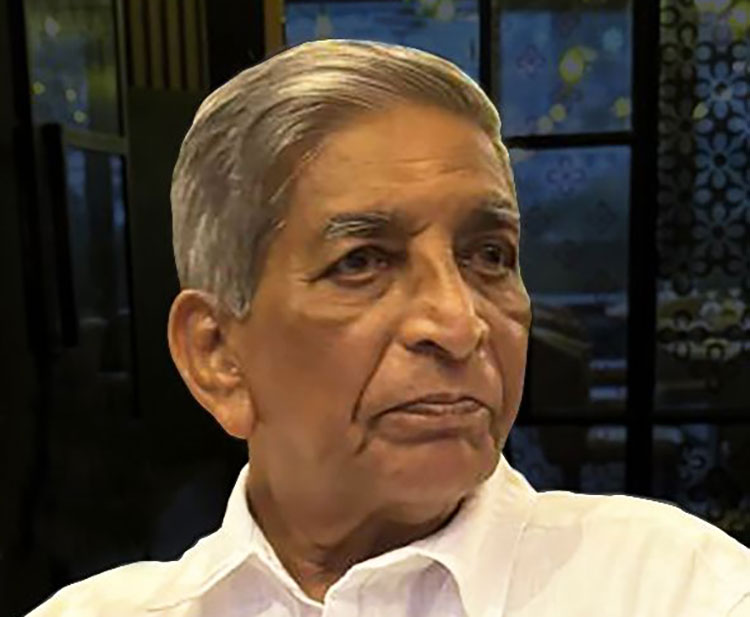
A tribute to the man who believed Sri Lankan music deserved the very best
by Vindana Ariyawansa
Some people build companies. Others build institutions that outlive them. When Ananda Ganegoda passed away last week at the age of 81, he left behind something far larger than a business: a cultural landmark whose logo sits on the cassette shelves of countless Sri Lankan homes, and whose songs many of us grew up with without knowing the man who made them possible.
For decades, his name and Singlanka were one and the same. Both stand for the belief that Sri Lankan music deserved the highest standard of quality in its content, its production and its presentation.
“Singlanka: the symbol of excellence in creation and of priceless perfection in finish!”
That was the promise printed in the company’s advertising, and Ananda Ganegoda spent his life trying to keep it.
A friendship that changed a life
In the 1970s, Ganegoda was already a successful businessman from an industrialist family, running enterprises alongside his brothers. Then he met pop singer Milton Mallawarachchi, and the friendship became a turning point.
Through Milton, he came to know many of the country’s most celebrated artistes. He admired them deeply, and they welcomed him into their circle. Before long, the businessman had become something rarer: a patron who supported the country’s artistic endeavours out of genuine love for them.
Worried for the artistes
By the late 1970s the audio cassette had become the most practical way to sell music, and many businessmen rushed into the trade. Ganegoda watched this with concern. He worried about what it meant for singers’ creative and financial independence, and whether the people who made the music would share fairly in its rewards.
At the request of leading artists, he decided to enter music production himself. He did it, by every account, without commercial ambition. His only intention was to serve the artists.
18 March 1980
Singlanka was founded on 18 March 1980 as a limited company. Its founding team was remarkable. Clarence Wijewardana, the celebrated singer and songwriter, joined it. So did the renowned lyricist Kularatna Ariyawansa, who gave up his government job to be part of the venture, and continued to this day as its creative director. Vijaya Ramanayake, owner of the Tharanga record label, took charge of distribution.
Dozens of veteran artists who were close friends of Ganegoda handed over songs they had recorded independently to be released under the new label. Many new songs were recorded under the guidance of Clarence Wijewardana and Vijaya Ramanayake. In April 1980, Singlanka launched with 25 albums at once.
The first cassettes were produced in Singapore and imported. Because Sri Lanka then lacked the facilities to print Sinhala on the covers, the first sleeves carried their titles and information in English. Listeners objected, and the albums were quickly re-released with new covers in Sinhala.
By December 1980, 15 more albums recorded earlier in the year had followed. That same year, the Singlanka recording studio opened in Nugegoda under Clarence Wijewardana’s supervision. Equipped with the latest technology, it produced the country’s first eight-track recordings. Ganegoda invested heavily in it, and with veteran recordist Dayananda Perera at the helm it became the busiest and most respected studio in the country.
One roof, one family
The year 1981 was a landmark for the company. Ganegoda held a strong conviction that artists should not be left at the mercy of a fluctuating cassette market, which made careers unpredictable and unsustainable. If he could give them stability under one roof, he believed, they could give their energy to their art instead of worrying about money.
So, he invited them to join Singlanka, and they came. Amaradeva, Nanda Malini, Victor Rathnayaka, Sanath Nandasiri, Milton Mallawarachchi, Gunadasa Kapuge, Priya Sooriyasena, Sisira Senarathna, Indrani Wijayabandara, Malkanthi Nandasiri, Clarence Wijewardana, Anton Jones, Abeywardana Balasooriya and Niranjala Sarojini became exclusive Singlanka artists. Sunil Edirisinghe, T. M. Jayaratna, Somathilaka Jayamaha, Karunarathna Divulgane, Deepika Priyadarshani, Janaka Wickramasinghe, Rohan Bulegoda and Dayan Witharana joined them later.
Singlanka also produced best-selling albums by H. R. Jothipala, M. S. Fernando, Desmond de Silva, Nihal Nelson and Vijaya Kumaratunga.
The journey was not without heartache. Some ventures did not bear fruit, and it pained him when a few artistes left the label over the years. But the majority stayed, which says something about the man they stayed with.
A company of firsts
Singlanka’s catalogue reads like a record of firsts for Sri Lankan music:
· In April 1981, it released the first film soundtrack on cassette, for Sunil Ariyaratna’s Vajira.
· That year it also released Nanda Malini Live in London, the country’s first live-recorded cassette.
· In 1982, Ganegoda began replicating cassettes in Sri Lanka itself, having previously relied on Singapore. Veteran musician Rohana Weerasinghe left his government teaching post to join the company in 1983.
· In 1983, Prof. Ediriweera Sarachchandra’s iconic play Sinhabahu was released on a double cassette. Noorthi and Nadagam Songs, directed by Punyasena Gunasinghe, followed as another first.
· In 1984, under Sanath Nandasiri’s direction, came Madhubani, the country’s first album of classical instrumentals and songs, launched with a classical concert at Colombo’s Tower Hall.
· The same year, Nanda Malini’s double vinyl album Sathyaye Geethaya was released. Vinyl was not in popular demand at the time, so the experiment was not continued.
· In 1987, one of Ganegoda’s dream projects came true with Dorata Waduma, an album by six talented amateur singers. It introduced the singer Deepika Priyadarshani.
· In 1987, Sansare Api became the first collection of songs written by a member of the clergy, the Venerable Rambukkana Siddhartha.
· In 1989, Dhammapada Geethaya set verses of the Dhammapada to song.
The famous Singlanka logo was designed by Charlie Chang of Singapore. It has since become a timeless emblem of quality Sinhala music. In its first decade alone, Singlanka produced 136 original albums, a remarkable achievement for a company built on original recordings.
A patron of the nation’s culture
Ganegoda’s generosity reached well beyond his own studio. During its first two decades, Singlanka contributed financially to virtually every prominent national artistic event in the country.
In the early 1980s he sponsored concert tours to the United Kingdom for Amaradeva, Sisira Senarathna, Indrani Wijayabandara, Sunil Edirisinghe, Malani Bulathsinhala, Sanath Nandasiri and Malkanthi Nandasiri, carrying Sri Lankan music to audiences abroad.
He supported the first Sarasaviya Film Festival at the BMICH in 1980, the University of Colombo Art Festival, the G. B. Senanayake scholarship at the University of Sri Jayewardenepura, and the Mahagama Sekara Memorial Festival. He supported the Amaradeva felicitation event, the Children’s Books Society’s book exhibitions and prize-givings, the Bandaranaike Memorial Foundation Fund, and the Charles Silva Gunasinghe Memorial Fund. He supported the Vesak Bhakthi Gee Festival of the Lake House Buddhist Society, the “40 Years of Sinhala Cinema” event organised by the film critics and writers’ society, Prof. Sarachchandra’s drama festival, and the Premakeerthi Tribute Festival.
He also helped launch Amaradeva’s Naada Siththam, Dharmasiri Gamage’s Sulan Kurullo, and the concert Mage Swarayayi Obe Ridmayayi by Victor Ratnayake and Premasiri Kemadasa. These are only some of the many occasions on which he quietly gave his support.
More than a company
Today, Ananda Ganegoda’s name and Singlanka are inseparable. Singlanka is more than a record label. It is a cultural emblem of Sri Lanka, one that preserved the country’s musical heritage and identity for a generation and set a benchmark that the industry still looks to.
He began as a businessman who befriended a singer. He became a guardian of Sri Lankan music, giving artists a home, a stage and the security to create. Most of the millions who have hummed those songs may never have known his name. But every time a Singlanka melody plays, his dream is still being heard.

Showers or thundershowers will occur in most parts of the island after 1.00 p.m

CTU: Teacher shortage casts doubt on govt.’s education reforms

Norochcholai to remain offline for several days after blackout

President links businessman held with arms to politicians

CID probe sought into tusker’s death amid fears of elephant-killing syndicate

Bill to allow remote witness testimony in courts

‘Dates have the highest sugar content to fight Coronavirus’

Sunday Island 27 December – Headlines

#SundayIsland 17th December – Headlines

Sunday Island – 28th March

Sunday Island Headlines – 21 March

Sunday Island – 21st February – Headlines
-
 Latest News6 days ago
Nissanka’s return headlines Sri Lanka’s Test squad against Pakistan
-

 News6 days ago
Sri Lanka, India caught in US-Iran ship crisis
-
 Latest News6 days ago
Imran Khan’s PTI braces to fight federal takeover of Khyber Pakhtunkhwa
-

 Latest News6 days ago
Missiles intercepted near Riyadh after Saudi coalition hits Yemen fuel depot
-

 News3 days ago
Asgiri Mahanayake calls for immediate release of Gnanasara Thera
-

 Features2 days ago
Kotahena:A Small Enclave, An Extraordinary Legacy
-
 Latest News6 days ago
Kusal Mendis’ unbeaten 87 hands Sri Lanka consolation win
-
 News7 days ago
Mahinda and Shiranthi hospitalised