
Business
Shinkansen Moment for Sri Lanka: Raghuraman calls for radical export pivot as Japan backs regional value chain


Sri Lanka must engineer a “Shinkansen effect” in its export strategy or risk being left behind in a rapidly reorganising global economy, warned Indo Lanka Chamber of Commerce and Industry President M. Raghuraman, setting the tone for a high-powered policy dialogue at the Japan–Sri Lanka Business Cooperation forum held on Monday at the JAIC Hilton.
Raghuraman’s call for radical reform came amid a broader push by Japan and Sri Lanka to reposition the island as a strategic node in a regional industrial and logistics corridor linking India, Japan and the wider Global South.
The event, organised by Japan External Trade Organization (JETRO) and the Japan-Sri Lanka Business Co-Operation Committee, brought together policymakers, industry leaders and Japanese investors to map out a new export-led growth model.
“Sri Lanka cannot afford incremental change,” Raghuraman said. “We need a Shinkansen effect — a radical transformation in how we plug into regional and global value chains.”
With India projected to expand its middle-income population from 430 million to over 700 million by 2030, Raghuraman described the subcontinent as a “pot of gold just 22 miles away.” Yet Sri Lanka, he cautioned, has failed to fully capitalise on its proximity, particularly through delayed negotiations on upgrading existing trade arrangements into a more comprehensive economic partnership.
Echoing this regional logic, Toyokazu Nagamune, Regional Representative for South Asia at Japan’s Ministry of Economy, Trade and Industry (METI), framed the corridor within Tokyo’s evolving economic security doctrine.
“With rising geopolitical risks and protectionism, Japan is diversifying supply chains,” Nagamune said.
“It is neither realistic nor cost-efficient to localise entire supply chains within a single country. That is why regional cooperation — especially between India and Sri Lanka — is critical.”
Japan is actively encouraging investment in strategic sectors such as semiconductors, batteries, solar panels and rare earth components in India. But Nagamune stressed that Sri Lanka has complementary strengths — from high-purity rubber to skilled electronics assembly — that can integrate into these value chains.
He cited practical examples: Sri Lanka supplying rubber components for compressors manufactured in India; high-purity silicon inputs for solar cell production; and value-added intermediate goods that enhance cost competitiveness across the corridor.
Secretary to the Ministry of Trade, Commerce, Food Security and Co-Operative Development K.A. Vimalenthirajah acknowledged that policy recalibration is overdue.
“We need to create an enabling environment for manufacturers and shift from merely promoting trading entrepreneurship,” he said. “Sri Lanka must position itself as a preferred destination facilitating both investors and exporters.”
Vimalenthirajah identified three priorities: expanding physical connectivity — including ongoing capacity enhancements at the Colombo Port; strengthening “soft enablers” such as comprehensive free trade agreements and mutual recognition of standards; and institutional reforms including result-oriented single-window systems for trade and investment.
Confidence-building through policy consistency, he added, is paramount to attracting long-term capital.
From the Japanese private sector perspective, Takayuki Himeno, Chief Research Manager at Mitsubishi Research Institute, Inc., underscored that infrastructure alone will not secure Sri Lanka’s ambitions as a logistics hub.
“Sri Lanka’s strategic location is an advantage, but it is no longer enough,” Himeno said. “The challenge is fragmentation. Ports, airports and industries operate in silos. Physical infrastructure must be synchronised with data connectivity.”
Drawing on MRI’s two decades of experience managing Japan’s national single window and customs systems, Himeno pointed to digital integration — including port community systems and streamlined customs processes — as essential to reducing lead times and boosting export competitiveness.
Moderating the discussion, Ruvini Fernando, Head of Financial Advisory at Deloitte Sri Lanka, framed the conversation within Sri Lanka’s urgent need to diversify exports and identify new product lines and markets.
“When Sri Lanka is looking at development through export promotion and new market access, this is a very timely discussion,” she observed.
The strategic thrust emerging from the forum was clear: Sri Lanka’s small domestic market — just over 21 million people — should not be seen as a limitation but as a catalyst to integrate outward into regional production networks.
For Japan, the message is about resilience and cost-competitive diversification. For India, it is about scaling manufacturing depth. For Sri Lanka, it is about moving decisively from raw material exports to value-added components — and from policy inertia to execution.
By Ifham Nizam



The government has initiated what could become one of the most significant reforms of Sri Lanka’s social security system in decades by appointing a Senior Officials’ Committee to examine the feasibility of bringing the Employees’ Provident Fund (EPF) and the Employees’ Trust Fund (ETF) under a unified tripartite governance framework representing the government, employers and employees.
Cabinet approval was granted following a proposal submitted by the Minister of Labour. According to Cabinet Spokesman and Minister Dr. Nalinda Jayatissa, the committee has been mandated to study whether the two institutions could operate under a common governance structure based on internationally recognised principles promoted by the International Labour Organization (ILO).
He stressed that the committee has been appointed only to examine the feasibility of the proposal, and no final decision has been taken to merge the two funds.
The official Cabinet statement notes that the EPF, established under the Employees’ Provident Fund Act No. 15 of 1958, has more than 2.5 million members and assets exceeding Rs. 4.9 trillion, making it Sri Lanka’s largest social security fund.
Custody of the fund, investment management, financial administration and payment of benefits are currently handled by the Central Bank of Sri Lanka, while the Department of Labour is responsible for member registration, employer compliance, recovery of arrears and safeguarding employee rights.
The ETF, created under Act No. 46 of 1980, is administered by a tripartite board comprising representatives of the government, employers and employees. It manages assets of approximately Rs. 637 billion and provides coverage to more than 2.5 million active members.
The Cabinet paper highlights that tripartite governance of social security institutions is an internationally recognised best practice and a fundamental principle promoted by the ILO, which forms the basis for examining a common governance model for both funds.
The proposal is expected to attract close scrutiny from the business community, trade unions and financial market participants, given that the combined assets of the EPF and ETF exceed Rs. 5.5 trillion, making them among the country’s largest institutional investors.
Economists note that any governance reforms should strengthen transparency, accountability, professional investment management and public confidence while safeguarding workers’ retirement savings.
By Ifham Nizam
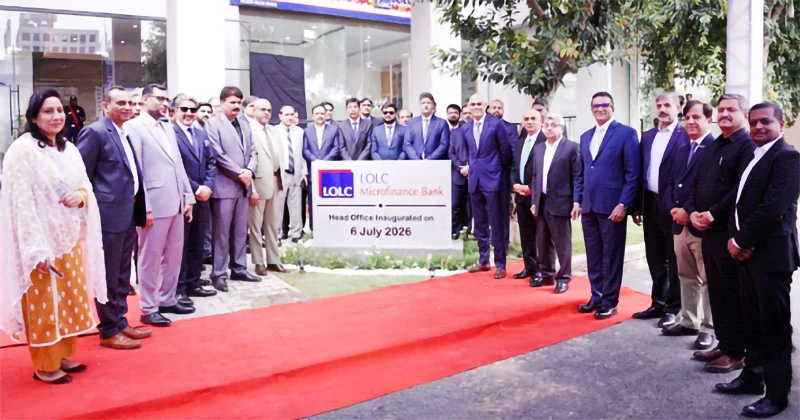
LOLC Microfinance Bank Pakistan, a fully owned subsidiary of the LOLC Group, has strategically relocated its Head Office to Gulberg Greens, Islamabad, marking a significant milestone in its growth journey. As one of the LOLC Group’s largest overseas operations in Asia, the Bank continues to advance financial inclusion and sustainable economic development across Pakistan.
The new Head Office was formally inaugurated in the presence of Chief Guests H.E. Admiral Fred Seneviratne (Retd.), High Commissioner of Sri Lanka to Pakistan, and Mr. Krishan Thilakaratne, Chairman of LOLC Microfinance Bank Pakistan. The ceremony was attended by the Bank’s Board of Directors, senior management and employees, commemorating another important chapter in the Bank’s continued expansion.
LOLC Microfinance Bank Pakistan is a fully-fledged Microfinance Bank regulated by the State Bank of Pakistan, operating through a network of 88 branches and employing over 1,200 staff members across the key cities of Karachi, Lahore, Hyderabad, Faisalabad, Sialkot, Islamabad, Peshawar and Gilgit. The Bank offers a comprehensive range of financial solutions, including business loans, microfinance, vehicle financing, gold loans and other financial products. It currently manages a loan portfolio exceeding USD 70 million and a deposit portfolio exceeding USD 90 million, comprising savings deposits, term deposits and current accounts.
The relocation to the new Head Office reflects the Bank’s expanding operations and its commitment to widening access to responsible financial services for individuals, micro-entrepreneurs and small businesses across Pakistan. In 2026, LOLC Microfinance Bank Pakistan was recognised as Pakistan’s fastest growing Microfinance Bank, highlighting its strong business momentum and growing market presence.
Addressing the gathering, H.E. Admiral Fred Seneviratne (Retd.), High Commissioner of Sri Lanka to Pakistan, stated, “The relationship between Sri Lanka and Pakistan continues to grow through meaningful partnerships such as this. LOLC Microfinance Bank Pakistan is making an important contribution by supporting entrepreneurs, strengthening the SME sector, and expanding financial access where it is needed the most. Institutions like these play a vital role in empowering communities and supporting sustainable economic growth.”(LOLC)
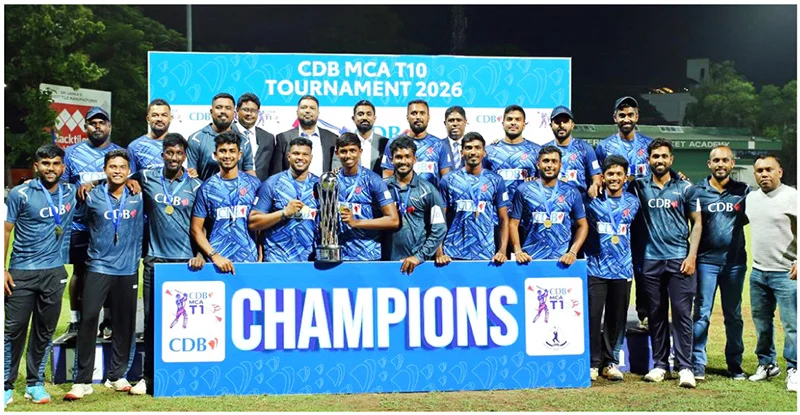
Citizens Development Business Finance PLC (CDB) lit up the CCC Grounds on June 28th, retaining the championship of the MCA T10 Cricket Tournament, further etching its record of being unbeaten and showcasing its signature persona of being determined and unstoppable.
Sealing the title without a single loss in the tournament from the first ball to the final cheer, Team CDB skippered by Tharindu Rathnayaka with Vice Captain Dunith Wellalage, both national players, showcased the calibre of a champion side.
Coached by national player Oshadha Fernando, CDB combined star power with relentless team spirit – the perfect combination of experience and youthful energy. CDB’s performance was not just about individual brilliance but about a collective drive that mirrors CDB’s corporate ethos of perseverance, leadership, and excellence.
The final match against the Abans Group was a fitting climax. Chasing 116, CDB powered to 120/4 in just 8.4 overs, sealing victory by six wickets. Vishad Randika rose to the occasion as Player of the Final. Nuwan Thushara’s consistent bowling prowess, including a hat trick — 2 overs, 11 runs, 4 wickets during the semi-finals — earned him the Best Bowler accolade.
This unbeaten run was more than a cricketing triumph. It was a statement by CDB of its dedication to excellence, which extends beyond financial services into fostering a high-performance culture through sports. The championship reinforced the company’s reputation as a leader in the financial sector while celebrating employee engagement, wellness, and community spirit.

President chairs discussion on 2027 Budget Proposals for the Ministry of Industry and Entrepreneurship Development

Prime Minister meets the Amir of the State of Qatar and conveys condolences on the passing of the Father Emir

Current El Niño Status in Sri Lanka

A few showers may occur in the Western, Sabaragamuwa and North-western provinces and in Kandy, Nuwara-Eliya, Galle and Matara districts.

Argentina face fine for Falklands banner in semi-final win

US launches fresh strikes on Iran as Trump warns Tehran it ‘better behave’

‘Dates have the highest sugar content to fight Coronavirus’

Sunday Island 27 December – Headlines

#SundayIsland 17th December – Headlines

Sunday Island – 28th March

Sunday Island Headlines – 21 March

Sunday Island – 21st February – Headlines
-
 News7 days ago
Herath warns prospective migrant workers not to get fleeced by racketeers
-
 Features5 days ago
Prison riots and politics: NPP’s biggest challenge and Sri Lanka’s biggest opportunity
-

 Editorial6 days ago
What’s the world coming to?
-
 Foreign News6 days ago
Tensions erupt in Indian state after 11-year-old raped and murdered
-

 Features7 days ago
Devanesan Annan – in Memoriam
-
Editorial7 days ago
Punishment in hellholes
-
 Features2 days ago
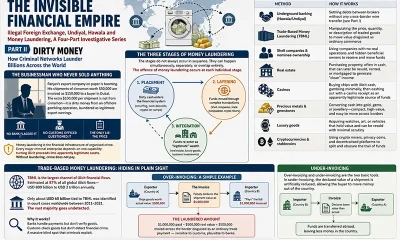
Dirty Money
-

 News7 days ago
Representatives of the Organization of Professional Associations (OPA) of Sri Lanka meet the Prime Minister