
Business
‘Serendib Flour Mills playing key role in Sri Lanka’s food security’

By Ifham Nizam
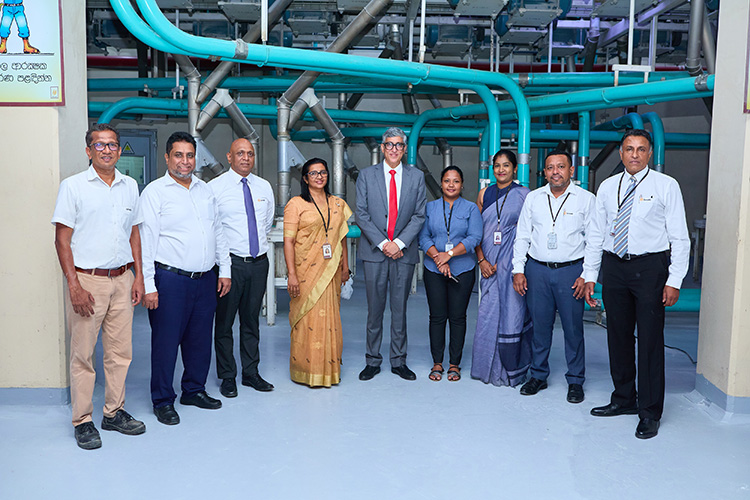
Serendib Flour Mills (SFML), a wholly-owned subsidiary of Dubai-headquartered Al Ghurair, one of the leading diversified family businesses in the United Arab Emirates (UAE), recently conducted a media tour of its state-of-the-art facility situated at the Colombo Port.
This visit underscored SFML’s ongoing commitment to enhancing Sri Lanka’s food security, fostering innovation, and promoting sustainable practices within the flour manufacturing industry.
For the past 15 years, SFML has stood as a trusted cornerstone of Sri Lanka’s food industry, propelled by the overarching purpose of ‘Nourishing the Nation.’ The company’s dedication to excellence is manifest in its utilization of pioneering Swiss Buhler technology, enabling the delivery of the highest quality flour and the introduction of groundbreaking innovations to the Sri Lankan market.
Currently, the company’s diverse portfolio features over 20 flour varieties, catering to a broad spectrum of clientele, ranging from artisan bakers to large-scale manufacturers and households. Recent additions include the Premium Flour line for superior bakery products, Adi Shakthi Fortified flour for plantation communities, and Fibre Plus to combat non-communicable diseases. These value-added offerings significantly enhance Sri Lanka’s food ecosystem and contribute to fostering a healthier nation.
SFML’s operations are meticulously designed to prioritize sustainability and environmental protection. The company employs tanker silo operations for larger industrial customers, thereby reducing energy consumption, labor requirements, and landfill waste, thereby making a substantial contribution towards environmental sustainability.
Committed to upholding food security in Sri Lanka, SFML maintains a three-month buffer of wheat stocks at all times, ensuring a consistent supply throughout the year. With five company-managed warehouses strategically positioned across the country, SFML ensures easy access to its products nationwide.
Vijay Sharma, CEO of Serendib Flour Mills, said; “At Serendib Flour Mills, we are committed to nourishing lives across Sri Lanka through sustainable and innovative food solutions. By harnessing the power of modern technology and upholding the highest standards of corporate citizenship, we aspire to be the trusted partner in ensuring food security for our nation.”
SFML extends its dedication beyond flour production through impactful social responsibility initiatives. The ‘Serendib Uthama Dalada’ program offers senior citizens from Elders Homes the opportunity to witness the Esala Perahera. Additionally, the ‘7 Star Manusathkara’ program empowers marginalized and vulnerable communities, showcasing SFML’s commitment to social upliftment.
SFML consistently underscores the importance of consuming domestically produced branded flour as the safest option for consumers. The company’s unwavering adherence to the highest quality standards and stringent control measures ensures nutritious offerings for all Sri Lankans through the finest wheat flour
SFML Director Brand & Corporate Communications, Kalinga Wijesekera responded to The Island Financial Review:
What initiatives has Serendib Flour Mills undertaken to contribute to food security in Sri Lanka? How successful are you?
During the economic crisis in SL there were many shortages of essential items such as fuel, gas and other food items. However, there were no queues for flour or bread because we were able to supply without an interruption. At any given time we store a minimum of three months of grains in our silos and another two months of grain requirement is on order at all times. We manage 5 warehouses across the country. At any given time these warehouses carry 30% of the monthly requirement of flour at any given time. As a result we are able to swiftly deliver to any market within a short time span. These measures have helped us to positively contribute to the food security of the country.
How has SFML diversified its product offerings in the wheat flour market since its establishment in 2008?
When Serendib entered the market in 2008 there were only one or two flour types/products. We were the first to segment the market and come out with different flour types to suit each segment. Example; Bakers flour for the bakery Industry, Rotti flour for the eateries, Household flour for domestic households and similarly Noodle flour, Biscuit flour, Cake flour, Whole meal flour etc. etc. . Today we offer 20+ varieties of flour to our customers.
Can you describe SFML’s role and its impact on the bakery industry?
We consider the bakery Industry as a very vital industry and work very closely with the All Ceylon Bakery Owners Association. We have regular meetings with its chairman and the committee to understand what is required and supports them in various endeavors. We have Bakers flour in 25Kg and 50Kg, especially designed for the bakery Industry. It’s ideal for making of bread and other bakery products. Recently we launched Premium Bakery flour for those bakeries looking for a superior product. Premium flour provides whither and a softer bread which is also tastes better. Because of the higher gluten wheat it gives a better yield i.e. more loafs of bread. All in all Premium flour gives a superior loaf of Bread.
In addition we also have a technical team providing technical assistance to the bakers, new product development, new recipe development, trouble shooting, costing and pricing etc. on FOC basis 24/7.
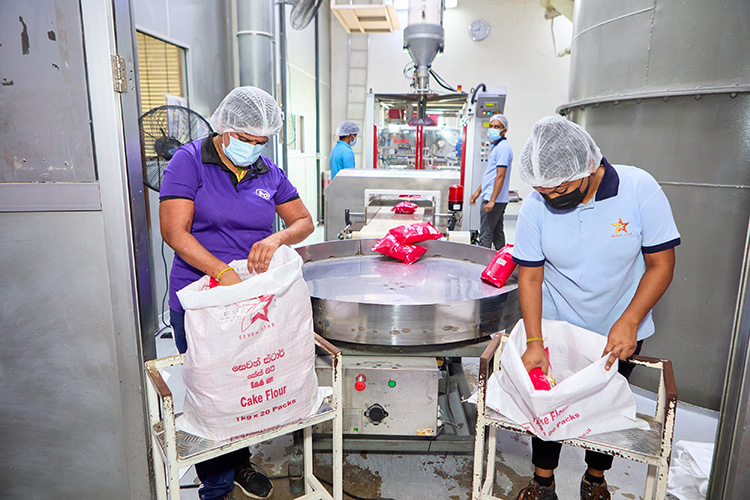
Work in progress at an SFML factory
What is the significance of the fortified flour product ‘Serendib Adi Shakthi’ in addressing dietary issues among the plantation communities in Sri Lanka?
According to WHO and the Ministry of Health 1 in every 3 school going children is suffering from anemia in the country. This is more prevalent among the tea plantation communities as a result of a lack of a balanced diet. According to research, lack of Folate in pregnant women contributes to certain defects in the new born. SFML along with the Plantation Human Development Trust (PHDT), after many rounds of discussions, came up with this concept of providing a fortified flour, i.e. fortified with Iron, Folic acid and Vitamin B12 to address these dietary issues of the tea plantation communities. Wheat flour, being one of the main sources of nutrition of the plantation communities, this was the ideal way of addressing their anaemic conditions and folate deficiencies. ‘Adi Shakthi’- fortified flour was crafted and distributed exclusively to the tea plantations.
How does SFML’s new wheat flour product, ‘7 Star Fibre Plus’, aim to combat non-communicable diseases (NCDs) prevalent in Sri Lanka?
According to statistics in SL over 25% adults are overweight, while 9.2% are obese. NCDs kill 41m people, i.e. to 71% of all deaths globally, while in SL it is 83%. Life styles of people are the major contributor to this situation. Recognizing this factor SFML launched ‘7 Star Fibre Plus’ to address these issues. Dietary fibre is found in wheat grain. ‘7 Star Fibre Plus’ is enriched with fibre, providing 10% of your daily fibre needs. According to research, Individuals with high intakes of dietary fibre appear to be at significantly lower risk for developing NCDs. Increasing fibre intake lowers blood pressure and serum cholesterol levels.
Could you elaborate on SFML’s initiatives towards community welfare, particularly during times of crisis, such as the COVID-19 pandemic and natural disasters?
Serendib undertook the initiative to facilitate elderly people to witness the annual Kandy Dalada Perahera. Titled ‘Serendib Uthama Dalada 2023’, Serendib organized elderly people from over four elders homes located in Central and Northwestern Provinces to witness the majestic event. SFML ensured all facilities, such as, transport, food and seating arrangements were provided to these elders to witness the Perahera in comfort.
Similarly, during the height of Covid, Serendib embarked on a journey to supply wheat flour to over 1,000 families in the Chilaw district at a time when the curfew was in place and people were deprived of their daily incomes. The program was titled ‘7 Star Manusathkara’, aimed to nourish the vulnerable sections of society.
On the same lines over 2,500 flood- affected families in Kinniya and Kalmunai areas were provided with their wheat flour requirements during the recent floods in these regions earlier this year.
What environmental sustainability measures has SFML implemented in its operations, particularly regarding packaging and transportation?
Serendib delivers wheat flour in bulk tankers and stored in silos to its key its customers. The initiative resulted in the reduction of land fill as no PP bags were used to pack flour and less energy and storage space was used, thus contributing to environmental sustainability.

Business
Sri Lanka Customs exceeds revenue targets to enters 2026 with a surplus of Rs. 300 billion – Director General


The year 2025 has been recorded as the highest revenue-earning year in the history of Sri Lanka Customs, stated Director General of Sri Lanka Customs, Mr. S.P. Arukgoda, noting that the Department had surpassed its expected revenue target of Rs. 2,115 billion, enabling it to enter 2026 with an additional surplus of approximately Rs. 300 billion.
The Director General made these remarks at a discussion held on Tuesday (30) morning at the Sri Lanka Customs Auditorium, chaired by President Anura Kumara Dissanayake.
The President visited the Sri Lanka Customs Department this to review the performance achieved in 2025 and to scrutinize the new plans proposed for 2026. During the visit, the President engaged in extensive discussions with the Director General, Directors and senior officials of the Department.
Commending the vital role played by Sri Lanka Customs in generating much-needed state revenue and contributing to economic and social stability, the President expressed his appreciation to the entire Customs employees for their commitment and service.
Emphasizing that Sri Lanka Customs is one of the country’s key revenue-generating institutions, the President highlighted the importance of maintaining operations in an efficient, transparent and accountable manner. The President also called upon all officers to work collectively, with renewed plans and strategies, to lead the country towards economic success in 2026.
The President further stressed that the economic collapse in 2022 was largely due to the government’s inability at the time to generate sufficient rupee revenue and secure adequate foreign exchange. He pointed out that the government has successfully restored economic stability by achieving revenue targets, a capability that has also been vital in addressing recent disaster situations.
A comprehensive discussion was also held on the overall performance and progress of Sri Lanka Customs in 2025, as well as the new strategic plans for 2026, with several new ideas and proposals being presented.
Sri Lanka Customs currently operates under four main pillars, revenue collection, trade facilitation, social protection and institutional development. The President inquired into the progress achieved under each of these areas.
It was revealed that the Internal Affairs Unit, established to prevent corruption and promote an ethical institutional culture, is functioning effectively.
The President also sought updates on measures taken to address long-standing allegations related to congestion, delays and corruption in Customs operations, as well as on plans to modernize cargo inspection systems.
The discussion further covered Sri Lanka Customs’ digitalization programme planned for 2026, along with issues related to recruitment, promotions, training and salaries and allowances of the staff.
Highlighting the strategic importance of airports in preventing attempts to create instability within the country, the President underscored the necessity for Sri Lanka Customs to operate with a comprehensive awareness of its duty to uphold the stability of the State, while also being ready to face upcoming challenges.
The discussion was attended by Minister of Labour and Deputy Minister of Finance and Planning, Dr. Anil Jayanta Fernando, Deputy Minister of Economic Development, Nishantha Jayaweera, Secretary to the President, Dr. Nandika Sanath Kumanayake, Deputy Secretary to the Treasury, A.N.Hapugala, Director General of Sri Lanka Customs, S.P.Arukgoda, members of the Board of Directors and senior officials of the Department.

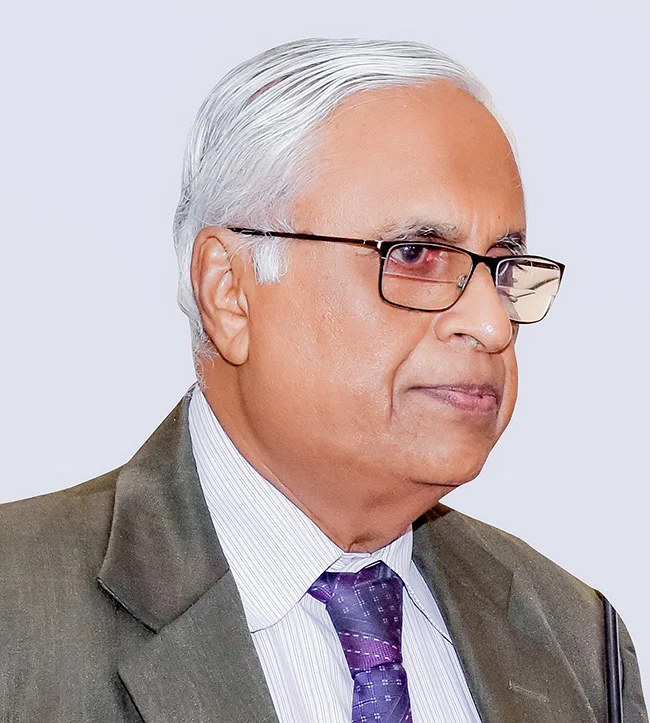
The dawn of 2026 represents a time for critical recalibration, not just ceremony, for the nation’s vital construction sector, says Eng Nissanka N Wijeratne, Secretary General/CEO of the Chamber of Construction Industry (CCI).
In a New Year message, Wijeratne reframes the annual greeting as a strategic call to action. “For Sri Lanka’s construction industry – the true backbone of our economy – the turning of the calendar is an ideal moment for a realistic and forward-looking assessment,” he states.
His vision sketches a practical blueprint where the unprecedented challenges of the recent past become the foundation for a smarter, more sustainable future.
The industry, long considered a barometer of national prosperity, has weathered severe headwinds: economic volatility and spiraling material costs. “These were not mere business cycles, but unprecedented tests,” Wijeratne notes, acknowledging the severe strain on firms and professionals. Yet, the sector’s response, he observes, has been “nothing short of remarkable,” showcasing a deeply ingrained resilience.
The Chamber’s chosen theme for the year, “Resilience through Innovation,” signals a pivotal shift from enduring hardship to actively engineering progress.
The pathway forward, Wijeratne outlines, is built on three interdependent pillars.
First is the revitalization of Infrastructure. “This is not a simple call for new projects,” he clarifies, “but a strategic push to reactivate stalled ventures and initiate sustainable developments in concert with the government and international agencies.” He emphasises that construction activity is intrinsically linked to the broader economy’s pulse, where resuming projects catalyses employment, energises supply chains, and restores public confidence.
The second pillar, technological Integration, addresses the urgent need to modernise the sector’s core. Advocacy for Building Information Modeling (BIM), green building practices, and digital project management is a direct answer to past inefficiencies. “It is a commitment to ensuring Sri Lankan construction is not just rebuilt, but upgraded becoming more competitive, cost-effective, and environmentally responsible,” Wijeratne says. ” Innovation must move from slogan to practice, transforming how the nation conceives, builds, and maintains its infrastructure,” he notes.
The third pillar, consistent policy advocacy, underpins all efforts. The Chamber positions itself as a vital intermediary, fighting for fair pricing mechanisms, streamlined regulations, and a protective framework for local contractors. Wijeratne stresses that the best-laid plans of engineers can falter without a conducive policy environment, calling for a strengthened partnership with the state to create a level playing field where skill and enterprise determine success.
Ultimately, Wijeratne’s message is a powerful reminder of the industry’s profound legacy. “When we build, the nation grows,” he states, elevating construction from a commercial activity to a national mission. The structures that rise from the ground are more than concrete and steel; they are the schools, hospitals, roads, and homes that shape the nation’s future.
As Sri Lanka steps into 2026, the construction industry’s message is clear: it is ready to transform resilience from a trait of survival into a dynamic force for innovation.
The past challenges, according to Wijeratne, have been met with grit. Now, the future must be built with vision.
By Sanath Nanayakkare
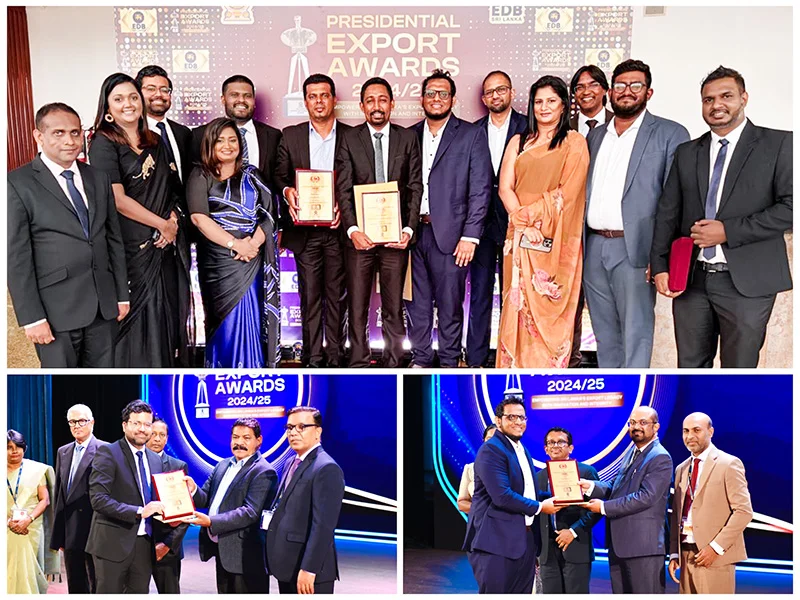
Expo Commodities (Pvt) Ltd, together with its member company STAY Naturals (Pvt) Ltd, has been recognized with Merit Awards at the Sri Lanka Export Development Board (EDB) Presidential Export Awards 2024/25, one of the country’s most prestigious platforms celebrating export excellence.
The awards were presented under the categories of Spices and Allied Products and Essential Oils, Oleoresins & Condiments, recognizing the companies’ consistent performance, product quality, and contribution to strengthening Sri Lanka’s presence in global markets.
The recognition reflects Expo Commodities’ continued focus on delivering high-quality, value-added Sri Lankan products while upholding international standards across innovation, sustainability, and responsible sourcing. Through STAY Naturals, the group has expanded its reach in key export markets, promoting Sri Lanka’s essential oils, oleoresins, and condiments derived from its rich agricultural heritage to customers worldwide.
The achievement also reflects the collective effort, technical expertise, and commitment of the teams behind the operations, alongside the continued trust of global partners and customers. Expo Commodities (Pvt) Ltd, part of Expo Commodities Global, is strategically focused on driving sustainable export growth and strengthening Sri Lanka’s global positioning as a reliable supplier of high-quality natural products.
Expo Commodities Global is a globally active Agri-commodity enterprise with operations spanning multiple origins including Sri Lanka, Vietnam, Indonesia, Madagascar, Comoros, Egypt, the UAE, India, Germany, and the Netherlands. The company specializes in the production, processing, and export of premium organic and conventional spices, coconut products, essential oils, oleoresins, and value-added agricultural products, delivering consistent quality through integrated and sustainable operations.
Expo Commodities Global and STAY Naturals (Pvt) Ltd are part of Aberdeen Holdings, a diversified Sri Lankan conglomerate with interests across pharmaceuticals, packaging, commodities, transport and logistics, power generation, and digital innovation, supporting long-term growth through strong governance, sustainability, and global market engagement.

Showers or thundershowers will occur at times in the Northern, Eastern, Central, North-central, North-western and Uva provinces

Israel to bar 37 aid groups from Gaza

Protests spread across Iran for third day after currency hits record low

Sri Lanka Customs exceeds revenue targets to enters 2026 with a surplus of Rs. 300 billion – Director General

Harmanpreet Kaur leads the way as India complete 5-0 sweep over Sri Lanka

Educators slam govt. for ‘unprepared’ education reforms

‘Dates have the highest sugar content to fight Coronavirus’

Sunday Island 27 December – Headlines

#SundayIsland 17th December – Headlines

Sunday Island – 28th March

Sunday Island Headlines – 21 March

Sunday Island – 21st February – Headlines
-

 News6 days ago
British MP calls on Foreign Secretary to expand sanction package against ‘Sri Lankan war criminals’
-
 News5 days ago
Street vendors banned from Kandy City
-

 Sports6 days ago
Chief selector’s remarks disappointing says Mickey Arthur
-

 Opinion6 days ago
Disasters do not destroy nations; the refusal to change does
-

 Sports2 days ago
Gurusinha’s Boxing Day hundred celebrated in Melbourne
-

 News5 days ago
Lankan aircrew fly daring UN Medevac in hostile conditions in Africa
-

 Sports3 days ago
Time to close the Dickwella chapter
-

 Sports6 days ago
Royal record crushing innings win against Nalanda