
News
Senior academics and conservationists express fears over Pidurutalagala slopes

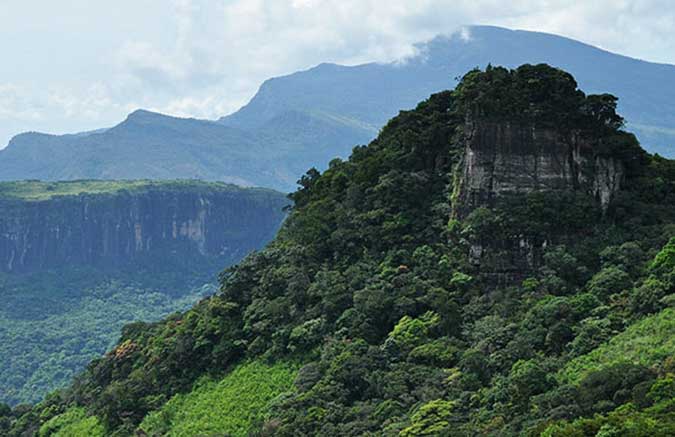
A group of top level academics and environmentalists have written to President Ranil Wickremesinghe expressing grave concern about the degradation of the Mahakudugala Conservation Forest located in the uppermost on the slopes of Pidurutalagala, the country’s highest mountain.
“The numerous waterways that begin on its steep sides provide water, all year round, to the communities that inhabit the eastern escarpment of the Central Highlands, and to the rich biodiversity its forests host, high in endemism,” they have said in an open letter.
The text of their letter: “You have openly expressed your commitment to the protection of the watersheds of Sri Lanka,recognizing their vital importance for slowing, cleaning, filtering and storing water by allowing it to absorb into the ground. This process improves water quality, reduces risk of flooding, reduces risk for invasive species to establish and increases resilience within a changing climate; all vital for the future health and prosperity of this Nation.
“Your Excellency has also expressed your belief and intent in honouring Sri Lanka’s legally binding commitment to the three Rio Conventions, with the ultimate and essential intent of addressing climate change. With these noble intents, it may be horrifying for you to learn that both of the above ideals are being compromised on the slopes of this country’s highest mountain; Pidurutalagala. The numerous waterways that begin on its steep sides provide water, all year round, to the communities that inhabit the eastern escarpment of the Central Highlands, and to the rich biodiversity its forests host, high in endemism.
“And why is this survival disaster, for humans and nature, playing out? For growing apples!
The Proposed Apple Farm
“The proposed Apple Farm is situated in the Maha Kudugala GN Division of the Pidurutalagala Conservation Forest located entirely within the uppermost watershed, mainly of the Kurundu Oya, at an elevation range of 1500 m – 2100 m (over 5000 ft.) The land area of the Farm is 126 ha consisting of three blocks each of 89 ha, 12 ha, and 5 ha respectively. It has, however, never been used for the growing of apples, but for other agricultural purposes. Any clearing of these lands, for whatever purpose, has detrimental consequences to the ecological balance of this region, and the services it gives to the local communities downstream of it.
“In terms of hydrological importance, the Pedro Reserve was ranked Number Three (No. 3), just behind the Peak Wilderness and the Knuckles Range, of all the natural forests in Sri Lanka surveyed during the National Conservation Review (NCR 1996) conducted by the IUCN-The World Conservation Union with funding from the FAO. The main reason for gaining such a high rank is the contribution of fog interception by the natural forests to feed the streams originating from them, thus ensuring year-round water security. According to the IUCN-sponsored NCR (1996), the total fog contribution foregone by converting forest into agricultural land use is about 860,000 cubic meters per annum.
“This is why this land is so important and as a body of concerned Conservation / Environmental Groups, Scientists and Researchers, we plead with you to use your high office to prevent the destruction of a vital mountain forest, and upper watershed, for growing apples. Our deep concerns, and reasons for addressing you directly like this, are summarized in the attached paper, for study by your science advisors. We have also made suggestions for possible strategies that will not only help preserve this fragile, yet vital, forest for posterity, but also greater gain to the human communities that depend not only on this mountain forest, but others like it.
“We thank you for your time, and sincerely hope that you will not let this vital piece of Sri Lanka be exploited and destroyed, for the short-term profit of just a few.”
The signatories are: Prof. Nimal Gunatilleke, Prof. Siril Wijesundara, Mr. Rohan Pethiyagoda, Prof. Sevvandi Jayakody, Prof. Enoka Kudavidanage, Prof. Sampath Seneviratne, Dr. Sandun J. Perera, Dr. Suranjan Fernando, Mr. Hemantha Withanage, Centre for Environmental Justice and Mr. Jehan Canagaretna, Wildlife and Nature Protection Society






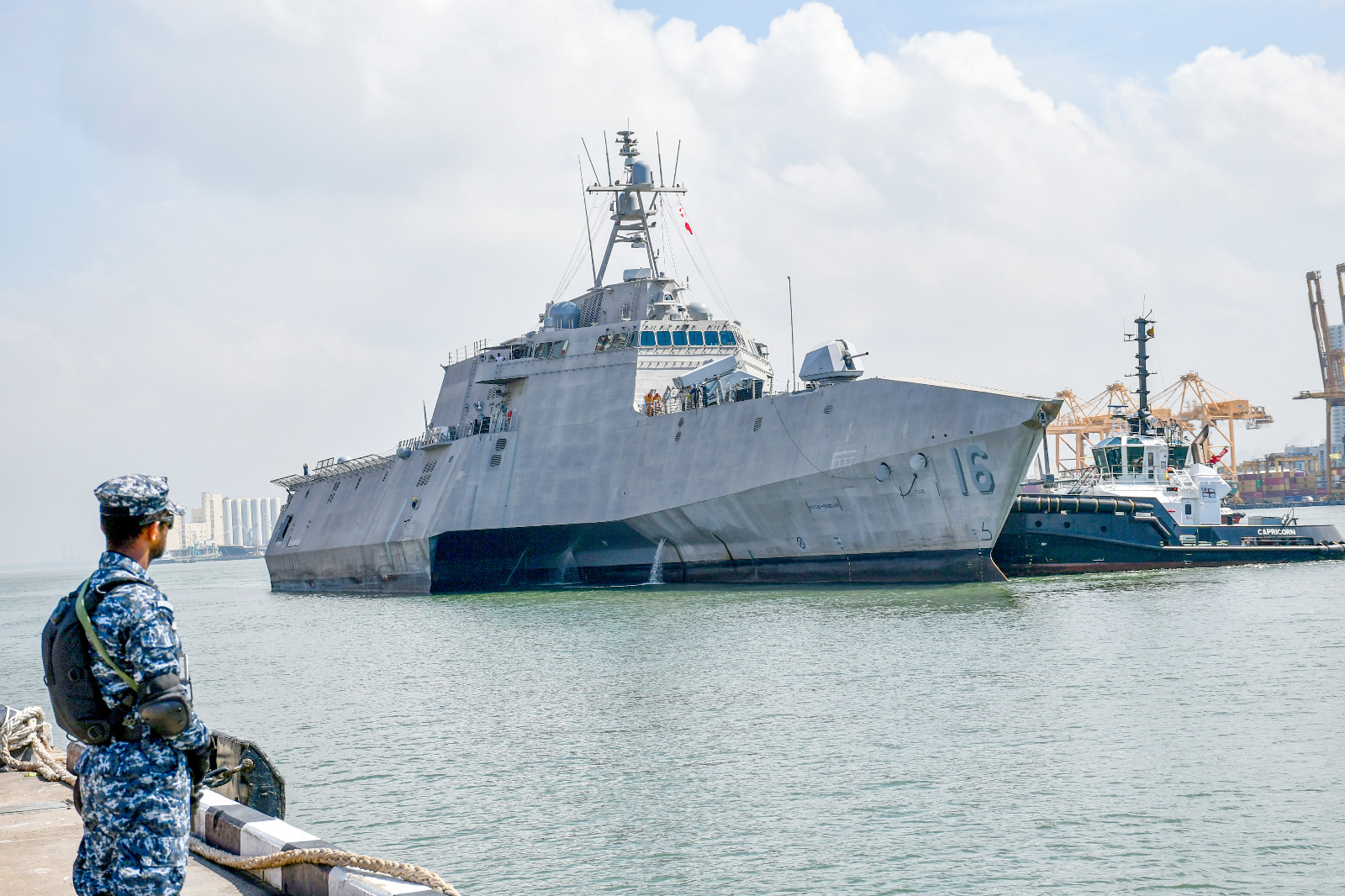
The U.S. Navy ship USS Tulsa (LCS 16) arrived at the Port of Colombo this morning, 7 October 2026 for replenishment purposes.
The visiting ship was welcomed by the Sri Lanka Navy in accordance with naval traditions.
The 127.7-metre-long platform is a Littoral Combat Ship commanded by Commander BM Wanier. Commissioned on 16 February 2019, USS Tulsa has since been in service with the US Navy.
The ship previously made a port call in Sri Lanka on 27 August 2025.

Govt. tells fuel distributors to maintain stocks to ensure uninterrupted supplies
by Saman Indrajith and Norman Palihawadane
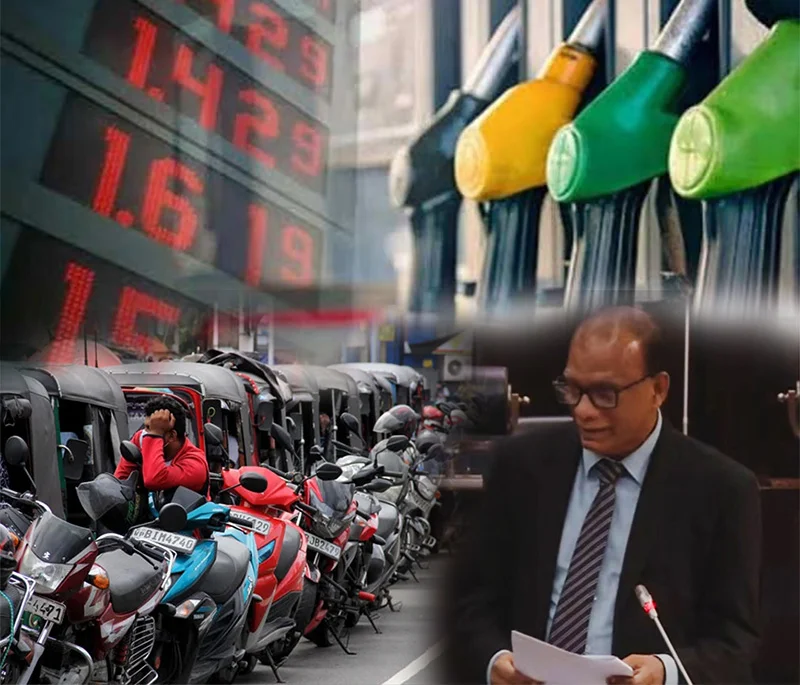
The government had instructed private fuel distributors to maintain minimum stocks and ensure uninterrupted supplies to the market, Energy Minister Anura Karunathilaka told Parliament yesterday (06).
Karunathilaka said the Ministry of Energy Secretary had notified the relevant companies of the requirement, following a reduction in supplies by some private distributors, amid higher international fuel prices.
The Minister said private companies had informed the government that they were facing losses because international prices had risen while fuel was being sold, locally, at prevailing prices. As a result, some companies had reduced the volumes released to the market.
The reduced supplies had increased the burden on the Ceylon Petroleum Corporation (CPC), whose share of the diesel market had risen from about 54% to 82%, the Minister said.
“The CPC currently holds an 82% share of the market,” he said, adding that it had increased its supplies, compared with February, to compensate for the reduction by private distributors.
Karunathilaka said the government could not, under the existing agreements with private companies, specify the quantities they should supply to individual filling stations. However, it could require them to maintain minimum stocks in the country.
The Minister said the Energy Ministry had already instructed companies that had failed to maintain the required stocks to take steps to prevent supply disruptions.
The Minister attributed the queues reported at some filling stations to reduced supplies from private distributors, as well as normal variations in fuel distribution. He also said demand for CPC fuel had increased because private companies generally did not provide fuel to dealers on credit, while the CPC offered a three-day credit facility.
“We expect that, as the Ceylon Petroleum Corporation takes on this additional burden, the problem will ease to some extent by Wednesday or Thursday,” Karunathilaka said.
He said instructions had also been issued to increase supplies to CPC filling stations. A special discussion on the issue is scheduled for today (07), with officials of the Energy Ministry and CPC expected to participate,
along with President Anura Kumara Dissanayake.
Meanwhile, Petroleum Dealers’ Association officials have called for an early solution to the supply issue. Association Chairman D.V. Shantha Silva said queues had been reported at many filling stations, mainly those operated by private distributors.
He said the situation was not due to an overall shortage of fuel, but was linked to reduced orders by Lanka IOC, Sinopec and R.M. Parks amid concerns over losses incurred on fuel sales.
The Ceylon Petroleum Private Tanker Owners Association has urged motorists to refrain from panic buying, saying there was no nationwide disruption to fuel supplies.
The government earlier increased fuel prices and introduced a per-litre diesel subsidy following concerns raised by distributors over rising international prices.
by Norman Palihawadane
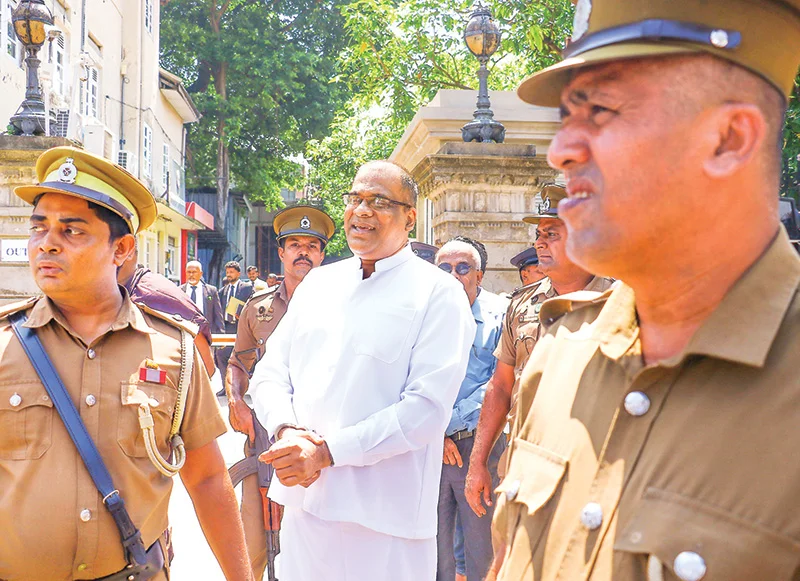
Bodu Bala Sena General Secretary Ven. Galagodaatte Gnanasara Thera, who has been ordered by the court to serve the remainder of his prison sentence, is to be assigned to the prison ‘printing work party’, prison officials said yesterday.
The monk was produced before the Colombo High Court yesterday by prison officials in connection with a warrant issued by the court.
He appeared before the court in civilian attire.
Prison sources said arrangements were being finalised for his detention and that he would subsequently be assigned to the printing work party.
The Thera initially objected when prison officials instructed him to change from his robes into the attire worn by convicted prisoners.
He later agreed to wear the prescribed prison clothes, sources said.
The Supreme Court, in September, annulled the presidential pardon granted to Gnanasara Thera in 2019. He had been serving a six-year prison sentence imposed following his conviction for contempt of court but had served only about nine months when then President Maithripala Sirisena granted him a presidential pardon in May 2019.
Following the Supreme Court ruling, the Thera was required to serve the remainder of his sentence. He was subsequently reported missing, prompting the Court of Appeal to issue an open warrant for his arrest.
The Court of Appeal on Monday ordered the authorities to enforce the remainder of his prison sentence.

U.S. Navy ship USS Tulsa arrives in Colombo for replenishment visit

Smriti Mandhana appointed India captain across formats

Ronaldo apologizes for Portugal walkout; says Jesus broke promise

Showers in the Western, Sabaragamuwa, Central, Uva, North-western and Southern provinces and in Anuradhapura and Mannar districts

Fuel crunch looms

Gnansara Thera to be assigned to prison printing section: Officials

‘Dates have the highest sugar content to fight Coronavirus’

Sunday Island 27 December – Headlines

#SundayIsland 17th December – Headlines

Sunday Island – 28th March

Sunday Island Headlines – 21 March

Sunday Island – 21st February – Headlines
-

 News6 days ago
US-assisted ‘Ice’ detection: NPC to examine IGP’s move to transfer drug-busting team
-

 Editorial5 days ago
Colombo Port drug bust: The plot thickens
-

 Editorial6 days ago
Drug busting, transfers and trust deficit
-

 Features4 days ago
The first woman in the foreign service or Ceylon Overseas Service it was then called
-
 News7 days ago
Sri Lankan facing death penalty in Saudi Arabia: Mano G appeals to Crown Prince
-

 Editorial5 days ago
Fuelling discontent and protest
-

 News2 days ago
Geneva takes up Sallay’s case and govt. ignores opportunity to answer accusations
-

 Latest News4 days ago
Tharindu Rathnayake, bowlers secure Asian Games Bronze for Sri Lanka