
Business
SDB bank records handsome growth in 2021


SDB bank has achieved outstanding financial results during 2021, amidst an unprecedentedly challenging economic environment. Total profits for the year ended 31st December 2021 stood at LKR 909 million, recording a year-on-year (YoY) growth of 9%, while profit for the 4th quarter of the year was recorded at LKR 159 million. Net interest income grew by 11% YoY, to LKR 6.774 billion, while total operating income grew by 9% YoY to reach LKR 7.4 billion. SDB bank’s loan book too showed robust growth, expanding by 9% against the year prior to LKR 111.89 billion, while a total of LKR 65 billion was disbursed through 98,185 accounts during the year. Net NPL (Non-Performing Loans) Ratio also witnessed positive change, improving to 1.49% in 2021, against 1.79% in 2020, due to improved provisioning during the period. SDB bank’s Total Assets also grew healthily by 15% in the year under review to LKR 147.8 billion, while the Deposit Portfolio expanded marginally by 1% YoY.
Discussing the Bank’s robust financial performance, Niranjan Thangarajah – The acting CEO at SDB bank said, “We have focused heavily on our core SME and MSME customers during the year, with special emphasis on women owned and led enterprises, in line with our drive towards inclusive banking. The exceptional planning and strategy devised by our senior management team has proven to be effective during the year, while we also benefitted from the rescinding of pandemic related restrictions. Furthermore, our commitment to working together with our customers in mutual partnership, placed us in an excellent position to detect early warning signs of financial distress, and helped us guide our customers towards making the right decisions. This is reflected in our expanding loan portfolio, coupled with shrinking NPLs. In 2022, we look forward to building on the achievements we have made in 2021. We also take this opportunity to thank our customers and stakeholders for their continued cooperation and support of SDB bank.”
2021 also saw SDB bank conduct a Secondary Public Offering (SPO), which received exceptional interest from investors, enjoying a hefty oversubscription on the opening date of the issue. The Bank also solidified its global reputation as a pioneering financier for SMEs in Sri Lanka, playing host, in November 2021, to the Annual Meeting of the Asia Pacific Chapter of the Global Alliance for Banking on Values (GABV). In line with SDB bank’s 4-year strategic growth plan, 2021 also saw the bank focus heavily on the SME sector, female entrepreneurship, driving sustainability both financially and environmentally and aggressively push digital banking across Sri Lanka, staying true to its commitment to take inclusive digital banking to the masses.
A future-ready bank, providing holistic, 360-degree support to its customers, SDB bank is constantly catering to ever-changing needs, through a combination of financial support and value additions to life and business through mentorship and knowledge-sharing focusing on areas such value chain enhancements and financial management. SDB bank is also committed to a sustainable business model in terms of environmental, social and governance sustainability. This commitment is reflected in the Bank’s financing activities, giving preference to businesses and initiatives that take a sustainable approach over those that do not. By supporting Sri Lanka’s SMEs, empowering women entrepreneurs and taking digital banking to the masses, SDB bank has established itself as a financier that values every customer equally, for their potential and not their worth. (SDB bank)



The Colombo Stock Exchange (CSE) announces the following change in S&P Sri Lanka 20 index constituents made by S&P Dow Jones Indices at the 2026 Mid-Year rebalance.
The exclusion and inclusion as announced by S&P Dow Jones Indices, effective from 22nd June 2026 (after the market close of 19th June 2026) are presented below.
The S&P SL 20 index includes the 20 largest companies, by total market capitalization, listed on the CSE that meet minimum size, liquidity and financial viability thresholds. The constituents are weighted by float-adjusted market capitalization, subject to a single stock cap of 15%, which is employed to reduce single stock concentration.


The S&P SL 20 index has been designed in accordance with international practices and standards. All stocks are classified according to the Global Industry Classification Standard (GICS®), which was co-developed by S&P Dow Jones Indices and MCSI and is widely used by market participants throughout the world.
To be eligible for inclusion, a stock must have a minimum float-adjusted market capitalization of 500 million Sri Lankan rupees (Rs), a six-month median daily value traded of Rs 0.25 million and have positive net income over the 12 months prior to the rebalancing reference date. For information, including the complete methodology, please visit: www.spindices.com
Effective from 22nd June 2026 the stocks in the S&P Sri Lanka 20 in alphabetical order are as above.

The Teejay Group recorded revenue of LKR 60.04 billion during the period, reflecting a 10% year-on-year decline, primarily due to continued softness in global textile demand. This performance was largely impacted by reciprocal tariffs imposed by the United States, intensified pricing pressures across key markets, and the resulting decline in volumes, all of which collectively weighed on topline growth.
Group Gross Profit declined by 36% year-on-year to LKR 5.02 billion, mainly attributable to lower production volumes, underutilization of plant capacity, sustained pricing pressures, and an unfavorable product mix. Together, these factors adversely affected margin performance amid a challenging operating environment.
The Group reported a Profit After Tax (PAT) of LKR 54.7 million, representing a 98% year-on-year decline. This was primarily driven by higher rupee-denominated costs and non-recurring items, provision for doubtful debts, and restructuring costs associated with right-sizing initiatives.
Ajit Gunewardene, Chairman of the Teejay Group said, “The year was marked by persistent global demand softness and pricing pressures, which impacted results. Despite this, we focused on operational efficiency, cost discipline, and strengthening our financial resilience. These actions position the Group to navigate ongoing uncertainty while remaining committed to long-term value creation for our shareholders.”
Despite these near-term challenges, the Teejay Group continues to maintain a strong financial position, supported by disciplined working capital management and a robust liquidity base. As at 31 March 2026, cash and cash equivalents stood at LKR 8.3 billion, while the Group’s net asset base increased by 3% year-on-year to LKR 32.4 billion, reinforcing the resilience of its balance sheet.

Fairfirst Insurance has once again partnered with the Sri Lanka Police K9 Unit, continuing its support for the seventh consecutive year. This partnership reflects the company’s long-standing commitment to giving back to the community.
Through this initiative, Fairfirst will provide comprehensive insurance coverage for the highly trained canines attached to the Sri Lanka Police K9 Unit. These dogs play a critical role in supporting police operations across the country, assisting with crime detection, narcotics investigations, search and rescue missions, and public safety efforts.
As a company that believes business should create a meaningful impact beyond insurance, Fairfirst remains committed to initiatives that support communities and recognise the vital contributions of those who help keep society safe. This shared commitment to protection and responsibility continues to drive the company’s long-standing partnership with the Sri Lanka Police K9 Unit.
Commenting on the continued partnership, Ravishankar Wickneswaran, CEO of Fairfirst Insurance, said, “It is a privilege for us to continue supporting the Sri Lanka Police K9 Unit for the seventh consecutive year. These dogs serve the country with incredible discipline and loyalty, often in challenging situations. Supporting their wellbeing is one small way for us to give back, and it reflects the FairfirstWay of standing by those who protect and serve our communities every day.”
Fairfirst looks forward to continuing this partnership and contributing to the wellbeing of the Sri Lanka Police K9 Unit in the years ahead.

Krrish case against Namal: Summons issued to two Indians

Kelaniya emerges as highest ranked Lankan uni in Times Higher Education Sustainability Impact Ratings

Dayasiri calls for independent investigation into coal imports

Quandary of Dengue: Some roving perspectives

Falling oil prices and fallen heroes

Constituent Change in the S&P Sri Lanka 20 Index

‘Dates have the highest sugar content to fight Coronavirus’

Sunday Island 27 December – Headlines

#SundayIsland 17th December – Headlines

Sunday Island – 28th March

Sunday Island Headlines – 21 March

Sunday Island – 21st February – Headlines
-

 News7 days ago
Creditor receives USD 2.5 mn as Lankan public bears loss from theft of Treasury funds
-

 News6 days ago
Creditor not yet paid
-
 News6 days ago
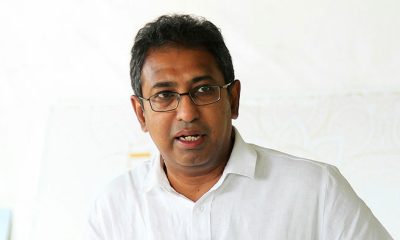
Consumers bearing 22% tax burden despite 18% VAT claim: Dr. Harsha de Silva
-

 Features5 days ago
Nanda Pethiyagoda Wanasundara as three generations of family saw her
-

 Features4 days ago
Sri Lanka developing independent hydrographic capabilities
-

 Editorial5 days ago
Fuel crisis: Beyond price debate
-

 Latest News4 days ago
Sooryavanshi thumps fastest List A fifty as India A win tri-series
-

 Opinion3 days ago
Ranasinghe Premadasa: The man who would not take ‘No’ for an answer