
Sports
Salt, Brook fireworks set up crushing England win

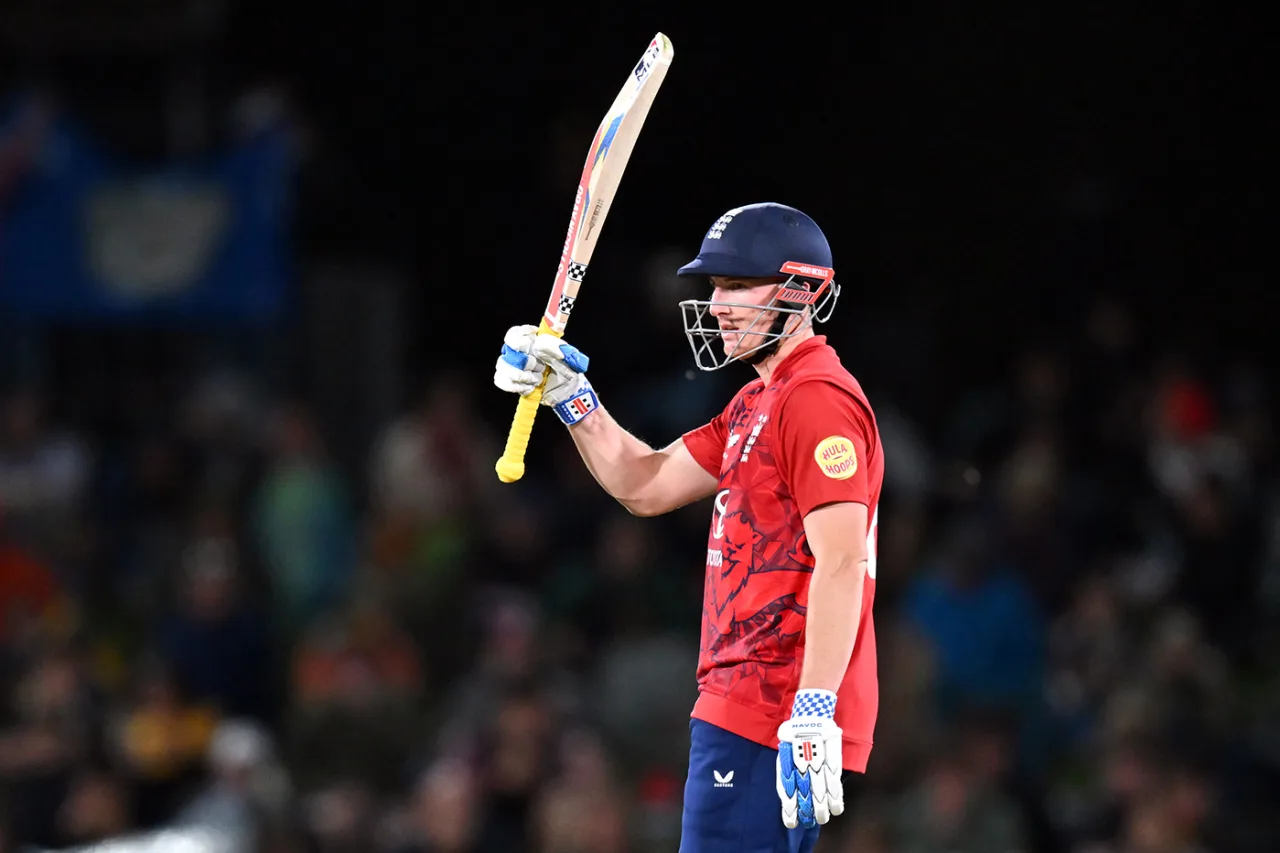
Phil Salt and Harry Brook combined to blow New Zealand out of the water in the second T20I, as England sealed a dominant 65-run win in Christchurch to take an insurmountable 1-0 lead in this three-match series.
Both Salt (85 off 56 balls) and Brook (78 off 35) were independently brutal but came together in devastating fashion with a partnership of 129 from just 69 deliveries. England’s 236 for 4 was a new record T20I score at Hagley Oval, comfortably bumping off the previous best of 208 with 10 balls still to go in their innings. New Zealand were eventually dismissed for 171 with two overs to spare.
Mitchell Santner’s decision to bowl first upon winning the toss was a case of rinse-and-repeat; both teams opting for the same XIs after Saturday’s washout in the first T20I. Unfortunately for the Black Caps skipper, this was a truer surface than the one which saw England scrape to 153 for 6.
Drier with more pace, Santner’s bowlers were up against it from the off, with all six used posting double-figure economy rates. They were not helped by two dropped catches that would have given them a more realistic target.
The one that mattered more gave Brook a life on 40, after he had successfully overturned a caught behind decision on 22. The visiting captain was at his destructive best, with 54 runs through boundaries, including five sixes, two of which were carted out of the ground. Despite Kyle Jamieson accounting for both Brook and then Salt in the space of three deliveries, Tom Banton’s unbeaten 29 from 12 added the record-busting cherry on top.
Brydon Carse’s twin strikes in the second over clipped the Kiwis’ wings in pursuit of 237. And though Tim Seiffert and Mark Chapman restarted the chase with an engaging stand of 69, their respective demises to the spin duo of Adil Rashid and Liam Dawson all but confirmed the result.
Santner did his utmost to inject some late jeopardy with a breezy 36 off 15, before falling to Rashid’s final delivery, the legspinner finishing a solid evening’s work with 4 for 32. Luke Wood then had the honour of capping off victory in the 18th over with two dismissals in four deliveries, with New Zealand losing all 10 wickets to catches.
This new iteration of Salt is developing a knack of cashing in after missing out. His career-best 141 not out against South Africa in September came two days after a first-ball duck. And with as many days since 3 off 4 in the first T20I at Hagley Oval, he looked on course for a fifth century in the format.
No doubt Salt will feel he missed out in a different way, falling for 85 when he was caught on the long-off sponge, 15 short of three figures with as many balls of the innings remaining. Once again he spearheaded a record total a month after leading the breaching of 300.
He upheld his first-over responsibility by putting Matt Henry’s second ball on to the grass bank at midwicket, then whipping behind square leg along the floor once Henry had corrected. By the time Jos Buttler faced his second ball, Salt had already struck 20 from nine.
That was as dominant as Salt was in his stands. Once Buttler was dismissed for 4, he adopted a secondary role during his work with Bethell (scoring 19 of their 44 together) and Brook (46 of their 129). Hardly a passenger but more than happy to cede the driving.
Perhaps the best example of his continued intent was his dismissal, attempting a second six (and 13th boundary) two balls after Brook had holed out at deep midwicket. He now has more T20I runs than Jason Roy, despite 22 fewer innings, moving up to sixth for England run-scorers in the format, with a strike rate of 168.12 that is at least 16 ahead of any of those in the top 10.
“We’ve got such a strong batting line-up, we can keep going,” Brook said after a second coin toss of the series had gone against him on this tour. The response came after the England captain seemed nonplussed with being asked to set a total.
And how. Arriving in the eighth over, Brook, a straight-talker, got straight down to business. He raced to 19 off six, courtesy of three successive boundaries off Santner, with two sixes – the first into the crowd, the second over the roof at midwicket – sandwiching a craftily ramped four.
A second six beyond the confines of this boutique ground allowed him to knock two singles for a 22-ball half-century – his fifth overall in T20Is and first as captain.
He celebrated with 21 off the returning Kyle Jamieson in the following over. Earlier, he had provided 14 of the 20 picked off from Jimmy Neesham’s one-and-only over.
Both were examples of constantly putting bowlers under pressure, already a well-worn mantra in his six months at the helm. That knack of leading by example is not only why he was handed the keys to the white-ball job but instilled as Test vice-captain ahead of this winter’s Ashes.
That both teams opted for two spinners owed more to trending towards 2026’s T20 World Cup in India and Sri Lanka. While New Zealand’s returned 1 for 77 from seven overs, England’s bagged 6 for 70 in eight.
The fact both wanted to bowl first showed there was a collective misreading of conditions. And as the lights took over for the second half, the pitch did begin to grip. It was, in more ways than one, a great toss to lose.
There is not much more to be said of Rashid, his status as one of England’s most-valuable white-ball cricketers set in stone long before becoming the first visiting bowler to take four or more in a T20I at this venue. But it was Dawson who laid down his credentials to partner the leggie for next year’s global tournament.
The left-arm spinner’s wiliness was on show in his first three overs, manipulating his angles to remove Mark Chapman and then the dangerous Michael Bracewell. It took until Dawson’s 16th delivery for New Zealand to find a boundary off him – Jimmy Neesham smearing a four to midwicket – and even then, heading into his final over, the Hampshire allrounder had an impressive 2 for 15 by his name.
Twenty-three conceded off a scatty fourth messed up those figures. Two sixes from Santner were responsible the untidy finish, triggering five wides as Dawson bunged a full toss down the leg side in an attempt to hide the ball from the home skipper’s arc. Nevertheless, Santner’s 0 for 41 earlier in the piece highlighted just how impressive England’s own southpaw twirler had been.
For all England’s enterprise with the bat, there was unnecessary generosity from their hosts. You do not usually associate slack fielding with New Zealand, but two drops tilted this match against them significantly in Christchurch.
Tim Seifert was responsible for missing the first and tougher chance. Jacob Duffy, having pulled out of the previous delivery as Jacob Bethell gave himself room to the leg side, dug one in short with a bit of cut. Bethell, on 7, went for his pull shot, only to top-edge high towards short third.
Seifert had tracked it well, but was done by the stiff north-west breeze, ending up on his back, palming the ball just before he hit the deck. Though Bethell “only” managed 17 more before being dismissed with the last ball of the sixth over, his back-to-back sixes off Bracewell lifted England’s powerplay score to 68 for 2.
That it was the highest at this ground was a sign of things to come, but that, too, could have been avoided. At the start of the 13th over, Matt Henry returned and was greeted with a lofted straight heave from Brook. Somehow, Neesham, having just bowled an over that cost 20, botched a straightforward catch at long-on allowing Brook a life.
They did not have to count the cost of dropping Sam Curran twice on Saturday, the allrounder’s 49 not out hustling England to a respectable total of 153 before the rain intervened. Here, the price of the combined errors was 55 – a figure New Zealand only made up for in their innings with the final ball of the powerplay.
Brief scores:
England 236 for 4 in 20 overs (Phil Salt 85, Jacob Bethell 24, Harry Brook 78, tom Banton 29*; Jacob Duffy 1-44, Kyle Jamieson 2-47, Michael Bracewell 1-36) beat New Zealand 171 in 18 overs (Tim Seifert 39, Mark Chapman 28, James Neesham 17, Mitchell Santner 36; Luke Wood 2-36, Brydon Carse 2-27, Adil Rashid 4-32, Liam Dawson 2-38) by 65 runs
[Cricinfo]

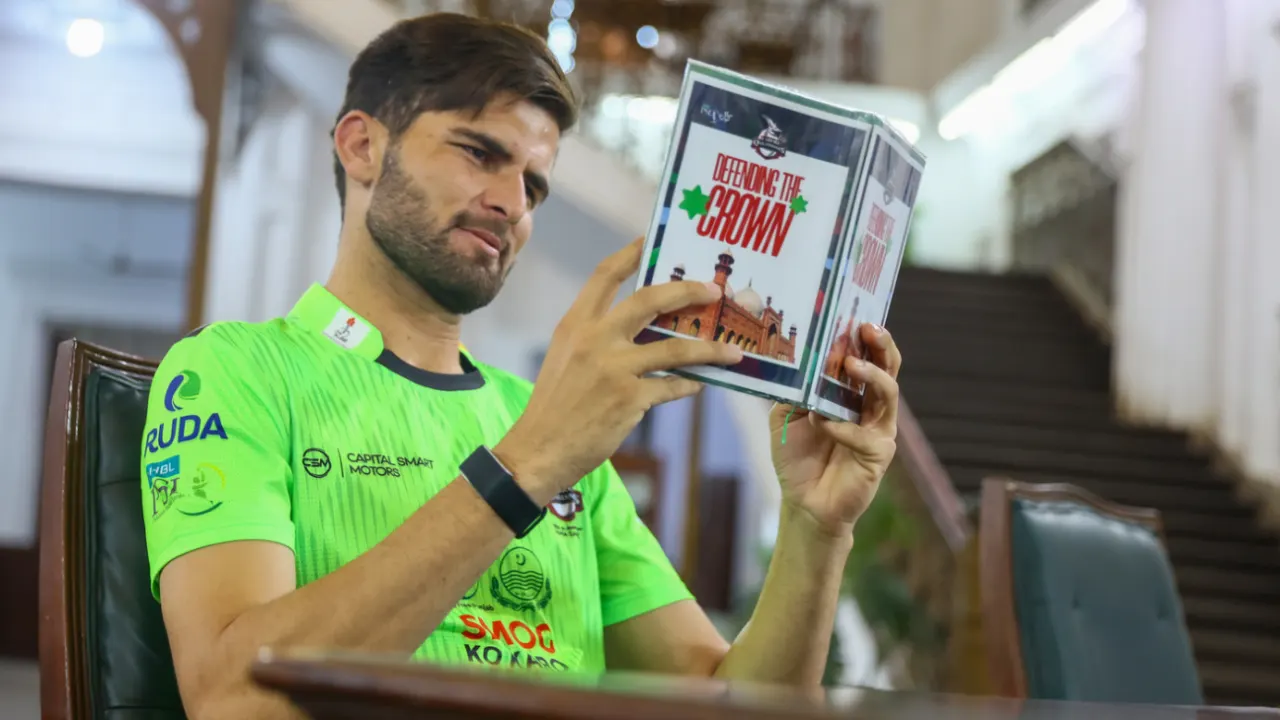
Lahore Qualandars have fined Shaheen Shah Afridi PKR 1 million (approx. USD 3600) following the incident that saw the Punjab police accuse him of violating security protocols at the team hotel. In a statement, Qalandars said they had imposed the fine on their captain to “maintain discipline and impose accountability”.
There will be no action taken against Qalandars player Sikandar Raza, who was also accused by the police of violating the same protocols. At a press conference yesterday, Raza said he took responsibility for the incident and attempted to exonerate Afridi from blame.
News of the incident emerged after a letter from the Punjab police to PSL CEO Salman Naseer was made widely available on social media. It accused Qalandars, Afridi and Raza’s team, of violating security protocols, alleging that, despite being refused permission to receive visitors in Raza’s room by both the PCB’s security and anti-corruption manager as well as Naseer, Afridi and Raza took people up to the player’s room. Despite Raza saying they stayed in his room for 40 minutes, the letterclaims they spent approximately three hours there.
Qalandars accepted the broader details of the incident, but the statement said it had been “overstated in public discourse, amplified beyond its original context”, and was “unnecessarily escalated”.
“While underscoring that the matter arose from a misunderstanding rather than any deliberate attempt to violate established procedures, Lahore Qalandars reiterated its full respect for all security protocols,” the statement said.
“The organisation reaffirmed its commitment to strict adherence to standard operating procedures (SOPs) and emphasised the importance of continued clarity and alignment in the communication of protocols to prevent similar situations in the future.”
[Cricinfo]
New IPL season, new-look team, but same-old batting troubles for Chennai Super Kings [CSK].
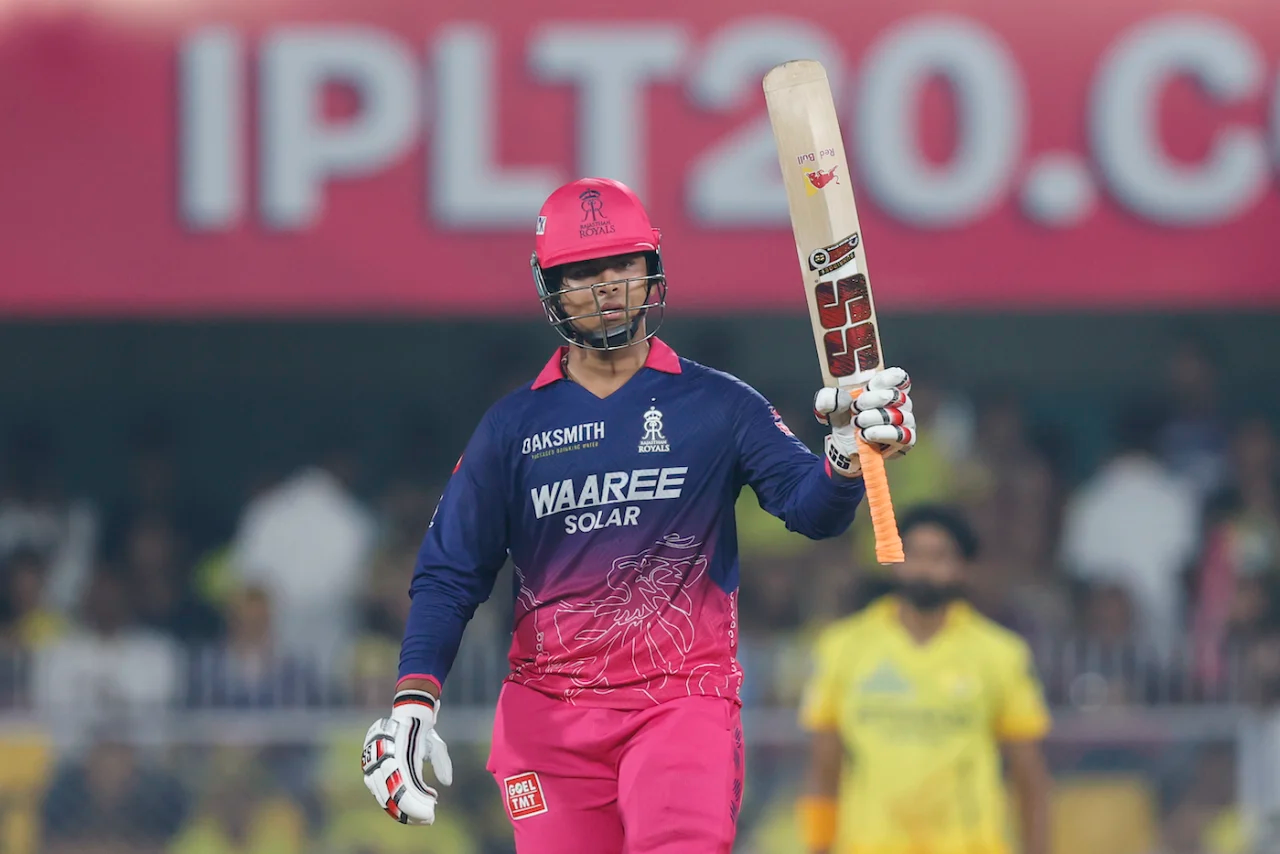
On Monday, their powerplay score of 41 for 4 against Rajasthan Royals [RR] was straight out of 2025, when they had finished rock bottom in the league, before they were eventually bowled out for 127. That total then looked next to nothing when 15-year-old Vaibhav Sooriyavanshi, who is four years younger than the IPL itself, clattered a 15-ball half-century. RR razed the target down with eight wickets and almost as many overs to spare.
The Guwahati pitch was trickier to bat on in the early exchanges – it had spent considerable time under covers both on match day and match eve – and RR made excellent use of the dampness after winning a crucial toss and opting to bowl. Both Jofra Archer and Nandre Burger bowled Test-match lengths to wreck CSK’s top order. Ravindra Jadeja then marked his return to RR after 17 years with a double-wicket first over. Sooryavanshi then ripped up CSK’s attack, and the IPL record books.
It was Burger who made the opening breakthrough when he knocked Sanju Samson over in the second over. Burger bowled a perfectly pitched delivery – neither full or short – on a good length, and got it to seam away from over the wicket. Samson, who was shaping up for an inswinger, was made to look silly by the left-arm quick.
Ruturaj Gaikwad then exposed all his stumps, only to be bowled by a 143.3kph delivery from Archer. Both the CSK openers fell for 6 each, and the revamped middle order could not stop the rot.
CSK’s title-winning sides of old used to navigate such Test-match style passages of play with their all-format experience. But the team management has now pivoted to youth who tried to hit their way out of trouble, and wound up collapsing spectacularly.
Ayush Mhatre dared to hook a head-high bouncer, and was caught behind for a golden duck. Matthew Short, who got an opportunity in place of the injured Dewald Brevis, chipped a slower ball from Sandeep Sharma to midwicket to leave CSK at 38 for 4 in the sixth over.
That soon became 57 for 6 after Jadeja’s double-strike in his first over. The first wicket of Sarfaraz Khan had Jadeja written all over it. He speared in a fast, flat dart that thudded into Sarfaraz’s pads, and trapped him lbw for 17 off 12 balls. Sarfaraz had come in as CSK’s Impact Sub in their bat-first XI that had Noor Ahmad slotted in at No. 8. Had CSK fared better with the bat, they may have had the option of strengthening their bowling with the potential inclusion of Gurjapneet Singh or allrounder Ramakrishna Ghosh.
Shivam Dube came out attacking as well, launching his first ball for six over wide long-on. But Jadeja quickly shifted his lines wide of off and had Dube slicing a catch to wide long-off. Jadeja bared his emotions and gave his former team-mate a send-off. He finished with 2 for 18 in his three overs and later said “pink looks good on me” with a big smile on his face during the innings break.
At one point, CSK were in danger of being bowled out for a sub-100 total, but Jamie Overton’s 43 off 36 balls – he was the only CSK batter to pass 20 on the day – dragged them to 127. Overton added 33 with Anshul Kamboj, the highest ever for the last wicket for CSK.
CSK could’ve dismissed Sooryavanshi for a golden duck had debutant Kartik Sharma not dropped him in the first over of the chase. Matt Henry drew a mis-hit over midwicket with a hard-length delivery, but Kartik, who usually keeps wicket for Rajasthan, missed a difficult catch and parried it away to the boundary. What happened next ball? Sooryavanshi swatted it over wide long-on for the first of his five sixes.
The pick of Sooryavanshi’s sixes was a scythed hit off a slower ball from Henry in the third over. Henry took pace off and bowled a slower cutter wide of off, but Sooryavanshi powered it over deep point, one of the two fielders in the outfield, with his incredible bat speed and bat swing. He pressed on to bring up his fifty off 15 balls. Only four other players – his opening partner Yashasvi Jaiswal, KL Rahul, Pat Cummins and Romario Shepherd – have hit quicker fifties in the IPL.
CSK cut Sooryavanshi’s innings short on 52 off 17 balls when Sarfaraz pulled off a superb diving catch at sweeper cover off Kamboj in the seventh over. Kamboj struck again in his next over to remove Dhruv Jurel, but Jaiswal (38*) and captain Riyan Parag (14*) completed RR’s demolition of CSK.
Brief scores:
Rajasthan Royals 128 for 2 in 12.1 overs (Vaibhav Sooryavanshi 52, Yashaswi Jaiswal 38*, Druv Jurel 18, Riyan Parag 14*; Anshul Kamboj 2-27) beat Chennai Super Kings 127 in 19.4 overs (Sarfaraz Khan 17, Kartik Sharma 18, Jamie Overton 43; Ravindra Jadeja 2-18, Jofra Archer 2-19, Nandre Burger 2-26, Brijesh Sharma 1-17, Sandeep Sharma 1-22, Ravi Bishnoi 1-16) by eight wickets
[Cricinfo]

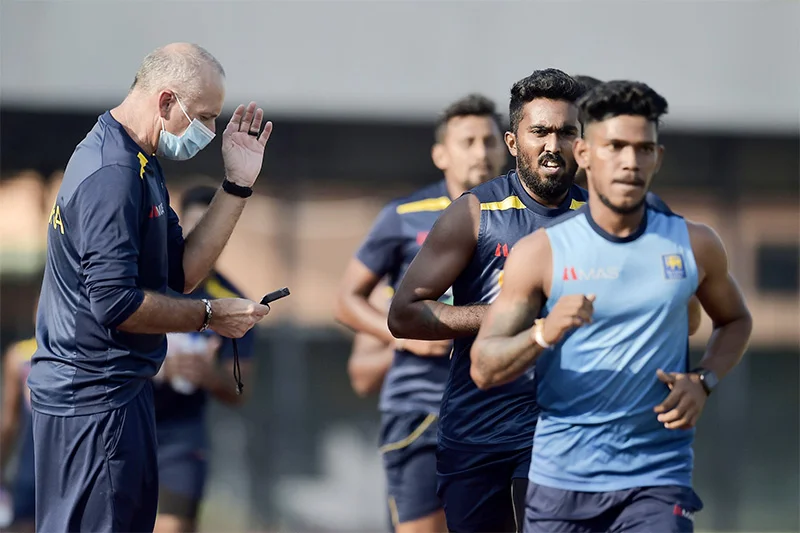
Sri Lanka Cricket has drawn a hard line in the sand, vowing zero tolerance for players who fail fitness tests, with a clear message that those who don’t make the grade risk being left out in the cold when selections are made. While Sri Lanka’s campaign in the recent T20 World Cup, co-hosted with India, had its moments in the sun, fitness issues proved to be the Achilles’ heel.
The wheels began to come off midway through the tournament as key bowlers broke down, forcing the selectors to field a second-string unit. Across the board, fitness levels looked below the required standard.
In the immediate aftermath of the World Cup, the board tightened the screws, making it mandatory for players to clear fitness tests before being granted No Objection Certificates (NOCs) to feature in franchise leagues such as the IPL and PSL.
“The concerns about the fitness levels of players were flagged during the tournament and we are addressing it,” a board official told Telecom Asia Sport. “There has been non-stop cricket over the last 36 months, leaving very little time for players to work exclusively on fitness. But having said that, professional cricketers should be able to meet minimum standards.”
“In the past, we have fined players for failing fitness tests, but if that’s not yielding results, we will have to explore stronger measures. If it comes to a point where a player is deemed ineligible for selection due to failing fitness standards, we will have to take that call.”
Telecom Asia Sport understands that the numbers make for grim reading. Of the 46 players put through the fitness grind, only 12 managed to pass. Those who cleared the bar have secured NOCs and are plying their trade in India and Pakistan, while others, including Nuwan Thushara, have been benched after failing to meet the cut.
Leg-spinner Wanindu Hasaranga and tearaway quick Matheesha Pathirana are set to undergo their fitness tests after completing rehabilitation. If they come through unscathed, both are expected to be back in action from the second week of April.
SLC’s fitness regime is no walk in the park. It includes skinfold tests to monitor body fat, a two-kilometre run to assess endurance, a 20-metre sprint, agility drills and a counter-movement jump. The spotlight, however, falls heavily on skinfold measurements and endurance, with players given a second bite at the cherry before fines and now potentially harsher consequences come into play.

Steps are taken to accelerate the recovery efforts following Cyclone Ditwah despite Global Economic Challenges

Qalandars fine Afridi for violating security protocols

Sooryavanshi, Archer, Burger demolish Chennai Super Kings

Showers may occur at a few places in the Western and Sabaragamuwa provinces and in Galle and Matara districts after 2.00 pm

Burning of low-grade coal at N’cholai plant increases pollution: Parliament

Tariff shock from 01 April as power costs climb across the board

‘Dates have the highest sugar content to fight Coronavirus’

Sunday Island 27 December – Headlines

#SundayIsland 17th December – Headlines

Sunday Island – 28th March

Sunday Island Headlines – 21 March

Sunday Island – 21st February – Headlines
-

 News6 days ago
Senior citizens above 70 years to receive March allowances on Thursday (26)
-

 Features3 days ago
A World Order in Crisis: War, Power, and Resistance
-

 News4 days ago
Energy Minister indicted on corruption charges ahead of no-faith motion against him
-

 News5 days ago
US dodges question on AKD’s claim SL denied permission for military aircraft to land
-

 Business5 days ago
Dialog Unveils Dialog Play Mini with Netflix and Apple TV
-

 News6 days ago
CEB Engineers warn public to be prepared for power cuts after New Year
-

 Sports4 days ago
SLC to hold EGM in April
-

 Latest News5 days ago
A strong Technical and Vocational Education and Training (TVET) system equips individuals with practical, relevant, and future-oriented skills helping to innovate responsibly towards a greener and sustainable future – PM