
Features
Roots of armed conflict: High Commissioner’s misinterpretations

By Dr Laksiri Fernando
Did or did not Sri Lanka face separatist terrorism from the LTTE and other sources? Why cannot the so-called High Commissioner for Human Rights accept this truth? Why instead the High Commissioner’s Report directly and indirectly try to justify that separatist terrorism? It appears that the words ‘terrorism’ and ‘separatism’ have been taboo to the High Commissioner. However, criticisms about ‘Buddhism,’ ‘Sinhala-Buddhist ethno-nationalism’ and ‘majoritarianism’ frequently appear in the Report.
Armed Conflict or Ethnic Conflict?
Among other excuses for separatism and terrorism the following appears in the Report:
“In Sri Lanka, armed conflict emerged against a backdrop of deepening discrimination against and the marginalization of the country’s minorities, particularly the Tamils.”
What is the picture given? The ‘diagnosis’ here is that the ‘armed conflict’ emerged because or ‘against a backdrop’ of deepening discrimination and the marginalization of the Tamils.’ In justification of this ‘diagnosis,’ some others have quoted the Lessons Learnt and Reconciliation Commission (LLRC) report. However, what the LLRC report said was the following.
“The Commission takes the view that the root cause of the ethnic conflict in Sri Lanka lies in the failure of successive Governments to address the genuine grievances of the Tamil people.”
There is a difference. The High Commissioner was talking about ‘the armed conflict’ but the LLRC was talking about the ‘ethnic conflict.’ Are these the same? It also should be noted that the LLRC report qualifies the grievances as ‘genuine grievances.’ It is true that the LLRC report also refers to the armed conflict in a very generous manner and says the following because one of its mandates was Reconciliation.
“The country may not have been confronted with a violent separatist agenda, if the political consensus at the time of independence had been sustained and if policies had been implemented to build up and strengthen the confidence of the minorities around the system which had gained a reasonable measure of acceptance.”
It should be noted the LLRC report’s open-ended qualification ‘the country may not have been confronted.’ It is not a diagnosis but an opinion/speculation. As a record of history, it also should be noted that the separatist agenda came soon after independence from the Ilankai Tamil Arasu Kadchi (ITAK) in 1949. It is true that the citizenships acts came in 1948 depriving the hill country Tamils of their citizenship, but it is not from that community the separatist agenda emerged.
Are the Reasons Objective?
In social science and political science analyses, there can be other reasons for ‘violent separatist agendas’ in the ideological sphere other than objective reasons. We should not quote passages just rhetorically without understanding the nuances. I never got the opportunity to go before the LLRC, because of travel, but I had the opportunity to meet some of the members later and their views were quite concerned, magnanimous, and fully committed to reconciliation and resolving the problems that all communities were facing. The LLRC report is one building block for possible reconciliation.
What I would quote below is what the prominent British historian, Eric Hobsbawm, quoted and analyzed about the roots of this separatist ideology in his famous ‘Nations and Nationalism’ (latest edition, 2012, pp.6-7). I was reluctant to quote this before for the last several years for the sake of reconciliation but given the distortions and attempts by the High Commissioners (present and the last) to resurrect separatism and probably terrorism in Sri Lanka, it is timely that I quote and bring it to the notice of the public. First, his quote came from the Ilankai Tamil Arasu Kadchi (ITAK), manifesto, “The Case for a Federal Constitution of Ceylon,” Colombo, 1951.
“The Tamil-speaking people in Ceylon constitute a nation distinct from that of the Sinhalese by every fundamental test of nationhood, firstly that of a separate historical past in the island at least as ancient and as glorious as that of the Sinhalese, secondly by the fact of their being a linguistic entity different from that of the Sinhalese, with an unsurpassed classical heritage and a modern development of language which makes Tamil fully adequate for all present-day needs, and finally by reason of their territorial habitation of definite areas.”
Unfortunately, S. J. V. Chelvanayakam was the brain behind these concepts or principles. These are the concepts later developed into the Vaddukoddai Resolution (1976) and Thimphu Principles (1985). Hobsbawm said immediately after quoting the above passage that:
“The purpose of this passage is clear: it is to demand autonomy or independence for an area described as ‘over one third of the island’ of Sri Lanka, on grounds of Tamil nationalism. Nothing else about it as it seems.“
This was soon after independence and not later. Of course, the Tamil people have had so many grievances after independence and even before because of neglect of their areas and discrimination. These should have been negotiated on an objective and reasonable grounds by their true representatives. However, the federalist or separatist demands were based on a nationalist ideology, or ideologies of the political leaders. Hobsbawm considered these demands to be unreasonable and unrealistic. He was not a Sinhala nationalist.
Hobsbawm’s Insight
After expressing his dismay and unreasonable nature of the territorial demands of Tamil nationalism (too long to quote here) he said the following with reference to the 13th Amendment.
“In fact, in the negotiations which led to the end of the Sri Lankan civil war in 1987, the decision to do so was a straightforward political concession to the demands of the Tamil nationalists.”
Hobsbawm’s book was first published in early 1990. He even thought that given the above concession, the war would end. Unfortunately, it did not. He said:
“As we have already seen the ‘linguistic entity’ conceals the unquestionable fact that indigenous Tamils, immigrant Indians and Moors are – so far – a homogeneous population in no other than the philosophical sense, and, as we shall see, probably not even in this sense.”
He went further and had a prophesy at the end of the analysis.
“As for the ‘separate historical past,’ the phrase is almost certainly anachronistic, question-begging or so vague as to be meaningless. It may, of course, be objected that patently propogandist manifestos should not be scrutinized as they were contributions to the social sciences, but the point is that almost any classification of some community as a ‘nation’ on the grounds of such purportedly objective criteria would be open to similar objections, unless the fact that it was a ‘nation’ could be established on other grounds.”
It was to establish this ‘nation’ or ‘Eelam’ on other grounds that Prabhakaran fought through terrorism. But he and others failed. The UN High Commissioner for Human Rights or others therefore, in my concerned opinion, should not directly or indirectly try to justify and resurrect it again.



 ‘Adapt, shrink or die’ – thus runs the warning issued by the Trump administration to UN humanitarian agencies with brute insensitivity in the wake of its recent decision to drastically reduce to $2bn its humanitarian aid to the UN system. This is a substantial climb down from the $17bn the US usually provided to the UN for its humanitarian operations.
Considering that the US has hitherto been the UN’s biggest aid provider, it need hardly be said that the US decision would pose a daunting challenge to the UN’s humanitarian operations around the world. This would indeed mean that, among other things, people living in poverty and stifling material hardships, in particularly the Southern hemisphere, could dramatically increase. Coming on top of the US decision to bring to an end USAID operations, the poor of the world could be said to have been left to their devices as a consequence of these morally insensitive policy rethinks of the Trump administration.
Earlier, the UN had warned that it would be compelled to reduce its aid programs in the face of ‘the deepest funding cuts ever.’ In fact the UN is on record as requesting the world for $23bn for its 2026 aid operations.
If this UN appeal happens to go unheeded, the possibilities are that the UN would not be in a position to uphold the status it has hitherto held as the world’s foremost humanitarian aid provider. It would not be incorrect to state that a substantial part of the rationale for the UN’s existence could come in for questioning if its humanitarian identity is thus eroded.
Inherent in these developments is a challenge for those sections of the international community that wish to stand up and be counted as humanists and the ‘Conscience of the World.’ A responsibility is cast on them to not only keep the UN system going but to also ensure its increased efficiency as a humanitarian aid provider to particularly the poorest of the poor.
It is unfortunate that the US is increasingly opting for a position of international isolation. Such a policy position was adopted by it in the decades leading to World War Two and the consequences for the world as a result for this policy posture were most disquieting. For instance, it opened the door to the flourishing of dictatorial regimes in the West, such as that led by Adolph Hitler in Germany, which nearly paved the way for the subjugation of a good part of Europe by the Nazis.
If the US had not intervened militarily in the war on the side of the Allies, the West would have faced the distressing prospect of coming under the sway of the Nazis and as a result earned indefinite political and military repression. By entering World War Two the US helped to ward off these bleak outcomes and indeed helped the major democracies of Western Europe to hold their own and thrive against fascism and dictatorial rule.
Republican administrations in the US in particular have not proved the greatest defenders of democratic rule the world over, but by helping to keep the international power balance in favour of democracy and fundamental human rights they could keep under a tight leash fascism and linked anti-democratic forces even in contemporary times. Russia’s invasion and continued occupation of parts of Ukraine reminds us starkly that the democracy versus fascism battle is far from over.
Right now, the US needs to remain on the side of the rest of the West very firmly, lest fascism enjoys another unfettered lease of life through the absence of countervailing and substantial military and political power.
However, by reducing its financial support for the UN and backing away from sustaining its humanitarian programs the world over the US could be laying the ground work for an aggravation of poverty in the South in particular and its accompaniments, such as, political repression, runaway social discontent and anarchy.
What should not go unnoticed by the US is the fact that peace and social stability in the South and the flourishing of the same conditions in the global North are symbiotically linked, although not so apparent at first blush. For instance, if illegal migration from the South to the US is a major problem for the US today, it is because poor countries are not receiving development assistance from the UN system to the required degree. Such deprivation on the part of the South leads to aggravating social discontent in the latter and consequences such as illegal migratory movements from South to North.
Accordingly, it will be in the North’s best interests to ensure that the South is not deprived of sustained development assistance since the latter is an essential condition for social contentment and stable governance, which factors in turn would guard against the emergence of phenomena such as illegal migration.
Meanwhile, democratic sections of the rest of the world in particular need to consider it a matter of conscience to ensure the sustenance and flourishing of the UN system. To be sure, the UN system is considerably flawed but at present it could be called the most equitable and fair among international development organizations and the most far-flung one. Without it world poverty would have proved unmanageable along with the ills that come along with it.
Dehumanizing poverty is an indictment on humanity. It stands to reason that the world community should rally round the UN and ensure its survival lest the abomination which is poverty flourishes. In this undertaking the world needs to stand united. Ambiguities on this score could be self-defeating for the world community.
For example, all groupings of countries that could demonstrate economic muscle need to figure prominently in this initiative. One such grouping is BRICS. Inasmuch as the US and the West should shrug aside Realpolitik considerations in this enterprise, the same goes for organizations such as BRICS.
The arrival at the above international consensus would be greatly facilitated by stepped up dialogue among states on the continued importance of the UN system. Fresh efforts to speed-up UN reform would prove major catalysts in bringing about these positive changes as well. Also requiring to be shunned is the blind pursuit of narrow national interests.

 Hi! Great to be back after my Christmas break.
Thought of starting this week with egg white.
Yes, eggs are brimming with nutrients beneficial for your overall health and wellness, but did you know that eggs, especially the whites, are excellent for your complexion?
OK, if you have no idea about how to use egg whites for your face, read on.
Egg White, Lemon, Honey:
Separate the yolk from the egg white and add about a teaspoon of freshly squeezed lemon juice and about one and a half teaspoons of organic honey. Whisk all the ingredients together until they are mixed well.
Apply this mixture to your face and allow it to rest for about 15 minutes before cleansing your face with a gentle face wash.
Don’t forget to apply your favourite moisturiser, after using this face mask, to help seal in all the goodness.
Egg White, Avocado:
In a clean mixing bowl, start by mashing the avocado, until it turns into a soft, lump-free paste, and then add the whites of one egg, a teaspoon of yoghurt and mix everything together until it looks like a creamy paste.
Apply this mixture all over your face and neck area, and leave it on for about 20 to 30 minutes before washing it off with cold water and a gentle face wash.
Egg White, Cucumber, Yoghurt:
In a bowl, add one egg white, one teaspoon each of yoghurt, fresh cucumber juice and organic honey. Mix all the ingredients together until it forms a thick paste.
Apply this paste all over your face and neck area and leave it on for at least 20 minutes and then gently rinse off this face mask with lukewarm water and immediately follow it up with a gentle and nourishing moisturiser.
Egg White, Aloe Vera, Castor Oil:
To the egg white, add about a teaspoon each of aloe vera gel and castor oil and then mix all the ingredients together and apply it all over your face and neck area in a thin, even layer.
Leave it on for about 20 minutes and wash it off with a gentle face wash and some cold water. Follow it up with your favourite moisturiser.
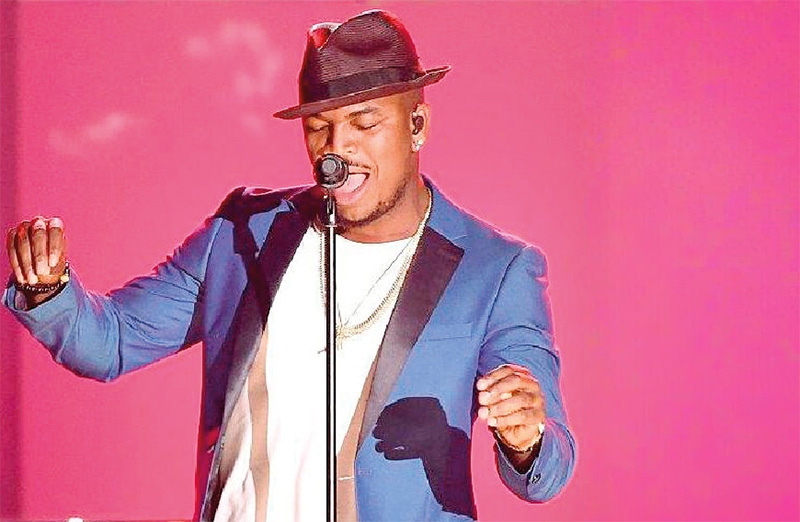
 Superlatives galore were used, especially on social media, to highlight R&B singer Ne-Yo’s trip to Sri Lanka: Global superstar Ne-Yo to perform live in Colombo this December; Ne-Yo concert puts Sri Lanka back on the global entertainment map; A global music sensation is coming to Sri Lanka … and there were lots more!
At an official press conference, held at a five-star venue, in Colombo, it was indicated that the gathering marked a defining moment for Sri Lanka’s entertainment industry as international R&B powerhouse and three-time Grammy Award winner Ne-Yo prepares to take the stage in Colombo this December.
What’s more, the occasion was graced by the presence of Sunil Kumara Gamage, Minister of Sports & Youth Affairs of Sri Lanka, and Professor Ruwan Ranasinghe, Deputy Minister of Tourism, alongside distinguished dignitaries, sponsors, and members of the media.
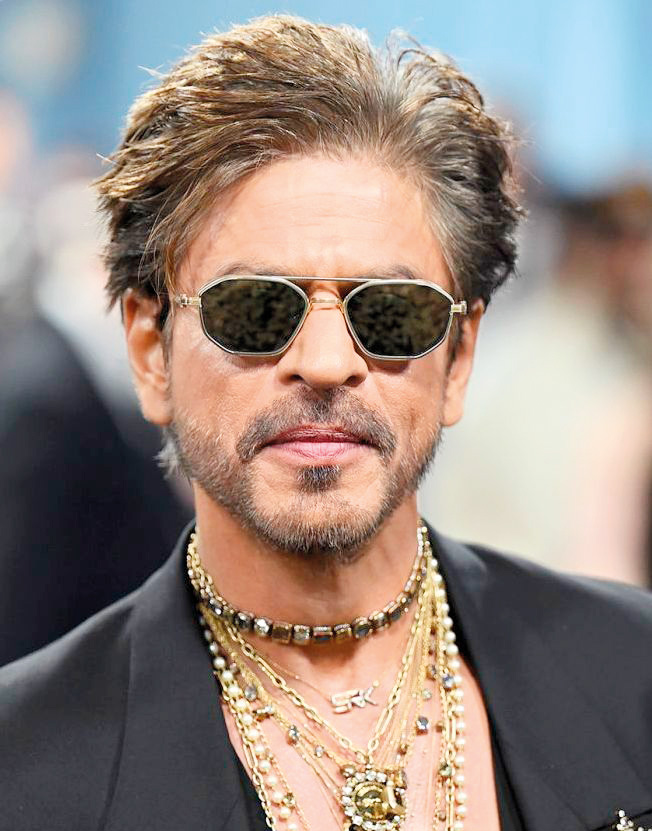
Shah Rukh Khan: Disappointed his fans in Sri Lanka
According to reports, the concert had received the official endorsement of the Sri Lanka Tourism Promotion Bureau, recognising it as a flagship initiative in developing the country’s concert economy by attracting fans, and media, from all over South Asia.
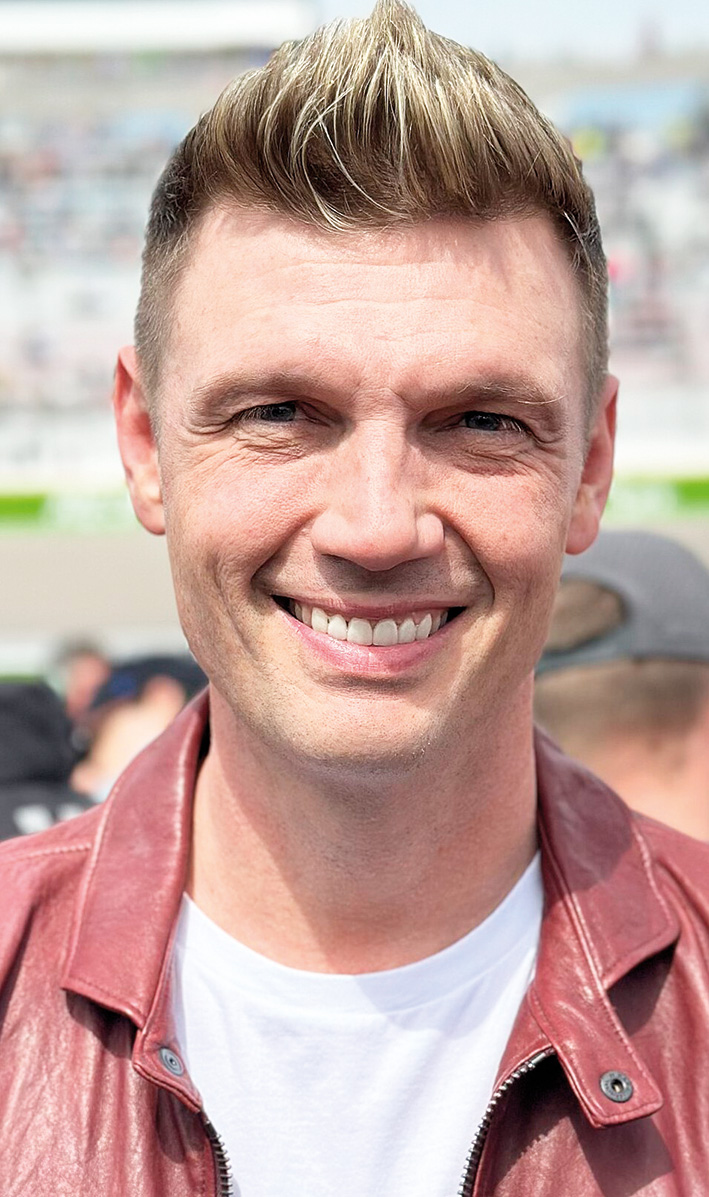
Nick Carter: His concert, too, was cancelled due to “Unforeseen circumstances
However, I had that strange feeling that this concert would not become a reality, keeping in mind what happened to Nick Carter’s Colombo concert – cancelled at the very last moment.
Carter issued a video message announcing he had to return to the USA due to “unforeseen circumstances” and a “family emergency”.
Though “unforeseen circumstances” was the official reason provided by Carter and the local organisers, there was speculation that low ticket sales may also have been a factor in the cancellation.
Well, “Unforeseen Circumstances” has cropped up again!
In a brief statement, via social media, the organisers of the Ne-Yo concert said the decision was taken due to “unforeseen circumstances and factors beyond their control.”
Ne-Yo, too, subsequently made an announcement, citing “Unforeseen circumstances.”
The public has a right to know what these “unforeseen circumstances” are, and who is to be blamed – the organisers or Ne-Yo!
Ne-Yo’s management certainly need to come out with the truth.
However, those who are aware of some of the happenings in the setup here put it down to poor ticket sales, mentioning that the tickets for the concert, and a meet-and-greet event, were exorbitantly high, considering that Ne-Yo is not a current mega star.
We also had a cancellation coming our way from Shah Rukh Khan, who was scheduled to visit Sri Lanka for the City of Dreams resort launch, and then this was received: “Unfortunately due to unforeseen personal reasons beyond his control, Mr. Khan is no longer able to attend.”
Referring to this kind of mess up, a leading showbiz personality said that it will only make people reluctant to buy their tickets, online.
“Tickets will go mostly at the gate and it will be very bad for the industry,” he added.

Zohran Mamdani sworn in as New York City mayor

In pictures: New Year welcomed around the world

Foreign warships commended for their assistance during weather disaster in Sri Lanka

Machu Picchu train crash leaves one dead and dozens injured

I invite you to step into 2026 with renewed energy, hope, and determination – PM

Fairly heavy showers about 75 mm are likely at some places in the Central and Uva provinces and in Batticaloa and Ampara districts

‘Dates have the highest sugar content to fight Coronavirus’

Sunday Island 27 December – Headlines

#SundayIsland 17th December – Headlines

Sunday Island – 28th March

Sunday Island Headlines – 21 March

Sunday Island – 21st February – Headlines
-
 News7 days ago
Street vendors banned from Kandy City
-

 Sports4 days ago
Gurusinha’s Boxing Day hundred celebrated in Melbourne
-
 News2 days ago
Leading the Nation’s Connectivity Recovery Amid Unprecedented Challenges
-

 News7 days ago
Lankan aircrew fly daring UN Medevac in hostile conditions in Africa
-

 Sports5 days ago
Time to close the Dickwella chapter
-

 Features3 days ago
It’s all over for Maxi Rozairo
-

 Features7 days ago
Rethinking post-disaster urban planning: Lessons from Peradeniya
-

 Opinion7 days ago
Are we reading the sky wrong?