
News
Road development plan encroaching on Knuckles Conservation Forest?


A controversial road development project cutting through the Knuckles Conservation Forest — part of Sri Lanka’s UNESCO World Heritage Central Highlands — has sparked outrage among conservationists, who warn it could devastate one of the island’s most ecologically sensitive mountain ecosystems, said Sajeewa Chamikara of Movement for Land and Agricultural Reform (MONLAR).
Chamikara said that tourism operators and several safari jeep owners, in collaboration with Kandy District MPs E.M. Basnayake and Jagath Manuwarna, have reportedly secured approval to carpet and open an eight-kilometre forest trail between Thangappuwa and Corbett’s Gap for jeep safaris. The decision, facilitated at a meeting on August 22, 2025, by officials of the Land Use Policy Planning Department, was made despite the area falling within a legally protected conservation zone.
Construction is already underway on the section from Rangala to Thangappuwa, which lies outside the protected boundary. Once completed, the project aims to extend into the Knuckles forest reserve itself — widening paths, cutting slopes, and laying asphalt through the core zone.
Environmental experts warn the move is illegal under the Forest Ordinance and National Environmental Act, which prohibit land clearing, road construction, or development activities within conservation forests without environmental impact assessments and central approvals. Violators face imprisonment or heavy fines.
Chamikara said the initiative is being driven by a group of hoteliers and business owners in Thangappuwa and Rangala and several other local entrepreneurs.
He said that scientists had pointed out that the Knuckles-Dumbara range is home to numerous endemic species found nowhere else on Earth — including rare amphibians like the Dumbara shrub frog, unique reptiles such as the Dumbara horned lizard, and more than 30 endemic bird species. Any disturbance, they warn, could destroy critical microhabitats, increase temperatures, and accelerate species extinction.
Chamikara said that the project directly contradicts the government’s own “Prosperous Country, Beautiful Life” policy, which pledges to uphold ecological justice and protect sensitive zones. By supporting illegal development, MPs and officials are accused of violating these commitments and undermining public trust.
Conservationists urge the President and Environment Minister to immediately intervene to halt the project, stressing that the Knuckles range — the principal watershed of the Mahaweli River — is too valuable to be sacrificed for short-term commercial gain.
“This is not development. It is the destruction of a world heritage site,” Chamikara said.
Relevant ministers and officials were unavailable for comment as they were attending the budget debate in Parliament on Friday.

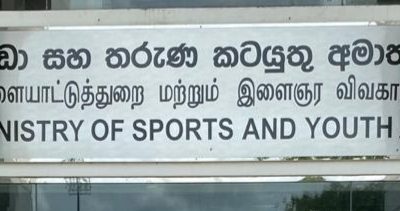


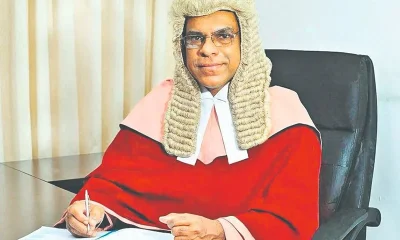
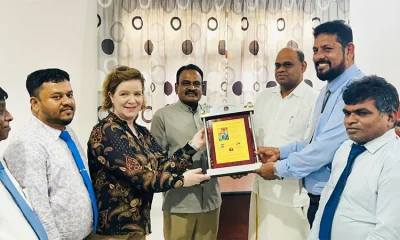


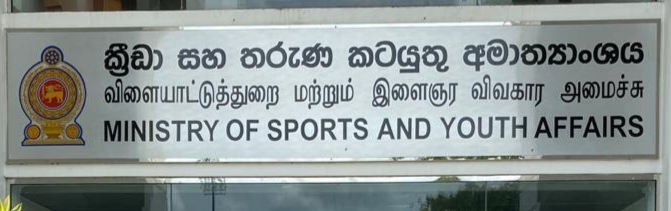
The official appointment letters for the members of the newly established “Cricket Transformation Committee” (CTC) were handed over on Monday (04) by the Minister of Youth Affairs and Sports, Sunil Kumara Gamage.
The following members received their letters of appointment at the Ministry premises:
Sidath Wettimuny
Thushira Radella
Prakash Schaffter
Ms. Avanthi Colombage
The Ministry also noted that veteran cricketers Roshan Mahanama and Kumar Sangakkara, who are key members of the committee, are currently overseas. Their official appointments will be formalised immediately upon their arrival in Sri Lanka.
The Cricket Transformation Committee has been mandated to oversee the administration and drive structural reforms within Sri Lanka Cricket (SLC) in accordance with the powers vested in the Minister under the Sports Act No. 25 of 1973.
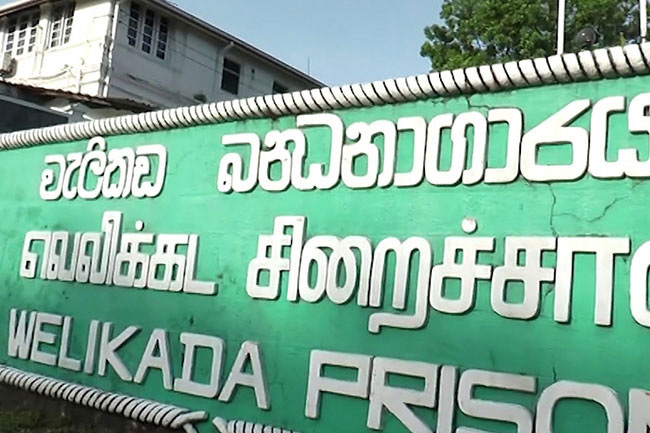
Three prison guards attached to the Welikada Prison have been arrested by Borella Police following the death of an inmate on Monday (04).

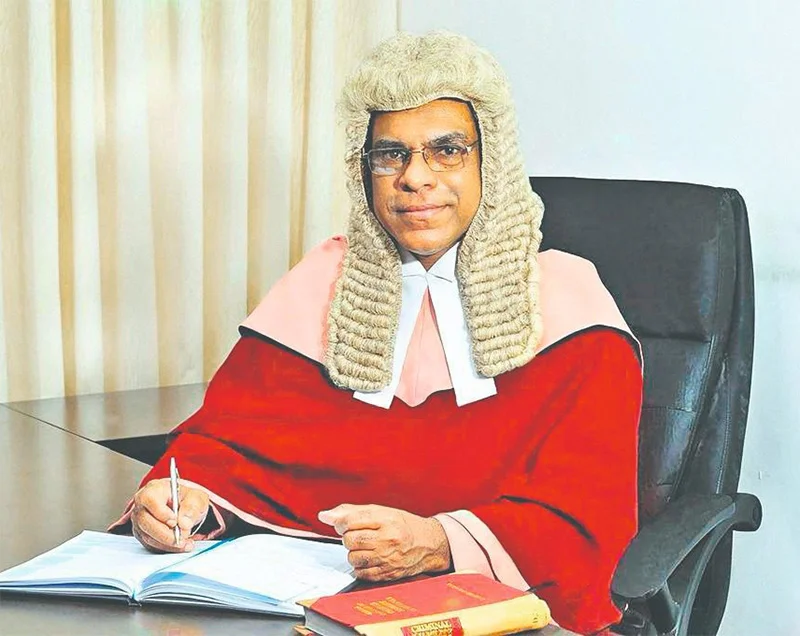
‘Bar Association must reveal its stand’
Civil society group ‘Free Lawyers’ has requested Chief Justice Preethi Padman Surasena to probe whether political pressure was brought on a Magistrate, or a High Court Judge, in respect of an ongoing high profile case.
Speaking to The Island on behalf of ‘Free Lawyers,’ Rajith Keerthi Tennakoon said that they felt the urgent need to seek the CJ’s intervention, following the May Day declaration by President Anura Kumara Dissanayake that the verdict of a case that was heard on 30 April would be given on 25 May. Tennakoon said that addressing the NPP’s main May Day rally at Maharagama, the President asked the people to be ready to celebrate that verdict. The President couldn’t have said so if he hadn’t been aware of the impending verdict, Tennakoon said, while emphasising the responsibility on the part of the Bar Association to state its position on the issue.
‘Free Lawyers’ recently captured pubic attention following its exposure of the theft of USD 2.5 mn from the Treasury.
Responding to a query, Tennakoon said that on behalf of ‘Free Lawyers,’ Maithri Gunaratne, PC, on Monday, 4 April, wrote to both CJ Surasena and President of the Bar Association Rajeev Amarasuriya.
 Alleging that President Dissanayake’s declaration caused immense harm to the independence of the judiciary and raised controversy over the judgement that would be given on 25 May, ‘Free Lawyers’ organisation also asked the CJ to inquire into whether the entire judicial process was under political pressure.
Tennakoon said that they expect the Bar Association to reveal its position on President Dissanayake’s statement. Tennakoon pointed out that during the May Day address, President Dissanayake made reference to 15 cases that were to be taken up during this month, whereas Transport, Highways and Urban Development Minister, as well as Leader of the House Bimal Rathnayake, mentioned nearly 10 names of politicians, both sitting and former lawmakers, to be summoned beginning, May.
Tennakoon said that the NPP appeared to have used May Day to counter growing accusations over the Colombo port container controversy, coal scam, Rs 13.2 bn NDB fraud and theft of USD 2.5 mn from the Treasury and USD 625,000 from the Sri Lanka Postal Service.
By Shamindra Ferdinando

Members of Sri Lanka Cricket Transformation Committee Officially Appointed

Three prison guards arrested following the death of an inmate

Showers or thundershowers will occur at most places of the island after 1.00 pm.

CJ urged to inquire into AKD’s remarks on May 25 court verdict

ITAK MPs representing East take their woes to Canadian HC

People demand release of Keppapilavu land

‘Dates have the highest sugar content to fight Coronavirus’

Sunday Island 27 December – Headlines

#SundayIsland 17th December – Headlines

Sunday Island – 28th March

Sunday Island Headlines – 21 March

Sunday Island – 21st February – Headlines
-

 News7 days ago
Treasury chief’s citizenship details sought from Australia
-

 News6 days ago
Rooftop Solar at Crossroads as Sri Lanka Shifts to Distributed Energy Future
-
 News5 days ago
“Three-in-one blood pressure pill can significantly reduce risk of recurrent strokes”
-

 News7 days ago
Central Province one before last in AL results
-

 Sports7 days ago
Well done AKD!
-

 News2 days ago
USD 3.7 bn H’tota refinery: China won’t launch project without bigger local market share
-

 News5 days ago
Alarm raised over plan to share Lanka’s biometric data with blacklisted Indian firm
-
 News3 days ago
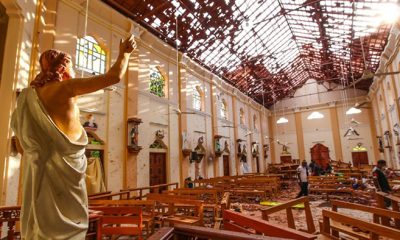
Easter Sunday Case: Ex-SIS Chief concealed intel, former Defence Secy tells court