
News
Rise in Digital Payments Spurs Increase in Scams

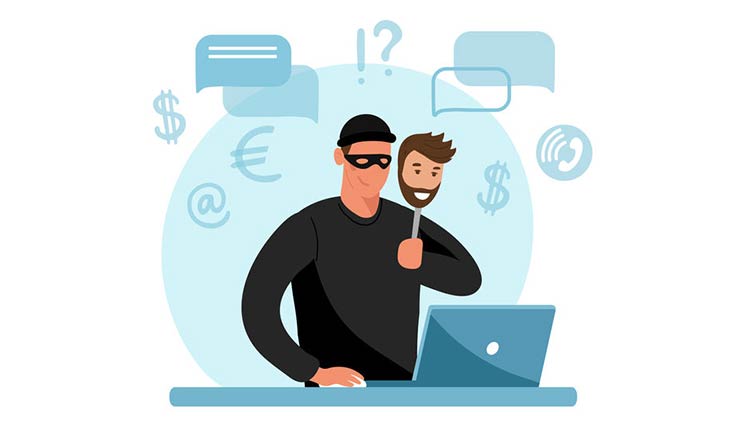
Most Sri Lankans started using digtal systems to make their payments following COVID-19, and this also marks the beginning of a spike in digital scams, Chief Executive Officer of LankaPay, Channa de Silva said in a recent TV programme on Derana TV.
“However, digital scams are very low as a percentage of online transactions. The Central Bank appointed a committee to investigate digital fraud and it has representatives from all relevant sectors. The committee carried out a survey and found that most people didn’t know the importance of protecting their passwords,” he said.
De Silva added that most Sri Lankans don’t understand that data is confidential, and they often get scammed because they share private information.
“Scammers are persistent, and you must be vigilant. You must remember basics like one must never share OTPs or other passwords. If someone makes you an offer that is too good to be true, you must assume that the person is trying to scam you,” he said.
Meanwhile, Director of the Payments and Settlements Department- Central Bank of Sri Lanka (CBSL), K. V. K. Alwis said most Sri Lankans do not know that One Time Passwords (OTPs) should not be shared.
“Scammers often target people who collect money for medical emergencies. Let’s say I have a relative who needs a kidney transplant. I place an advert on newspapers, or social media, asking for donations. Given that I am expecting funds from philanthropists, I have to put the name and the mobile number of the account holder, account number and the bank branch on the advert. A scammer can call me and say that they have deposited money into the account, ask if I had received a code from the bank, and he would ask me to share this number with him. This is the OTP and if I give him the OTP, the scammer can secure access to my account and he can drain it,” he said.
Earlier banks would only send messages in English, he said. However, now they send messages in all three languages so that people understand the meaning.
“We have to reduce the gaps that scammers use. We are exploring the possibility of enabling mobile financial transactions to be conducted exclusively through a phone using the SIM card associated with the bank-registered number,” he said.
Alwis also said a person may receive a link by someone who promises a foreign job or remote work. Once someone clicks the link, they are taken to a website that asks for documents such as copies of the NIC, birth certificate, passport, etc.
“They might ask for money and you may realise that you are walking into a scam and not pay any money, but you may have already given very sensitive personal information to malicious third parties. There are many things that such malicious people can do with such sensitive information and documents such as your NIC,” he said.
Alwis added that scammers also target the elderly who take out cash at ATMs. These individuals often follow the elderly and offer assistance to withdraw money. “Then they swap the cards,” he said.
The CBSL official said people of all ages and educational backgrounds become victims of digital fraud. “For example, we know software engineers who fall victim to digital rackets, and these are people who should know better. The problem is that we are always in a rush to do things and we do not take a step back and think things through. However, I must reiterate that the number of people who become victims of fraud is statistically insignificant, when compared to the total amount of digital transactions that take place in the country,” he said.
Alwis said when someone becomes a victim of a scam, the first thing is to prevent further loss.
“Please call your bank and deactivate your account. Then you must go to your nearest police station and lodge a complaint if you have been scammed for less than two million rupees. If the loss is between two and 20 million, you must go to the special crimes investigation bureau at the headquarters police station closest to you. If the scam is over 20 million you must go to the CID and the computer crimes investigation division will take over the case,” he said.

Latest News
Advisory for Heavy Rain issued for the Central, Uva and Sabaragamuwa provinces and in the Ampara, Batticaloa and Polonnaruwa districts


Advisory for Heavy Rain Issued by the Natural Hazards Early Warning Centre at 12.00 noon on 21 February 2026 valid for the period until 08.30 a.m. 22 February 2026
Due to the low level atmospheric disturbance in the vicinity of Sri Lanka, Heavy showers above 100 mm are likely at some places in the Central, Uva and Sabaragamuwa provinces and in the Ampara, Batticaloa and Polonnaruwa districts and fairly heavy showers above 75 mm are likely at some places elsewhere.
Therefore, the general public is advised to take adequate precautions to minimize damages caused by heavy rain, strong winds and lightning during thundershowers.
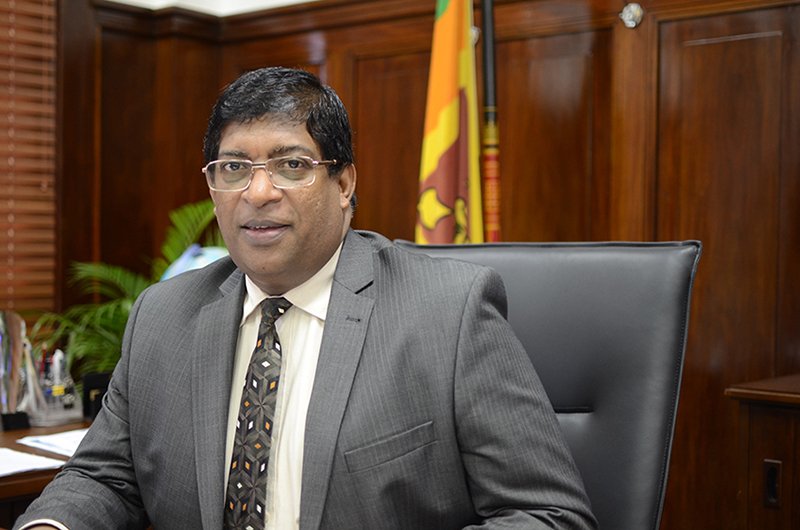
Opposition MP Ravi Karunanayake on Wednesday called for an urgent government statement to Parliament on the integrity and usability of Sri Lanka’s Gross Official Reserves (GOR), raising concerns over foreign exchange leakages and regulatory consistency under the Foreign Exchange Act No. 12 of 2017.
Raising the issue under Standing Order 27 (i), Karunanayake urged the Government to provide a comprehensive disclosure on the composition, encumbrances and deployability of the country’s reserves, as well as on the Central Bank’s oversight of foreign currency transactions.
“Reserve credibility depends not merely on headline numbers, but on transparency, enforceability and consistency in regulation,” the MP told the House.
He sought clarification on the latest reported GOR figure and the net usable reserves after excluding encumbered assets, swaps and pledged balances. He also requested details of annual revenue earned on reserves from 2023 to 2025.
Following are the questions raised by MP Karunanayake:
1. What is the latest reported GOR figure, and what is the net usable reserve after excluding encumbered assets, swaps, and pledged balances? What is the revenue earned on are GOR 23-25 per year?
2. Provide a separate and detailed breakdown of GOR, including: (a) Monetary gold (quantity and valuation basis) is it real gold or gold paper? (b) Foreign currency assets by major currency and instrument; (c) SDR holdings; (d) IMF reserve position; (e) Foreign currency swaps, specifying counterparty type, principal amount, tenure, maturity profile, and all-in cost; (f) Domestic swaps, specifying amount, tenure, rollover terms, collateralisation, and effective cost.
3. Of the total reserves reported, how much is encumbered, swap-backed, or otherwise not immediately deployable for debt servicing or currency stabilisation?
4. What SLR spread, fee, or margin does the Central bank apply when buying or selling USD to the Government for reserve accumulation and external debt servicing and what total profit or gain has the C.bank realised from such transactions during the past three financial years? Advice per year.
5. Is the Central Bank subject to continuous and statutory audit by the Auditor General? If so, will the Government table the most recent audit report, specifying audit scope, sample size, reserve confirmations, swap verification and gold custody validation?
6. What triggered the recent circular warning domestic institutions on foreign currency transactions?
7. Has the C.bank quantified foreign exchange and tax revenue losses resulting from Sri Lanka-based businesses routing credit card and commercial payments through overseas payment gateways?
8. If domestic entities are regulated strictly, why has a binding circular not been issued against noncompliant business entities using foreign payment gateway arrangements that divert foreign exchange outside Sri Lanka’s regulated banking system?
The government asked for two weeks’ time to respond to the queries.
by Saman Indrajith
News
Sajith exposes highly questionable coal imports from South Africa in 25 vessels; calls for independent probe
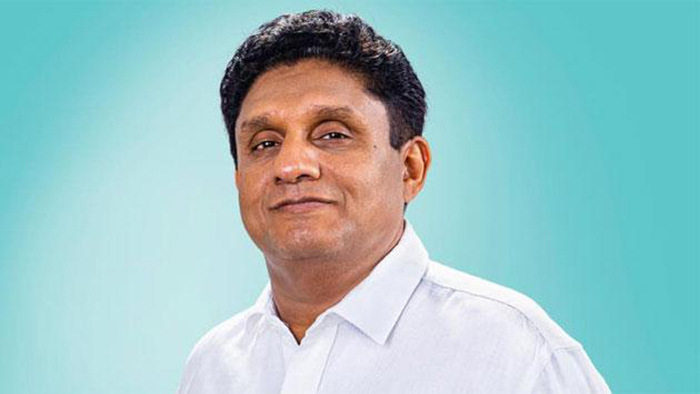
Opposition Leader Sajith Premadasa yesterday alleged in Parliament that eight recently imported coal shipments were substandard and called for an independent probe into the matter.Speaking in the House, Premadasa said Sri Lanka typically requires 36–38 coal shipments annually. While 11 Russian shipments received so far had raised no concerns, he claimed that 25 vessels ordered from South Africa under a new tender were facing quality issues.
He cited combustion reports from the Norochcholai Coal Power Plant showing that the eight shipments already received under the new tender failed to generate the expected 300 megawatts per unit. According to the MP, the outputs were: 285 MW, 290 MW, 260 MW, 295 MW, 285 MW, 270 MW, 275 MW, and 255 MW.
“These are scientific data generated automatically through boiler combustion reports that cannot be altered,” Premadasa said, asserting that the figures indicate the coal supplied was below required standards.
He warned that low-quality coal could increase fuel consumption, raise operational costs, and damage equipment. Any shortfall in power generation, he said, would necessitate additional coal imports or greater reliance on diesel power, ultimately driving up electricity tariffs for consumers.
“The loss will have to be borne by the electricity consumer,” Premadasa said, urging the government to clarify whether the shipments met required specifications.
He also criticized delays and changes in tender requirements, alleging that supplier eligibility criteria had been relaxed to allow non-standard providers.
by Saman Indrajith

Advisory for Heavy Rain issued for the Central, Uva and Sabaragamuwa provinces and in the Ampara, Batticaloa and Polonnaruwa districts

Ranaweera’s four-for leads Sri Lanka to tense win over West Indies

How photography helped the British empire classify India

Atmospheric conditions are favorable for thundershowers over most parts of the island

Trump brings in new 10% tariff as Supreme Court rejects his global import taxes

Ravi demands full disclosure on Lanka’s usable reserves, flags forex leakages

‘Dates have the highest sugar content to fight Coronavirus’

Sunday Island 27 December – Headlines

#SundayIsland 17th December – Headlines

Sunday Island – 28th March

Sunday Island Headlines – 21 March

Sunday Island – 21st February – Headlines
-

 Life style7 days ago
Marriot new GM Suranga
-

 Business6 days ago
Ministry of Brands to launch Sri Lanka’s first off-price retail destination
-

 Features7 days ago
Monks’ march, in America and Sri Lanka
-

 Features7 days ago
The Rise of Takaichi
-

 Features7 days ago
Wetlands of Sri Lanka:
-

 News7 days ago
Thailand to recruit 10,000 Lankans under new labour pact
-

 News7 days ago
Massive Sangha confab to address alleged injustices against monks
-
 Sports2 days ago
Old and new at the SSC, just like Pakistan