
Features
Revival of Innovative systems for reservoir operation and flood forecasting

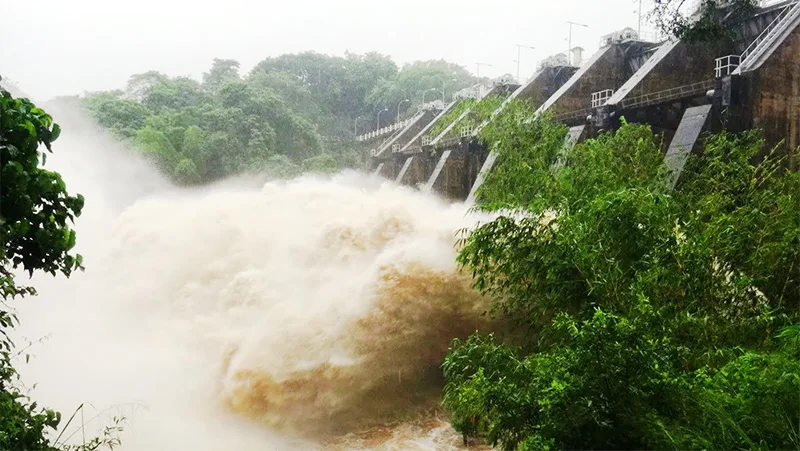
Most reservoirs in Sri Lanka are agriculture and hydropower dominated. Reservoir operators are often unwilling to acknowledge the flood detention capability of major reservoirs during the onset of monsoons. Deviating from the traditional priority for food production and hydropower development, it is time to reorient the operational approach of major reservoir operators under extreme events, where flood control becomes a vital function. While admitting that total elimination of flood impacts is not technically feasible, the impacts can be reduced by the efficient operation of reservoirs and effective early warning systems.
At the very outset, I would like to mention that the contents in this article are based on my personal experience in the Irrigation Department (ID), and there is no intention to disrespect their contributions during the most recent flood event. The objective is to improve the efficiency and the capability of the human resources available in the ID and other relevant institutions to better respond to future flood disasters.
Reservoir operation and flood forecasting
Reservoir management is an important aspect of water management, as water storage and release are crucial for managing floods and droughts. Several numerical models and guidelines have already been introduced to the ID and MASL during numerous training programs for reservoir management and forecasting of inflows.
This article highlights expectations of engineering professionals and discusses a framework for predicting reservoir inflows from its catchment by using the measured rainfall during the previous few days. Crucially, opening the reservoir gates must be timed to match the estimated inflow.
Similarly, rainfall-runoff relationships had been demonstrated and necessary training was provided to selected engineers during the past to make a quantitative (not qualitative) forecast of river water levels at downstream locations, based on the observed rainfall in the upstream catchment.
Already available information and technology
Furthermore, this article highlights the already available technology and addresses certain misinformation provided to the mass media by some professionals during recent discussions. These discrepancies are primarily related to the opening of reservoir gates and flood forecasting.
A. Assessing the 2025 Flood Magnitude
It is not logically sound to claim that the 2025 flood in the Kelani basin was the highest flood experienced historically. While, in terms of flood damage, it was probably the worst flood experienced due to rapid urbanisation in the lower Kelani basin. We have experienced many critical and dangerous floods in the past by hydraulic definition in the Kelani Ganga.
Historical water levels recorded at the Nagalagam Street gauge illustrate this point: (See Table)

In view of the above data, the highest water level recorded at the Nagalagam river gauge during the 2025 flood was 8.5 ft. This was a major flood, but not a critical or dangerous flood by definition.
B. Adherence to Reservoir Standing Orders
According to the standing orders of the ID, water levels in major reservoirs must be kept below the Full Supply Level (FSL) during the Northeast (NE) monsoon season (from October to March) until the end of December. According to my recollection, this operational height is 1.0m below the FSL. Therefore, maintaining a reservoir below the FSL during this period is not a new practice; it explicitly serves the dual purpose of dam safety and flood detention for the downstream areas.
C. Gate Operation Methodology
When a reservoir is reaching the FSL, the daily operation of gates is expected to be managed so that the inflow of water from the catchment rainfall is equal to the outflow through the spill gates (Inflow * Outflow). The methodology for estimating both the catchment inflow and the gate outflow is based on very simple formulas, which have been previously taught to the technical officers and engineers engaged in field operations.
D. Advanced Forecasting Capabilities
Sophisticated numerical models for rainfall-runoff relationships are available and known to subject specialists of the ID through the training provided over the last 40 years. For major reservoirs, the engineers in charge of field operations could be trained to estimate daily inflows to the reservoirs, especially in cases where the simple formulas mentioned in section C are not adequate.
Design concept of reservoir flood gates
Regarding the provision of reservoir spill gates, one must be mindful of the underlying principles of probability. Major reservoir spillways are designed for very high return periods, such as 1,000 and 10,000 years. If the spillway gates are opened fully when a reservoir is at full capacity, this can produce an artificial flood of a very large magnitude. A flood of such magnitude cannot occur under natural conditions. Therefore, reservoir operators must be mindful in this regard to avoid any artificial flood creation.
In reality, reservoir spillways are often designed for the sole safety of the reservoir structure, often compromising the safety of the downstream population. This design concept was promoted by foreign funding agencies in recent times to safeguard their investment for dams. Consequently, the discharge capacities of these spill gates significantly exceed the natural carrying capacity of river downstream. This design criterion requires serious consideration by future designers and policymakers.
Undesirable gate openings
The public often asks a basic question regarding flood hazards in a river system with reservoirs: Why is flooding more prominent downstream of reservoirs compared to the period before they were built? This concern is justifiable based on the following incidents.
For instance, why do Magama in Tissamaharama face flood threats after the construction of the massive Kirindi Oya reservoir? Similarly, why does Ambalantota flood after the construction of Udawalawe Reservoir? Furthermore, why is Molkawa in the Kalutara District area getting flooded so often after the construction of Kukule reservoir?
These situations exist in several other river basins too. Engineers must therefore be mindful of the need to strictly control the operation of reservoir gates by their field staff. The actual field situation can sometimes deviate significantly from the theoretical technology discussed in air- conditioned rooms. Due to this potential discrepancy, it is necessary to examine whether gate operators are strictly adhering to the operational guidelines, as gate operation currently relies too much on the discretion of the operator at the site.
In 2003, there was severe flood damage below Kaudulla reservoir in Polonnaruwa. I was instructed to find out the reason for this flooding by the then Minister of Mahaweli & Irrigation. During my field inspection, I found that the daily rainfall in the area had not exceeded 100mm, yet the downstream flood damage was unbelievable. I was certain that 100mm of rainfall could not create a flood of that magnitude. Further examination suggested that this was not a natural flood, but was created by the excessive release of water from the radial gates of the Kaudulla reservoir. There are several other similar incidents and those are beyond the space available for this document.
Revival of Innovative systems
It may be surprising to note the high quality of real-time flood forecasts issued by the ID for the Kelani River in the late 1980s and early 1990s. This was achieved despite the lack of modern computational skills and advanced communication systems. At that time, for instance, mobile phones were non-existent. Forecasts were issued primarily via the Sri Lanka Broadcasting Corporation (SLBC )in news bulletins.
A few examples of flood warning issued during the past available in official records of the ID are given below:
Forecast issued at 6th June 1989 at 5.00 PM
“The water level at Nagalagam street river gauge was at 9 ft 0 inches at 5.0 PM. This is 1.0 ft above the major flood level. Water level is likely to rise further, but not likely to endanger the Kelani flood bund”.
Eng. NGR. De Silva, Director Irrigation
Forecast issued at 30th Oct 1991 at 6.00 PM
“The water level at Nagalagam street river gauge was at 3 ft 3 inches at 6.0 PM. The water level likely to rise further during the next 24 hours, but will not exceed 5.0 ft.”
Eng. K.Yoganathan, Director Irrigation
Forecast issued at 6th June 1993 at 10.00 AM:
“The water level at Nagalagam street river gauge was at 4 ft 6 inches last night. The water level will not go above 5.0 ft within the next 24 hours.”
Eng. K.Yoganathan, Director Irrigation
Forecast issued at 8th June 1993 at 9.00 AM:
“The water level at Nagalagam Street River gauge was at 4 ft 6 inches at 7.00 AM. The water level will remain above 4.0 ft for the next 12 hours and this level will go below 4.0 ft in the night.
The water level is not expected to rise within next 24 hours.”
Eng.WNM Boteju,Director of Irrigation
Conclusion
Had this technology been consistently and effectively adopted, we could have significantly reduced the number of deaths and mitigated the unprecedented damage to our national infrastructure. The critical question then arises: Why is this known, established flood forecasting technology, already demonstrated by Sri Lankan authorities, not being put into practice during recent disasters? I will leave the answer to this question for social scientists, administrators and politicians in Sri Lanka.


The escalating conflict in the Middle East is of such magnitude, with loss of life, destruction of cities, and global energy shortages, that it is diverting attention worldwide and in Sri Lanka, from other serious problems. Barely four months ago Sri Lanka experienced a cyclone of epic proportions that caused torrential rains, accompanied by floods and landslides. The immediate displacement exceeded one million people, though the number of deaths was about 640, with around 200 others reported missing. The visual images of entire towns and villages being inundated, with some swept away by floodwaters, evoked an overwhelming humanitarian response from the general population.
When the crisis of displacement was at its height there was a concerted public response. People set up emergency kitchens and volunteer clean up teams fanned out to make flooded homes inhabitable again. Religious institutions, civil society organisations and local communities worked together to assist the displaced. For a brief period the country witnessed a powerful demonstration of social solidarity. The scale of the devastation prompted the government to offer generous aid packages. These included assistance for the rebuilding of damaged houses, support for building new houses, grants for clean up operations and rent payments to displaced families. Welfare centres were also set up for those unable to find temporary housing.
The government also appointed a Presidential Task Force to lead post-cyclone rebuilding efforts. The mandate of the Task Force is to coordinate post-disaster response mechanisms, streamline institutional efforts and ensure the effective implementation of rebuilding programmes in the aftermath of the cyclone. The body comprises a high-level team, led by the Prime Minister, and including cabinet ministers, deputy ministers, provincial-level officials, senior public servants, representing key state institutions, and civil society representatives. It was envisaged that the Task Force would function as the central coordinating authority, working with government agencies and other stakeholders to accelerate recovery initiatives and restore essential services in affected regions.
Demotivated Service
However, four months later a visit to one of the worst of the cyclone affected areas to meet with affected families from five villages revealed that they remained stranded and in a state of limbo. Most of these people had suffered terribly from the cyclone. Some had lost their homes. A few had lost family members. Many had been informed that the land on which they lived had become unsafe and that they would need to relocate. Most of them had received the promised money for clean up and some had received rent payments for two months. However, little had happened beyond this. The longer term process of rebuilding houses, securing land and restoring livelihoods has barely begun. As a result, families who had already endured the trauma of disaster, now face prolonged uncertainty about their future. It seems that once again the promises made by the political leadership has not reached the ground.
A government officer explained that the public service was highly demotivated. According to him, many officials felt that they had too much work piled upon them with too little resources to do much about it. They also believed that they were underpaid for the work they were expected to carry out. In fact, there had even been a call by public officials specially assigned to cyclone relief work to go on strike due to complaints about their conditions of work. This government official appreciated the government leadership’s commitment to non corruption. But he noted the irony that this had also contributed to a demotivation of the public service. This was on the unjustifiable basis that approving and implementing projects more quickly requires an incentive system.
Whether or not this explanation fully captures the situation, it points to an issue that the government needs to address. Disaster recovery requires a proactive public administration. Officials need to reach out to affected communities, provide clear information and help them navigate the complex procedures required to access assistance. At the consultation with cyclone victims this was precisely the concern that people raised. They said that government officers were not proactive in reaching out to them. Many felt they had little engagement with the state and that the government officers did not come to them. This suggests that the government system at the community level could be supported by non-governmental organisations that have the capacity and experience of working with communities at the grassroots.
In situations such as this the government needs to think about ways of motivating public officials to do more rather than less. It needs to identify legitimate incentives that reward initiative and performance. These could include special allowances for those working in disaster affected areas, recognition and promotion for officers who successfully complete relief and reconstruction work, and the provision of additional staff and logistical support so that the workload is manageable. Clear targets and deadlines, with support from the non-governmental sector, can also encourage officials to act more proactively. When government officers feel supported and recognised for the extra effort required, they are more likely to engage actively with affected communities and ensure that assistance reaches those who need it most.
Political Solutions
Under the prevailing circumstances, however, the cyclone victims do not know what to do. The government needs to act on this without further delay. Government policy states that families can receive financial assistance of up to Rs 5 million to build new houses if they have identified the land on which they wish to build. But there is little freehold land available in many of the affected areas. As a result, people cannot show government officials the land they plan to buy and, therefore, cannot access the government’s promised funds. The government needs to address this issue by providing a list of available places for resettlement, both within and outside the area they live in. However, another finding at the meeting was that many cyclone victims whose lands have been declared unsafe do not wish to leave them. Even those who have been told that their land is unstable feel more comfortable remaining where they have lived for many years. Relocating to an unfamiliar area is not an easy decision.
Another problem the victims face is the difficulty of obtaining the documents necessary to receive compensation. Families with missing members cannot prove that their loved ones are no longer alive. Without official confirmation they cannot access property rights or benefits that would normally pass to surviving family members. These are problems that Sri Lanka has faced before in the context of the three decade long internal war. It has set up new legal mechanisms such as the provision of certificates of absence validated by the Office on Missing Persons (OMP) in place of death certificates when individuals remain missing for long periods. The government also needs to be sensitive to the fact that people who are farmers cannot be settled anywhere. Farming is not possible in every location. Access to suitable land and water is essential if farmers are to rebuild their livelihoods. Relocation programmes that fail to take these realities into account risk creating new psychological and economic hardships.
The message from the consultation with cyclone victims is that the government needs to talk more and engage more directly with affected communities. At the same time the political leadership at the highest levels need to resolve the problems that government officers on the ground cannot solve. Issues relating to land availability, legal documentation and livelihood restoration require policy decisions at higher levels. The challenge to the government to address these issues in the context of the Iran war and possible global catastrophe will require a special commitment. Demonstrating that Sri Lanka is a society that considers the wellbeing of all its citizens to be a priority will require not only financial assistance but also a motivated public service and proactive political leadership that reaches out to those still waiting to rebuild their lives.
by Jehan Perera

 A recent panel discussion at the University of Peradeniya examined the implications of the Supreme Court’s judgement on ragging, in which the Court recognised that preventing ragging requires not only criminal penalties imposed after an incident occurs but also systems and processes within universities that enable victims to speak up and receive support. Bringing together perspectives from law, university administration, psychology and students, the discussion sought to understand why ragging continues to persist in Sri Lankan universities despite the existence of legal prohibitions. While the discussion covered legal and institutional dimensions, one theme emerged clearly: addressing ragging requires more than laws and disciplinary rules. It requires institutions that are capable of supporting victims.
Sri Lanka enacted the Prohibition of Ragging and Other Forms of Violence in Educational Institutions Act No. 20 of 1998 following several tragic incidents in universities, during the 1990s. Among the most widely remembered is the death of engineering student S. Varapragash at the University of Peradeniya in 1997. Incidents such as this shocked the country and revealed the consequences of allowing violent forms of student hierarchy to persist. The 1998 Act marked an important legal intervention by recognising ragging as a criminal offence. The law introduced severe penalties for individuals found guilty of engaging in ragging or other forms of violence in educational institutions, including fines and imprisonment.
Despite the existence of this law for nearly three decades, prosecutions under the Act have been extremely rare. Incidents continue to surface across universities although most are not reported. The incidents that do reach university administrations are dealt with internally through disciplinary procedures rather than through the criminal justice system. This suggests that the problem does not lie solely in the absence of legal provisions but also in the ability of victims to come forward and pursue complaints.
The tragic reminders; the cases of Varapragash and Pasindu Hirushan
Varapragash, a first-year engineering student at the University of Peradeniya, was forced by senior students to perform extreme physical exercises as part of ragging, resulting in severe internal injuries and acute renal failure that ultimately led to his death. In 2022, the courts upheld the conviction of one of the perpetrators for abduction and murder. The case illustrates not only the brutality of ragging but also how long and difficult the path to justice can be for victims and their families. Even when victims speak about their experiences, they may not always disclose the full extent of what they have endured. In the case of Varapragash, the judgement records that the victim told his father that he was asked to do dips and sit-ups. Varapragash’s father had testified that it appeared his son was not revealing the exact details of what he had to endure due to shame.
More than two decades after the death of Varapragash, the tragedy of ragging continues. The 2025 Supreme Court judgement arose from the case of Pasindu Hirushan, a 21-year-old student of the University of Sri Jayewardenepura, who sustained devastating head injuries at a fresher’s party, in March 2020, after a tyre sent down the stairs by senior students struck him. He became immobile, was placed on life support, and returned home only months later. If the Varapragash case exposed the deadly consequences of ragging in the 1990s, the Pasindu Hirushan case demonstrates that universities are still failing to prevent serious violence, decades after the enactment of the 1998 Act. It was against this background of continuing institutional failure that the Supreme Court issued its Orders of Court in 2025. Among the key mechanisms emphasised by the judgement is the establishment of Victim Support Committees within universities.
Why do victims need support?
Ragging in universities can take many forms, including verbal humiliation, physical abuse, emotional intimidation and, in some instances, sexual harassment. While all forms of ragging can have serious consequences, incidents involving sexual harassment often present additional barriers for victims who wish to come forward. Victims may hesitate to complain due to weak institutional mechanisms, fear of retaliation, or uncertainty about whether their experiences will be taken seriously. In many cases, those who speak out are confronted with questions that shift attention away from the alleged misconduct and onto their own behaviour: why did s/he continue the conversation?; why did s/he not simply disengage, if the harassment occurred as claimed?; why did s/he remain in the environment?; or did his/her actions somehow encourage the accused’s behaviour? Such responses illustrate how easily victims can be subjected to a second layer of scrutiny when they attempt to report incidents. When individuals anticipate disbelief, minimisation or blame, silence may appear safer than disclosure. In such circumstances, the presence of a trusted institutional body, capable of providing guidance, protection and support, become critically important, highlighting the need for effective Victim Support Committees within universities.
What Victim Support Committees must do
As expected by the Supreme Court, an effective Victim Support Committee should function as a trusted institutional mechanism that places the safety and dignity of victims at the centre of its work. The committee must provide a safe and confidential point of contact through which victims can report incidents of ragging without fear of intimidation or retaliation. It should assist victims in understanding and pursuing available complaint procedures, while also ensuring their immediate protection where there is a risk of continued harassment. Recognising the psychological harm ragging may cause, the committee should facilitate access to counselling and emotional support services. At a practical level, it should also help victims document incidents, record statements, and preserve evidence that may be necessary for disciplinary or legal proceedings. The committee must coordinate with university authorities to ensure that complaints are addressed promptly and responsibly, while maintaining strict confidentiality to protect the identity and well-being of those who come forward. Beyond responding to individual cases, Victim Support Committees should also contribute to broader awareness and prevention efforts, within universities, helping to create an environment where ragging is actively discouraged and students feel safe to report incidents. Without such support, the process of pursuing justice can become overwhelming for individuals who are already dealing with the emotional impact of abuse.
Making Victim Support Committees work
According to the Orders of Court, these committees should include representatives from the academic and non-academic staff, a qualified counsellor and/or clinical psychologist, an independent person, from outside the institution, with experience in law enforcement, health, or social services, and not more than three final-year students, with unblemished academic and disciplinary records, appointed for fixed terms. Further, universities must ensure that committees consist of individuals who possess both expertise and genuine commitment in areas such as student welfare, psychology, gender studies, human rights and law enforcement, in line with the spirit of the Supreme Court’s directions, rather than consisting largely of ex officio positions. If treated as routine administrative positions, rather than responsibilities requiring specialised knowledge, sensitivity and empathy, these committees risk becoming symbolic rather than functional.
Greater transparency in the appointment process could strengthen the credibility of these committees. Universities could invite expressions of interest from individuals with relevant expertise and demonstrated commitment to supporting victims. Such an approach would help ensure that the committees benefit from the knowledge and dedication of those best equipped to fulfil this role.
The Supreme Court judgement also introduces an important safeguard by giving the University Grants Commission (UGC) the authority to appoint members to university-level Victim Support Committees. If exercised with integrity, this provision could help ensure that these committees operate with greater independence. It may also help address a challenge that sometimes arises within institutions, where individuals, with relevant expertise, or strong commitment to addressing issues, such as violence, harassment or student welfare, may not always be included in institutional mechanisms due to internal administrative preferences. External oversight by the UGC could, therefore, create opportunities for such individuals to contribute meaningfully to Victim Support Committees and strengthen their effectiveness.
Ultimately, the success of the recent judgement will depend not only on the directives it issued, the number of committees universities establish, or the number of meetings they convene, or other box-checking exercises, but on how sincerely those directives are implemented and the trust these committees inspire among students and staff. Laws can prohibit ragging, but they cannot by themselves create environments in which victims feel safe to speak. That responsibility lies with institutions. When universities create systems that listen to victims, support them and treat their experiences with seriousness, universities will become places where dignity and learning can coexist.
(Udari Abeyasinghe is attached to the Department of Oral Pathology at the University of Peradeniya)
Kuppi is a politics and pedagogy happening on the margins of the lecture hall that parodies, subverts, and simultaneously reaffirms social hierarchies.
by Udari Abeyasinghe

 Several of our artistes do venture out on foreign assignments but, I’m told, most of their performances are mainly for the Sri Lankans based abroad.
However, the group Mirage is doing it differently and they are now in great demand in the Seychelles.
Guests patronising the Lo Brizan pub/restaurant, Niva Labriz Resort, in the Seychelles, is made up of a wide variety of nationalities, including Russians, Chinese, French and Germans, and they all enjoy the music dished out by Mirage, and that is precisely why they are off to the Seychelles … for the fifth time!
The band is scheduled to leave this month and will be back after three weeks, but their journey to the Seychelles will continue, with two more assignments lined up for 2026.
In August it’s a four-week contract, and in December another four-week contract that will take in the festive celebrations … Christmas and the New Year.

Donald’s birthday
celebrations
According to reports coming my way, it is a happening scene at the Lo Brizan pub/restaurant, Niva Labriz Resort, whenever Mirage is featured, and the band has even adjusted its repertoire to include local and African songs.
They work three hours per day and six days per week at the Lo Brizan pub/restaurant.

Donald Pieries:
Leader, vocalist,
drummer
Led by vocalist and drummer Donald Pieries, many say it is his
musical talents and leadership that have contributed to the band’s success.
Donald, who celebrated his birthday on 07 March, at the Irish Pub, has been with the group through various lineup changes and is known for his strong vocals.
He leads a very talented and versatile line up, with Sudham (bass/vocals), Gayan (lead guitar/vocals), Danu (female vocalist) and Toosha (keyboards/vocals).
Mirage performs regularly at venues like the Irish Pub in Colombo and also at Food Harbour, Port City.

Israel says it’s killed Ali Larijani, Iran’s security chief and Basij commander

Devon Conway, bowlers star as New Zealand make it 1-1

Israel claims to have assassinated commander of Iran’s Basij militia unit

Trump seeks to delay meeting with Xi in China

Pakistan lodge official complaint about Bangladesh’s review at end of chase

Showers or thundershowers will occur at several places in the Central, Sabaragamuwa, Southern and Uva provinces after 2.00 pm.

‘Dates have the highest sugar content to fight Coronavirus’

Sunday Island 27 December – Headlines

#SundayIsland 17th December – Headlines

Sunday Island – 28th March

Sunday Island Headlines – 21 March

Sunday Island – 21st February – Headlines
-

 Business7 days ago
BOI launches ‘Invest in Sri Lanka’ forum
-

 News6 days ago
Historic address by BASL President at the Supreme Court of India
-

 Sports6 days ago
The 147th Royal–Thomian and 175 Years of the School by the Sea
-

 Sports7 days ago
Royal start favourites in historic Battle of the Blues
-

 News7 days ago
CEBEU warns of operational disruptions amid uncertainty over CEB restructuring
-
 Features7 days ago
Indian Ocean zone of peace torpedoed!
-
 News6 days ago
Power sector reforms jolted by 40% pay hike demand
-

 Life style3 days ago
From culture to empowerment: Indonesia’s vision for Sri Lanka