
News
Resumption of burials a high risk the country cannot afford to take – MP Muzammil


‘We shouldn’t seek exclusive rights during a grave crisis’
By Shamindra Ferdinando
SLPP (Sri Lanka Podujana Peramuna) National List MP Mohammed Muzammil yesterday strongly urged the government not to resume burial of Muslim corona victims under any circumstances, though a section of the Muslim community is demanding that Muslim covid-19 victims be allowed to be buried.
Muzammil, who represents the National Freedom Front (NFF), a constituent of the SLPP, said that the country was struggling to cope with the corona pandemic and no one should be allowed to play politics at a time of national health emergency.
The NFF has five elected MPs and one National List MP in the 145-member SLPP parliamentary group.
In a brief interview with The Island over the phone, the former JVP MP emphasised that whatever the religious dictates and sentiments, the Sri Lankan Muslim community should adhere to specific instructions issued by the government as regards the cremation of corona victims.
Pointing out that the ongoing corona second wave could lead to a an unprecedented catastrophe, Muzammil said the Muslim community had no option but to follow government guidelines. The national economy was already in tatters, as in many other countries, with all major revenue sources such as tourism, garment trade and foreign remittances badly affected, and, therefore any further deterioration of health situation could be disastrous, the MP said.
The government would have to take decisions for the benefit of all people, the MP said, adding that the burial of corona victims was against the health guidelines now in place. Commenting on other Muslim members of parliament pushing for the burial of Muslims dying of COVID-19, Muzammil said that they should be free to express their views. “There is nothing wrong in them taking a stand on this sensitive issue,” the MP said, emphasizing the responsibility on the part of the government to do the right thing.
Muzammil said that he deeply regretted the issue caused by the demand for Muslim burial rights. Responding to another query, the MP pointed out that the Catholic community accepted the government dictates in that regard without causing unnecessary issues.
The MP warned of dire consequences if decision-makers allowed burials at the expense of, what he called the overall health of the country. “Let me explain how burial of bodies could cause a catastrophe. Unlike Catholics, we do not cover a hole dug in the ground to receive the body with sand. Instead, we place some planks and then cover them with sand. This can pose quite a health hazard. Therefore burials shouldn’t be permitted under any circumstances,” Muzammil said.
The MP pointed out how the community could be affected if bodies were released to the families. There could be corona outbreaks all over the place, lawmaker Muzammil said, pointing out how the situation could go out of control.
Responding to another query, Muzammil said that he might earn the wrath of a section of the community for taking a stand contrary to that of their other members of parliament. The lawmaker said that he felt it was his duty to educate the Muslims of the need to follow the government guidelines and also strengthen the government initiatives to contain the rapidly spreading virus.
The MP urged that no one should play politics with the issue at the expense of the country. The country should be told in no uncertain terms that decisions were taken by the government, in consultation with the health authorities, and the military, and it would be the responsibility of all communities to follow specific instructions.
All communities, including the Muslims, should be prepared to give up traditions, and practices, until experts had finalized studies, he said.
“We are still in control of the situation. But, we are certainly not in a position to take a chance. Decisions must be followed to the letter. I also believe Muslims have to be buried. I support that position. But the extraordinary situation on the ground makes my personal stand, on this matter, irrelevant,” MP Muzammil said.
Whatever the politicians say, the vast majority of Lankans realized that the country should follow what was best for all, the NFF representative said.
Muzammil warned that burial of COVID-19 victims could, overnight, cause the rapid deterioration of the situation. Urging the government to be firm on the matter, the MP said: “Please don’t let a few illogical men jeopardize the health of all.”
Muslim burials were done in accordance with Arabian customs which the Sri Lankan Muslim community would have to give up or face the consequences. “We shouldn’t be part of the problem,” the lawmaker said.
Lawmaker Muzammil said that though he wanted to oppose resumption of burials and generally dealt with the issue, he couldn’t get an opportunity to address the parliament when the Corona threat was debated on Oct 23. “The government parliamentary group was allocated 162 minutes. There were 31 speakers, I wasn’t among them.”
Muzammil said that the Muslim community should speak in one voice on this matter.



Latest News
Heat Index at Caution Level in the Northern, North-central, North-western, Western, Sabaragamuwa, Eastern and Southern provinces and in Monaragala district


Warm Weather Advisory
Issued by the Natural Hazards Early Warning Centre
Issued at 3.30 p.m. on 15 April 2026, valid for 16 April 2026.
The Heat index, the temperature felt on human body is likely to increase up to ‘Caution level’ at some places in the Northern, North-central, North-western, Western, Sabaragamuwa, Eastern
and Southern provinces and in Monaragala district.
The Heat Index Forecast is calculated by using relative humidity and maximum temperature and this is the condition that is felt on your body. This is not the forecast of maximum temperature. It is generated by the Department of Meteorology for the next day period and prepared by using global numerical weather prediction model data.
Effect of the heat index on human body is mentioned in the above table and it is prepared on the advice of the Ministry of Health and Indigenous Medical Services.
ACTION REQUIRED
Job sites: Stay hydrated and takes breaks in the shade as often as possible.
Indoors: Check up on the elderly and the sick.
Vehicles: Never leave children unattended.
Outdoors: Limit strenuous outdoor activities, find shade and stay hydrated.
Dress: Wear lightweight and white or light-colored clothing.
Note:
In addition, please refer to advisories issued by the Disaster Preparedness & Response Division, Ministry of Health in this regard as well. For further clarifications please contact 011-7446491

The Indonesian Navy Sailing Ship KRI BIMA SUCI – 945 arrived at the Port of Colombo on a goodwill visit on 15 Apr 2026 and was welcomed by the Sri Lanka Navy (SLN) in compliance with time-honoured naval traditions.
The vessel’s arrival is a key highlight of the ASEAN Plus Cadet Sail (APCS) – 2026 programme , accompanying a diverse contingent of Navy cadets from 26 different nations alongside their Indonesian counterparts.
The ship is commanded by Commander SUGENG HARIYANTO. Meanwhile, Officer Under-trainees of the Sri Lanka Navy are expected to participate in various programmes aboard the
ship and naval personnel observe its operational functions during its stay in the island.
Furthermore, the ship’s crew is scheduled to take part in programmes organized by the Sri Lanka Navy to enhance camaraderie between the two navies, as well as visit several tourist attractions in the country.
News
PM initiates children into learning at the auspicious time while observing New Year traditional customs and rituals

The Sinhala and Tamil New Year cultural festival, organized by the Ministry of Buddha Sasana, Religious and Cultural Affairs, was held on Tuesday (14) in Gampaha under the patronage of Prime Minister Dr. Harini Amarasuriya, with the performance of traditional auspicious customs and rituals.
In accordance with tradition, during the Punya Kalaya (inauspicious time), the Prime Minister visited the Medagama Sri Sunandarama Viharaya in Gampaha and participated in religious observances and received blessings from Venerable Thunmodara Samitha Thero, a member of the Karaka Sangha Sabha of the Sri Lanka Ramanna Maha Nikaya and the Chief Incumbent of the Medagama Sri Sunandarama Dharmaduta Piriven Viharaya.
The traditional observances of the Sinhala and Tamil New Year cultural festival were held at the residence of Darshana Weerasinghe in Gampaha. Marking the auspicious time for commencing work, and upon the invitation of the host family, the Prime Minister planted a sapling within the premises. Concurrently, Minister of Buddha Sasana, Religious and Cultural Affairs, Dr. Hiniduma Sunil Senevi, and Minister of Foreign Affairs and Tourism, Vijitha Herath, joined the PM.
Subsequently, the Prime Minister joined children in engaging in traditional folk games.
At the auspicious time for engaging work and educational activities, the PM participated with children in reading and writing, guiding them and symbolically marking the commitment to advancing the educational development of the nation’s children.
Thereafter, the Prime Minister and other distinguished guests observed the traditional customs of exchanging greetings, transactions and gifts with the host family, and joined them to partake in the customary New Year meal.
Extending New Year greetings to all citizens, the Prime Minister expressed her gratitude to all Sri Lankans, both at home and abroad, for their contributions in overcoming and effectively managing the various challenges faced by the country.
Speaking at the occasion, Minister Dr. Hiniduma Sunil Senevi stated that the Sinhala and Tamil New Year festival symbolizes renewal and purity, and reflects the energy of the sun. He also conveyed his wishes for a peaceful and prosperous New Year for all.
The occasion was attended by the Deputy Minister of Finance and Planning and Minister of Labour, Dr. Anil Jayantha; Deputy Minister of Labour, Mahinda Jayasinghe; Member of Parliament for the Gampaha District, Ruwan Mapalagama; along with the Gampaha District Secretary, Mayor, Divisional Secretaries, and a large number of government officials.
(Prime Minister’s Media Division)

Heat Index at Caution Level in the Northern, North-central, North-western, Western, Sabaragamuwa, Eastern and Southern provinces and in Monaragala district

Pakistani army chief in Tehran amid bid to restart US talks

Sri Lanka repatriates 238 Iranian sailors stranded after US torpedo attack

Indonesian Navy Sailing Ship KRI BIMA SUCI – 945 makes port call in Colombo

PM initiates children into learning at the auspicious time while observing New Year traditional customs and rituals

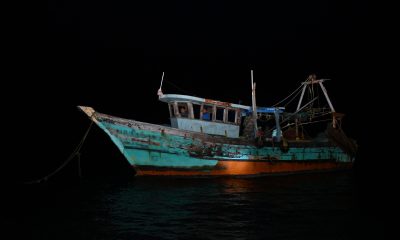
Navy seize an Indian fishing boat poaching in seas north of Mannar

‘Dates have the highest sugar content to fight Coronavirus’

Sunday Island 27 December – Headlines

#SundayIsland 17th December – Headlines

Sunday Island – 28th March

Sunday Island Headlines – 21 March

Sunday Island – 21st February – Headlines
-

 News4 days ago
CEB orders temporary shutdown of large rooftop solar systems
-

 News7 days ago
AG: Coal procurement full of irregularities
-
 Features4 days ago
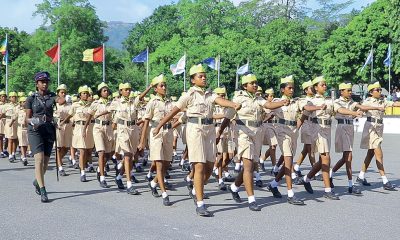
From Royal College Platoon to National Cadet Corps: 145 years of discipline, leadership, and modern challenges
-

 Business6 days ago
Israeli attack on Lebanon triggers local stock market volatility
-

 Business7 days ago
Hayleys Mobility introduces Premium OMODA C9 PHEV
-

 Business6 days ago
HNB Assurance marks 25 years with strategic transformation to ‘HNB Life’
-
 Latest News3 days ago
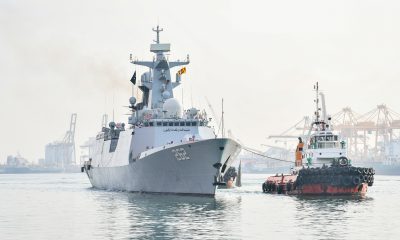
PNS TAIMUR & ASLAT arrive in Colombo
-

 Sports7 days ago
DS to face St. Anthony’s in ‘Bridges of Brotherhood’ cricket encounter