
Latest News
Reeling from Trump’s tariffs, India and China seek a business reboot


India’s Prime Minister Narendra Modi landed in China on Sunday with the sting of Donald Trump’s US tariffs still top of his mind.
Since Wednesday, tariffs on Indian goods bound for the US, like diamonds and prawns, now stand at 50% – which the US president says is punishment for Delhi’s continued purchase of Russian oil.
Experts say the levies threaten to leave lasting bruises on India’s vibrant export sector, and its ambitious growth targets.
China’s Xi Jinping, too, is trying to revive a sluggish Chinese economy at a time when sky-high US tariffs threaten to derail his plans.
Against this backdrop, the leaders of the world’s two most populous countries may both be looking for a reset in their relationship, which has previously been marked by mistrust, a large part of it driven by border disputes.
“Put simply, what happens in this relationship matters to the rest of the world,” Chietigj Bajpaee and Yu Jie of Chatham House wrote in a recent editorial.
“India was never going to be the bulwark against China that the West (and the United States in particular) thought it was… Modi’s China visit marks a potential turning point.”
India and China are economic powerhouses – the world’s fifth and second largest, respectively.
But with India’s growth expected to remain above 6%, a $4tn (£3tn) economy, and $5tn stock market, it is on the way to moving up to third place by 2028, according to the International Monetary Fund (IMF).
“While the world has traditionally focused on the single most important bilateral relationship in the world, US and China, it is time we shift more focus on how the second and would-be third largest economies, China and India, can work together,” says Qian Liu, founder and chief executive of Wusawa Advisory, based in Beijing.
But the relationship is deeply challenging.
The two sides have an unresolved and long-standing territorial dispute – that signifies a much broader and deeper rivalry.
Violence erupted across Ladakh’s Galwan Valley in June 2020 – the worst period of hostility between the two countries in more than four decades.
The fallout was largely economic – a return of direct flights was taken off the table, visas and Chinese investments were put on hold leading to slower infrastructure projects, and India banned more than 200 Chinese apps, including TikTok.
“Dialogue will be needed to help better manage the expectations of other powers who look to India-China as a key factor of Asia’s wider stability,” Antoine Levesques, senior fellow for South and Central Asian defence, strategy and diplomacy at IISS, says.
There are other fault lines too, including Tibet, the Dalai Lama, and water disputes over China’s plans to build the world’s largest hydroelectric power project across a river shared by both nations, as well as tensions with Pakistan after the Pahalgam attack.
India also does not currently enjoy good relations with most of its neighbours in South Asia, whereas China is a key trading partner for Pakistan, Bangladesh, Sri Lanka and Afghanistan.
“I would be surprised if a BYD factory is coming to India, but there may be some soft wins,” Priyanka Kishore, founder and principal economist at research company Asia Decoded, says.
It’s already been announced that direct flights will resume, there may be more relaxations on visas, and other economic deals.
However, the relationship between Delhi and Beijing is “an uncomfortable alliance to be sure”, notes Ms Kishore.
“Remember at one point, the US and India were coming together to balance China,” she adds.
But India is completely perplexed with the US and its position: “So it’s a smart move – and feeds into the multipolar narrative that both India and China believe in.”
Modi is travelling to China for the Shanghai Cooperation Organisation (SCO) – a regional body aimed at projecting an alternative worldview to that of the West. Members include China, India, Iran, Pakistan and Russia.
In the past, India has downplayed the organisation’s significance. And critics say it hasn’t delivered on substantial outcomes over the years.
The June SCO defence ministers’ meeting failed to agree on a joint statement. India raised objections over the omission of any reference to the deadly 22 April attack on Hindu tourists in Indian-administered Kashmir, which led to the worst fighting in decades between India and Pakistan.
But experts say the downturn in Delhi’s relations with Washington has prompted India to rediscover the utility of the SCO.
China, meanwhile, will value the optics of Global South solidarity amid Trump’s tariff chaos.
The Brics grouping – of which China, India, Russia, Brazil and South Africa are the founding members – has drawn the ire of Trump, who has threatened to slap additional tariffs on group members on top of their negotiated rates.
Modi last met Xi and Russia’s Vladimir Putin at the Brics summit in Russia in October 2024. Last week, Russian embassy officials said Moscow hopes trilateral talks with China and India will take place soon.
“Leveraging each of their advantages – China’s manufacturing prowess, India’s service sector strengths, and Russia’s natural resource endowment – they can work to reduce their dependence on the United States to diversify their export markets and ultimately reshape global trade flows,” Bajpaee and Yu said in their editorial.
Delhi is also leveraging other regional alliances, with Modi stopping in Japan on the way to China.
“Asean and Japan would welcome closer co-operation between China and India. It really helps in terms of supply chains and the idea of Make in Asia for Asia,” Ms Kishore says, referring to the political grouping comprising 10 Southeast Asian economies.
India continues to be reliant on China for its manufacturing, because it sources raw materials and components from there. It will likely be looking for lower import duties on goods.
India’s strict industrial policies have so far held it back from benefiting from the supply chain shift from China to South East Asian countries, according to experts.
There is a case for partnership, a strong one, says Ms Kishore, where India pitches to manufacture more electronics.
She points out that Apple makes airpods and wearables in Vietnam, and iPhones in India, and so there would be no overlap.
“Faster visa approvals would be an easy win for China as well. It wants market access in India either directly or through investments. It’s dealing with a shrinking US market, it’s already flooded Asean markets, and a lot of Chinese apps like Shein and TikTok are banned in India,” says Ms Kishore.
“Beijing would welcome the opportunity to sell to 1.45 billion people.”
Given the complexity of the relationship, one meeting is unlikely to change much. There is a long way to go on improving China-India ties.
But Modi’s visit to China could repair some animosity and send a very clear signal to Washington that India has options.
[BBC]

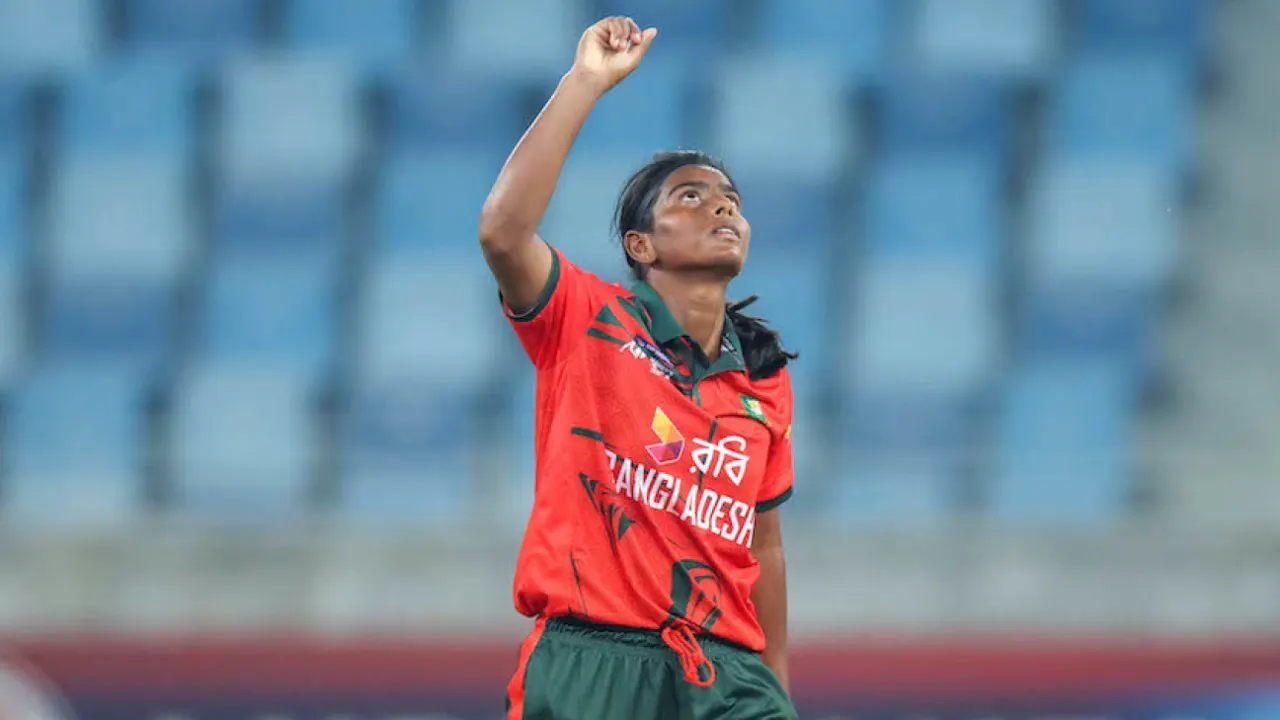
A superb bowling performance led by Marufa Akter and the spin attack helped Bangladesh overcome Indonesia in their Asia Cup opener in Dubai.
Indonesia, on their Asia Cup debut, put up a spirited performance especially with the ball to restrict Bangladesh to 129 for 8. Sobhana Mostary , playing her 100th international match, top-scored with 40, while Shorna Akter injected late momentum with 31 off 18 balls. Indonesia in return were bowled out for 58, with left-arm spinner Nahida Akter finishing with figures of 3 for 15.
Indonesia make early inroads
Indonesia’s Ni Made Putri Suwandewi found swing almost immediately but Bangladesh’s openers handled the movement well to make a positive start, scoring four boundaries in the first two overs. But that did not last long as Suwandewi struck in her second over, having Juairiya Ferdous mistime an inswinging delivery towards cover point, where Ni Ariani came forward and held a sharp low catch to give Indonesia their first wicket in Asia Cup.
Mostary and Dilara Akter then found run-scoring increasingly difficult. Bangladesh managed only one boundary between the third over and the end of the powerplay, reaching 30 for 1.
Indonesia’s spinners maintained the pressure thereafter, conceding only a few boundaries and repeatedly forcing Bangladesh’s batters to manufacture their shots. The partnership between Mostary andDilara struggled to gather momentum and was eventually broken when Ariani had Dilara caught for 27 off 31 balls. Bangladesh reached 58 for 2 at the halfway stage.
Shorna shines, Indonesia sparkle
Bangladesh’s first six came only in the 13th over thanks to Mostary. But her attempt to accelerate was checked soon after as 16-year old legspinner Sofia Velic, on her international debut, dismissed captain Nigar Sultana. Mostary was then left with the responsibility of guiding Bangladesh towards a competitive total, but Indonesia continued to restrict the scoring. Ni Luh Dewi struck twice in the 17th over to remove Mostary for 40 and Ritu Moni, leaving Bangladesh in further trouble.
Shorna briefly changed the momentum, hitting a six and a four, but Indonesia’s bowling ensured Bangladesh could not fully capitalise. Indonesia too dropped as many as three catches but the reprieves did not make much of an impact.
Ariani produced a dramatic finish to the innings, picking up two wickets as Bangladesh slipped from 105 for 3 to 129 for 8. They lost five wickets for 21 runs in just 17 balls, with Shorna, who had looked Bangladesh’s most fluent batter late in the innings, stranded at the non-striker’s end for much of the final over.
Bangladesh bowlers rule
Marufa began with a probing over, getting the ball to swing both ways and keeping Indonesia’s openers cautious. She broke through in her second over, having Rahmawati Pangestuti edge a full delivery to mid-on. she struck again in her next over, trapping Maria Corazon lbw with a full ball that swung sharply into her pads and beat her attempted flick. Indonesia had lost both openers early but they had made a slightly better start than Bangladesh managed during their own powerplay.
But the game shifted after the powerplay as Bangladesh’s spinners tightened the screws. Senior legspinner Fahima Khatun ended Ni Putu Ayu Nanda Sakarini’s difficult stay at the crease in the ninth over, trapping the Indonesia captain in front for just 2 off 15 balls. Sanjida Akter Meghla followed up with another wicket in the next over, trapping Dewi lbw after she missed a length ball that came into her pads.
Nahida struck in the 12th over but it was in the 14th over that Indonesia’s innings completely fell apart. Nahida first dismissed Suwandewi for 3 after a mistimed pull. Sofia Velic was then run out for 1 following a quick throw from deep fine leg, before Nahida finished the over by bowling Ariani for 2. Indonesia had slipped to eight down, and two more run-outs completed their innings as Bangladesh sealed a convincing 71-run victory.
Scores:
Bangladesh Women 129 for 8 in 20 overs (Dilara Akter 27, Sobhana Mostary 40, Nigar Sultana 10, Shorna Akter 31*; Ni Made Putri Suwandevi 1-13, Ni Ariani 3-28, Ni Luh Dewi 2-21) beat Indonesia Women 58 in 17.3 overs (Maria Corazon 12; Marufa Akter 2-06, Sanjida Akter Meghia 1-11, Nahida nahida 3-15, Fahima Khatun 1-09) by 71 runs
[Cricinfo]
Latest News
Sun directly overhead Kalpitiya, Talawa, Sinharagama, Galkadawala, Nachchaduwa, Padikaramaduwa, Gomarankalla and Verugal about 12.10 noon today (01)

The sun is going to be directly over the latitudes of Sri Lanka from 28th of August to 07th of September due to its apparent southward relative motion.
The nearest places of Sri Lanka over which the sun is overhead today (01) are Kalpitiya, Talawa, Sinharagama, Galkadawala,
Nachchaduwa, Padikaramaduwa, Gomarankalla and Verugal about 12.10 noon.
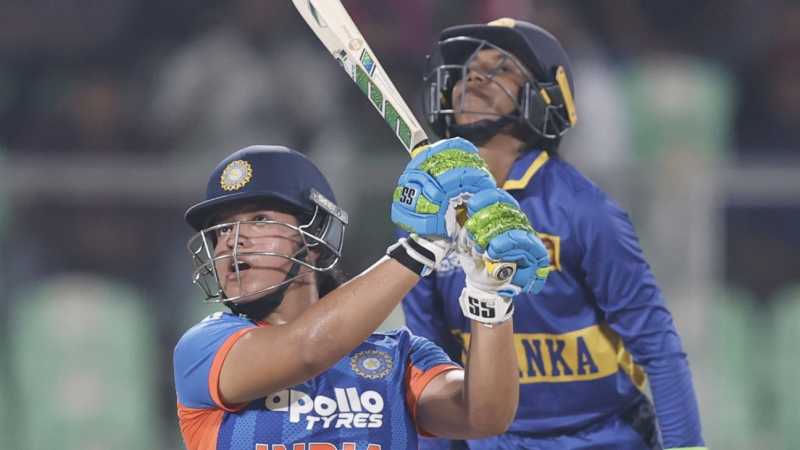
The inaugural Women’s Champions Trophy, scheduled for February 2027, will be moved out of Sri Lanka with the SLC set to be stripped of hosting rights. Cricinfo has confirmed that the six-team event will be played at a different venue in the same window, and it is likely to be held in India. The new hosts will be confirmed at the next ICC board meeting in October.
Sri Lanka have lost the right to stage the tournament, which was due to be their second ICC event in a year after they also co-hosted the 2026 men’s T20 World Cup, because of government interference in their board. The SLC has an interim administration, called the Transformation Committee, which was put in place by the Sri Lankan government and will oversee major board changes including to the constitution.
The ICC does not recognise politically appointed administrations and SLC representatives have not been at ICC board meetings since the Transformation Committee was put in place.
The change in venue could significantly impact the Sri Lanka side, who only qualified for the event by virtue of it being held in their country. The competition is limited to the top six teams on the ICC rankings and, as of the rankings update on Saturday, Sri Lanka are currently seventh. Australia, England, India, New Zealand and South Africa make up the top five. West Indies are sixth and would have originally missed out but if Sri Lanka do not qualify, then the Caribbean could sneak in.
This will be the second time in three years that Sri Lanka have lost out on an ICC event. In 2023, the 2024 men’s Under-19 World Cup was taken away from them for the same reasons and moved to South Africa.
In any case, while the Transformation Committee is in charge, SLC’s electoral processes stand suspended. The Transformation Committee’s official task is to reform that very electoral system, and the Sri Lanka Cricket constitution in general. According to the country’s laws, this can only be done through parliament.
The Transformation Committee has said it has produced a fresh constitution which is expected to be taken up in parliament over the next few weeks. Members of that Transformation Committee told Cricinfo that it expects for SLC elections to take place before the end of 2026, so long as the parliamentary process runs smoothly.
(Cricinfo)

Nahida, Marufa help Bangladesh brush aside Indonesia

Showers will occur in the Western, Sabaragamuwa, Southern and Uva provinces and in Kandy and Nuwara-Eliya districts

Sun directly overhead Kalpitiya, Talawa, Sinharagama, Galkadawala, Nachchaduwa, Padikaramaduwa, Gomarankalla and Verugal about 12.10 noon today (01)

SJB asks what Speaker intended to do about allegations against CJ

Navy Chief attends strategic-level discussions in Delhi

ICRS: Sustained and collective efforts critical to address issue of missing persons

‘Dates have the highest sugar content to fight Coronavirus’

Sunday Island 27 December – Headlines

#SundayIsland 17th December – Headlines

Sunday Island – 28th March

Sunday Island Headlines – 21 March

Sunday Island – 21st February – Headlines
-

 News4 days ago
Eight politicians in drug kingpin probe
-

 Features2 days ago
“Wrap Me Up in My Blazer”— A Gentlemanly Bradby Reminiscence
-

 Business4 days ago
Sri Lanka opens up: A new season of direct connectivity
-

 Features4 days ago
Redefining ageing in Sri Lanka
-
 Features6 days ago
Insights from Chieftains of Uva: Genealogy of two Kandyan Families – Part II
-
 Latest News5 days ago
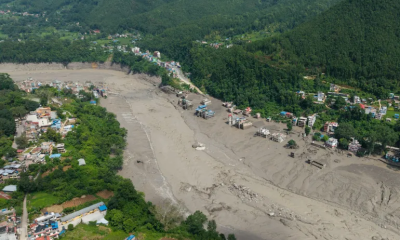
Nepal-Tibet floods: What happened, what caused them and who is missing?
-

 Editorial6 days ago
Warning of power cuts: El Niño and corruption
-

 Features6 days ago
Export diversification: Missing the wood for the trees – Part I