
Latest News
China and India pledge to be ‘partners not rivals’

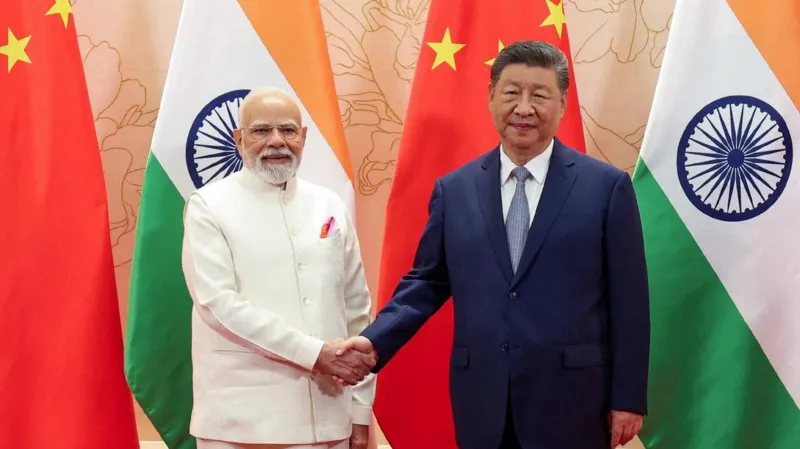
The leaders of China and India say there is now deepening trust between them after years of tension that includes a long-running border dispute.
China’s President Xi Jinping and Indian PM Narendra Modi met on the sidelines of the Shanghai Cooperation Organisation (SCO) in the port city of Tianjin. It is Modi’s first time in China in seven years.
Xi told Modi that China and India should be partners, not rivals while Modi said there was now an “atmosphere of peace and stability” between them.
President Putin is also at the summit, attended by more than 20 world leaders, but this year overshadowed by trade wars with the US.
President Trump has imposed steep tariffs on Indian goods as punishment for Delhi’s continued purchase of Russian oil, and Putin faces threats of sanctions for his ongoing war on Ukraine.
As the US-India relationship faces increasing headwinds, Modi is moving closer to Xi. Both countries are not only the most populous, but also have two of the biggest economies in the world.
Modi announced that flights between India and China – suspended since deadly troop clashes on their shared Himalayan border in 2020 – would resume, without providing a timeline.
Xi said that “both sides need to approach and handle our relationship from a strategic height and long-term perspective” and that “it is the right choice for both sides to be friends”.
The SCO summit itself is largely symbolic but will allow leaders to air common grievances and shared interests. It comes days before a massive military parade in Beijing that will mark 80 years since the end of World War II.
There are 10 member states in the grouping – including Russia, Pakistan and Iran – and 16 dialogue partners and observers.
Putin, who is a close ally of China, arrived to a red carpet welcome in Tianjin on Sunday.
The SCO was created by China, Russia and four Central Asian countries in 2001 as a countermeasure to limit the influence of Western alliances such as Nato.
This year’s gathering is the largest since it was founded.
For Tianjin, the summit has become a major event with banners and billboards promoting it throughout the northern port city.
At night tens of thousands of local spectators have been cramming into the riverside area to see a lightshow displayed on tower blocks while the gathering is taking place.
The streets have been heavily crowded – making it difficult for people to even move, especially on and around the historic Jiefang Bridge.
During the day pedestrians are at times being made to wait as roadblocks go up to allow the motorcades of visiting world leaders to pass by quickly.
Taxis and other hire car services have been suspended in the downtown area, but this has not dampened the enthusiasm of crowds of people wanting to be part of what has been described as a historic meeting.
However, police have advised Tianjin’s more than 13 million residents to avoid moving around the city if possible and to stick to shops nearby them to purchase any immediate necessities.
[BBC]

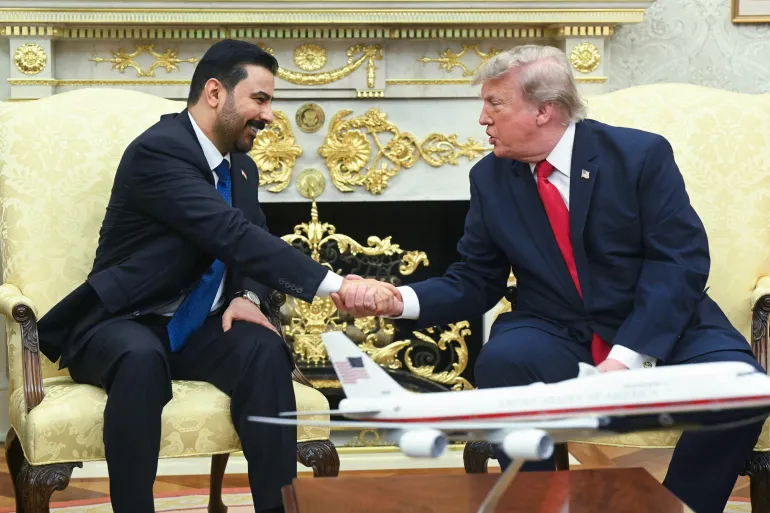
United States President Donald Trump and Iraqi Prime Minister Ali al-Zaidi have met at the White House in Washington, DC, with both leaders pledging to deepen economic ties and boost Iraq’s oil output.
The meeting on Tuesday came after Trump threw his support behind al-Zaidi, a businessman with no history in politics, and publicly opposed Iraq’s former Prime Minister Nouri al-Maliki for the prime ministerial role earlier this year.
Al-Maliki, a divisive figure seen as having close ties to Iran, subsequently dropped out of contention in April.
The Iraqi government had previously said it expected several oil and gas agreements to be signed during al-Zaidi’s visit to the US, with Trump also vowing a raft of deals during the Oval Office meeting.
He called al-Zaidi “a fantastic champion, a new champion”.
“Iraq has tremendous potential because of their oil and because of other things, but because of their oil, and we’re going to be doing a lot of deals,” Trump said.
“We’re going to create a lot of jobs for both countries, and we’re going to be taking out a lot of oil. A lot of oil is coming out,” he said.
Al-Zaidi, meanwhile, said the “visit was not like any other visit”, calling it the beginning of an “economic partnership”.
He said US-Iraqi relations were shifting from militaristic to economic.
Both he and Trump said the remaining US forces in Iraq, believed to number fewer than 2,000, would completely withdraw from Iraq by September 30. That is the same date al-Zaidi pledged that armed factions active across Iraq would disarm.
Iraq has long contended with the competing influences of Tehran and Washington in its domestic politics, with tensions over the continued US troop presence, deployed amid the conflict with ISIL (ISIS), and the pull of Iran-aligned armed groups.
In his first speech in parliament as prime minister, al-Zaidi vowed to disarm the country’s varied paramilitary groups, which have wielded power since the 2003 US-led war on Iraq.
He has not said how he will achieve the ambitious goal. Shortly before his departure, the Islamic Resistance in Iraq, an umbrella group of Iran-backed armed groups in the region, including Iraq, said it would reject any outcomes of al-Zaidi’s visit.
Iraq has also been one of several fronts in the US-Israeli war with Iran that began on February 28, with the conflict looming and its recent escalation looming large during al-Zaidi’s visit.
Iraq’s economy has also been particularly hard hit by Iran’s effective closure of the Strait of Hormuz, with about 90 percent of its 3.4 million barrels per day of fossil fuel exports passing through the water.
The recent fighting has thrown into question the future of a memorandum of understanding (MoU), which in June beckoned in a temporary end to the fighting, the opening of the Strait of Hormuz, and the lifting of a US naval blockade on Iran.
Speaking to reporters at the White House, al-Zaidi also said that Iraq needs a “fair share” from the Organization of the Petroleum Exporting Countries (OPEC).
Iraq has been pushing for a higher quota on its oil production, with al-Zaidi saying the need is a direct result of the destruction caused by the war against ISIL, over which Iraq officially declared victory in 2017.
“The damage suffered by Iraq exceeds $400bn, and to this day, some Iraqis still have destroyed homes and are living in camps,” he said. “I have a plan to return them to their homes, and that is why I want a fair share for Iraq in OPEC.”
[Aljazeera]
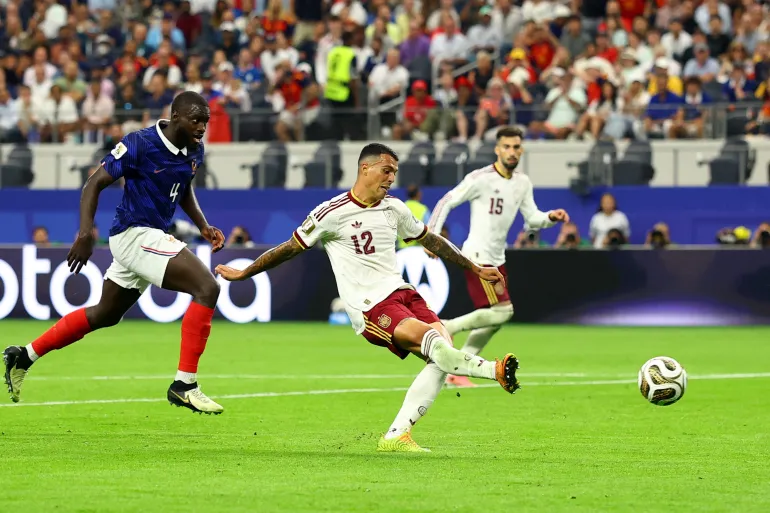
Spain snuffed out France’s dream of a third World Cup triumph, taming their galaxy of forwards to win 2-0 and progress to a final against England or Argentina.
Didier Deschamps’ men were hot favourites for the trophy after a string of breathtaking displays in the United States but they met their match against the slick European champions at the semifinal stage on Tuesday.
Mikel Oyarzabal opened the scoring for the 2010 winners with an emphatic penalty in the first half in Arlington, Texas, and Pedro Porro doubled their lead in the second half.
Shell-shocked France could not find a way back into the match despite their wealth of attacking riches.
The game at the Dallas Stadium caught fire midway through the first half when Salvadoran referee Ivan Barton pointed to the penalty spot after a reckless challenge by France left-back Lucas Digne on Spain winger Lamine Yamal.
Oyarzabal hammered the ball past France goalkeeper Mike Maignan for his fifth goal of the World Cup to leave France trailing for the first time in the tournament.

Minutes later they suffered another blow when centre-back William Saliba had to leave the pitch after a recurrence of his lower back injury, replaced by Crystal Palace defender Maxence Lacroix.
Spain went agonisingly close to extending their lead after some dazzling one-touch football but Dayot Upamecano’s challenge denied Fabian Ruiz.
France finished the half without a single shot on target, and just two attempts overall.
Deschamps threw on Desire Doue for Bradley Barcola in the 57th minute in a bid to supercharge his attack but a minute later they were 2-0 down after a stunning team goal for Luis de la Fuente’s men.
Defender Porro delivered a sharp pass to the feet of Dani Olmo on the edge of the box and collected the return ball before coolly slotting past Maignan.
(Aljazeera)
Latest News
S. N. B. M. Patdmasiri appointed Director General of the Department of Government Factories
The Cabinet of Ministers approved the resolution furnished by the Minister of Housing, Construction and Water Supply to
appoint S. N. B. M. Patdmasiri who is a Special Grade officer in Sri Lanka Engineering Service and currently serving at the Department as the Additional Director General to the post of Director General of the Department of Government Factories with immediate effect.

Trump meets Iraq PM at White House, promises ‘a lot of deals’

A few showers may occur in the Western, Sabaragamuwa and North-western provinces and in Kandy, Nuwara-Eliya, Galle and Matara districts

Negombo Prison riot: No convicts among 21 inmates killed

2026: 128 elephants killed in first four-and-a-half months

Sigiriya Jungles marks 10 years with community medical camp

Protests continue in Valikamam North demanding military-held land

‘Dates have the highest sugar content to fight Coronavirus’

Sunday Island 27 December – Headlines

#SundayIsland 17th December – Headlines

Sunday Island – 28th March

Sunday Island Headlines – 21 March

Sunday Island – 21st February – Headlines
-
 News5 days ago
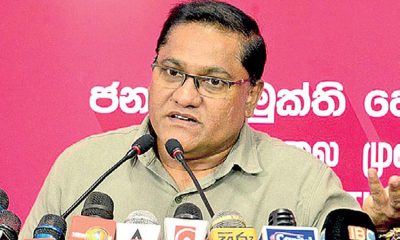
Herath warns prospective migrant workers not to get fleeced by racketeers
-
 Features3 days ago
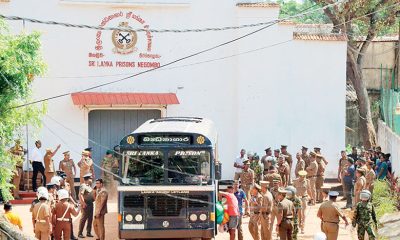
Prison riots and politics: NPP’s biggest challenge and Sri Lanka’s biggest opportunity
-

 Editorial4 days ago
What’s the world coming to?
-
 Foreign News5 days ago
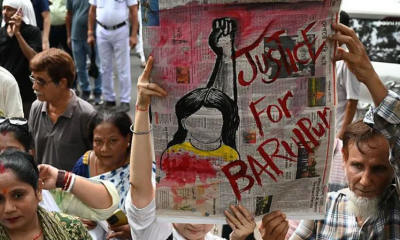
Tensions erupt in Indian state after 11-year-old raped and murdered
-
 Features5 days ago
Devanesan Annan – in Memoriam
-
 News6 days ago
Negombo Prison riot: Ensuring protection of prisoners fundamental responsibility of the state – UN
-
Editorial5 days ago
Punishment in hellholes
-
 News6 days ago
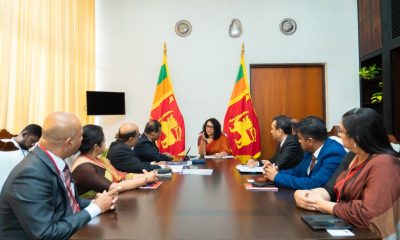
Representatives of the Organization of Professional Associations (OPA) of Sri Lanka meet the Prime Minister