
Features
Rediscovering Lumbini: Birth place of Prince Siduhath

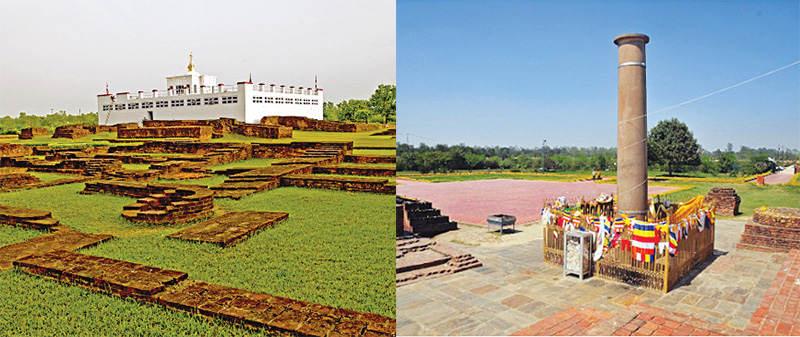
by Geewananda Gunawardana, Ph.D.
There is no doubt that this title itself will bring bemusement to the denizens of the land of Mahavamsa. An entire nation failing to recall such an important place may seem impossible, but up until the colonial occupiers started probing the past in the 19th century, the historical significance, or the geographical location of Lumbini had been completely erased from the collective memory of India and Nepal.
The history of India is undoubtedly one of the richest in the world, yet it is one of the least recorded ones as well. The chronicles of the surrounding countries have done a better job in capturing the history of this great land than its own esteemed epics, poems, and legends. For example, the Sri Lankan chronicles Deepavamsa and Mahavamsa were crucial in uncovering the origins of Buddhism and the role Emperor Asoka played in spreading it in Asia. As a result of this paucity of endogenous information, when the British started the Asiatic Society in 1784 to further Oriental Research, they were not aware that India was the birthplace of Buddhism. Observing the curly, short hair depicted on statues and carvings being discovered, they assumed that those antiquities belonged to an African cult. For a time, they confused Sri Lankan king Devanam Piya Tissa with the Devanam Piya (Asoka) of India and wondered why a Sri Lankan king would have erected commemorative pillars in India. Even today, despite years of investigations, the origins of the magnificent Bharhut temple remains a mystery.
Over 1.5 million devotees, 60 thousand of them Sri Lankans, visited Lumbini, Nepal in 2019 before the pandemic disrupted travels. However, as late as the early 20th century, there were no proper roads or facilities available for visitors. The visitors had to go on horseback or ride elephants and carry all their supplies with them. The first recorded visit to Lumbini after Parinirvana was by Emperor Asoka in the year 249 BCE. Asokawadana, a 2nd century Sanskrit poem, describes how Emperor Asoka broke down in tears when he was taken to Lumbini and explained what happened there by his spiritual teacher Upagupta. The last recorded visit prior to the 19th century developments was in 1312 by Ripu Malla King of Kathmandu. After that, the place was neglected, forgotten, and remained elusive to the modern world until 1896, hidden among groves of sal trees, only frequented by wild beasts and the few hunters who go after them.
It was Dr. Francis Buchanan, a surgeon turned botanist, charged with statistical surveys of the occupied territories by the governor of Bengal, that learned the connection between India and the founder of the religion of Ava or Inwa, a kingdom of Myanmar, known as Boodh. Based on information he gathered during his visits to Ava and Katmandu, he published a paper in 1797, the first English document describing “Buddhism,” although he did not use this term. During the next hundred years, major advances were made in the fields of Indian history and archeology. Even though epics such as Mahavamsa had textual information, it was these 19th century developments that enabled the construction of a coherent, evidence-based story that connected the localities and peoples referenced in the historical texts to present day places.
Interests of the Asiatic Society were mainly academic; driven by the curiosity of the strange land they conquered. It did not do much for exploration or preservation of Indian archaeological sites. That had to wait until the establishment of the Indian Archaeological Survey in 1862 with Alexander Cunningham, an army engineers, as its head. However, haphazard digging of ancient ruins by cavalier Indologists looking for valuables or building materials continued unabated. From a hindsight, one cannot stop wondering how much more physical evidence for Buddha and his life could have come to light if these sites were left for systematic archaeological explorations later. Unfortunately, the same could be said about burning of the libraries at Alexandria by Romans, Nalanda by Islamic invaders, or Aluvihara temple, where the Tipitaka was written, by the British in 1848.
A landmark development of this time was the deciphering of the Brahmi and Kharosthi alphabets in 1837 by James Prinsep, the Assay Master of the government mint in Benares. This provided access to inscriptions that were found in increasing numbers on pillars, rocks, and other ruins. A wide-ranging collaboration between civil servants stationed in British colonies enabled the reconstruction of the Indian history of the second half of the first millennium BCE, that has escaped from the collective memory of India. The information from Sri Lankan sources came from the reports of Robert Knox (1641-1720), and civil servants George Turnour (1799-1843) and Alexander Johnston (1775-1849) who translated historical documents. Later, they were supplemented by the works of Rhys Davids (1843 1922) and Hugh Nevill (1847-1897). At the same time, the classic poem The Light of Asia by Sir Edwin Arnold (1832-1904), published in 1879, kindled the Western interests on Buddhism with its mystique laden description of Buddha’s life.
However, the crucial information for the geographical locations of historical sites relevant to Buddha’s life came from two Chinese sources: the travelogues of Fa Hian and Huan Tsang. Fa Hian (Faxian, 337-422 CE) spent ten years in India and two years in Sri Lanka from 380 to 413 CE while Huan Tsang (Xuanzang, 602—664 CE) spent sixteen years in India from 627 to 643 CE. Both kept detailed records of their travels, and copied or translated many local texts to be taken back to China. It is incredible that they managed to travel such vast distances, collect that much information, and take them back to China with the limited facilities available at the time. Interestingly, according to some documents, Fa Hian and Buddhagosha had met briefly at sea while traveling to and from Sri Lanka. The Chinese travelogues contained relative positions of the sacred sites they visited: the distances, travel times, and direction of travel to reach them as well as detailed descriptions of the sites.
Bodhgaya was the first to be identified as an important Buddhist landmark, and it was Francis Buchanan who made the connection. While conducting his first statistical survey of the regions West of Calcutta in 1811, Buchana came upon the village of Gaya. He was astonished to see that all structures of the village were constructed of salvaged materials, bricks, and decorated stones of varying sizes. A local Brahmin had confirmed that they came from older constructions found abundantly in the countryside, but of unknown origin. Buchanan also observed that most of the ancient statues, carvings, and decorations were repurposed in the Hindu shrines. A statue of a Hindu deity was found to be a Buddha statue altered with clay and paint. Buchanan identified Bodhgaya as the place that the Chinese travelers described as the place where Siduhath attained enlightenment. The completion of excavation and restoration of the Bodhgaya temple complex was left to the Archaeological survey led by Cunningham after a failed restoration effort by a group sent by the King of Ava in 1879. The role of Mahabodhi society and Anagarika Dhamrmapala in this effort need not be repeated here. Bodhgaya was the first historical place associated with Buddha to be identified by modern Indologists.
After reconstructing the time and life of Emperor Asoka, most of the sites connected with the Buddha’s life were identified, excavated, and restoration works initiated by the year 1890. However, out of the four places most important to Buddhists, Lumbini, the birthplace of Prince Siduhath had not been located. The Indian Archeological Survey was broken-up in 1889, and exploration and preservation were neglected. This gave the local administrators the authority to do what they thought was best, thereby giving the opportunity for anyone to become an armature archeologist.
Two types of people entered the race to find other the remaining undiscovered important sites described in the texts, including Lumbini. First were the government officials who tried to follow the topographical directions provided in the Chinese documents. Two such professionals were Vincent Smith, who rose through the ranks to become District Magistrate and Collector and Dr. Lawrence Waddell, an officer in the Indian Medical Service. The second type were the property owners who could dig anything in their property at will. During one such random dig of a mound, a potsherd and some bone fragments were recovered, but were thrown in the river by the disappointed excavator. The interpretation of the inscriptions found there on a later date revealed that it was Buddha’s alms bowl that was thrown away.
A third type comes into the story of Lumbini in the form of one Dr. Alois Fuhrer (1853-1930). Many documents credit him with the discovery of Lumbini, but there is another, darker side to that story. He was a German Indologist working as a low-level officer for the North-Western province. His “involvement” with the discovery of Lumbini and Piprahwa relics brought him immense publicity and respect. He was adorated so much by Buddhists that one Mahabodhi Society report claimed he would become a Buddhist monk in Sri Lanka. It took a while to come to light that he was a “a forger and dealer in fake antiquities.” The unfortunate association of this shadowy figure cast doubts about the authenticity of several archeological finds of that time. What follows is an account of the lesser-known side of the Lumbini story.
The two professionals, Smith and Waddell worked independently of each other but were guided by the same information provided by Fa Hien, Huan Tsang, and the previous fieldwork by Cunningham. They both concluded that Cunningham’s earlier identifications of Bhuila and Kesia as Kapilavastu and Kusinagara, respectively, were incorrect. The geography of the Gangetic plains had shifted significantly from the time of Fa Hien and Huan Tsang due to annual flooding of the river. Cunningham assumed that Pataliputra must have been swept away leading to this mistaken identity.
After several unsuccessful explorations, Waddell managed to locate Pataliputra, emperor Asoka’s capital, just outside the present-day town of Patna. He was aided by numerous accidental finds of archaeological artefacts surfaced during several construction projects. A cartload of statues was taken away by an overseer and disappeared never to be found on one such occasion. Elaborately carved stonework had been used to build a dam. Confirmation of the location of Pataliputra gave another reference point for siting Lumbini. Based on the cartographic information given by Fa Hian, Huan Tsang, and a Tibetan Pilgrimage Guide, Waddell postulated the locations of Lumbini and Kapilavastu relative to Pataliputra and send a proposal to the government to carry out excavations.
Waddell’s proposal was approved but he was unable to carry out the work as he was assigned other duties. First, he was sent to a war front, and then appointed as the Professor of Chemistry and Pathology at Calcutta Medical College. In Dr. Waddell’s absence, Dr. Alois Fuhrer, the same person who would later come out as a fake, was appointed to carry out this work.
(To be continued)







 ‘Adapt, shrink or die’ – thus runs the warning issued by the Trump administration to UN humanitarian agencies with brute insensitivity in the wake of its recent decision to drastically reduce to $2bn its humanitarian aid to the UN system. This is a substantial climb down from the $17bn the US usually provided to the UN for its humanitarian operations.
Considering that the US has hitherto been the UN’s biggest aid provider, it need hardly be said that the US decision would pose a daunting challenge to the UN’s humanitarian operations around the world. This would indeed mean that, among other things, people living in poverty and stifling material hardships, in particularly the Southern hemisphere, could dramatically increase. Coming on top of the US decision to bring to an end USAID operations, the poor of the world could be said to have been left to their devices as a consequence of these morally insensitive policy rethinks of the Trump administration.
Earlier, the UN had warned that it would be compelled to reduce its aid programs in the face of ‘the deepest funding cuts ever.’ In fact the UN is on record as requesting the world for $23bn for its 2026 aid operations.
If this UN appeal happens to go unheeded, the possibilities are that the UN would not be in a position to uphold the status it has hitherto held as the world’s foremost humanitarian aid provider. It would not be incorrect to state that a substantial part of the rationale for the UN’s existence could come in for questioning if its humanitarian identity is thus eroded.
Inherent in these developments is a challenge for those sections of the international community that wish to stand up and be counted as humanists and the ‘Conscience of the World.’ A responsibility is cast on them to not only keep the UN system going but to also ensure its increased efficiency as a humanitarian aid provider to particularly the poorest of the poor.
It is unfortunate that the US is increasingly opting for a position of international isolation. Such a policy position was adopted by it in the decades leading to World War Two and the consequences for the world as a result for this policy posture were most disquieting. For instance, it opened the door to the flourishing of dictatorial regimes in the West, such as that led by Adolph Hitler in Germany, which nearly paved the way for the subjugation of a good part of Europe by the Nazis.
If the US had not intervened militarily in the war on the side of the Allies, the West would have faced the distressing prospect of coming under the sway of the Nazis and as a result earned indefinite political and military repression. By entering World War Two the US helped to ward off these bleak outcomes and indeed helped the major democracies of Western Europe to hold their own and thrive against fascism and dictatorial rule.
Republican administrations in the US in particular have not proved the greatest defenders of democratic rule the world over, but by helping to keep the international power balance in favour of democracy and fundamental human rights they could keep under a tight leash fascism and linked anti-democratic forces even in contemporary times. Russia’s invasion and continued occupation of parts of Ukraine reminds us starkly that the democracy versus fascism battle is far from over.
Right now, the US needs to remain on the side of the rest of the West very firmly, lest fascism enjoys another unfettered lease of life through the absence of countervailing and substantial military and political power.
However, by reducing its financial support for the UN and backing away from sustaining its humanitarian programs the world over the US could be laying the ground work for an aggravation of poverty in the South in particular and its accompaniments, such as, political repression, runaway social discontent and anarchy.
What should not go unnoticed by the US is the fact that peace and social stability in the South and the flourishing of the same conditions in the global North are symbiotically linked, although not so apparent at first blush. For instance, if illegal migration from the South to the US is a major problem for the US today, it is because poor countries are not receiving development assistance from the UN system to the required degree. Such deprivation on the part of the South leads to aggravating social discontent in the latter and consequences such as illegal migratory movements from South to North.
Accordingly, it will be in the North’s best interests to ensure that the South is not deprived of sustained development assistance since the latter is an essential condition for social contentment and stable governance, which factors in turn would guard against the emergence of phenomena such as illegal migration.
Meanwhile, democratic sections of the rest of the world in particular need to consider it a matter of conscience to ensure the sustenance and flourishing of the UN system. To be sure, the UN system is considerably flawed but at present it could be called the most equitable and fair among international development organizations and the most far-flung one. Without it world poverty would have proved unmanageable along with the ills that come along with it.
Dehumanizing poverty is an indictment on humanity. It stands to reason that the world community should rally round the UN and ensure its survival lest the abomination which is poverty flourishes. In this undertaking the world needs to stand united. Ambiguities on this score could be self-defeating for the world community.
For example, all groupings of countries that could demonstrate economic muscle need to figure prominently in this initiative. One such grouping is BRICS. Inasmuch as the US and the West should shrug aside Realpolitik considerations in this enterprise, the same goes for organizations such as BRICS.
The arrival at the above international consensus would be greatly facilitated by stepped up dialogue among states on the continued importance of the UN system. Fresh efforts to speed-up UN reform would prove major catalysts in bringing about these positive changes as well. Also requiring to be shunned is the blind pursuit of narrow national interests.

 Hi! Great to be back after my Christmas break.
Thought of starting this week with egg white.
Yes, eggs are brimming with nutrients beneficial for your overall health and wellness, but did you know that eggs, especially the whites, are excellent for your complexion?
OK, if you have no idea about how to use egg whites for your face, read on.
Egg White, Lemon, Honey:
Separate the yolk from the egg white and add about a teaspoon of freshly squeezed lemon juice and about one and a half teaspoons of organic honey. Whisk all the ingredients together until they are mixed well.
Apply this mixture to your face and allow it to rest for about 15 minutes before cleansing your face with a gentle face wash.
Don’t forget to apply your favourite moisturiser, after using this face mask, to help seal in all the goodness.
Egg White, Avocado:
In a clean mixing bowl, start by mashing the avocado, until it turns into a soft, lump-free paste, and then add the whites of one egg, a teaspoon of yoghurt and mix everything together until it looks like a creamy paste.
Apply this mixture all over your face and neck area, and leave it on for about 20 to 30 minutes before washing it off with cold water and a gentle face wash.
Egg White, Cucumber, Yoghurt:
In a bowl, add one egg white, one teaspoon each of yoghurt, fresh cucumber juice and organic honey. Mix all the ingredients together until it forms a thick paste.
Apply this paste all over your face and neck area and leave it on for at least 20 minutes and then gently rinse off this face mask with lukewarm water and immediately follow it up with a gentle and nourishing moisturiser.
Egg White, Aloe Vera, Castor Oil:
To the egg white, add about a teaspoon each of aloe vera gel and castor oil and then mix all the ingredients together and apply it all over your face and neck area in a thin, even layer.
Leave it on for about 20 minutes and wash it off with a gentle face wash and some cold water. Follow it up with your favourite moisturiser.

 Superlatives galore were used, especially on social media, to highlight R&B singer Ne-Yo’s trip to Sri Lanka: Global superstar Ne-Yo to perform live in Colombo this December; Ne-Yo concert puts Sri Lanka back on the global entertainment map; A global music sensation is coming to Sri Lanka … and there were lots more!
At an official press conference, held at a five-star venue, in Colombo, it was indicated that the gathering marked a defining moment for Sri Lanka’s entertainment industry as international R&B powerhouse and three-time Grammy Award winner Ne-Yo prepares to take the stage in Colombo this December.
What’s more, the occasion was graced by the presence of Sunil Kumara Gamage, Minister of Sports & Youth Affairs of Sri Lanka, and Professor Ruwan Ranasinghe, Deputy Minister of Tourism, alongside distinguished dignitaries, sponsors, and members of the media.
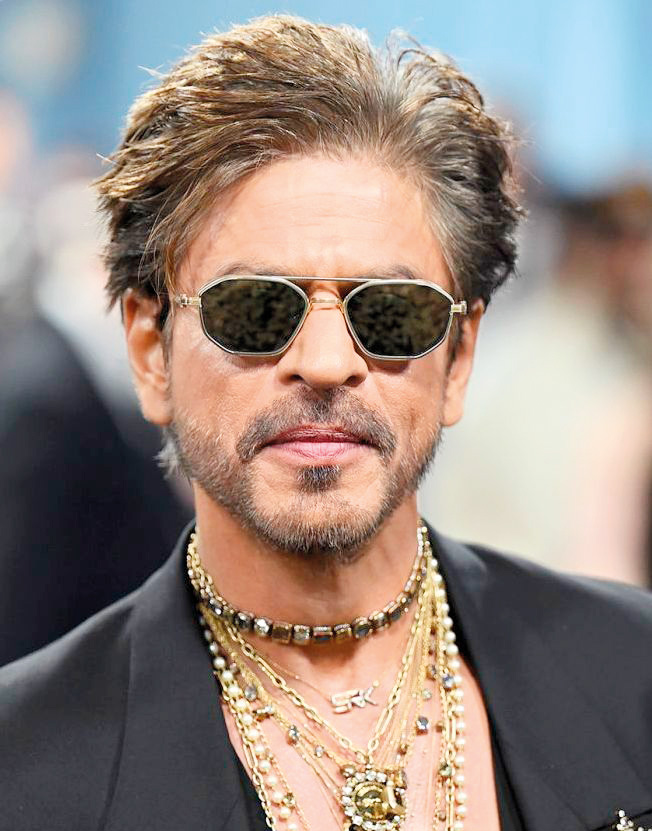
Shah Rukh Khan: Disappointed his fans in Sri Lanka
According to reports, the concert had received the official endorsement of the Sri Lanka Tourism Promotion Bureau, recognising it as a flagship initiative in developing the country’s concert economy by attracting fans, and media, from all over South Asia.

Nick Carter: His concert, too, was cancelled due to “Unforeseen circumstances
However, I had that strange feeling that this concert would not become a reality, keeping in mind what happened to Nick Carter’s Colombo concert – cancelled at the very last moment.
Carter issued a video message announcing he had to return to the USA due to “unforeseen circumstances” and a “family emergency”.
Though “unforeseen circumstances” was the official reason provided by Carter and the local organisers, there was speculation that low ticket sales may also have been a factor in the cancellation.
Well, “Unforeseen Circumstances” has cropped up again!
In a brief statement, via social media, the organisers of the Ne-Yo concert said the decision was taken due to “unforeseen circumstances and factors beyond their control.”
Ne-Yo, too, subsequently made an announcement, citing “Unforeseen circumstances.”
The public has a right to know what these “unforeseen circumstances” are, and who is to be blamed – the organisers or Ne-Yo!
Ne-Yo’s management certainly need to come out with the truth.
However, those who are aware of some of the happenings in the setup here put it down to poor ticket sales, mentioning that the tickets for the concert, and a meet-and-greet event, were exorbitantly high, considering that Ne-Yo is not a current mega star.
We also had a cancellation coming our way from Shah Rukh Khan, who was scheduled to visit Sri Lanka for the City of Dreams resort launch, and then this was received: “Unfortunately due to unforeseen personal reasons beyond his control, Mr. Khan is no longer able to attend.”
Referring to this kind of mess up, a leading showbiz personality said that it will only make people reluctant to buy their tickets, online.
“Tickets will go mostly at the gate and it will be very bad for the industry,” he added.

Zohran Mamdani sworn in as New York City mayor

In pictures: New Year welcomed around the world

Foreign warships commended for their assistance during weather disaster in Sri Lanka

Machu Picchu train crash leaves one dead and dozens injured

I invite you to step into 2026 with renewed energy, hope, and determination – PM

Fairly heavy showers about 75 mm are likely at some places in the Central and Uva provinces and in Batticaloa and Ampara districts

‘Dates have the highest sugar content to fight Coronavirus’

Sunday Island 27 December – Headlines

#SundayIsland 17th December – Headlines

Sunday Island – 28th March

Sunday Island Headlines – 21 March

Sunday Island – 21st February – Headlines
-
 News7 days ago
Street vendors banned from Kandy City
-

 Sports4 days ago
Gurusinha’s Boxing Day hundred celebrated in Melbourne
-
 News2 days ago
Leading the Nation’s Connectivity Recovery Amid Unprecedented Challenges
-

 News7 days ago
Lankan aircrew fly daring UN Medevac in hostile conditions in Africa
-

 Sports5 days ago
Time to close the Dickwella chapter
-

 Features3 days ago
It’s all over for Maxi Rozairo
-

 Features7 days ago
Rethinking post-disaster urban planning: Lessons from Peradeniya
-

 Opinion7 days ago
Are we reading the sky wrong?