
Latest News
Red Cross outraged over killing of medics by Israeli forces in Gaza

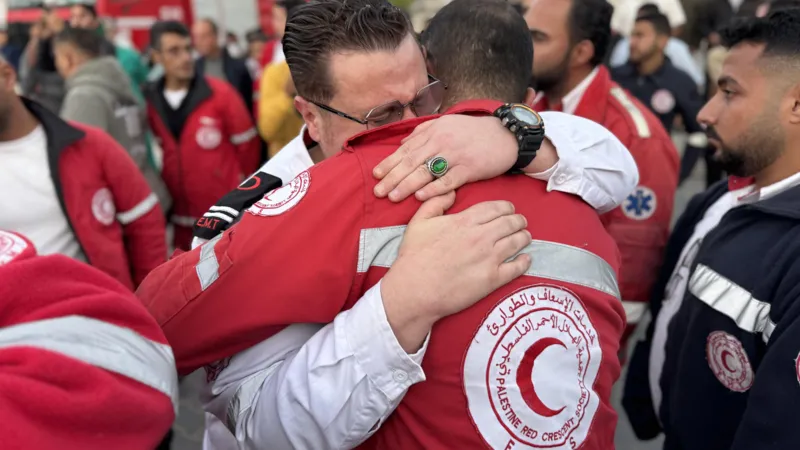
The Red Cross movement has expressed outrage that eight Palestinian medics were killed along with six Civil Defence first responders and a UN staff member by Israeli forces in southern Gaza.
Five ambulances, a fire truck and a UN vehicle were struck “one by one” in the al-Hashashin area on 23 March, according to a UN official. The 15 bodies were recovered from a “mass grave” on Sunday, he said.
The Palestine Red Crescent Society (PRCS) said a ninth medic was missing and accused Israel of targeting staff.
Israel’s military said troops fired on vehicles “advancing suspiciously” without headlights or emergency signals. It said a Hamas operative and “eight other terrorists” were among those killed.
The International Federation of Red Cross and Red Crescent Societies (IFRC) said in a statement on Sunday that the eight bodies of PRCS medics were retrieved “after seven days of silence and having access denied to the area of Rafah where they were last seen”.
The organisation identified those killed as ambulance officers Mostafa Khufaga, Saleh Muamer and Ezzedine Shaath, and first responder volunteers Mohammad Bahloul, Mohammed al-Heila, Ashraf Abu Labda, Raed al-Sharif and Rifatt Radwan.
It added that ambulance officer Assad al-Nassasra was “still missing”.
“I am heartbroken. These dedicated ambulance workers were responding to wounded people. They were humanitarians,” IFRC Secretary General Jagan Chapagain said.
“They wore emblems that should have protected them; their ambulances were clearly marked.
“Even in the most complex conflict zones, there are rules. These rules of International Humanitarian Law could not be clearer – civilians must be protected; humanitarians must be protected. Health services must be protected.”
The International Committee of the Red Cross (ICRC) said in a separate statement that it was “appalled” that the medics were killed while carrying out their work.
The head of the UN Office for the Co-ordination of Humanitarian Affairs (OCHA) in Gaza, Jonathan Whittall, said in a post on X on Sunday that its staff had supported the PRCS and Civil Defence in recovering the 15 bodies of the PRCS medics, Civil Defence first responders and UN staff member from “a mass grave… that was marked with the emergency light from one of their crushed ambulances”.
In a video that was posted online on Monday, Mr Whittall said: “Seven days ago, Civil Defence and PRCS ambulances arrived at the scene. One by one they were hit, they were struck. Their bodies were gathered and buried in this mass grave. We’re digging them out with uniforms, with their gloves on. They were here to save lives. Instead, they ended up in a mass grave.”
“Their vehicles… are crushed and dumped, covered in sand next to us. It’s an absolute horror what has happened here. This should never happen. Healthcare workers should never be a target.”
The head of the UN agency for Palestinian refugees (Unrwa), Philippe Lazzarini, said the UN staff member was one of its employees and that the burial of the bodies in “shallow graves” was “a profound violation of human dignity”.
The PRCS said it was devastated by the “massacre of our team”.
“[Israel’s] targeting of Red Crescent medics, despite the protected status of their mission and the Red Crescent emblem can only be considered a war crime punishable under international humanitarian law,” a statement added.
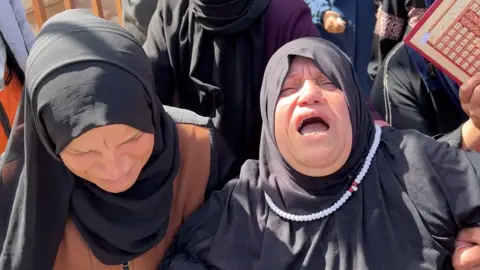
At the funeral for the medics on Monday, the father of Ashraf Abu Labda told the BBC: “They [Israeli troops] targeted the first vehicle, then the second and then the third. They killed them in cold blood.”
“We’ve been trying to look for them for eight days. They refused all co-ordination with Red Crescent, OCHA, or the UN. No-one can hold them accountable. Only God,” Nasser Abu Labda said.
The Israel Defense Forces (IDF) said in a statement that during an operation in southern Gaza on 23 March “several vehicles were identified advancing suspiciously toward IDF troops without headlights, or emergency signals, their movement was not co-ordinated in advance. Thus, IDF troops opened fire at the suspected vehicles.”
“Following an initial assessment, it was determined that the forces had eliminated a Hamas military operative, Mohammad Amin Ibrahim Shubaki, along with eight other terrorists from Hamas and the PIJ [Palestinian Islamic Jihad],” it added.
“Following the strike, the IDF co-ordinated with international organisations to facilitate the evacuation of the bodies.”
A previous IDF statement about the incident said an initial inquiry had determined that “some of the suspicious vehicles that were moving towards the troops were ambulances and fire trucks”. It also condemned what it called the “repeated use of civilian infrastructure by terrorist organisations”.
The IDF has not commented on the whereabouts of the missing PRCS medic. The OCHA said it was not clear if he was dead, had been detained or something else had happened.
Senior Hamas official Basem Naim condemned the attack.
“The targeted killing of rescue workers – who are protected under international humanitarian law – constitutes a flagrant violation of the Geneva Conventions and a war crime,” he said.
OCHA spokeswoman Olga Cherevko said there needed to be a full investigation to establish exactly what happened.
“They were aid workers in clearly marked vehicles, so this is why it’s obviously important to get to the bottom of it and get all the facts,” she told the BBC.
When asked about the IDF statements that Hamas and PIJ members had been killed, she said: “There are certain rules that all wars have, and this is why all parties to the conflict have to, obviously, abide by these rules. And this is what we’ve always said… But that doesn’t negate the fact that humanitarian aid workers and emergency responders shouldn’t be targeted.”
The incident in al-Hashashin happened on the same day that the IDF announced that its troops had encircled the nearby Tel al-Sultan area of Rafah and raided what it said was a Hamas command-and-control centre there.
On Monday, the IDF issued a sweeping new evacuation order for the entire Rafah region, telling all residents to head towards the nearby al-Mawasi humanitarian zone for their safety.
The IDF’s Arabic spokesperson warned that it was “returning to fight with great force to eliminate the capabilities of terrorist organizations in these areas”.
Israel launched its first major operation in Rafah last May, leaving large parts of it in ruins. However, tens of thousands of people returned to what was left of their homes in the city during the recent two-month-long ceasefire.
Israel renewed its aerial bombardment and ground offensive in Gaza on 18 March after the first phase of the ceasefire deal came to an end and negotiations on a second phase of the deal stalled.
At least 1,001 people have since been killed in Gaza since then, according to the territory’s Hamas-run health ministry.
The war erupted when Hamas attacked southern Israel on 7 October 2023, killing about 1,200 people and taking 251 back to Gaza as hostages.
The Israeli military launched a campaign to destroy Hamas in response, during which more than 50,350 people have been killed, the Gaza health ministry says.
[BBC]

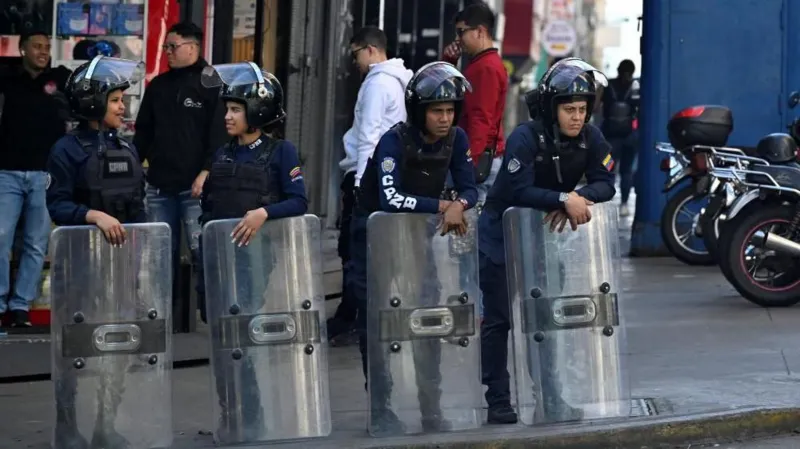
At least 14 members of the press were detained in Venezuela on Monday as they were covering the aftermath of the seizure of Venezuelan leader Nicolás Maduro by US forces.
The union representing media workers in Venezuela said all but one of those detained were employed by foreign news organisations and were released later on Monday, with one reporter deported.
Foreign news media have long faced restrictions in Venezuela, with very few being granted visas to work in the country.
Their detention came as Delcy Rodríguez was sworn in as the interim president and shortly after she said that she was willing to co-operate with the Trump administration, which has said it would “run” Venezuela.
The union said the media workers were detained by Venezuelan security forces at the National Assembly and its environs, and in the neighbourhood of Altamira – all in the capital, Caracas.
At least two of them were seized by agents working for Venezuela’s military counterintelligence agency, while others were detained by Venezuela’s intelligence service.
They said they had their equipment searched, their phones checked and their social media posts and messages read, the union statement added.
A Colombian and a Spanish reporter were also detained at Venezuela’s border with Colombia near Cúcuta.
The two reporters were held for hours incommunicado before being released back into Colombia, the statement said.
The union called the incidents “alarming” and called for the release of 23 media workers who remain in detention in the country.
(BBC)

South Korea’s President Lee Jae Myung has called for a “new phase” in ties with China as he met its leader Xi Jinping in Beijing on Monday.
Regional security and lifting Beijing’s unofficial ban on Korean pop culture is high on Lee’s agenda, as he continues his four-day trip in China. He is set to meet China’s Premier Li Qiang and the chairman of parliament, Zhao Leji on Tuesday.
It marks the first visit by a South Korean leader since 2019. Bilateral ties had soured under Lee’s predecessor, impeached ex-president Yoon Suk Yeol, who was very critical of China.
Xi, meanwhile, has appeared keen to shore up ties with South Korea amid a diplomatic row between China and Japan.
South Korea is a US security ally – like Japan – but also relies on China for trade. Experts say Lee is expected to keep walking a diplomatic tightrope between Beijing and Tokyo.
The visit marks the second time the two leaders have met since November when Xi visited South Korea for a regional economic summit.
On Monday Lee stated that the visit was “a crucial opportunity” for the “full-scale restoration of South Korea-China relations”, reported South Korean newspaper Chosun. “We want to usher in a new phase in the development of South Korea-China relations.”
Government officials and companies from both countries signed a series of cooperation agreements on technology, trade and environment.
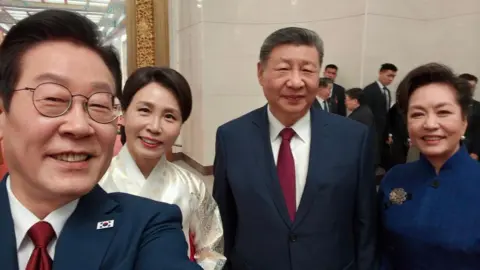
Lee also took selfies with Xi, using a Xiaomi phone that the Chinese president had gifted him last year.
“The image quality is certainly good, right?” Lee posted on X along with the photos.
Xi noted that the “international situation is becoming more turbulent and complex”.
The meeting followed the US’s capture of Venezuelan president Nicolas Maduro over the weekend.
Xi urged Lee to “firmly stand on the right side of history and make correct strategic choices”, China’s official Xinhua news agency reported.
He also brought up the two countries’ shared history of resisting Japan militarism, saying that China and South Korea should now “work hand in hand to safeguard the outcomes of the victory of World War Two and uphold peace and stability in Northeast Asia”.
Xi’s eagerness to meet Lee signals the pressure he faces in finding a regional ally, Park Seung-chan, professor of China studies at Yongin University told the BBC.
“China may beat around the bush but its demand is clear: side with China and denounce Japan.”
During his four-day trip to China, Lee is expected to hold a memorial service in Shanghai for activists who fought for Korea’s independence from Japan.
But while South Korea is “still showing all its deference towards China”, it wants to “strengthen its relationships with both Japan and China”, Mr Park said.
Lee is reportedly planning to visit Japan later this month to meet Prime Minister Sanae Takaichi.
Security on the Korean Peninsula has also been part of the discussions. Lee has sought to engage North Korea diplomatically, but there has been little progress so far. He needs Chinese cooperation in pressuring the North’s Kim Jong Un to give up his nuclear weapons. Beijing is one of Pyongyang’s biggest supporters, economically and diplomatically.
Lee vowed on Monday to work with China on “viable alternatives for peace on the Korean Peninsula”.
On Sunday Seoul’s military said Pyongyang fired ballistic missiles off its east coast. And on Monday the North’s state news agency said the country test-fired hypersonic missiles to assess deterrence capabilities following recent developments, in an apparent reference to the US’s seizure of Maduro.
It remains unclear how much Lee will be able to push China on North Korea. In September, Xi had pledged to strengthen Beijing’s “traditional friendship” with Pyongyang.
And Seoul and Beijing are not natural allies.
US troops have been stationed in South Korea for decades in case of an attack from the North, and last year the two sides agreed to cooperate on building nuclear-powered submarines. The announcement drew warnings from China.
Lee has also sought to put a stop to China’s build-up of maritime structures in waters between the two countries. Beijing says the structures are fish-farming equipment, but they have sparked security concerns in Seoul.
The two leaders agreed on Monday to continue “constructive” dialogue on the matter, South Korea’s presidential spokesperson said.
Another item high on Lee’s agenda is China’s unofficial restrictions on South Korean music and dramas that have been in place for a decade. K-pop and K-dramas are either unavailable or difficult to access on Chinese media platforms.
While China has never acknowledged a ban on Korean artists, it’s believed to be a protest against South Korea’s decision to deploy a US anti-missile system in 2016, which China sees as a threat to its military operations in the region.
China is a massive market for Korean entertainment, which is already a huge global success.
At a Korea-China business forum on Sunday, Lee encouraged deeper bilateral collaboration in beauty products, food and cultural content including movies and music.
A South Korean presidential spokesperson said on Monday that the two leaders agreed to discuss the gradual expansion of cultural exchanges – without specifying concrete commitments on K-dramas or K-pop.
A Chinese foreign ministry spokesperson similarly told reporters on Tuesday that both sides have agreed to “carry out orderly, healthy, and beneficial cultural exchanges”.
Speaking before Korean residents in Beijing on Sunday, Lee said his visit would “serve as a new starting point to fill in the gaps in Korea-China relations, restore them to normal and upgrade them to a new level”.
The Cabinet of Ministers granted approval to the proposal forwarded by the Minister of Agriculture, Livestock, Lands and Irrigation to appoint Mrs. P. K. L. S. Panduwawala, the officer
in the special grade of Sri Lanka Surveyors’ Service currently serving as the Additional Surveyor General (Central) to the post of Surveyor General with effect from 02.02.2026.

Venezuelan security forces detain journalists as armed police patrol streets

Selfies and smiles: South Korea seeks ‘new phase’ in ties with China

M/s South Asian Technologies awarded contract to supply vehicle number plates

A new act for National Lotteries Board to be introduced
Motor Vehicles (Driving License Levy) Regulations No. 3 of 2022 to be amended
Mrs. P. K. L. S. Panduwawala appointed to the post of Surveyor General

‘Dates have the highest sugar content to fight Coronavirus’

Sunday Island 27 December – Headlines

#SundayIsland 17th December – Headlines

Sunday Island – 28th March

Sunday Island Headlines – 21 March

Sunday Island – 21st February – Headlines
-
 News24 hours ago
Broad support emerges for Faiszer’s sweeping proposals on long- delayed divorce and personal law reforms
-
 News2 days ago
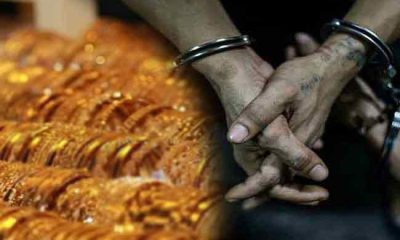
Private airline crew member nabbed with contraband gold
-

 News24 hours ago
Interception of SL fishing craft by Seychelles: Trawler owners demand international investigation
-

 News4 days ago
Health Minister sends letter of demand for one billion rupees in damages
-

 Opinion6 days ago
Remembering Douglas Devananda on New Year’s Day 2026
-
 Features2 days ago
Pharmaceuticals, deaths, and work ethics
-
 News7 days ago
Leading the Nation’s Connectivity Recovery Amid Unprecedented Challenges
-
 News24 hours ago
US raid on Venezuela violation of UN Charter and intl. law: Govt.