

News
Recognition of Palestine’s statehood : SL should follow Norway, etc., – former top Lankan diplomat
By Shamindra Ferdinando
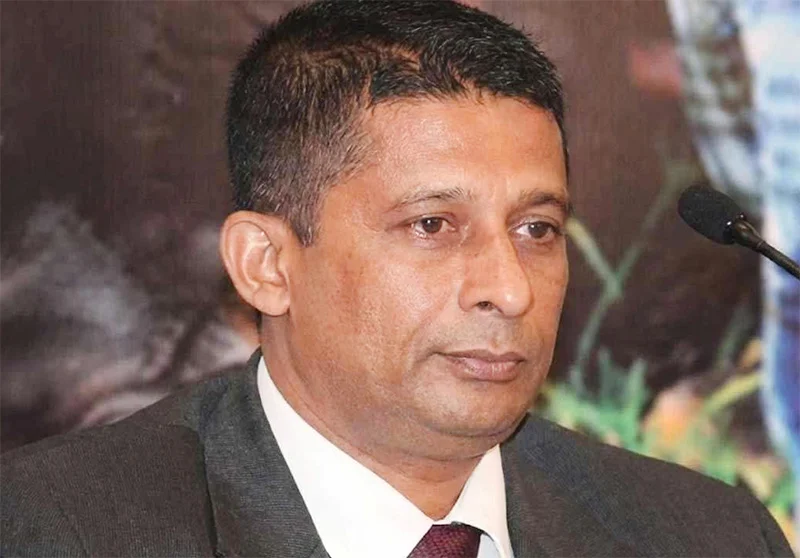
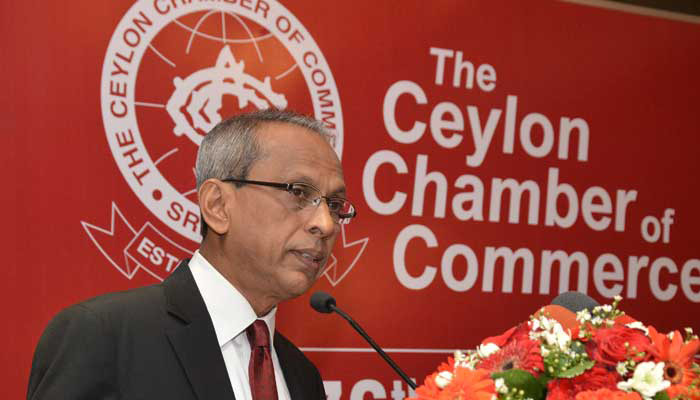
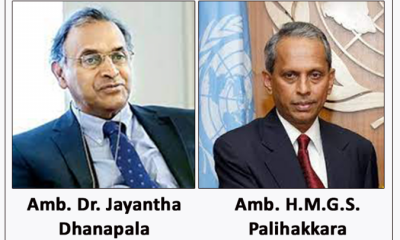
Retired Foreign Secretary H. M. G. S. Palihakkara says Sri Lanka shouldn’t hesitate to recongise a Palestine state formally against the backdrop of Spain, Ireland and Norway having done so already.The veteran Foreign Service officer was responding to The Island query regarding what Sri Lanka’s response should be to the raging Gaza conflict.
Asked to explain the developing situation, Palihakkara said Sri Lanka’s position with regard to Palestinian statehood ought to be clear because Sri Lanka recognised that status more than three decades ago. Norway and Spain have been members of NATO-North Atlantic Treaty Organization since 1949 and 1982, respectively.
“Sri Lanka, in fact, was among the early responders in establishing diplomatic relations and an Embassy of Palestine in Colombo,” the former Permanent Representative to the UN said.
Commenting on the recent developments both in and outside parliament in the wake of Hamas attack mounted on Israel on 07 October last year and the latter’s response, Palihakkara said: “What stands out in this issue now is that there is rather a clear and present multi-party support for the Palestinian cause cutting across many political divides in this country. There continues to be a large measure of consensus across the isles of the legislature enabling successive Sri Lankan governments of different ideological hues to consistently support statehood, self-determination free of foreign occupation for the Palestinian people based on the ‘two states solution’ which also enjoys wide international support.”
The unprecedented move by Spain, Ireland and Norway could set in motion a new dynamic, the expert commented.Acknowledging that the coordinated move has somewhat shaken the US-led conventional Western posture on
peace in the Middle East in general and the Israeli-Palestinian conflict in particular, Palihakkara explained that the usual Western stance was that peaceful and secure two states must emerge at the end of a process of negotiations between Israelis and Palestinians.
Palihakkara mentioned the efforts made by Norway to work out an agreement between Israel and Palestine some time back.
The issue at hand is – will that posture now face a reboot calling for international recognition of two States first leading to peace between the two nations within secure boundaries. “Israeli intransigence and the devastation in Gaza may cause this re-sequencing especially if more European countries break rank with the usual Western posture and join Norway, Spain, and Ireland plus 140 odd other countries of the world.”
Palihakkara pointed out that Norwegian FM Espen Barth Eide at a recent press conference declared that if present double standards continued, it would undermine the ‘rules-based international order’, a rebuke to their NATO partners who while preaching human rights to some, protect impunity by others.
Latest News
Interment of singer Latha Walpola at Borella on Wednesday [31st]
Family sources have confirmed that the interment of singer Latha Walpola will be performed at the General Cemetery Borella on Wednesday (31 December).
News
Western Naval Command conducts beach cleanup to mark Navy’s 75th anniversary
In an environmental initiative commemorating the 75th anniversary of the Sri Lanka Navy, the Western Naval Command organized a cleanup programme at Galle Face Beach on Saturday (27 Dec 25).
The programme focused on the removal of substantial solid waste littering the beachfront, including accumulated plastic and polythene debris. All collected wastey was systematically disposed of utilizing methods designed to safeguard the sensitive coastal ecosystem.
Demonstrating a strong commitment to the cause, the cleanup effort saw the participation of the Commander Western Naval Area and a group of over 200 naval personnel.
News
Environmentalists warn Sri Lanka’s ecological safeguards are failing
Sri Lanka’s environmental protection framework is rapidly eroding, with weak law enforcement, politically driven development and the routine sidelining of environmental safeguards pushing the country towards an ecological crisis, leading environmentalists have warned.
Dilena Pathragoda, Managing Director of the Centre for Environmental Justice (CEJ), has said the growing environmental damage across the island is not the result of regulatory gaps, but of persistent failure to enforce existing laws.
“Sri Lanka does not suffer from a lack of environmental regulations — it suffers from a lack of political will to enforce them,” Pathragoda told The Sunday Island. “Environmental destruction is taking place openly, often with official knowledge, and almost always without accountability.”
Dr. Pathragoda has said environmental impact assessments are increasingly treated as procedural formalities rather than binding safeguards, allowing ecologically sensitive areas to be cleared or altered with minimal oversight.
“When environmental approvals are rushed, diluted or ignored altogether, the consequences are predictable — habitat loss, biodiversity decline and escalating conflict between humans and nature,” Pathragoda said.
Environmental activist Janaka Withanage warned that unregulated development and land-use changes are dismantling natural ecosystems that have sustained rural communities for generations.
“We are destroying natural buffers that protect people from floods, droughts and soil erosion,” Withanage said. “Once wetlands, forests and river catchments are damaged, the impacts are felt far beyond the project site.”
Withanage said communities are increasingly left vulnerable as environmental degradation accelerates, while those responsible rarely face legal consequences.
“What we see is selective enforcement,” he said. “Small-scale offenders are targeted, while large-scale violations linked to powerful interests continue unchecked.”
Both environmentalists warned that climate variability is amplifying the damage caused by poor planning, placing additional strain on ecosystems already weakened by deforestation, sand mining and infrastructure expansion.
Pathragoda stressed that environmental protection must be treated as a national priority rather than a development obstacle.
“Environmental laws exist to protect people, livelihoods and the economy,” he said. “Ignoring them will only increase disaster risk and long-term economic losses.”
Withanage echoed the call for urgent reform, warning that continued neglect would result in irreversible damage.
“If this trajectory continues, future generations will inherit an island far more vulnerable and far less resilient,” he said.
Environmental groups say Sri Lanka’s standing as a biodiversity hotspot — and its resilience to climate-driven disasters — will ultimately depend on whether environmental governance is restored before critical thresholds are crossed.
By Ifham Nizam ✍️
-
News6 days agoMembers of Lankan Community in Washington D.C. donates to ‘Rebuilding Sri Lanka’ Flood Relief Fund
-
News4 days agoBritish MP calls on Foreign Secretary to expand sanction package against ‘Sri Lankan war criminals’
-
News7 days agoAir quality deteriorating in Sri Lanka
-
News7 days agoCardinal urges govt. not to weaken key socio-cultural institutions
-
Features6 days agoGeneral education reforms: What about language and ethnicity?
-
Opinion7 days agoRanwala crash: Govt. lays bare its true face
-
News6 days agoSuspension of Indian drug part of cover-up by NMRA: Academy of Health Professionals
-
News7 days agoCID probes unauthorised access to PNB’s vessel monitoring system