
Business
Real coconut arrack may soon become history warns Harry J

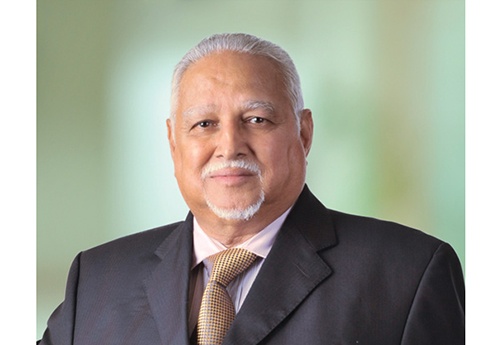
“100% coconut products out of reach of the customer due to prevailing taxes”
Distilleries Company boss Harry Jayawardena has warned that “real coconut arrack will soon be out of the market” if the concerned authorities do not look into the “step-motherly treatment” now being accorded to the coconut arrack industry.
Jayawardena, the Chairman and Managing Director of the Distilleries Company of Sri Lanka PLC (DCSL) has sounded this warning in the recently published annual report of the company where he has complained about prevailing exorbitant pricing structure of coconut arrack with sales volumes shrinking daily.
“One hundred percent coconut products are out of the reach of the consumer due to prevailing taxes,” he has said. “The government must seriously look into this matter to reduce prices in order to divert some of the ENA customers to coconut products.”
The DCSL report says that arrack is one of Sri Lanka’s most celebrated offerings to the world. It claims that Sri Lanka coconut arrack is undeniably one of the purest naturally derived alcoholic beverages in the world, distilled through a natural fermentation process.
“Sri Lanka has perfected the technique of making coconut arrack through the years,” the report said. “Today it has acquired the perfect balance for the discerning palate and coconut arrack reigns as the alcoholic beverage of choice in the country.”
Jayawardena has once again repeated his long-held complaint about increasing volumes of illicit products, adulterated and artificial toddy manufactured daily in large quantities.
“Today it is an industry by itself, formed into a cottage industry dominated by a section of Mudalalis,” he stated. “The proof is that the situation has multiplied byy 20 times over what it has been for years and spread over the whole island. Recent raids made by the Department of Excise and other enforcement authorities is proof that this situation exists.”
He accused some regulatory officials of conniving with with the illicit trade to avoid detection. As soon as one plant is detected it will start running under another name, he said adding that moonshine is being distilled in some luxurious houses without the knowledge of the enforcement authorities.
Jayawardena demanded action to control this situation as it has reduced legal alcohol volumes. With the STF and armed forces authorized to monitor illicit liquor, there have been more detections in the recent past compared to previous years and “there has been somewhat of a dip in the illegal activity.”
DCSL, previously a State near-monopoly, was privatized in 1991 with Harry J connected companies assuming control, helping to make Jayawardena one of the country’s best known tycoons. The company today has nearly Rs. 20.9 billion in assets and is one of the wealthiest businesses in Sri Lanka.
In the year under review, DCSL paid Rs. 53.8 billion in excise duty to the government, marginally below Rs. 54 billion the previous year and earned an after tax profit of Rs. 5.8 billion against the previous year’s Rs. 5.4 billion.
The dominant shareholder of DCSL is Melstacorp PLC, a Harry J company (92.46%). Other companies connect5ed to him in the Top 20 shareholders list are Milford Exports (3.21%), Lanka Milk Foods (0.98%), Stassen Exports (0.05%) and his son, Hasitha Jayawardena (0.05%).
The directors of the company are Messrs: Harry Jayawardena (Chairman/MD), CR Jansz, R. Seevaratnam, Niranjan Deva Adittya, Capt. (Rtd.) KJ Kahanda, Dr. Naomal Balasuriya, Hasitha Jayawardena, Ms. VJ Senaratne and Amitha Gooneratne.



The Asian Development Bank (ADB) has approved a $100 million results-based loan to help Sri Lanka transform its technical and vocational education and training (TVET) system, equip more young people with industry-relevant skills, and strengthen the country’s competitiveness and inclusive growth.
The Skills Development System Transformation Program will support the Government of Sri Lanka’s efforts in improving the quality and relevance of skills training, strengthening links between training providers and industries, and expanding employment opportunities for youth. The program will increase women’s employment opportunities in nontraditional jobs in fields including automotive technology, engineering, information and communications technology, construction, and renewable energy.
“A skilled workforce is essential to Sri Lanka’s long-term economic transformation and competitiveness,” said ADB Country Director for Sri Lanka Shannon Cowlin. “This program will help create stronger pathways from education to employment by making training more responsive to industry needs, expanding opportunities for young people and women, and ensuring that graduates have the skills required by a modern and evolving economy.”
Though Sri Lanka’s economy is recovering, it faces skills shortages in priority sectors, high youth unemployment, and low female labor force participation. Many employers report difficulty finding workers with the skills needed in a changing economy.
Aligned with the Government of Sri Lanka’s Technical and Vocational Education and Training Sector Strategic Framework 2026–2035, the nationwide program will be implemented from 2027 to 2031 and is expected to directly benefit more than 100,000 young people through improved access to quality, employment-oriented training.
By Ifham Nizam
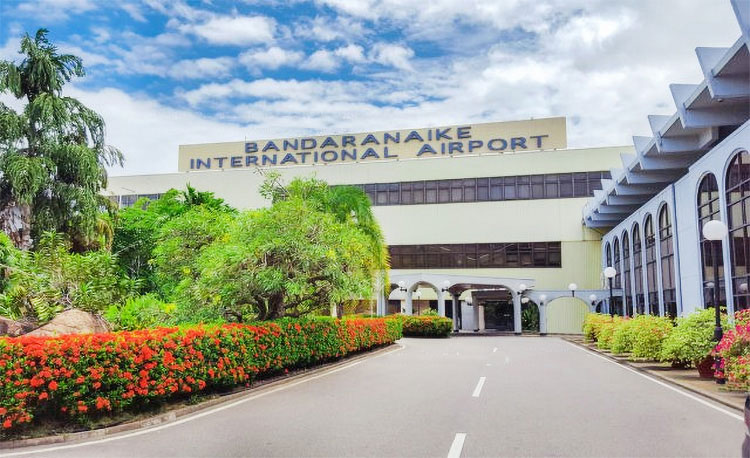
The government has cleared a USD 40.84 million and Rs. 8,548.75 million contract to build a dedicated aviation fuel pipeline from Muthurajawela to Bandaranaike International Airport (BIA), alongside a massive new fuel storage facility with a capacity of 92,000 cubic metres.
Energy Minister Anura Karunatilaka said the project represented a major investment in strengthening the infrastructure underpinning Sri Lanka’s aviation fuel supply and ensuring more reliable fuel availability at the country’s main international airport.
‘This project will provide the infrastructure required to strengthen the reliability and continuity of aviation fuel supplies to Bandaranaike International Airport, Karunatilaka said.
The contract has been awarded to China Petroleum Pipeline Engineering Company Limited, following an international competitive procurement process in which three bids were received.
The project will see a new aviation fuel storage tank complex constructed at Muthurajawela, together with the associated infrastructure required for handling and transferring aviation fuel.

By Hiran H Senewiratne
Trading activity on the Colombo Stock Exchange (CSE) gathered pace yesterday as global fuel prices began to show signs of easing, according to market analysts.In this context, both indices moved upwards. All Share Price Index up by 67.97 points while S and P SL20 up by 8.30 points.
Turnover stood at Rs 1.4 billion with seven crossings. Those crossings were reported in Sampath Bank 1.7 million shares crossed to the tune of Rs 238 million and its share price traded at Rs 140, Access Engineering two million shares crossed to the tune of Rs 159 million and its share price traded at Rs 79.50, LOLC one million shares crossed to the tune of Rs 129 million and its share price traded at Rs 129, HNB 100,000 shares crossed to the tune of Rs 38.4 million and its share price traded at Rs 384, JKH 1.9 million shares crossed to the tune of Rs 35 million and its share price traded at Rs 18.60, Hayleys 100,000 shares crossed to the tune of Rs 22.50 million and its share price traded at Rs 225 and Richard Pieris 847,000 shares crossed to the tune of Rs 22 million and its share price traded at Rs 25.50.
In the retail market top seven companies that have mainly contributed to the turnover were Sampath Bank Rs 114 million (813,000 shares traded), JKH Rs 100 million (5.3 million shares traded) LB Finance Rs 49 million (325,000 shares traded), HNB Finance Rs 30 million (27 million shares traded), HNB Rs 27 million (70000 shares traded), NTB Rs 25 million (82000 shares traded ) and Lanka IOC Rs 21 million (666,000 shares traded). During the day 65 million shares volumes changed hands in 10433 transactions.
The Banking and manufacturing sector counters performed well. In the banking sector Sampath Bank let the market while manufacturing sector especially JKH also significantly performed well. With the fuel revision Land IOC also a significant stock at the floor.
Meanwhile, First Capital Treasuries said that Ramesh Schaffter resigned as a Non-Independent Non-Executive Director with effect from October 1, to facilitate the restructuring of the company’s board.
Yesterday the Central Bank announced the US Dollar rate as against rupee. The rupee was quoted flat at Rs 330.65/80 to the US dollar in the spot market , while bond yields dropped, dealers said.

Showers or thundershowers will occur in most parts of the island after 1.00 p.m.

Unions resist tripartite EPF management plan

Two arrest warrants issued for Gnanasara thera

CA dismisses GR’s writ petition against arrest

ADB-backed virtual net metering project faces policy contradiction

Media action group flays NPP over new anti-terrorism law

‘Dates have the highest sugar content to fight Coronavirus’

Sunday Island 27 December – Headlines

#SundayIsland 17th December – Headlines

Sunday Island – 28th March

Sunday Island Headlines – 21 March

Sunday Island – 21st February – Headlines
-

 Editorial6 days ago
Birth of a bad law
-

 News4 days ago
Police remove Thileepan statue in Jaffna
-

 News6 days ago
TIN mandatory for key transactions from Nov. 1
-

 Features4 days ago
The 22nd Amendment, constitutional recovery and illiberal slippage
-

 Features4 days ago
Of foreigners as CEOs of Lankan ventures
-

 News4 days ago
Sajith rejects Jt. Opp. protest sabotage claim; SJB TU chief demands remedial action
-

 Latest News2 days ago
Gold winner Tharanga gets brand-new Honda Vezel from SLAAJ
-

 Features3 days ago
Thailand’s biggest new global star …