
Business
Rapacity as the driving force of colonialism and capitalism


Book Review
Title – Savage Beasts
Author- Rani Selvarajah
Publisher – One More Chapter; a division of HarperCollinsPublishers
Within the pages of this memorable novel, ‘Savage Beasts’, by Sri Lankan-origin Rani Selvarajah, a University of Cambridge product, living and working in Great Britain, is an exhilarating narrative of the rapacious greed that drove the British colonial project in its early centuries. Essentially, it is a creative writer’s account of how the global South or East came to be pillaged and reduced to penury by its colonial overlords, although it is presented to us in the form of a gripping story.
As could have been expected, we don’t have in the novel a detailed, prosaic historical account of how parts of the ‘Third World’ came to be subjugated by the Western colonial powers, such as the Dutch and the British, in the mid-eighteenth century; for that is the century in focus. Rather, what we have narrated very engagingly in ‘Savage Beasts’, is an amorous tie that descends into mutual animosity between a Calcutta-based Indian Princess and a handsome young British sailor, with strong blood connections to the ruling hierarchy of the invading British East India Company (VOC), the precursor of full-blown British rule in the East. The relationship starts with a heart-warming romance and ends in betrayal, deceit, thievery, murder and destitution.
The central action in the novel traverses India, Ceylon, South Africa and Britain. The princess, Meena, is duped by the sailor, James, into running away with him from her kingdom in Bengal where her father, the Nawab of Bengal was the ruling despot, to Ceylon, South Africa and lastly Britain, where James’ cruel machinations to use Meena to achieve his material and power ambitions are laid bare.
It is finally revealed that James was mainly interested in wresting from Meena, the Nawab’s military plans to defend his kingdom against the invading British, and to sell these secrets to the British East India Company, which was headed by James’ uncle, the coldly calculating Sir Peter Chilcot, who becomes a symbol of imperial rule in the East in all its harshness and exploitative greed.
Although a ruthless ruler, whose fixation too was power, we are compelled to agree with the Nawab in his assessment of James, when he tells Meena at page 104, early in the story: ‘That man is a charlatan. You may not be able to see it, but he is. All of them are. They come here, treating us like fools, taking what they can at the point of a gun. Traders, merchants. They like to call themselves businessmen when they’re just pirates who think they can make demands of kings.’
The Meena-James relationship at the heart of ‘Savage Beasts’, therefore, becomes an ‘objective correlative’, as it were, if we are to borrow a concept from renowned English poet and literary critic T.S. Eliot, for the central theme in the novel, which is the ruination and impoverishment of its colonies by the British colonizer. That is, the romance and its gradual degeneration into a relationship of mutual hate between the main protagonists becomes a tangible symbol of the novel’s main theme.
The ruination of India by the British colonizer does not take the form of only the physical subjugation and economic exploitation of the ‘Jewel in the Crown’ of the British monarch. It takes the form also of the brazen robbing and pillaging of everything of cultural and spiritual importance to India, including, of course, its dignity.
The episode that bears this out in the novel arrives in its closing chapters when Meena, who is inveigled by James into accompanying him to England, finds to her horror that all the important cultural treasures in her father’s palace had been robbed and stowed away in James’ uncle’s mansion, that is, the VOC chief’s residence. Prior to such pillaging, the Nawab had been savaged by the invaders and left to die on a Calcutta street, we are given to understand.
‘Savage Beasts’ ends on the tragic note of Meena being rendered homeless and destitute. However, she enjoys the satisfaction of exacting ‘blood revenge’ from James, by killing the influential English woman he intended to marry after deserting her. Meena, however, is deeply comforted by the fact that she retains possession of the son, her liaison with James yielded. The enduring mother-son bond, we could say, is the ‘universal in the particular.’
Besides its thematic substance, ‘Savage Beasts’ is also notable for its smoothly flowing and gripping story line. Bolstering its literary merit further is its dramatic and evocative prose style. It is a novel that calls for close and sustained literary appraisal.
– Lynn Ockersz


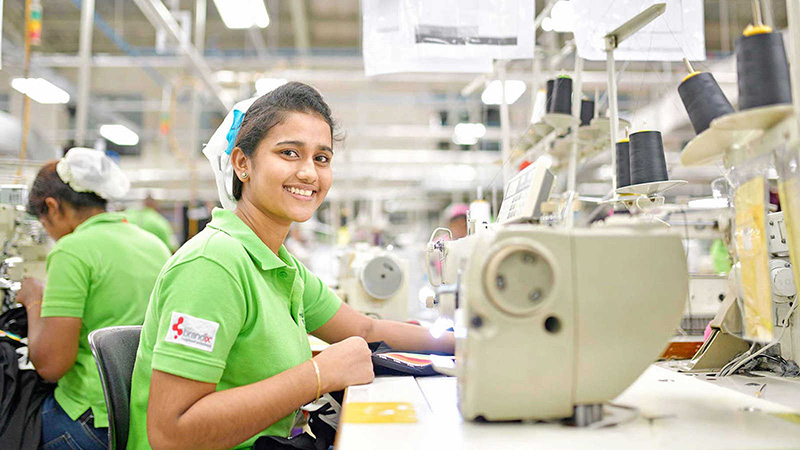
The latest Purchasing Managers’ Index (PMI) from the Central Bank suggests Sri Lanka’s economy is beginning to find its feet after a severe crisis, revealing tentative signs of hope in factories and business activity. It indicates the deepest economic pain may be over. With prices rising more slowly, families and companies are getting some much-needed relief.
The Island spoke to an independent analyst for an outside perspective. Elaborating on the report, he struck a cautious note: “Yes, the PMI sounds favourable. But no one should think the hard times are completely behind us. The road to recovery is long and full of potholes.”
“While we can hope for slow, steady improvement in coming months, major problems remain,” he continued. “The country’s massive debt is a heavy burden. Staying on track with the IMF programme requires sticking to tough reforms, which won’t be easy. Global economic uncertainty also affects our exports and even other forms of external support.”
“In short, the next phase won’t be a quick boom. It will be a time for careful repair. These small improvements are like young seedlings – they need constant care, sound policy, and continued external support to grow strong. Our task is to turn this shaky stability into a solid foundation for lasting, inclusive growth. The economy is out of emergency care, but full recovery will be a long and patient journey,” he concluded.
When asked if the current political landscape would aid recovery, he pointed to the present stability as a key advantage. “With political stability in place, the path for necessary reforms and recovery should be more navigable now than ever in the past,” he said.
By Sanath Nanayakkare

Sri Lanka Insurance Life Ltd and Sri Lanka Insurance General Ltd inaugurated their business operations for the year 2026 on 1st January at the Sri Lanka Insurance Head Office. The event was graced by the Chairman, Board members, Corporate Management, and staff of SLIC.
Parallel business launches were also conducted at branch level, with branch staff joining the head office proceedings via live stream. The day’s programme commenced with blessings observed from the four major religious faiths, symbolising unity and goodwill for the year ahead
Heralding the dawn of the New Year, SLIC brought together all 142 branches in a cohesive celebration, uniting as one family to light the traditional oil lamp. During the celebrations, the theme for SLICGL for 2026 ‘Leading the market, strengthening every step’ was officially unveiled
Celebrating 64 years of service and expertise, SLIC continues to stand as Sri Lanka’s most respected and trusted name in insurance. Over the decades, the organisation has remained at the forefront of the sector, sustaining industry‑wide growth and equity even through testing times.
The year 2025 brought many meaningful and positive achievements for SLICGL, yet it concluded with significant challenges as the nation faced the aftermath of the devastating Cyclone Ditwah. Rising to the occasion, SLICGL honoured claims and delivered timely relief, offering protection and reassurance to communities impacted by the catastrophe.
SLICGL proudly reflects on a year of remarkable achievements in 2025. The organisation was ranked
Sri Lanka’s highest-rated insurance brand as the only A+ Fitch rated insurer in the country and became the first and only insurer to surpass Rs. 30 billion in Gross Written Premium. SLICGL secured Carbon Neutral Certification, highlighting a commitment to sustainability. SLICL was also recognised as the Most Valuable General Insurance Brand by Brand Finance.
The lifting of the vehicle import ban in January 2025 helped to revitalize the automotive sector and also reaffirmed SLICGL’s role as the nation’s most trusted insurer. Stepping in to protect new vehicle owners, SLICGL strengthened its portfolio, supported national growth, and supported families and businesses to move forward with confidence.
During 2025, SLICGL continued its partnership with the Ministry of Education on the Suraksha Insurance Scheme, a national initiative aimed at securing the health and wellbeing 4.5 million schoolchildren throughout the country. The partnership provides students regardless of background, access to essential insurance coverage, safeguarding health, supporting families, and strengthening the nation’s future.
SLIGL’s mission places customers at the heart of everything it does. The organisation continues in the commitment of meeting and exceeding customer expectations through its expertise and specialised services. Aligning business strategies with this vision, SLIC delivers a superior customer experience through all touchpoints.
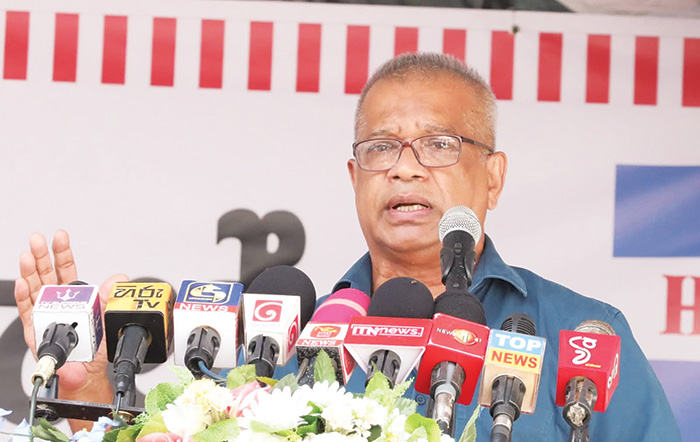
The Milk Industries of Lanka Company (MILCO) has recorded the highest profit and sales revenue in its history, driven by strong performance under the flagship Highlands brand, Agriculture Minister Lal Kantha said.
Addressing a Performance Incentive Awards Ceremony held at the MILCO Head Office in Narahenpita on December 31, the Minister said the achievement marked a decisive turnaround for the state-owned dairy enterprise, which had earlier been prepared for divestment.
“When we assumed office, MILCO was being readied for sale. Today, we have been able to rescue it and transform it into a profitable institution,” Minister Lal Kantha said. “By October 2025, the company had generated profits amounting to Rs. 1,490 million, the highest profit ever recorded in MILCO’s history.”
He noted that 2025 has also become the year with the highest sales revenue since the company’s establishment, reflecting improved operational efficiency, renewed consumer confidence and stronger market penetration under the Highlands brand.
The Minister said the government intends to ensure that the gains from the company’s financial recovery are shared across the value chain. “A portion of the profits will be distributed as incentives among dairy farmers,” he said, adding that plans are also in place to provide free life insurance coverage to 15,000 dairy farmers in 2026.
The incentive awards ceremony was organised to recognise employees who played a key role in achieving record sales targets and historic profitability, with senior management highlighting improvements in production planning, supply chain management and farmer engagement.
Minister Lal Kantha paid tribute to the dedication of the MILCO workforce, stating that the turnaround was the result of collective effort.
“This achievement belongs to everyone who worked tirelessly to restore confidence in this institution. I extend my sincere appreciation to all those who contributed to this success,” he said.
MILCO’s performance in 2025 is being viewed as a benchmark for the revival of state-owned enterprises, particularly within Sri Lanka’s agri-based industrial sector.
By Ifham Nizam

Showery condition is expected to enhance in the Eastern, Northern and Uva provinces during the coming days, due to the development of a low-level atmospheric disturbance to the East of Sri Lanka

GMOA warns of trade union action unless govt. urgently resolves critical issues in health sector

Elephant census urged as death toll nears 400

CTU raises questions about education reforms

Navy lauds foreign warships that came to assist in disaster relief ops here

It’s PC polls, stupid

‘Dates have the highest sugar content to fight Coronavirus’

Sunday Island 27 December – Headlines

#SundayIsland 17th December – Headlines

Sunday Island – 28th March

Sunday Island Headlines – 21 March

Sunday Island – 21st February – Headlines
-

 Sports4 days ago
Gurusinha’s Boxing Day hundred celebrated in Melbourne
-

 News2 days ago
Leading the Nation’s Connectivity Recovery Amid Unprecedented Challenges
-

 Sports5 days ago
Time to close the Dickwella chapter
-

 Features3 days ago
It’s all over for Maxi Rozairo
-

 News5 days ago
Environmentalists warn Sri Lanka’s ecological safeguards are failing
-

 News3 days ago
Dr. Bellana: “I was removed as NHSL Deputy Director for exposing Rs. 900 mn fraud”
-
 News2 days ago
Dons on warpath over alleged undue interference in university governance
-

 Features5 days ago
Digambaram draws a broad brush canvas of SL’s existing political situation