
Business
Rapacity as the driving force of colonialism and capitalism


Book Review
Title – Savage Beasts
Author- Rani Selvarajah
Publisher – One More Chapter; a division of HarperCollinsPublishers
Within the pages of this memorable novel, ‘Savage Beasts’, by Sri Lankan-origin Rani Selvarajah, a University of Cambridge product, living and working in Great Britain, is an exhilarating narrative of the rapacious greed that drove the British colonial project in its early centuries. Essentially, it is a creative writer’s account of how the global South or East came to be pillaged and reduced to penury by its colonial overlords, although it is presented to us in the form of a gripping story.
As could have been expected, we don’t have in the novel a detailed, prosaic historical account of how parts of the ‘Third World’ came to be subjugated by the Western colonial powers, such as the Dutch and the British, in the mid-eighteenth century; for that is the century in focus. Rather, what we have narrated very engagingly in ‘Savage Beasts’, is an amorous tie that descends into mutual animosity between a Calcutta-based Indian Princess and a handsome young British sailor, with strong blood connections to the ruling hierarchy of the invading British East India Company (VOC), the precursor of full-blown British rule in the East. The relationship starts with a heart-warming romance and ends in betrayal, deceit, thievery, murder and destitution.
The central action in the novel traverses India, Ceylon, South Africa and Britain. The princess, Meena, is duped by the sailor, James, into running away with him from her kingdom in Bengal where her father, the Nawab of Bengal was the ruling despot, to Ceylon, South Africa and lastly Britain, where James’ cruel machinations to use Meena to achieve his material and power ambitions are laid bare.
It is finally revealed that James was mainly interested in wresting from Meena, the Nawab’s military plans to defend his kingdom against the invading British, and to sell these secrets to the British East India Company, which was headed by James’ uncle, the coldly calculating Sir Peter Chilcot, who becomes a symbol of imperial rule in the East in all its harshness and exploitative greed.
Although a ruthless ruler, whose fixation too was power, we are compelled to agree with the Nawab in his assessment of James, when he tells Meena at page 104, early in the story: ‘That man is a charlatan. You may not be able to see it, but he is. All of them are. They come here, treating us like fools, taking what they can at the point of a gun. Traders, merchants. They like to call themselves businessmen when they’re just pirates who think they can make demands of kings.’
The Meena-James relationship at the heart of ‘Savage Beasts’, therefore, becomes an ‘objective correlative’, as it were, if we are to borrow a concept from renowned English poet and literary critic T.S. Eliot, for the central theme in the novel, which is the ruination and impoverishment of its colonies by the British colonizer. That is, the romance and its gradual degeneration into a relationship of mutual hate between the main protagonists becomes a tangible symbol of the novel’s main theme.
The ruination of India by the British colonizer does not take the form of only the physical subjugation and economic exploitation of the ‘Jewel in the Crown’ of the British monarch. It takes the form also of the brazen robbing and pillaging of everything of cultural and spiritual importance to India, including, of course, its dignity.
The episode that bears this out in the novel arrives in its closing chapters when Meena, who is inveigled by James into accompanying him to England, finds to her horror that all the important cultural treasures in her father’s palace had been robbed and stowed away in James’ uncle’s mansion, that is, the VOC chief’s residence. Prior to such pillaging, the Nawab had been savaged by the invaders and left to die on a Calcutta street, we are given to understand.
‘Savage Beasts’ ends on the tragic note of Meena being rendered homeless and destitute. However, she enjoys the satisfaction of exacting ‘blood revenge’ from James, by killing the influential English woman he intended to marry after deserting her. Meena, however, is deeply comforted by the fact that she retains possession of the son, her liaison with James yielded. The enduring mother-son bond, we could say, is the ‘universal in the particular.’
Besides its thematic substance, ‘Savage Beasts’ is also notable for its smoothly flowing and gripping story line. Bolstering its literary merit further is its dramatic and evocative prose style. It is a novel that calls for close and sustained literary appraisal.
– Lynn Ockersz



The Asian Development Bank (ADB) has approved a $100 million results-based loan to help Sri Lanka transform its technical and vocational education and training (TVET) system, equip more young people with industry-relevant skills, and strengthen the country’s competitiveness and inclusive growth.
The Skills Development System Transformation Program will support the Government of Sri Lanka’s efforts in improving the quality and relevance of skills training, strengthening links between training providers and industries, and expanding employment opportunities for youth. The program will increase women’s employment opportunities in nontraditional jobs in fields including automotive technology, engineering, information and communications technology, construction, and renewable energy.
“A skilled workforce is essential to Sri Lanka’s long-term economic transformation and competitiveness,” said ADB Country Director for Sri Lanka Shannon Cowlin. “This program will help create stronger pathways from education to employment by making training more responsive to industry needs, expanding opportunities for young people and women, and ensuring that graduates have the skills required by a modern and evolving economy.”
Though Sri Lanka’s economy is recovering, it faces skills shortages in priority sectors, high youth unemployment, and low female labor force participation. Many employers report difficulty finding workers with the skills needed in a changing economy.
Aligned with the Government of Sri Lanka’s Technical and Vocational Education and Training Sector Strategic Framework 2026–2035, the nationwide program will be implemented from 2027 to 2031 and is expected to directly benefit more than 100,000 young people through improved access to quality, employment-oriented training.
By Ifham Nizam
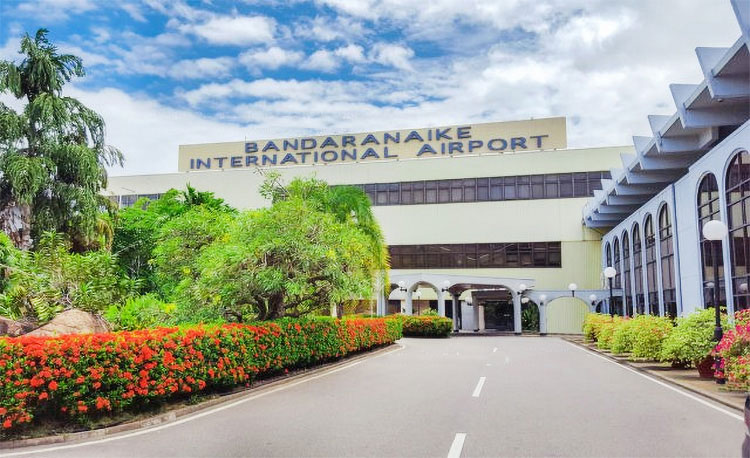
The government has cleared a USD 40.84 million and Rs. 8,548.75 million contract to build a dedicated aviation fuel pipeline from Muthurajawela to Bandaranaike International Airport (BIA), alongside a massive new fuel storage facility with a capacity of 92,000 cubic metres.
Energy Minister Anura Karunatilaka said the project represented a major investment in strengthening the infrastructure underpinning Sri Lanka’s aviation fuel supply and ensuring more reliable fuel availability at the country’s main international airport.
‘This project will provide the infrastructure required to strengthen the reliability and continuity of aviation fuel supplies to Bandaranaike International Airport, Karunatilaka said.
The contract has been awarded to China Petroleum Pipeline Engineering Company Limited, following an international competitive procurement process in which three bids were received.
The project will see a new aviation fuel storage tank complex constructed at Muthurajawela, together with the associated infrastructure required for handling and transferring aviation fuel.

By Hiran H Senewiratne
Trading activity on the Colombo Stock Exchange (CSE) gathered pace yesterday as global fuel prices began to show signs of easing, according to market analysts.In this context, both indices moved upwards. All Share Price Index up by 67.97 points while S and P SL20 up by 8.30 points.
Turnover stood at Rs 1.4 billion with seven crossings. Those crossings were reported in Sampath Bank 1.7 million shares crossed to the tune of Rs 238 million and its share price traded at Rs 140, Access Engineering two million shares crossed to the tune of Rs 159 million and its share price traded at Rs 79.50, LOLC one million shares crossed to the tune of Rs 129 million and its share price traded at Rs 129, HNB 100,000 shares crossed to the tune of Rs 38.4 million and its share price traded at Rs 384, JKH 1.9 million shares crossed to the tune of Rs 35 million and its share price traded at Rs 18.60, Hayleys 100,000 shares crossed to the tune of Rs 22.50 million and its share price traded at Rs 225 and Richard Pieris 847,000 shares crossed to the tune of Rs 22 million and its share price traded at Rs 25.50.
In the retail market top seven companies that have mainly contributed to the turnover were Sampath Bank Rs 114 million (813,000 shares traded), JKH Rs 100 million (5.3 million shares traded) LB Finance Rs 49 million (325,000 shares traded), HNB Finance Rs 30 million (27 million shares traded), HNB Rs 27 million (70000 shares traded), NTB Rs 25 million (82000 shares traded ) and Lanka IOC Rs 21 million (666,000 shares traded). During the day 65 million shares volumes changed hands in 10433 transactions.
The Banking and manufacturing sector counters performed well. In the banking sector Sampath Bank let the market while manufacturing sector especially JKH also significantly performed well. With the fuel revision Land IOC also a significant stock at the floor.
Meanwhile, First Capital Treasuries said that Ramesh Schaffter resigned as a Non-Independent Non-Executive Director with effect from October 1, to facilitate the restructuring of the company’s board.
Yesterday the Central Bank announced the US Dollar rate as against rupee. The rupee was quoted flat at Rs 330.65/80 to the US dollar in the spot market , while bond yields dropped, dealers said.

Showers or thundershowers will occur in most parts of the island after 1.00 p.m.

Unions resist tripartite EPF management plan

Two arrest warrants issued for Gnanasara thera

CA dismisses GR’s writ petition against arrest

ADB-backed virtual net metering project faces policy contradiction

Media action group flays NPP over new anti-terrorism law

‘Dates have the highest sugar content to fight Coronavirus’

Sunday Island 27 December – Headlines

#SundayIsland 17th December – Headlines

Sunday Island – 28th March

Sunday Island Headlines – 21 March

Sunday Island – 21st February – Headlines
-

 Editorial6 days ago
Birth of a bad law
-

 News4 days ago
Police remove Thileepan statue in Jaffna
-

 News6 days ago
TIN mandatory for key transactions from Nov. 1
-

 Features4 days ago
The 22nd Amendment, constitutional recovery and illiberal slippage
-

 Features4 days ago
Of foreigners as CEOs of Lankan ventures
-

 News4 days ago
Sajith rejects Jt. Opp. protest sabotage claim; SJB TU chief demands remedial action
-

 Features3 days ago
Thailand’s biggest new global star …
-

 Latest News2 days ago
Gold winner Tharanga gets brand-new Honda Vezel from SLAAJ