
Business
Ranil recalls how India overtook Sri Lanka in economic reforms journey while latter was hesitant at policy wheel


By Sanath Nanayakkare
During the Atal Bihari Vajpayee Memorial Lecture delivered by former president Ranil Wickremesinghe in India recently, he recalled that his first visit to India was as a young boy of 18 years to Chennai to sit for the London GCE A-level Examination — as was the practice in Sri Lanka at the time.
Referring to multiple interactions with Indian leaders over the decades which started in his role as an assistant to former president J.R. Jayawardene, he said,” When you have been in politics as long as I have, you end up knowing everyone – at some point or the other.”
The following are a few excerpts from his speech.
“I have also been an eyewitness to the pivotal and sweeping economic metamorphosis of India from the late 1990s onwards.”
“As you may recall, Sri Lanka was a forerunner in instituting an open economy in South Asia – as far back as in 1977. By 1989, as Minister of Industries, I had brought in the 2nd Generation Economic Reforms in the country, which included Sri Lanka’s Strategy for Industrialization. Not long after, in 1991, India’s first Generation of Economic Reforms were introduced by Prime Minister Narasimha Rao, whom I had known from the early 1980s, since he was my counterpart in India when I was the Minister of Education.”
“Dr. Manmohan Singh’s first budget speech as Finance Minister in Narasimha Rao’s government changed the course of Indian history. Without him, there would not have been any economic reforms in India, and without those reforms, there would not have been a modern India.”
“Indo-Sri Lank economic cooperation moves never kicked off as envisioned due to protests by certain political parties and trade unions in Sri Lanka.”
“However, the calamity of Covid-19 and the consequential economic crisis in Sri Lanka showed India at its best. At the most crucial moment when Sri Lanka declared bankruptcy and had only a few hundred million dollars in reserves, India valiantly stepped up to help us.
“The Sri Lankan people could not have survived without the 4 billion US dollars of financing received from India through various credit lines. It was India’s Neighborhood First Policy – in practice – that benefited Sri Lanka. India was followed by Bangladesh with a loan of US$200 million.”
“Furthermore, India, as a Co-Chair of the Official Creditors Committee, gave us valuable help. All this vindicated my stand on closer economic cooperation with India, including improving connectivity in key sectors. By then, it was clear to most in Sri Lanka that recovery from bankruptcy and fast growth could be achieved only through closer economic collaboration with India. In July 2023, PM Modi and I announced the “Promoting connectivity, catalyzing prosperity: India-Sri Lanka Partnership Vision.”
“The strategy in these statements is to enhance Sri Lanka’s economic development by coupling our economic recovery to India’s sustained and swift economic growth and technological advancement. It is expected that by 2040, India would be the third-largest economic power in the world. By then, Tamil Nadu’s GDP would have reached US$1 trillion. This is the powerhouse to which Sri Lanka has to connect as a nation. All this will establish larger markets for Sri Lankan exports and create two new economic sectors which are expected to be fast-growing. Establishing grid interconnectivity — thereby enabling Sri Lanka’s potential for surplus renewable energy to engage in trading with India and Bangladesh.”
“In the context of maritime and air connectivity – in addition to India as a global economic power, Indonesia will also be among the top 10 in time to come with Bangladesh following closely behind if all goes well.”
“This will lead to an explosion of trade in the Bay of Bengal area. As noted before, if Sri Lanka positions itself as a regional logistic hub, we can become a beneficiary of these developments in the region.”
Thus, the two governments must finalize the outstanding issues of the strategy within a short time frame and agree on the modalities to implement these proposals. Today, it is only fitting that we witnessed the conclusion of the talks on economic cooperation on Vajpayeeji’s birth century.
During his speech, Wickremesinghe said that Atal Bihari Vajpayeeji had an instinctive understanding of the nation-building exercise and the need to maintain the unity of India’s diverse peoples.


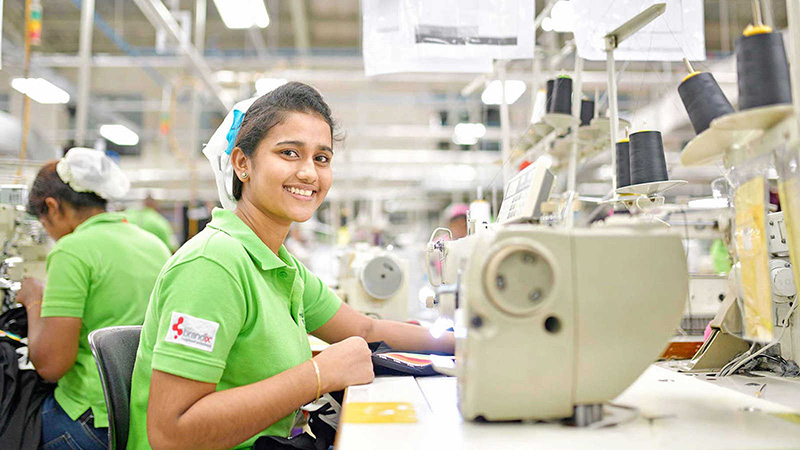
The latest Purchasing Managers’ Index (PMI) from the Central Bank suggests Sri Lanka’s economy is beginning to find its feet after a severe crisis, revealing tentative signs of hope in factories and business activity. It indicates the deepest economic pain may be over. With prices rising more slowly, families and companies are getting some much-needed relief.
The Island spoke to an independent analyst for an outside perspective. Elaborating on the report, he struck a cautious note: “Yes, the PMI sounds favourable. But no one should think the hard times are completely behind us. The road to recovery is long and full of potholes.”
“While we can hope for slow, steady improvement in coming months, major problems remain,” he continued. “The country’s massive debt is a heavy burden. Staying on track with the IMF programme requires sticking to tough reforms, which won’t be easy. Global economic uncertainty also affects our exports and even other forms of external support.”
“In short, the next phase won’t be a quick boom. It will be a time for careful repair. These small improvements are like young seedlings – they need constant care, sound policy, and continued external support to grow strong. Our task is to turn this shaky stability into a solid foundation for lasting, inclusive growth. The economy is out of emergency care, but full recovery will be a long and patient journey,” he concluded.
When asked if the current political landscape would aid recovery, he pointed to the present stability as a key advantage. “With political stability in place, the path for necessary reforms and recovery should be more navigable now than ever in the past,” he said.
By Sanath Nanayakkare

Sri Lanka Insurance Life Ltd and Sri Lanka Insurance General Ltd inaugurated their business operations for the year 2026 on 1st January at the Sri Lanka Insurance Head Office. The event was graced by the Chairman, Board members, Corporate Management, and staff of SLIC.
Parallel business launches were also conducted at branch level, with branch staff joining the head office proceedings via live stream. The day’s programme commenced with blessings observed from the four major religious faiths, symbolising unity and goodwill for the year ahead
Heralding the dawn of the New Year, SLIC brought together all 142 branches in a cohesive celebration, uniting as one family to light the traditional oil lamp. During the celebrations, the theme for SLICGL for 2026 ‘Leading the market, strengthening every step’ was officially unveiled
Celebrating 64 years of service and expertise, SLIC continues to stand as Sri Lanka’s most respected and trusted name in insurance. Over the decades, the organisation has remained at the forefront of the sector, sustaining industry‑wide growth and equity even through testing times.
The year 2025 brought many meaningful and positive achievements for SLICGL, yet it concluded with significant challenges as the nation faced the aftermath of the devastating Cyclone Ditwah. Rising to the occasion, SLICGL honoured claims and delivered timely relief, offering protection and reassurance to communities impacted by the catastrophe.
SLICGL proudly reflects on a year of remarkable achievements in 2025. The organisation was ranked
Sri Lanka’s highest-rated insurance brand as the only A+ Fitch rated insurer in the country and became the first and only insurer to surpass Rs. 30 billion in Gross Written Premium. SLICGL secured Carbon Neutral Certification, highlighting a commitment to sustainability. SLICL was also recognised as the Most Valuable General Insurance Brand by Brand Finance.
The lifting of the vehicle import ban in January 2025 helped to revitalize the automotive sector and also reaffirmed SLICGL’s role as the nation’s most trusted insurer. Stepping in to protect new vehicle owners, SLICGL strengthened its portfolio, supported national growth, and supported families and businesses to move forward with confidence.
During 2025, SLICGL continued its partnership with the Ministry of Education on the Suraksha Insurance Scheme, a national initiative aimed at securing the health and wellbeing 4.5 million schoolchildren throughout the country. The partnership provides students regardless of background, access to essential insurance coverage, safeguarding health, supporting families, and strengthening the nation’s future.
SLIGL’s mission places customers at the heart of everything it does. The organisation continues in the commitment of meeting and exceeding customer expectations through its expertise and specialised services. Aligning business strategies with this vision, SLIC delivers a superior customer experience through all touchpoints.
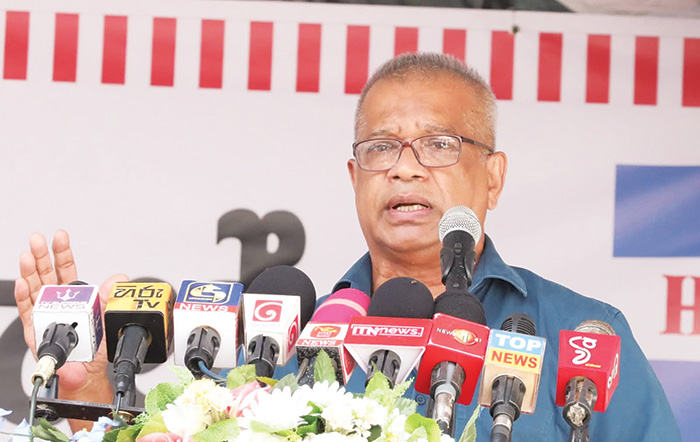
The Milk Industries of Lanka Company (MILCO) has recorded the highest profit and sales revenue in its history, driven by strong performance under the flagship Highlands brand, Agriculture Minister Lal Kantha said.
Addressing a Performance Incentive Awards Ceremony held at the MILCO Head Office in Narahenpita on December 31, the Minister said the achievement marked a decisive turnaround for the state-owned dairy enterprise, which had earlier been prepared for divestment.
“When we assumed office, MILCO was being readied for sale. Today, we have been able to rescue it and transform it into a profitable institution,” Minister Lal Kantha said. “By October 2025, the company had generated profits amounting to Rs. 1,490 million, the highest profit ever recorded in MILCO’s history.”
He noted that 2025 has also become the year with the highest sales revenue since the company’s establishment, reflecting improved operational efficiency, renewed consumer confidence and stronger market penetration under the Highlands brand.
The Minister said the government intends to ensure that the gains from the company’s financial recovery are shared across the value chain. “A portion of the profits will be distributed as incentives among dairy farmers,” he said, adding that plans are also in place to provide free life insurance coverage to 15,000 dairy farmers in 2026.
The incentive awards ceremony was organised to recognise employees who played a key role in achieving record sales targets and historic profitability, with senior management highlighting improvements in production planning, supply chain management and farmer engagement.
Minister Lal Kantha paid tribute to the dedication of the MILCO workforce, stating that the turnaround was the result of collective effort.
“This achievement belongs to everyone who worked tirelessly to restore confidence in this institution. I extend my sincere appreciation to all those who contributed to this success,” he said.
MILCO’s performance in 2025 is being viewed as a benchmark for the revival of state-owned enterprises, particularly within Sri Lanka’s agri-based industrial sector.
By Ifham Nizam

Over 400,000 Russians killed, wounded for 0.8 percent of Ukraine in 2025

SCG curator ‘really happy’ with pitch for final Ashes Test

Showery condition is expected to enhance in the Eastern, Northern and Uva provinces during the coming days, due to the development of a low-level atmospheric disturbance to the East of Sri Lanka

GMOA warns of trade union action unless govt. urgently resolves critical issues in health sector

Elephant census urged as death toll nears 400

CTU raises questions about education reforms

‘Dates have the highest sugar content to fight Coronavirus’

Sunday Island 27 December – Headlines

#SundayIsland 17th December – Headlines

Sunday Island – 28th March

Sunday Island Headlines – 21 March

Sunday Island – 21st February – Headlines
-

 Sports5 days ago
Gurusinha’s Boxing Day hundred celebrated in Melbourne
-
 News3 days ago
Leading the Nation’s Connectivity Recovery Amid Unprecedented Challenges
-

 Sports6 days ago
Time to close the Dickwella chapter
-

 Features4 days ago
It’s all over for Maxi Rozairo
-

 News6 days ago
Environmentalists warn Sri Lanka’s ecological safeguards are failing
-
 News4 days ago
Dr. Bellana: “I was removed as NHSL Deputy Director for exposing Rs. 900 mn fraud”
-
 News3 days ago
Dons on warpath over alleged undue interference in university governance
-
 Features6 days ago
Digambaram draws a broad brush canvas of SL’s existing political situation