
Connect with us

News

Public Security Minister: Some Opposition politicians bent of scuttling Easter Sunday carnage probe

Published

on

by Saman
Indrajith

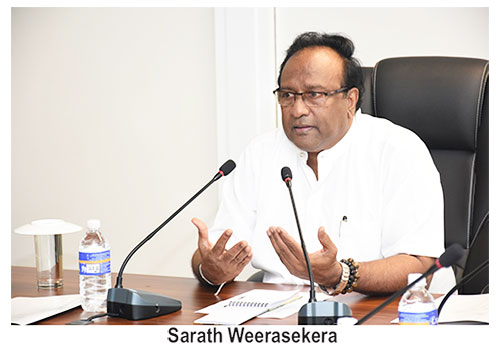
Speaker Mahinda Yapa Abeywardena might permit MP Rishad Bathiudeen to attend Parliament; the latter and several others are being held on a 90-day detention order in connection with the Easter Sunday terror attacks investigations, but that might have serious repercussions for the country’s security, Public Security Minister Rear Admiral (Retd) Sarath Weerasekera warns.

In an interview with The Island, the retired top Navy officer said that the previous week, he, in his capacity as Minister of Public Security, had requested the Speaker not to override the detention order made under the provisions of the Prevention of Terrorism Act. “I have nothing personal in this matter. It’s my duty to warn of any impediment to the ongoing investigations. He is being held on detention orders under the PTA. If he makes any statements, it may have an impact on the investigations. Such statements can harm the investigation and may allow other persons under investigation to evade arrests. Therefore, I am requesting the Speaker not to allow anyone held under the PTA to be allowed into Parliament until the investigations are concluded. However, I came to know from the media that the Speaker has decided to allow Bathiudeen to attend Parliament. The Speaker is doing so, making use of provisions of the Parliamentary Powers and Privileges Act. There is another argument that Bathiudeen is only a suspect until proven guilty, he has a right to attend Parliament. However, overruling a PTA detention order amounts to the legislature undermining the Executive. The arrest and detention order are executive actions.”

“Allowing Bathiudeen to attend Parliament at this juncture will seriously jeopardise the ongoing investigations. The law can permit it but that does not mean that there wouldn’t be unlawful repercussions resulting from  such action.

 “There are some elements in the Opposition bent on sabotaging the investigations so that they can get away with their crimes. I issued a warning to this effect in Parliament.”


Fight against crime

Minister Weerasekera said that the government had launched a campaign to rid the country of fear of criminals. “There is no place in a civilized society for murderers, rapists, extortionists, paedophiles and other such characters. Our duty is to protect the law-abiding citizens. We have defeated the most ruthless terrorist organisation in the world. So, we consider ourself equal to the task of combating crime. It is now up to the under underworld figures to surrender to the police or face the consequences. In addition to other measures, we are also in the process of amending the laws to make child abuse and harassment against women grave crimes. We are preventing narcotics coming into this country. They are coming via sea mainly from Pakistan and Iran. We are an island nation so it is easy for anyone to get into a fishing craft and reach some big ships nearby and get the drugs unloaded to their vessels to bring them ashore. That disadvantage is there but even at this moment we are speaking, special operations are underway against drug smugglers. We are also planning to rehabilitate addicts instead of jailing. We have found that 40 percent of criminals are drug addicts. Addicts should be rehabilitated and reintegrated into society. They must not be kept with other prisoners.”


Memories of war

Rear Admiral Weerasekera recalled how he volunteered to lead a rescue mission to land Army commandos in LTTE controlled Pooneryin in broad daylight with minimum casualties and to rescue some 400 soldiers surrounded by the LTTE – a mission that earned him the Rana Sura medal.

“I also recall my removal from the Eastern Command and being brought to Colombo for defying the LTTE in Trincomalee after they bombed a Buddha statue,” he said.

Following the UNF government’s signing of the peace accord with the LTTE, the terrorists were given full freedom to enter any Army and Navy camp, but Admiral Weerasekera never allowed LTTE to enter Mandativu Island when he was the Northern Commander. He also never allowed LTTE cadres to come in, wearing the cyanide capsule. Soon, he was branded an “anti-peace element. “In 2003, I was the Commander Eastern Naval Area and the peace process was in progress in favour of the LTTE. The Sinhalese in Trinco wanted to replace a small Buddha statue in the town with a large one to mark the Vesak Day, but the LTTE protested and called a hartal. All shops and fuel stations were closed and public transport was stopped. They hurled grenades at the Buddha statue. I was in charge of the sea. The army and the police could not act because they had been ordered not to confront the LTTE. I waited for three days to see whether the ground forces would do something. On the third day I, on my own initiative, took charge of the situation and deployed Navy personnel in the town placed guards around the statue challenging the LTTE to come out. None came and owners opened their shops and buses started to operate and people plied their trades. The following day, at the demand of the LTTE, the then President Chandrika Bandaranaike Kumaratunga removed me from the Eastern Naval Commander post, and brought me to Colombo.”


ISIS threat

Rear Admiral said the public should remain vigilant as the ISIS threat was still there. “This is the biggest threat against national security at the moment. The fight with the LTTE was easy for it was not hard to identify the enemy. Here in this case, we are fighting with an ideology.


Continue Reading
Click to comment

Leave a Reply

Your email address will not be published. Required fields are marked *

News

PM lays foundation stone for seven-storey Sadaham Mandiraya

Published

on

By

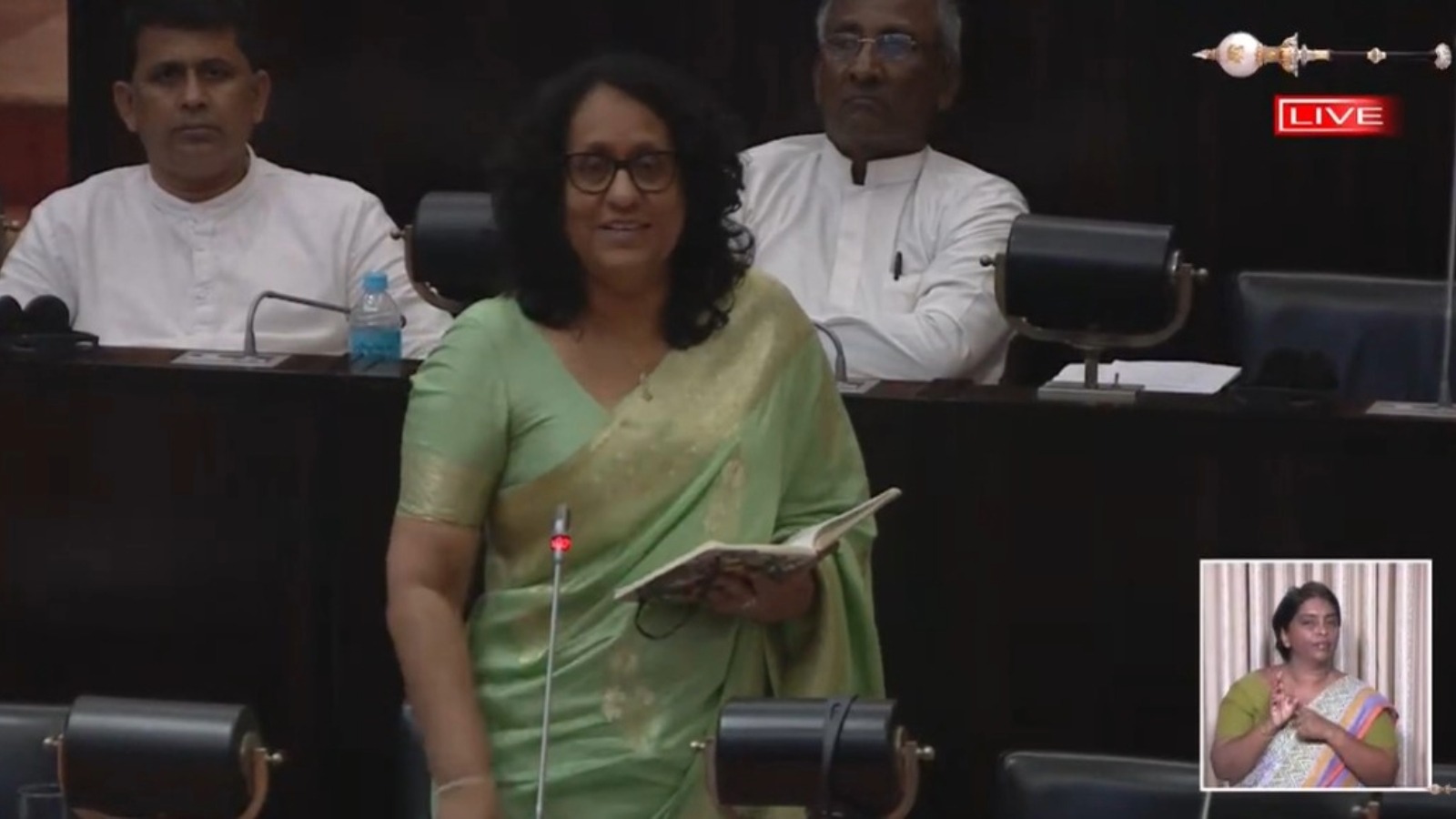
The foundation stone laying ceremony for the proposed seven-storey Sadaham Mandiraya at the historic Sri Jayewardenepura Kotte Rajamaha Viharaya was held on 03rd of January with the participation of Prime Minister Dr. Harini Amarasuriya.

The religious programme, organised to coincide with the Duruthu Full Moon Poya Day, commenced with the chanting of Seth Pirith by the Maha Sangha.

Subsequently, the Prime Minister participated in laying of the foundation stone, formally marking the commencement of construction of the seven-storey Sadaham Mandiraya.

The Sadaham Mandiraya will be constructed as a centre dedicated to the preservation of Buddhist heritage while providing Dhamma education and spiritual guidance for future generations.

The event was graced by the presence of Chief Incumbent of the Kotte Rajamaha Viharaya, Venerable Aluth Nuwara Anuruddha Thero, together with members of the Maha Sangha; and attended by the Deputy Minister of Industry and Entrepreneurship Development, Chathuranga Abeysinghe, local political representatives, state officials, and a large gathering of devotees.

(Prime Minister’s Media Division)

Continue Reading

News

PUCSL and Treasury under IMF spotlight as CEB seeks 11.5% power tariff hike

Published

on

The Public Utilities Commission of Sri Lanka (PUCSL) and the Treasury are facing heightened scrutiny as the Ceylon Electricity Board (CEB) presses for an 11.5 percent electricity tariff increase, a move closely tied to IMF-driven state-owned enterprise (SOE) reforms aimed at curbing losses and easing fiscal pressure on the State.

The proposed hike comes as the Treasury intensifies efforts to reduce the budgetary burden of loss-making SOEs under Sri Lanka’s IMF programme, which places strong emphasis on cost-reflective pricing, improved governance and the elimination of quasi-fiscal deficits.

Power sector sources said the PUCSL has completed its technical evaluation of the CEB proposal and is expected to announce its determination shortly.

The decision is being closely watched not only as a test of regulatory independence, but also as an indicator of how Treasury-backed fiscal discipline is being enforced through independent regulators.Under the IMF agreement, Sri Lanka has committed to restructuring key SOEs, such as, the CEB to prevent recurring losses from spilling over into public finances.

Treasury officials have repeatedly warned that continued operational losses at the utility could ultimately require state intervention, undermining fiscal consolidation targets agreed with the IMF.

The CEB has justified the proposed 11.5 percent hike by citing high generation costs, foreign currency loan repayments and accumulated legacy losses, arguing that further tariff adjustments are necessary to stabilise finances and avoid a return to Treasury support.

However, critics argue that IMF-aligned reforms should not translate into routine tariff hikes without meaningful improvements in efficiency, cost controls and governance within the utility.

Trade unions and consumer groups have urged the PUCSL to resist pressure from both the CEB and fiscal authorities to simply pass costs on to consumers.

They also note that improved hydropower availability should reduce dependence on expensive thermal generation, easing cost pressures and giving the regulator room to moderate any tariff increase.

Energy analysts say the PUCSL’s ruling will reflect how effectively the Treasury’s fiscal objectives are being balanced against the regulator’s statutory duty to protect consumers, warning that over-reliance on tariff increases could erode public support for IMF-backed reforms.

Business chambers have cautioned that another electricity price hike could weaken industrial competitiveness and slow economic recovery, particularly in export-oriented and energy-intensive sectors already grappling with elevated costs.

Electricity tariffs remain one of the most politically sensitive aspects of IMF-linked restructuring, with previous hikes triggering widespread public discontent and raising concerns over social impact.

The PUCSL is expected to outline the basis of its decision, including whether the proposed 11.5 percent increase will be approved in full, scaled down, or restructured through slab-based mechanisms to cushion low-income households.

An energy expert stressed that Sri Lanka navigates IMF-mandated fiscal and SOE reforms, the forthcoming ruling is widely seen as a defining moment—testing not only the independence of the regulator, but also the Treasury’s ability to pursue reform without deepening the burden on consumers.

By Ifham Nizam ✍️

Continue Reading

News

Bellana says Rs 900 mn fraud at NHSL cannot be suppressed by moving CID against him

Published

on

Dr. Bellana

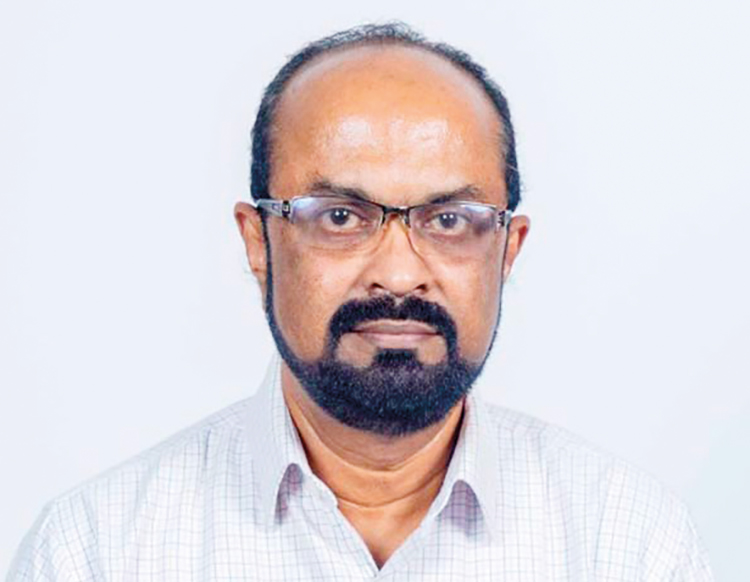
Massive waste, corruption, irregularities and mismanagement at laboratories of the country’s premier hospital, revealed by the National Audit Office (NAO), couldn’t be suppressed by sacking or accusing him of issuing death threats to Health Secretary Dr. Anil Jasinghe, recently sacked Director of the National Hospital of Sri Lanka (NHSL) Dr. Rukshan Bellana told The Island.

Dr. Bellana said so responding to Dr. Jasinghe’s request for police protection claiming that he (Bellana) was directly responsible for threatening him.

The NPP government owed an explanation without further delay as the queries raised by NAO pertained to Rs 900 mn fraud/loss caused as a result of procurement of chemical reagents for the 2022 to 2024 period remained unanswered, Dr. Bellana said, pointing out that NAO raised the issue in June last year.

Having accused all other political parties of corruption at all levels, the NPP couldn’t under any circumstances remain mum on NAO’s audit query, DR. Bellana said, claiming that he heard of attempts by certain interested parties to settle the matter outside legal procedures.

The former GMOA official said that the NPP’s reputation was at stake. Perhaps President Anura Kumara Dissanayake should look into this matter and ensure proper investigation. Dr. Bellana alleged that those who had been implicated in the NAO inquiry were making an attempt to depict procurement of shelf time expired chemical reagents as a minor matter.

By Shamindra Ferdinando ✍️

Continue Reading

Trending