
Features
Promoting Reconciliation and Accountability in Sri Lanka

By Neville Ladduwahetty
From 2012, Reconciliation and Accountability have been the twin pillars of the series of Resolutions that emerged from the UN Human Rights Council in Geneva. Perhaps, the thinking of those who developed the formula of linking Reconciliation with Accountability was guided by the notion that an effective accountability process that holds some members of the security forces and the associated leaders accountable and punished would somehow ease the humiliation of defeat, and make the painful processes of healing and eventual reconciliation more tolerable.
In general, this notion presumes that retributive justice would promote reconciliation. The presumption of such an outcome is not an assured given because the possibility exists for the positions of the parties hoping to reconcile to harden to a point of defeating the intended objective of reconciliation if retributive processes and their outcomes are perceived as being vindictive. Thus, the contemplated accountability exercise has the potential to be counterproductive depending on the context in which it is conducted.
SRI LANKAN EXPERIENCE
In the case of Sri Lanka, this theory could not be put to the test because the retributive process could not even get started. The reason for this being that those who devised the process overextended themselves and wanted the accountability process to be so effective that they conceived only a judicial mechanism that involved foreign judges, prosecutor etc. would achieve the intended objectives. The fact that such an arrangement would involve amending existing Laws and provisions in the Constitution, to the extent of requiring a two-third approval by Parliament and approval by the People at a referendum, escaped their attention.
This was brought to the attention of the Human Rights Council in March 2019 by the then Foreign Minister Tilak Marapana.
“The Government of Sri Lanka at the highest political levels, has both publicly and in discussions with the present and former High Commissioner for Human Rights and other interlocutors, explained the constitutional and legal challenges that preclude it from including non-citizens in its judicial processes. It has been explained that if non-citizen judges are to be appointed in such a process, it will not be possible without an amendment to the Constitution by 2/3 of members of the Parliament voting in favour and also the approval of the people at a referendum”.
This gave the present Government legitimate grounds to withdraw from the co-sponsorship of UNHRC Resolution 30/1 in terms of Article 46 of the Vienna Convention 1969, which in essence states that a State may invalidate its consent to a Treaty if it violates a rule of its internal law of fundamental importance such as a Constitution of a sovereign State.
CURRENT SITUATION
Currently, the accountability process is at a stand-still because of the failure of the approach adopted. However, what exists is a collective body of material available in Reports prepared externally by the Panel of Experts appointed by the UN Secretary General and by the Office of the Human Rights Commission in Geneva together with internal Reports of Commissions of Inquiry appointed by the Government of Sri Lanka such as the Lessons Learnt and Reconciliation Commission (LLRC), and the Paranagama Commission that included International Experts.
This body of material has been reviewed from two distinct perspectives. Since the mandate to the LLRC was primarily to promote national unity and reconciliation among communities, its Report gives emphasis to Human Rights as reflected in paragraphs 5.2 and 5.3 cited below. On the other hand, the other Reports reflect a perspective that is based on International Humanitarian Law (IHL) as the applicable Law since the conflict had reached the threshold of a non-International Armed Conflict. Consequently, the material reviewed from a Human Rights perspective is bound to be different to a review based on IHL. Of the several reasons for this difference the most significant is that the LLRC viewed the conflict as between a State (GoSL) and a non-state actor (LTTE), thereby holding the State to a higher level of accountability than the LTTE, while under the perspective of IHL, responsibilities are shared equally as parties to an Armed Conflict. This makes the conclusions drawn from the respective perspectives different.
Paragraph 5.2 states: “Being a party to the following seven core international human rights instruments, Sri Lanka has given obligations under these Conventions through legislative measures, including the Constitution as well as executive and administrative measures”
Paragraph 5.3 states: “Sri Lanka therefore has constitutional and international obligations for the effective national implementation of these core conventions both during times of peace and war, and in the latter situation, together with applicable International Humanitarian Law…”.
It is therefore evident from the foregoing that the LLRC emphasis is on Human Rights with “applicable International Humanitarian Law’ during times of war. Had the LLRC recognized that it was a non-International Armed Conflict from the day the Cease Fire Agreement was signed as two parties recognized nationally and internationally to the conflict, the accepted applicable Law should have been International Humanitarian Law coupled with seriously derogated Human Rights during an Armed Conflict. This interpretation is reflected in the Sri Lankan Constitution and in the relevant Conventions during an Emergency as in the case of an Armed Conflict. The failure of the LLRC to recognize that it was a non-International Armed Conflict is the significant reason for its perspective to be different to the other Reports cited above.
LLRC’s INTERPRETATION of ACCOUNTABILITY
The material presented below are extracts from Chapter 9 of the LLRC Report titled “Summary of Principal Observations and Recommendations”. Since the two primary charges against the Government and the Security Forces are the excessive use of force and the inadequacies in the delivery of humanitarian aid, the two related sub-section from the LLRC Report presented below are: (1) “Measures to safeguard civilians and avoid civilian casualties” and (2) “Supply of humanitarian relief, including food and medicine to civilians in conflict zone”.
“Measures to safeguard…and No-Fire Zones”:
Paragraph 9.4: “In evaluating the Sri Lankan experience in the context of allegations of violations of IHL, the Commission is satisfied that the military strategy that was adopted to secure the LTTE held areas was one that was carefully conceived, in which the protection of the civilian population was given the highest priority…”
9.7 Having reached the above conclusion, it is also incumbent on the Commission to consider the question, while there is no deliberate targeting of civilians by the Security Forces, whether the action of the Security Forces of returning fire into the NFZs was excessive in the context of the Principle of Proportionality…”
COMMENT: The two fundamental principles of International Humanitarian Law are: Distinction and Proportionality. Without Distinction as to who is a combatant and who is a civilian to question whether the military response was proportionate or excessive cannot be ascertained. Since the LLRC Report admits that the LTTE shed their uniforms during the final states of the conflict, the question of distinguishing a civilian from a combatant is not possible, which means the principle of Proportionality cannot be applied. Furthermore, the comment that the Security Forces were “RETURNING fire to the NFZs” makes clear that it was the LTTE in the NFZs that initiated the firing. Despite the obvious presence of LTTE combatants, the LLRC Report makes no reference to them and refers to ALL as civilians.
Therefore, to categorize ALL in the NFZs as civilians and to question whether the return of fire was excessive in the context of the Principle of Proportionality that has no applicability in the particular circumstances, is seriously flawed.
In regard to “Hospitals/Makeshift Hospitals paragraph 9.12 (b) of the LLRC report states: “None of the persons making representations was able to state with certainty that they were in a position to definitely confirm that the shells which fell on the hospitals, originated exclusively from the side of the Sri Lankan Army or from the LTTE…Another ex-LTTE cadre…stated that the Puthumatthalan hospital was in fact accidentally shelled by the LTTE for which they had subsequently apologized”.
Supply of Humanitarian Relief
Paragraph 9.15: “The Commission notes that the supply of food to the civilians held by the LTTE up to early 2009 was at reasonably adequate levels…However, these adequacy levels appear to have declined during the months of February, March, April and the first half of May 2009…”
Paragraph 9.16: “It must be acknowledged that the maximum quantities of food supplies, that were possible…due to the collective efforts of the Government of Sri Lanka, in particular the GAs and the Security Forces as well as international agencies such as the ICRC and WFP, and other volunteers who had provided selfless service on the spot in the No Fire Zone”.
The impression conveyed in the above comments is that the Government of Sri Lanka was responsible for and obligated to supply humanitarian relief to All in the No Fire Zone. Since it was not possible to separate combatants from civilians, this meant supplying humanitarian aid including medical supplies to the LTTE and engaging with them in an Armed Conflict, simultaneously. Such a flawed expectation is a result of the confused perspective adopted by the Commission as to the role of the Government. How could the Government be a party to the conflict and be a provider of humanitarian aid both at the same time?
COMMENT: Had the LLRC accepted IHL as the applicable Law, they would not have held the Government of Sri Lanka accountable for the “decline” in the supply of relief. The reason for including the Government in the list of those responsible for the supply of humanitarian relief is because their understanding of the Government’s responsibilities was misplaced. The Commission fails to acknowledge that the Government as a party to the Armed Conflict, should not be expected to supply aid of any kind to the LTTE. Instead, what the Government was expected to do was ONLY to facilitate free passage of humanitarian aid to those affected by the Armed Conflict as per ICRC Rules 55 and 56 (Vol. 87, Number 857 March 2005).
Rule 55: “The parties to the conflict must allow and facilitate rapid and unimpeded passage of humanitarian relief for civilians in need, which is impartial in character and conducted without any adverse, distinction, subject to their right of control”
Rule 56: “The parties to the conflict must ensure the freedom of movement of authorized humanitarian relief personnel essential to the exercise of their functions. Only in the case of imperative necessity may their movements be temporarily restricted”.
PROPOSED STRATEGY
There are two basic approaches that Sri Lanka could take in presenting its case before the forthcoming sessions in Geneva. One approach is to plead its case by presenting all the available evidence from sources such as that of Lord Naseby, UN Reports, opinions of experts in the Paranagama Commission Report and any other sources challenging the alleged claims in the UNHRC Resolution 30/1. The other is to challenge the alleged violations on the basis of International Humanitarian Law, backed up with support material referred to above. Of these two approaches there is a greater likelihood of the latter approach being more acceptable because it has a more credible basis than the former.
CONCLUSION
When Sri Lanka placed on record at the March 2019 UNHRC sessions that it was withdrawing from the co-sponsorship of UNHRC Resolution 30/1, it undertook, among other undertakings, to appoint a Commission of Inquiry “to review the reports of previous Sri Lankan COIs which investigated alleged violations of Human Rights and International Humanitarian Law, to assess the status of implementation of their recommendations and to propose deliverable measures to implement them in keeping with the new Government’s policy”.
The plea to anyone engaged in fulfilling the commitment stated above is to declare at the very outset that its review of reports of previous COIs is based on the fact that the conflict in Sri Lanka that ended in May 2009 was a non-International Armed Conflict, as recognized by international law. Consequently, the review process should bear in mind that the applicable Law is International Humanitarian Law together with derogated Human Rights Laws as reflected in International Covenants and in Sri Lanka’s Constitution during an Emergency. Therefore, the alleged violations presented in these Reports should be assessed in the context of these Laws, backed up with support material such from UN Reports, evidence presented by Lord Naseby, opinions of experts in the Paranagama Commission Report, and by the ICRC, etc.. Since the Additional Protocol II of 1977 is accepted as part of Customary Law and the fact that it embodies all recognized provisions of non-International Armed Conflict, the provisions of the Protocol should guide the review process of alleged violations committed collectively or individually.
The review process should also identify which recommendations in the Commission of Inquiry Reports relating to Reconciliation are deliverable in keeping with Government policy. In this regard one measure that would make a significant difference to Reconciliation is to demand tangible outcomes from the Office of Missing Persons, bearing in mind that their work could be constrained by the non-cooperation of Member States if they fail to disclose the identities of persons missing from Sri Lanka and who are now living in their countries under altered identities.
The forthcoming sessions in Geneva would be a defining moment for Sri Lanka in its relations with the UNHRC. Therefore, the Government should conclude its review process well in time, in order to enable it to canvas support among the members of the UN Human Rights Council on the basis of the legitimacy of the approach taken and bring closure to Accountability. At the same time the UN Human Rights Council should permit Sri Lanka the time and space to address Reconciliation through processes that each country has to fashion because its uniqueness is special to every country, and no country or International Agency has a universal formula to bring about Reconciliation among communities in a country.
Neville Ladduwahetty
November 15, 2020.



The election in Nepal last week was not merely a political exercise; it was an eruption of pentup fury, a rejection of the old guard that had throttled any semblance of progress for decades. But what now stares the country in the face is a stark question: have the people truly changed their future, or simply traded one set of illusions for another?
For years, Nepalis endured the same trio of power brokers — the Nepali Congress, the CPNUML, and the socalled Communist Party — as these entities pirouetted through government halls, recycled leadership, and maintained an endless cycle of impressive promises and microscopic delivery. Institutions decayed, corruption metastasized, unemployment worsened further. Youth unemployment stands north of 20 per cent — more than double the national average. Around 1,500 young Nepalis leave their homeland every single day seeking work abroad, a staggering exodus that undermines any future the country might hope to sculpt for itself.
So, when the uprising erupted, when Gen Z and youth frustration boiled over into the streets, it was not just rage — it was despair. For a generation raised on unfulfilled promises, the old guard simply had no authority left to persuade a battered population of its relevance. History remembers political decay, but seldom the emotional collapse that precedes a revolt.
Into this void surged Balendra Shah, the rapperturnedKathmandu mayor better known as Balen. He became the face of something many claimed they wanted: a break with the past. The Rastriya Swatantra Party (RSP), a party as new as its leader’s rise from outside the entrenched political class, swept to an unprecedented majority: 125 of the 165 firstpastthepost seats. A single party holding nearly twothirds control in Nepal is almost unheard of, a brutal indictment of the old establishment’s collapse.
Yet, beneath the celebrations, the mood of unrestrained optimism conceals something far darker: a population battered into radical decisionmaking by emotion, not strategy. It is a politics driven not by reflection, debate, or longterm planning, but by hatred — hatred of “corrupt leaders,” hatred of stagnation, hatred of a system that failed to deliver rice (dal bhat), work, dignity. This emotional current, once unleashed, is merciless. It propels movements forward with the force of steam but leaves them to sputter once the fire runs out.
Nepal’s new leadership inherited not opportunity but catastrophe. The economic foundation is weak and brittle. Public debt hovers around 40–45 per cent of GDP, but it is the quality of the economy that terrifies: a narrow tax base, enormous dependence on remittances accounting for roughly onequarter of GDP, and a private sector too fragile to absorb the burgeoning army of young jobseekers. Tourism, once thought a panacea, remains exquisitely sensitive to global disruptions. Agriculture remains archaic and unproductive. Power outages and distribution inefficiencies plague even the most basic enterprises. Crucially, the labour force — the very youth that marched in protests — has no obvious outlet for meaningful employment.
The RSP manifesto, the socalled “2082 Vision,” is nothing if not audacious: 1.2 million jobs in five years; GDP expansion to almost $100 billion; per capita income rising to $3,000; 15,000 megawatts of installed capacity; halving LPG imports; digital services exports of $30 billion in ten years; the construction or upgrade of 30,000 kilometres of national highways. These numbers are ambitious — some might say visionary — but independent observers see them as fantasy built on the emotional reservoir of hope, not on deeply rooted economic analysis. Nepal’s energy grid cannot reliably distribute current capacity; transportation infrastructure routinely buckles under seasonal rains; foreign direct investment remains underwhelming; and the digital economy is throttled by regulatory unpredictability and an underdeveloped legal regime for international payments.
These are the grim realities. A promise to reduce imports without addressing critical bottlenecks in trade policy or crossborder logistics is a promise destined for frustration. A pledge to build tens of thousands of kilometres of roads without sustained institutional capacity to manage land acquisition, competitive bidding, quality control, and anticorruption oversight offers little more than ritual groundbreaking and even more ceremonial delays.
This mismatch between aspirational rhetoric and structural capacity points to a far more troubling truth: Nepalis have been deceived not by individuals but by narratives. The uprising was not wrong in its desire for change. But it was driven by visceral emotion — a collective impulse to reject the old, often without a coherent alternative blueprint that could realistically transform the economy and provide stability. Angry protests and street fervour commandeered the engine of politics, and once that engine is running on emotion rather than evidence, it becomes dangerously unpredictable.
Look at Chile. Gabriel Boric was once lauded as a youthful saviour, riding a wave of antiestablishment fervour following mass protests. He came to power promising transformation, only to be bogged down by economic crises, political fragmentation, and opposition so ferocious that his capacity to govern was severely curtailed. Boric faced impeachment, suffered plummeting approval ratings, and struggled to balance reformist zeal with the weight of practical governance. If Nepal is honest with itself, it must question whether Balen may tread a similar path: overwhelmed by the emotional thunder that elevated him, yet unprepared to deliver the institutional and economic stability the nation desperately needs.
Here’s the painful truth: Gen Z politics, fuelled by emotion, creates momentum but not mechanisms. Momentum wins rallies; mechanisms build nations. The current administration’s inexperience — not merely in government, but in managing a modern economy under immense pressure — sets the stage for something grim: a crescendo of disappointed expectations. When job creation fails to materialize at the promised scale, when infrastructure projects lag, when remittances cool and capital flight accelerates, the emotional energy that once propelled this movement may transform into a bitter sense of betrayal. That betrayal has a name in political history: radicalization without deliverables.
Worse still, emotional politics is ripe for exploitation by external actors. Nepal is geostrategically hemmed in by its two giant neighbours. India — the largest source of trade, investment, energy supplies, and transit routes — watches with both interest and caution. China, shareholder in multiple infrastructure ventures and a central actor in Belt and Road projects, has its own expectations. Both have engaged with the RSP, seeking alignment with their own strategic interests. But emotion is a currency external powers love to leverage: where national confidence is high and institutional clarity is low, foreign influence finds entry points. A government fuelled by public passion — but lacking robust policy anchors — becomes pliable, attractive, and dangerous.
The question is: did the electorate truly choose a path to prosperity, or merely a dream of it? Emotional politics gave the people a mirror — a reflection of their hurt, their labour unrecognized, their aspirations denied. But mirrors do not map roads; they only reveal what is already before us.
Balenomics may become a lesson in hubris — not because the goals are unworthy, but because goals without disciplined implementation, institutional reform, and credible governance remain poetry when the country needs engineering. Nepal needs a systemic recalibration of labour markets, transparent rulemaking, competitive commerce, legal certainty for investments, and infrastructural credibility — not just slogans that rouse crowds.
When citizens see delays, when promised jobs fail to materialise, when inflation stubbornly erodes incomes, and when foreign capital does not flood in simply because of optimism, the inevitable question will surface: was this all just emotional theatre? If the answer is yes, Nepal risks entering a phase worse than the old guard’s mismanagement: disillusionment with revolt itself.
by Nilantha Ilangamuwa

Trips to Washington for IMF and World Bank meetings, bargain book sales
We were in the beginning of the year 2005 and the next Presidential election was coming ever closer. CBK had taken Chief Justice Sarath Silva’s advice and had taken oaths as President for the second time soon after the assassination attempt in 2001 in the belief that the balance period of her first term would be added to the tail end of her current tenure. Imagine her consternation when it was held that her second term ended exactly five years after her second oath taking.
It was a double blow in that her faith in Sarath Silva was shattered and her plans to undertake a year of reforms and groom a successor were now stymied. Sarath’s decision was tailor-made for his friend Mahinda Rajapaksa for if CBK had another year she may not have selected him to be the standard bearer of the PA in the forthcoming Presidential election. At this stage with Lakshman Kadirgamar’s demise, the odds on favourite was Anura Bandaranaike. But he was getting deeper into the cups and was not as proactive as his erstwhile protege MR.
The MR camp was busy demoralizing Anura. At the SLFP convention held in Kurunegala there was a well orchestrated hooting when Anura arrived on stage. Day by day pressure was brought on CBK to turn to MR and she was not helped by Anura’s reputation for drinking and indolence. No one knew that he had developed a cancer in his liver which Tissa Vitarana – a superb doctor, told me was caused by excessive drinking. The UNP which worked hand in glove with Mahinda to embarrass CBK now discovered that their favourite SLFPer (MR) whom they had nurtured could become a formidable candidate.
They filed a case through Kabir Hashim challenging Mahinda’s conduct in setting up “Helping Hambantota”, as a fund to collect money for the rehabilitation, presumably, as its name indicates, of Hambantota District. If found guilty he could have been imprisoned for four years as Sarath Silva proclaimed in retirement many years later. The “Helping Hambantota” fund created a dilemma for the Finance Ministry. Only the Treasury is entitled to set up special funds and when I was questioned about it in Parliament I had to frankly admit that “Helping Hambantota” was not properly constituted.
However MR’s Secretary Lalith Weeratunga had managed to get a letter from the Treasury stating that they were aware of this fund which proved to be a sufficient handle to save Mahinda. Kabir Hashim not only lost his case but was reprimanded by the CJ. He narrowly escaped being thrown in jail instead of MR.
Alternate Governor
As a prelude to a budgetary exercise the Ministry of Finance undertakes many discussions about foreign financial contributions which help in formulating our “foreign exchange budget”. All such inflows are depicted in the national budget under the relevant subheads. These discussions are held with both multilateral and bilateral donors. Among multilateral donors we transact business mainly with the IMF, the World Bank group and the ADB. In all these cases the Minister of Finance is an Alternate Governor who attends the annual sessions of these institutions.
The IMF-World Bank meetings are held twice a year as spring and autumn sessions and ADB meetings are held once a year. All these institutions have a practice of having their meetings in Washington and Manila as the case may be. However on every third year meetings are held in a member state. I was the Alternate Governor of these institutions from 2004 to 2015 which adds up to a considerable amount of travelling to all parts of the world. While innumerable ‘pilgrimages’ were made to Washington and Manila during this time, I also travelled to Ankara, Nagoya, Tokyo, Astana, Hyderabad, Singapore, Bali, Shanghai, and Bangkok for these multilateral sessions. Since most Finance Ministers of the world tend to attend these meetings, we also had fruitful meetings with many of them on bilateral issues. It was a good opportunity to review existing projects as well as discuss new requests. Many Ministers were accompanied by heads of their organizations that funded development efforts in the Third World. For instance the heads of the Saudi Fund, Norad, CIDA, UNDP, the Gulf Fund and many others who were funding Sri Lankan projects were present for a review of our joint efforts.
The agenda for IMF meetings was not too complicated. It began with the address of the heads of the IMF and World Bank followed by an overview of the global/regional economy and projections for the future by its Chief Economist. During my time, the post of Chief Economist was held by Raghuram Rajan, the distinguished scholar of Indian origin from the Economics Department of the University of Chicago. He was the first economist to predict the impending economic crisis of the late 20th century beginning with the failing housing market in the US.
He later became the Governor of the Reserve Bank of India at the invitation of Finance Minister Chidambaram. However having fallen out with the Modi government he went back to Chicago. We then had a meeting of the G40 which was a grouping of the developing countries. Here the concerns of the “receivers of aid” were articulated in the presence of the MD of the IMF and the President of the WB. At these meetings I was invariably asked to intervene by our group. Accordingly I characterized our plight as those of “innocent bystanders” whose economies were hit by the financial crisis which enveloped the developed world.
It must be remembered that this was the time when the global financial architecture was shaken to its roots following the American financial debacle. It was aptly described as a system “too big to fail”. The G40 meeting was followed by a luncheon hosted by the Indian Finance Minister for the South Asia group. Our geographical group comprised India, Bangladesh, Nepal, Bhutan and Sri Lanka. In my time our hosts were P. Chidambaram and Pranab Mukherjee who were the relevant Finance Ministers of India.
Afterwards many bilateral meetings were held on the sidelines of the main meetings. We invariably had meetings with India, the Gulf States, US, Japan, China and the Nordic countries where we could discuss progress in the projects underway funded by those countries as well as future funding for projects which had been submitted by the External Resources Division of the Finance Ministry. The grand finale was the plenary session where member states could make their interventions. Usually only eight minutes were allocated for each country.
The meeting ended with the formal responses of the heads of the IMF and WB to the concerns raised by delegates and a “family photograph”. I also had short “one to one” meetings with the MD of the IMF and the head of the World Bank. When De Rato the MD of IMF retired I called on him and presented him with a few packages of Ceylon tea and thanked him for his support extended to us particularly during the Tsunami. He remarked ruefully that I was the only representative of the developing countries who came to bid him farewell.
Country meetings
Perhaps the most important of our meetings were the “country meetings” when the senior officials of the IMF and WB reviewed the status of our economy as well as country projects spanning all aspects of the aid programme. I began the meeting with an introduction which reviewed the economy of Sri Lanka since our previous meeting. This was followed by a statement by the Governor of our Central Bank Nivard Cabral or his representative. One of the senior most officials of the IMF – Dr Kato a Japanese national, would then respond and turn over the discussion to the divisional leaders who would take up specific issues in project implementation. For example the Director overlooking education projects would review their activities in Sri Lanka while the Director in charge of budgetary reform would present his divisions analysis of our current budget and their recommendations for the forthcoming one.
It was an interesting high level discussion since we had come to know each other over a period of time and could speak frankly about our concerns. At the end of these discussions I would host the participants for a lunch usually at a top class Chinese restaurant close to the IMF building. Since we had an officer of the Central Bank attached to the IMF in Washington he took care of all these arrangements. He took care to invite a few other senior officials attached to the Maaging Director’s secretariat for that meal.
These and other public relations operations, including arranging a tour of our tourist hotspots when they were on mission in Sri Lanka, helped in smoothing our conversations and we were able to create a sense of goodwill which was very useful when it came to gaining the assent of the governing board which depended heavily on staff recommendations.
IMF ideology
A constant refrain about the IMF is that it follows a neo-liberal economic agenda. Since the West led by the US are the main shareholders of the IMF its Board usually toes a line which is favourable to Western interests. These interests include the regulation of the banking system and careful management of the global currency and exchange system which depended on US money supply and interest rates. Since the US dollar was the reserve currency of the world it held all the cards in the global financial game.
Part of our discussions were with the US Secretary to the Treasury and the Chairman of the Federal Reserve. When I first participated in IMF meetings the head of the Fed was Alan Greenspan [1987-2006] the legendary economist who dominated US economic policy for decades. He was followed by Ben Bernanke and Janet Yellen. They all participated in IMF meetings and Yellen in particular had special meetings with Finance Ministers to warn them of the possible consequences for their economies due to changes in the monetary policies of the US. For instance when the US raises interest rates money invested in developing countries tend to flow back to the US. When the US Fed reduces its interest rates there is a reverse flow to the poorer economies which offer higher rates.
Discussion with IMF officials in Colombo
When it comes to developing countries facing economic crises the IMF helps “by offering loans, technical assistance and surveillance of economic policies”. Loans are conditional on the following of a mutually agreed recovery programme for which funds are released in tranches after staff reviews which are endorsed by the Governing Board of the IMF. Sri Lanka has had 16 such programmes but none of them have been completed because the Sri Lankan side has aborted them mid stream due to political considerations.
In countries which go to varying types of polls almost every year, leaders find it difficult to accept the bitter economic recommendations of the IMF and the Central Bank. This is particularly true of Rajapaksa regimes because an electoral loss meant that “their occupation is gone” to use Shakespearean language. Subsidies however deleterious to growth is sacrosanct in this country and governments of the day prefer to pass on the hard decisions to future generations even if it means the breaking of its understandings with the IMF.
However there are some critics who challenge the model of growth adopted by the IMF. ‘Ihey find an alternative in closed economies where consumption is curtailed through a regime of restrictions and production is more for a domestic market. The economic models of such closed economies (also called “fortress economies”) have failed in the last 50 years and with the fall of the Communist blocs and the new trade policies of China, such an alternative is now hardly credible as a viable economic solution. Russia, China and Vietnam are keen members of the IMF and they jealously guard their interests in a globalized economy.
Donor meetings
In 1978 Ronnie de Mel established the practice of holding an annual meeting with our donor community as a prelude to preparing the budget. Since the new administration under JRJ was popular with western countries there was no dearth of supporters from among non-Communist countries. This was best seen in the foreign financing of the giant Mahaweli scheme. A large amount of money was provided as grants while many of the loans were given on concessionary terms.
The funding of this “Jumbo”project – both bilateral and multilateral – was so extensive that it is unlikely that such funding would be repeated in the future. Germany, Canada, Sweden and the UK financed the building of dams in Randenigala, Rantembe, Kotmale and Victoria. Japan which wanted to join the bandwagon but could not be accommodated under Mahaweli, opted to donate a whole new TV system and a 1001 bed hospital in Jayawardenepura as outright grants. When Scandinavian countries and Canada drew up “short lists”of developing countries earmarked for foreign funding Sri Lanka ranked among the top three.
Donor meetings were held because it was difficult to manage foreign funding on a one to one basis. It was more feasible to bring our donors together with the External Resources Division of the Treasury for a three-day long meeting when project performance could be reviewed and new funds pledged for the coming year and sometimes even beyond on a three year cycle. The World Bank agreed to host such a meeting and its European office in Paris was selected as the venue.
Thus from 1978 Treasury officials and the Minister of Finance wended their way to Paris for this much anticipated donor conference. Pledges were wrapped up and the meeting concluded with a grand dinner at the Ritz hosted by Ronnie in which all heads of relevant financial institutions participated. This model was so successful that the World Bank prescribed such meetings for many countries which were on the “beggars list” for extensive foreign support. This procedure worked well under the JR regime but was reduced to a shambles by Premadasa who preferred private foreign investment particularly for his garment manufacturing enterprises.
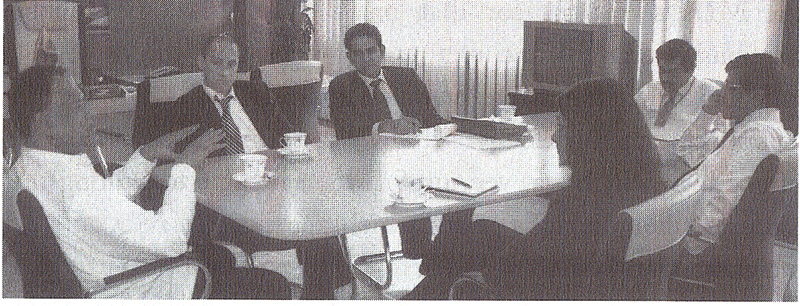
Discussion with IMF officials in Colombo
It must be stated here that this strategy did not entail obtaining a range of loans which would come home to roost later. Funding was provided by private investors. Premadasa’s favourite official in the Treasury – the super efficient Civil Servant Paskaralingam and his handpicked Treasury officials managed to steer the foreign exchange budget to success as well as start many urban infrastructure projects which began to alter the Colombo skyline. But the raging war – LTTE in the North and East and the JVP in the South – put paid to Premadasa’s dream of making Sri Lanka economically resurgent like Singapore, South Korea and Germany – countries that he admired. He was no great fan, unlike JRJ, of the USA and UK.
When CBK took over the reins in 1994 she had to confront an ongoing northern war. Premadasa had by then physically eliminated the JVP and its top leadership. All CBK’s efforts to quickly solve the “national question” became a tragic failure which blighted her regime. It particularly affected her management of the economy which declined over time to zero growth. As Minister of Finance I managed to reverse this trend and achieve a five percent plus growth and a significant increase in per capita income.
Her presence at the Paris donor meetings enabled western countries and Japan to complain to her about the escalating war in the North and East. To add to the countries security concerns several senior ministers Kadirgamar, CV Goonaratne and Jeyaraj Fernandopulle were assassinated and she herself had a narrow shave – all highlighting the stresses in a war torn country which were noted by the donors. Her strategy of taking her deputies GL Peiris and SB Dissanayake to Paris backfired in that they were exposed to the details of our economic debacle and the persisting concerns of western donors.
As SB told the media later he and GL realized at these meetings that CBK could not meet the challenge of managing the economy and therefore decided to cross over to Ranil and the UNP. To add to the misery the Tsunami of 2004 derailed all her plans and called for a concerted effort to put our foreign funding on a sounder footing.
We in the Finance Ministry decided to take the bold step of holding the Development Forum in Kandy. Earlier an attempt was made by Japan to host the Forum in Tokyo. It was decided then to move the venue from Paris to Tokyo largely due to the initiative of Japan’s roving ambassador Akashi who was well known for formulating his “Akashi Doctrine”. According to this policy Japan pledged substantial funds for development if the countries’ domestic conflicts were ended. It had been tested and tried successfully in Cambodia. This approach had been welcomed by Ranil’s regime.
But the LTTE had pulled out at the last minute and the Tokyo meeting had to be canceled. Our decision to shift to Kandy was welcomed by the donor community. We invited Bill Clinton for this meeting and he responded positively by sending a recorded message through his “alter ego” Erskine Bowles, the son of Chester Bowles – the former US ambassador to India, who attended on his behalf. The Deputy Managing Director of the IMF Praful Patel and deputy MD of the ADB Li Jin (who later headed the China backed Asian Infrastructure Development Bank) also attended together with senior officials of the World Bank.
The Ceylon Observer newspaper reported “More than 150 representatives from over 50 countries and international donor agencies will participate at this meeting. According to sources, the Government aims to cut down the budget deficit for 2005 with the assistance from donor countries and agencies. Sri Lanka maintains a 5.6 percent economic growth rate even in the midst of its largest ever disaster”.
After the ensuing discussions in which attention was drawn to the need to increase funding for Tsunami relief and strengthening the peace process, more specifically P-TOMS (Post-Tsunami Opertionl Mnsgement Structure), the international community pledged three billion US dollars for reconciliation and reconstruction activity in Sri Lanka. The holding of the development Forum in Sri Lanka was welcomed by the donors and it was continued the next year in Galle. However with the change of management a few years later it was abandoned by MR and successive administrations. Those Finance Ministers preferred to have bilateral discussions by themselves with donors and their contractors which led to many accusations of corruption which became more strident by the day. Instead of donor meetings emphasis was placed by MR and Basil Rajapaksa on “unsolicited proposals”.
Sunday off
Sunday in Washington was a free day which we used to visit the bookshops in Washington and go to the theatre. There was a bargain bookshop near Dupont Circle close to our hotel which was patronized by our delegation. It had many rare books donated to it by publishers since the sales collection went to charities. It was manned by students from top universities who were only too happy to engage in discussions about new books. Another memorable event was the closing down sale of the famous Borders bookshop since the company had gone bankrupt.
All books in the shop were sold at one dollar apiece. Borders bookshops in downtown Washington and Georgetown were stormed by “egg heads” who bought up not only books at a dollar each but even the shelves and safes which were on offer in the fire sale. I also visited my Peradeniya friend and colleague Professor HL Seneviratne and his family in Charlottesville, Virginia. Once I visited Stanley Tambiah my old teacher at Peradeniya. He had retired from teaching at Harvard and was installed in an old folks home by his ungrateful family. That was my last encounter with our much loved teacher from the fifties since Tambiah died a few months later.
The practice then was to attach a senior Central Bank officer to the IMF for a two year stint. It began with AS Jayawardene who later became Governor of our Central Bank. He was followed by Karunaratne, Jayatissa, Herath, Nandalal Weerasinghe, Dheerasinghe and Ranasinghe (the last three of whom we referred to as the “The three Sinhas”- lions). They all entertained us to dinner in their homes in Maryland. There were a large number of IMF and World Bank professionals who lived close to each other in the district.
It was no surprise therefore to learn that the Democratic Senator representing Maryland was Christopher Van Hollen Jr., the son of Chris Van Hollen, a long serving US Ambassador in Colombo who was a good friend of mine. Senator Van Hollen had his early schooling in Colombo. He was a Sri Lanka supporter who was always available for meetings with us. I was happy to present a book edited by his father to mark the historic relations between Sri Lanka and the USA to mark the bicentennial.
Our Ambassadors in Washington also assisted us. They participated in our IMF-WB meetings and arranged receptions so that we could meet IMF-WB staffers socially and also meet important US politicians and officials. As they say, Washington “inside the beltway” is the happy hunting grounds of politicians and bureaucrats. I particularly remember an Ambassador joining me for a memorable concert by Ravi Shankar and his daughter Anoushka held at the Kennedy Centre. Though our work in Washington was arduous and we had to burn midnight oil, we also had a lot of fun during our visits to the US capitol.
(Excerpted from vol. 3 of the Sarath Amunugama autobiography) ✍️
““Societies are not made of sticks and stones, but of men whose individual characters by turning the scale one way or another determine the direction of the whole”
Plato (The Republic)
Gotabaya Rajapaksa inherited a lower-middle income country and bankrupted it in two years and five months.
Donald Trump is likely to upend the world in a much shorter time. If he doesn’t immediately – and unconditionally – end the unprovoked and illegal war he began against Iran.
When Gotabaya Rajapaksa won the Lankan presidency with the enthusiastic backing of 6.9 million voters (almost all of them Sinhalese, and the absolute majority of them Sinhala-Buddhist), Dr Steve Turley, a pro-Trump conservative radio talk show host, hailed Sri Lanka’s turn to ‘nationalist right’. “An increasing number of populations are turning away from globalism and re-embracing nation, culture, custom and tradition as the basis for a vibrant political and cultural renewal. Just so another nation embraced the nationalist right. Sri Lanka recently held its presidential election and as a result we can add another nation to the growing number of nationalist populist governments throughout the world” (Sri Lanka Turns to the Nationalist Right!!! – YouTube).
The Rajapaksas could have given Donald Trump lessons on ethno-religious- populism, on the art of weaponising race and religion for political purposes. That mastery, however, was of no use when their errors and misdeeds sent the economy into a tailspin. Gotabaya Rajapaksa was chased out, literally, and the Rajapaksas reduced to three percent electorally.
Now Donald Trump, with his Iran folly, is about to unleash unprecedented economic chaos on America and the world.
Gotabaya Rajapaksa believed that Lankan agriculture (after more than half a century of inundation in chemical fertiliser) could be turned organic in one season. Donald Trump seemed to have convinced that a short sharp war would bring Iran to its knees. According to a recent New York Times report, “On Feb 18, as President Trump weighted whether to launch military attacks on Iran, Chris Wright, the energy secretary, told an interviewer he was not concerned that the looming war might disrupt oil supplies in the Middle East and wreak havoc in energy markets. Some of Mr Trump other advisers shared similar views in private dismissing warnings that…Iran might wage economic warfare by closing shipping lanes carrying roughly 20 percent of the world’s oil supply.” With such blitheness did America begin its newest war.
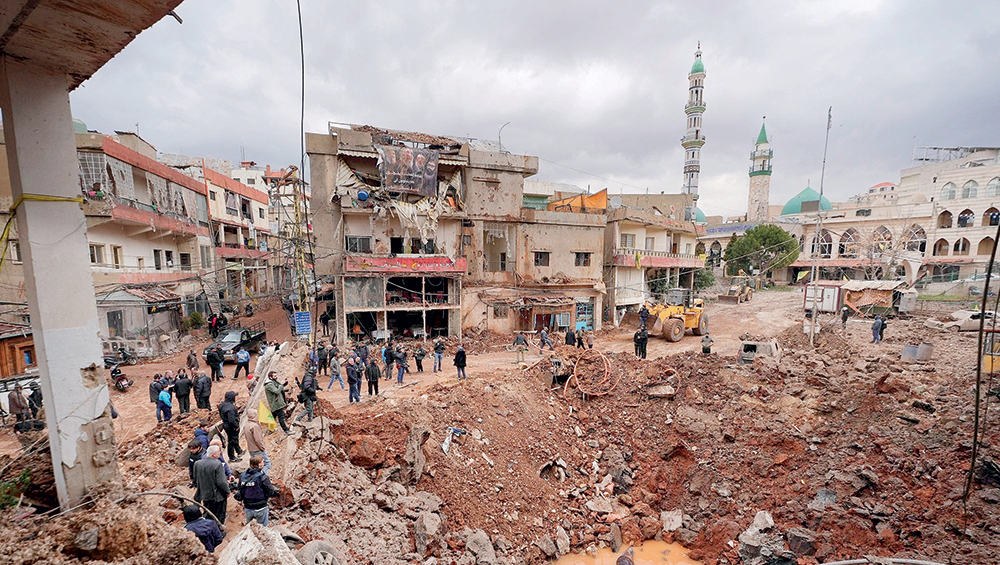
Today, the world’s oil supply is facing an unprecedented crisis. Iran has closed down the Strait of Hormuz and the 20 million barrels of oil that go through it on a normal day is not moving. Donald Trump first promised to use the US navy to escort ships through the channel, then told the shipping industry to show ‘some guts’. No one is likely to heed his call, not after three vessels in the vicinity were hit by Iranian projectiles (In the meantime, Iran is exporting more oil through the Strait than before, according to the Wall Street Journal.). So oil prices are soaring, driving up energy bills in the US – and across the world – less than eight months before mid-term polls with all Congress seats and 33 of the Senate’s 100 seats up for grabs.
Not just oil. Over one-third of world’s fertilizer trade too move through the Strait of Hormuz. Already fertiliser prices are rising globally and experts are warning about falling harvests and increased food prices across the world.
Then there’s Liquefied Natural Gas (LNG). Qatar, second largest exporter of LNG gas (handling about 20% of world’s output), has stopped production due to Iranian attacks, leading to soaring prices. An attack by Israel-US on an Iranian bank has resulted in an Iranian threat to retaliate against US and Israeli banking interests. The consequences so far include Citi Group and Standard Chartered evacuating their Dubai offices and HSBC closing its Qatar branch.
If the disruption of energy markets, financial markets, trade routes, and supply chains continues, the world is likely to slip into stagflation – low growth and high inflation with predictable results, from increased poverty and unemployment to socio-political upheavals.
In America Unbound: The Bush Revolution in Foreign Policy Ivo Daalder and James Lindsay argue that with his war on Iraq, George W Bush set off a revolution not in “America’s goals abroad, but rather in how to achieve them.” Under Donald Trump, American foreign policy is undergoing an even more momentous transformation. America has gone into Iran without a clear notion of what it wants and how it plans to achieve whatever it wants. With Donald Trump, it is not America Unbound. It is America Unhinged.
Quagmire
“We won,” claimed Donald Trump at a recent rally in Kentucky. Perhaps he has – in some alternate reality.
In this reality, Iran has achieved an unexpected degree of success in using one-way attack drones to destroy several US radars across the Middle East, “degrading the ability of the US and its allies to track incoming missiles,” according to the Wall Street Journal. The Military Watch Magazine reports that American air defence systems worth $2.7billion were destroyed by Iran in the first week of the war. These include one AN/FPS-132 radar (a long-range ballistic missile early-warning system) and two AN/TPY-2 X-band mobile radars (from THAAD anti-ballistic missile systems located in US bases in Jordan and the UAE). As a result, the US is planning redeploy parts of or even the entirety of THAAD anti-missile system from South Korea to the Middle East.
The financial cost of the war to the US was $11.3billion for the first six days, according to the Pentagon.
The Trump administration has finally admitted that around 150 American soldiers have been injured in the war already. This is without any boots on the ground. Israel-American plan to use Iranian Kurds as substitutes doesn’t seem to be working. “This is not our war,” responded deputy prime minister of Iraqi Kurdistan Qubad Talabani when asked why Kurds didn’t want to get involved in the Iran war. His message to Iranian Kurdish groups was, he said, “Be cautious, be smart, be strategic. Understand the landscape. Understand what’s on the other side of this border. Don’t rush into anything that could cause you significant damage or cause Kurdish areas in Iran significant damage” (https://www.youtube.com/watch?v=NqeT68ukZYI&t=192s).
With the air war not going according to plan and Kurds unwilling to act as cat’s paws, Donald Trump is in a bind. Close to 60% of Americans oppose the war while an overwhelming 80% oppose any commitment of ground troops. According to a recent Drop Site/Zeteo/Data for Progress survey, 52% of likely American voters believe that in starting the war, President Trump was ‘at least partly motivated…to distract from the Jeffrey Epstein’ (40% say he wasn’t so motivated). 46% of the respondents said that Trump is more responsive to Israel than to American people while 47% said he was more responsive to American people.
The controversial Epstein file containing allegations about Donald Trump abusing a minor came out, but barely made a stir since all the oxygen is being sucked in by the war on Iran. Without the war, it would have been the NEWS, for several cycles. If distracting public and media attention from the Epstein files was a Trump-objective in starting the war, it is working, so far. As for Israel, there’s little doubt that Binyamin Netanyahu was the prime mover in the war against Iran, just as he was in the 2003 war against Iraq. In his address to the nation, Mr. Netanyahu said that attacking Iran with American assistance “allows us to do what I had yearned for 40 years: smite the terror regime hip and thigh. This is what I promised and this is what we shall do.”
In November 2003, at an event to mark the 20th anniversary of the National Endowment for Democracy, George W Bush assured his credulous nation that “A new regime in Iraq would serve as a dramatic and inspiring example of freedom for other nations in the region.” Knowingly or unknowingly, he was echoing Bibi Netanyahu’s blithe and misleading words to the US Congress during a hearing on Iraq, “A war on Iraq is a good choice, the right choice… A nuclear-armed Saddam would place the security of our entire world at risk… If you take out Saddam, Saddam’s regime, I guarantee you that it will have positive reverberations in the region” (https://www.vox.com/2015/2/26/8114221/netanyahu-iraq-2002).
Donald Trump is after a third term. A repeat of Iraq in Iran is not in his interests. According the Wall Street Journal, White House officials fear that Israel will continue to attack Iran even if the US tries to end the war. Bibi Netanyahu needs and wants a long war to stay on as PM and to evade a possible long prison sentence for corruption. The extremist parties who back him think that the road to Greater Israel lies through a Middle East engulfed in chaos and anarchy. Longer the war, the greater the chaos. As the deputy PM of Iraqi Kurdistan said, chaos in Iran is not good for Iraq, Kurdistan, the Gulf, or the global markets. The possible exception, he pointed out, is Israel. “They could live with chaos in Iran. They’ve been living with chaos in Syria. As long as threats to Israel are taken care of, distracted, weakened and disorganised…”
According to a report by France 24, Israel drones are spraying herbicides on crops and even fruit trees in the buffer zone between Israel and Syria, destroying them (https://www.youtube.com/watch?v=Lyp9Xfess3Q). This is despite the pro-Israeli nature of Syria’s new regime. Clearly anarchy and chaos in the region is what Israel is after. A long war in Iran or – ideally – the fragmentation of Iran resulting in a series of civil wars would suit Israel’s purpose perfectly.
Blasts from the Past
Soon after the war began, a non-commissioned officer in a combat unit in the US army, a Christian by faith, wrote to the Military Religious Freedom Foundation on behalf of 15 comrades (at least 11 Christians, 1 Muslim, and 1 Jew). He said that his commander urged them to tell the troops that the war with Iran “is part of God’s Plan” and that Donald Trump was “anointed by Jesus to light the signal fire in Iran to cause Armageddon and mark his return to earth.” This complaint was repeated by at least 200 other officers across 50 installations encompassing every branch of the military. 30 Congressional Democrats are now asking the Defence Department to open an investigation into “invoking religious prophecy and apocalyptic theology to justify the United States’ actions in Iran” (https://www.militaryreligiousfreedom.org/2026/03/ms-nows-ali-velshi-covers-mrff-in-superb-segment-on-the-dangerous-infusion-of-religion-into-the-iran-war-by-commanders-pushing-end-times-prophecy/).).
This tendency within a section of the US army to justify the war on Iran using the Bible dovetails perfectly with Bibi Netanyahu’s own propaganda gimmick. In explaining the time of the attack on Iran, he invoked the Jewish holiday of Purim. “2500 years ago in ancient Persia, a tyrant rose against us with the very same goal, to utterly destroy our people.” The story of Purim is contained in the Book of Esther in the Old Testament (Torah in Judaism). Historians doubt the veracity of the tale. Be that as it may, the tale in the Book of Esther is not about Jews rising against Persian oppression; it is about Jews defeating a conspiracy against them by winning over the Persian king.
Haman, a minister of the Persian king Ahasuerus, angered by Jewish leader Mordecai to bow to him convinces the king to kill all Jews within the Persian empire. The king’s chief queen Esther is Jewish (she had married him at Mordecai’s suggestion hiding her Jewish lineage). She manages to convince the king not only to spare her people but also to allow them the right to worship. The historical truth is that Jews lived unharmed in the Persian Empire and often served as auxiliaries in the Persian army for centuries in the war against Christian Rome.
The first time Jewish people regained the right to occupy Jerusalem since the destruction of the Second Temple and their banishment by Roman emperor Titus in 70CE was after Persian emperor Khosrow conquered the Holy City around 610CE with the aid of Jewish auxiliaries. That ‘return’ did not go well either for Jerusalem or its Christian population. According to Pulitzer-winning historian David Levering Lewis, “The horrific sequel is so overlain by partisan hyperbole that little more can now be said other than that the holiest city in Christendom was left a charnel house of smouldering ruins after several days of rape, pillage, and massacre…” (God’s Crucible).
Trying to frame modern wars in the shape of ancient conflicts is a dangerous game. Some of George W Bush’s advisers depicted the war against Iraq as a new Crusade. As history shows, Crusades did the Crusaders no good. “If Richard Cœur – de – Lion and Philip Augustus had introduced Free Trade instead of getting mixed up in the Crusades we would have been spared 500 years of misery and stupidity” Fredrick Engles pointed out (letter to F Mehring – 14.7.1893). But misery is what happens when ignoramuses wear the crown. The misery we went through in 2022, the rest of the world is about to experience, soon.
by Tisaranee Gunasekara

‘Gruesome’ war bets fuel calls for crackdown on prediction markets

Three more Iran football team members change minds over asylum

Trump urges UK and other nations to send warships to Strait of Hormuz

Addressing the drug issue in the country must be treated as a national priority – PM

QR code system will be implemented for fuel with effect from 06.00 a.m. today (15th)

Showers will occur at several places in the Western, Sabaragamuwa, Central, North-western and Uva provinces and in Galle, Matara, Mannar and Anuradhapura districts after 2.00 pm.

‘Dates have the highest sugar content to fight Coronavirus’

Sunday Island 27 December – Headlines

#SundayIsland 17th December – Headlines

Sunday Island – 28th March

Sunday Island Headlines – 21 March

Sunday Island – 21st February – Headlines
-
 News7 days ago
Repatriation of Iranian naval personnel Sri Lanka’s call: Washington
-
 Features7 days ago
Winds of Change:Geopolitics at the crossroads of South and Southeast Asia
-

 News6 days ago
Prof. Dunusinghe warns Lanka at serious risk due to ME war
-

 Sports5 days ago
Royal start favourites in historic Battle of the Blues
-

 News4 days ago
Historic address by BASL President at the Supreme Court of India
-

 Sports4 days ago
The 147th Royal–Thomian and 175 Years of the School by the Sea
-

 Business5 days ago
BOI launches ‘Invest in Sri Lanka’ forum
-

 News5 days ago
CEBEU warns of operational disruptions amid uncertainty over CEB restructuring