
News
Prof. Malavige complains of vaccine apartheid

By Rathindra Kuruwita
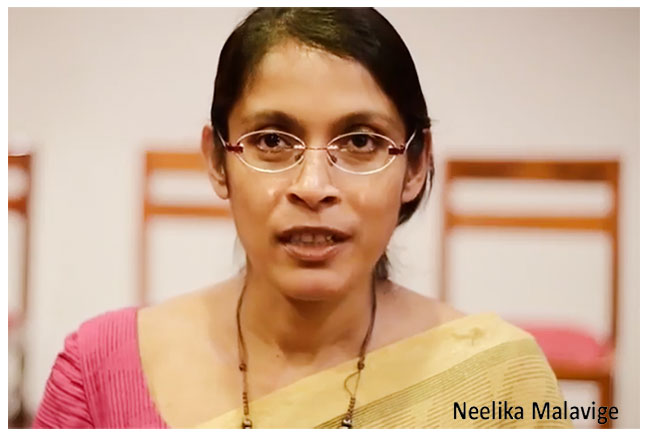
Developed countries were hoarding close to 4.5 billion doses of Pfizer, Moderna and AstraZeneca vaccines and those vaccines would expire soon, Prof. Neelika Malavige of the Department of Immunology and Molecular Medicine, University of Sri Jayewardenepura, said on Monday delivering the 16th Sujatha Jayawardena Memorial Oration.
Prof. Malavige said that 1.7 billion Pfizer and Moderna doses each and 1.1 billion AstraZeneca vaccines were being hoarded and most of those would be wasted soon.
“These developed nations must share these vaccines at a time when billions of people are vulnerable,” she said.
Commenting on restrictions imposed by Europe and the USA on those vaccinated with Sinopharm, Professor Malavige said that for Europe, Chinese tourists were extremely important and that it would be interesting to see what the Europeans could do once travel restrictions were lifted.
Prof. Malavige said that countries should exercise ceaseless vigilance when dealing with COVID-19 and learn from the mistakes other nations had made.
“Countries that were congratulating themselves for handling the pandemic well like Vietnam, are seeing a surge. On Sunday (29), there were around 13,000 new cases and over 300 deaths in Vietnam. Everyone makes mistakes, but we need to learn and move forward. It is important to be proactive, not reactive,” she said.
Sri Lanka had hitherto been reactive in dealing with the virus. The authorities and the public took drastic measures when the number of cases and deaths were high, however, overall, there had not been a strategy, she said.
“We had tamashas in April, when we had detected the Alpha variant in the country. We took measures too late and saw a rapid surge.
Then we went into a lockdown and during the lockdown we detected the delta variant in Colombo. What you must realise is that the University of Sri Jayewardenepura does limited number gene sequencing. So if we found one, it’s safe to assume that there are hundreds or even thousands in the community. Then we relaxed restrictions in June, but there are questions as to whether we did this scientifically. We soon saw significant surges and now we are in lockdown again,” she said.
Prof. Malavige said that Sri Lanka needed to plan, anticipate and act swiftly to control the spread of COVID-19. Sri Lanka had a number of experts in modelling in all fields and the government should reach out to experts in all relevant fields and come up with an effective strategy. She said that since it was a social and economic issue as well as a health issue, a multi-disciplinary approach should be taken with expert modelers from sociology and finance consulted.
Prof. Malavige also spoke of the need for data. It was not hard to collect data and Sri Lanka had many experts in that field.
“Think of dengue. We get outbreaks and when we see outbreaks, we take steps to curb them. We need data to know when and where COVID clusters emerge, allocate resources and control these. We need accurate data to educate the people and win their trust,” she said.
Sri Lanka had good vaccine coverage and that 99% of Sri Lankan children were vaccinated, which was higher than even the most advanced nations. “This has been achieved by continuous and effective communication. Vaccination is the long term solution for COVID and Sri Lanka needs to have a proper public education program. Vaccination can only be successful by empowering the public and community engagement”, she said.
“In recent years, we see viruses transmitted from animals to humans. As human interactions with wild animals, deforestation and climate change intensified, we will see more such transmissions. Therefore, environmental and animal health too must be considered to protect human health in the future” Prof. Malavige urged.


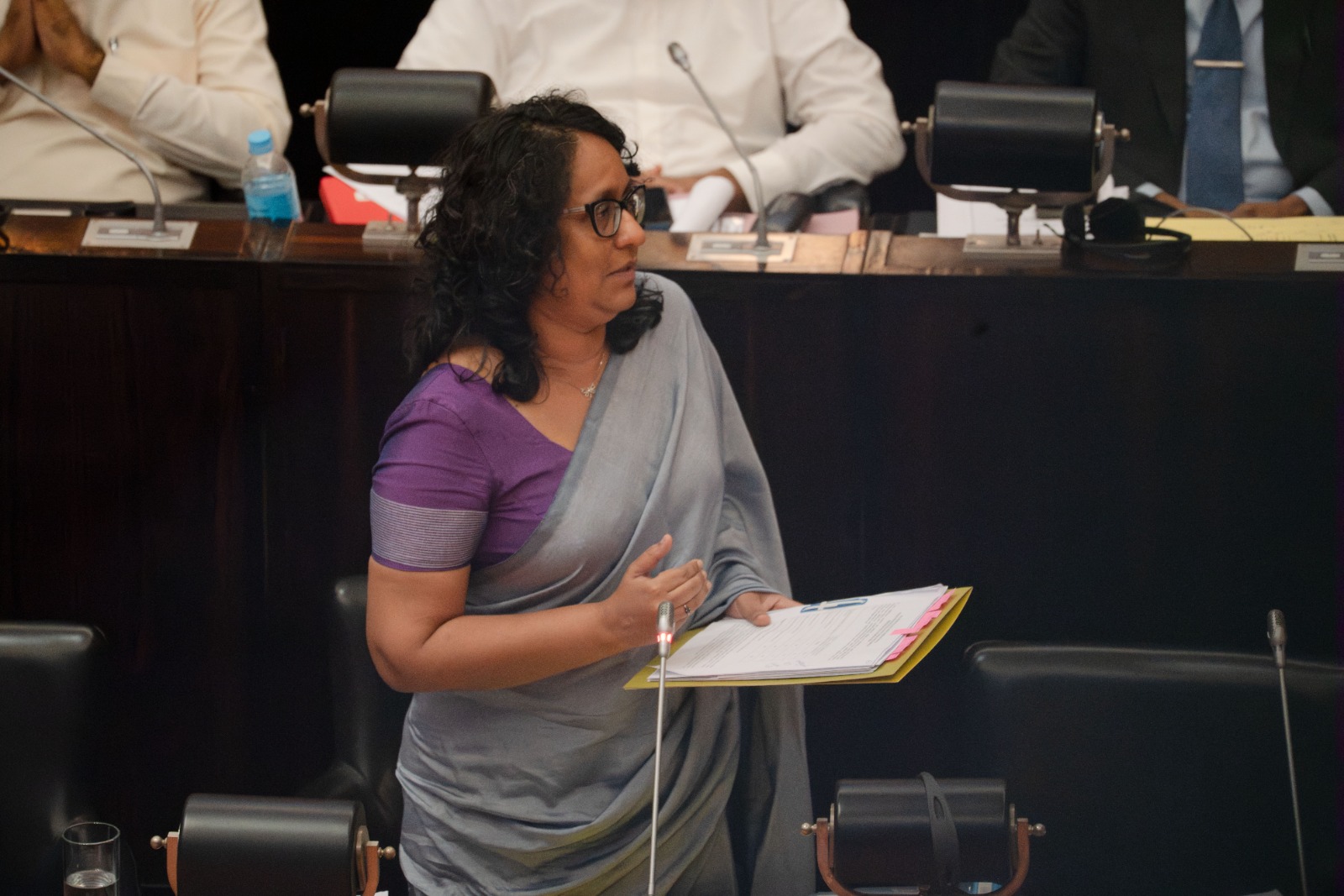
Prime Minister Dr. Harini Amarasuriya stated that the Ministry of Education has already commenced the distribution of Smart Boards required for the new education reforms, and that the collection of funds from parents at school level for this purpose must be stopped immediately. She further emphasized that no decision has been taken to curtail free education or to close the Jayewardenepura Faculty of Dental Sciences.
The Prime Minister made these remarks in response to a question raised in Parliament on Thursday [05th February] by the Leader of the Opposition, Sajith Premadasa.
Elaborating further, the Prime Minister stated,
“Although the Leader of the Opposition has not traditionally upheld free education as a policy, I appreciate your stance on the matter at this juncture. However, I urge that questions should not be raised based on social media content or unverified rumours in Parliament. No decision has been taken to curtail free education or to close the Jayawardenepura Faculty of Dental Sciences. The Medical Faculty of the Wickramarachchi University of Indigenous Medicine had commenced operations without regulatory approval and had introduced course work, resulting in students being placed in a vulnerable situation. Necessary action is currently being taken based on the recommendations of a report submitted by an expert committee appointed to examine the issue. This this is not a political decision, but one guided by expert opinion”.
“Arrangements are underway to distribute the required Smart Boards to schools during this year, and there is no need to collect funds from parents for this purpose. If any such collections are taking place, they must be stopped immediately. The Secretary to the Ministry of Education has already issued a directive instructing schools not to collect funds from parents”.
“The subject Information Technology will not be taught as a separate subject for Grades 1 to 5. However, recognizing the need to prepare students for a globally advancing technological world, discussions have been initiated based on expert advice on how to provide age-appropriate technological awareness to students. Decisions will be made after carefully considering child protection concerns and expert recommendations. The curriculum-related decisions will not be made politically, but by subject experts.
Based on the requests made by the universities and higher education institutions recruitment for essential academic vacancies is currently being carried out under the Cabinet approval. Although thirty years have passed since the establishment of the teacher service, further measures are required to enhance its quality. Existing issues relating to teacher promotions, considering the practical difficulties in evaluation processes and non-compliance with service minute provisions are being addressed alongside other challenges. The government is presently focused on formulating a systematic plan to ensure quality education.”
Responding to a question raised by the Member of Parliament Kader Mastan, the Prime Minister stated,
“Several programmes have been introduced based on government policy decisions to fulfill the basic needs of schoolchildren. These include the provision of school textbooks, uniforms, and the “Suraksha” health insurance scheme. Additionally, voucher schemes have been introduced to support the purchase of sanitary products for girls in Grades 6 to 13. Midday meals are also being provided for primary school students, and financial assistance is extended to students who pass the Grade 5 Scholarship Examination but do not receive bursaries. The Ministry of Education is in the process of gathering further information with the intention of expanding these programmes”.
The Prime Minister also announced that the 2025 G.C.E. Ordinary Level Examination is scheduled to be held from February 17 to 26. Although this period coincides with the observance of Ramadan, relevant authorities have confirmed that it will not pose an obstacle to the conduct of the examination. Furthermore, it has been decided to hold the Grade 5 Scholarship Examination and the G.C.E. Advanced Level Examination before August each year, and the G.C.E. Ordinary Level Examination in December. From 2026 onwards, efforts will be made to conduct examinations in accordance with this revised annual examination calendar.
[Prime Minister’s Media Division]

Marking a major transformation in Sri Lanka’s vocational education sector, the Government has decided to develop and modernize 25 technical colleges located across all the 25 districts in line with contemporary global standards.
It was revealed at a special discussion held on 06th of February at the Parliamentary Complex, chaired by the Minister of Education, Higher Education and Vocational Education, Prime Minister Dr. Harini Amarasuriya, together with the Deputy Minister of Vocational Education Nalin Hewage.
Addressing the meeting, the Prime Minister emphasized that these development initiatives should not be limited merely to providing vocational skills, but should also place strong emphasis on the mental health and overall well-being of the youth.
Accordingly, the Prime Minister stressed the importance of establishing modern hostels, cafeterias, and healthcare facilities; designing both internal and external environments in a manner that offers recreational and aesthetic experiences while promoting mental well-being; and developing a distinct identity for each technical college so that they can be clearly recognized as unique institutions, separate from other educational establishments.
Speaking at the discussion, Deputy Minister of Vocational Education Nalin Hewage stated that development work at 23 technical colleges could be commenced in the near future in order to enhance the human resources required for national development. He further noted that it is expected to obtain the labour contribution and assistance of the Tri-Forces for these construction and modernization activities.
The discussion was attended by Deputy Minister of Defence Major General Aruna Jayasekara, Secretary to the Ministry of Defence Air Vice Marshal Sampath Thuyacontha, Secretary to the Ministry of Education Nalaka Kaluwewa, along with the officers from the Tri-Forces.
[Prime Minister’s Media Division]


The scam involving the import of substandard coal has become the litmus test for the NPP Government, says the Frontline Socialist Party.The substandard coal scam has become the litmus test for the NPP government’s integrity and transparency, Frontline Socialist Party (FSP) Education Secretary Pubudu Jayagoda said on Thursday, alleging serious irregularities and contradictions in the government’s handling of coal procurement for the Lakvijaya Power Plant.
Addressing the media in Colombo, Jayagoda strongly rejected recent statements made by Tilvin Silva, General Secretary of the JVP, during an interview with a state television channel on the ongoing coal tender controversy. He said several of Silva’s claims were factually incorrect and echoed earlier statements made by the Minister of Power and Energy that had already been abandoned after being proven false.
“There are serious inaccuracies in the views expressed by Tilvin Silva. Some of these false points were first raised by the Power Minister a week or two ago, but he stopped repeating them once we produced documentary evidence,” Jayagoda said, adding that the JVP General Secretary appeared to be “not up to date with the facts.”
Jayagoda rejected claims that coal had previously been purchased without calling for tenders from a politician’s company at inflated prices. He said that since the Lakvijaya Power Plant commenced operations in 2008, tenders had been called annually and contracts awarded to the lowest bidder.
He also dismissed assertions that no tenders were called in 2023. “The Power Minister initially made this claim, too, but stopped after we presented the tender advertisements,” Jayagoda said. He questioned contradictory statements made by government representatives, pointing out that while Silva claimed no tender was called in 2023, references to 2023 tender specifications had been publicly cited by Deputy Minister Kumara Jayakody.
“If no tender was called in 2023, how were tender specifications published that year?” Jayagoda asked, describing the claims as mutually contradictory.
According to Jayagoda, tenders were, indeed, called in 2023 and the contract was awarded to Coral Energy. When that company failed to supply coal on time, the supply responsibility was transferred to Black Sand. He further rejected claims that no tenders were called in 2024, explaining that during the bidding process a company named Potentia had offered a lower price than the initial lowest bidder.
“Based on approvals from the Technical Evaluation Committee, the Procurement Committee, the Cabinet, and finally the Attorney General, coal was purchased from the lowest bidder,” he said, adding that any doubts regarding the legality of the process could be investigated through proper legal channels.
However, Jayagoda stressed that the controversy was not merely about whether tenders were called, but about how the process was manipulated. He listed several concerns raised by the FSP from the outset, including a four-month delay in calling for tenders, changes to tender specifications, and the tender period being reduced by half.
“Urgency was cited as the justification for these changes, yet there was a six-week delay in awarding the tender. That clearly shows there was no real urgency,” he said.
Jayagoda also alleged that laboratory reports were concealed when substandard coal shipments were imported, in order to protect the supplying company. He said that despite a contractual clause requiring the tender to be cancelled if two shipments failed quality standards, the government continued with the order. He further accused the authorities of violating the agreement by approving emergency purchases in a way that benefited the supplier.
“The entire process is suspicious,” Jayagoda said. “A Minister will not resign unless they admit to fraud. But it is the responsibility of the President and the government to conduct an independent investigation, determine whether fraud has occurred, and remove the Minister if wrongdoing is established.”
He concluded by reiterating that the coal tender controversy would serve as a decisive test of the government’s commitment to accountability. “This is the litmus test for the integrity and transparency of the government,” Jayagoda said.

Pakistan ask Netherlands to bat in T20 World Cup opener

Stop the collection of funds from parents at school level for Smart Boards — PM

Steps have been taken to modernize Technical Colleges in all 25 Districts – PM

Showers will occur in the Northern, North-central, North-western and Uva provinces and in Matale, Nuwara-Eliya, Ampara, Batticaloa and Hambantota districts

Coal scam has become litmus test for NPP: FSP

INS Gharial delivers 10 Bailey Bridges to Lanka

‘Dates have the highest sugar content to fight Coronavirus’

Sunday Island 27 December – Headlines

#SundayIsland 17th December – Headlines

Sunday Island – 28th March

Sunday Island Headlines – 21 March

Sunday Island – 21st February – Headlines
-

 Business4 days ago
SLIM-Kantar People’s Awards 2026 to recognise Sri Lanka’s most trusted brands and personalities
-

 Business6 days ago
Altair issues over 100+ title deeds post ownership change
-

 Business6 days ago
Sri Lanka opens first country pavilion at London exhibition
-

 Business5 days ago
All set for Global Synergy Awards 2026 at Waters Edge
-
 Business4 days ago
API-first card issuing and processing platform for Pan Asia Bank
-
 Business6 days ago
ESOFT UNI Kandy leads the charge in promoting rugby among private universities
-

 Editorial2 days ago
All’s not well that ends well?
-

 Features2 days ago
Phew! The heat …