
News
Coal scam has become litmus test for NPP: FSP

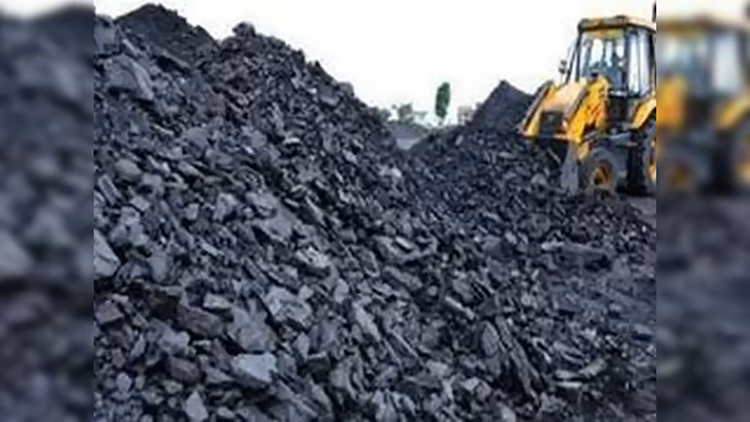
The scam involving the import of substandard coal has become the litmus test for the NPP Government, says the Frontline Socialist Party.The substandard coal scam has become the litmus test for the NPP government’s integrity and transparency, Frontline Socialist Party (FSP) Education Secretary Pubudu Jayagoda said on Thursday, alleging serious irregularities and contradictions in the government’s handling of coal procurement for the Lakvijaya Power Plant.
Addressing the media in Colombo, Jayagoda strongly rejected recent statements made by Tilvin Silva, General Secretary of the JVP, during an interview with a state television channel on the ongoing coal tender controversy. He said several of Silva’s claims were factually incorrect and echoed earlier statements made by the Minister of Power and Energy that had already been abandoned after being proven false.
“There are serious inaccuracies in the views expressed by Tilvin Silva. Some of these false points were first raised by the Power Minister a week or two ago, but he stopped repeating them once we produced documentary evidence,” Jayagoda said, adding that the JVP General Secretary appeared to be “not up to date with the facts.”
Jayagoda rejected claims that coal had previously been purchased without calling for tenders from a politician’s company at inflated prices. He said that since the Lakvijaya Power Plant commenced operations in 2008, tenders had been called annually and contracts awarded to the lowest bidder.
He also dismissed assertions that no tenders were called in 2023. “The Power Minister initially made this claim, too, but stopped after we presented the tender advertisements,” Jayagoda said. He questioned contradictory statements made by government representatives, pointing out that while Silva claimed no tender was called in 2023, references to 2023 tender specifications had been publicly cited by Deputy Minister Kumara Jayakody.
“If no tender was called in 2023, how were tender specifications published that year?” Jayagoda asked, describing the claims as mutually contradictory.
According to Jayagoda, tenders were, indeed, called in 2023 and the contract was awarded to Coral Energy. When that company failed to supply coal on time, the supply responsibility was transferred to Black Sand. He further rejected claims that no tenders were called in 2024, explaining that during the bidding process a company named Potentia had offered a lower price than the initial lowest bidder.
“Based on approvals from the Technical Evaluation Committee, the Procurement Committee, the Cabinet, and finally the Attorney General, coal was purchased from the lowest bidder,” he said, adding that any doubts regarding the legality of the process could be investigated through proper legal channels.
However, Jayagoda stressed that the controversy was not merely about whether tenders were called, but about how the process was manipulated. He listed several concerns raised by the FSP from the outset, including a four-month delay in calling for tenders, changes to tender specifications, and the tender period being reduced by half.
“Urgency was cited as the justification for these changes, yet there was a six-week delay in awarding the tender. That clearly shows there was no real urgency,” he said.
Jayagoda also alleged that laboratory reports were concealed when substandard coal shipments were imported, in order to protect the supplying company. He said that despite a contractual clause requiring the tender to be cancelled if two shipments failed quality standards, the government continued with the order. He further accused the authorities of violating the agreement by approving emergency purchases in a way that benefited the supplier.
“The entire process is suspicious,” Jayagoda said. “A Minister will not resign unless they admit to fraud. But it is the responsibility of the President and the government to conduct an independent investigation, determine whether fraud has occurred, and remove the Minister if wrongdoing is established.”
He concluded by reiterating that the coal tender controversy would serve as a decisive test of the government’s commitment to accountability. “This is the litmus test for the integrity and transparency of the government,” Jayagoda said.






Latest News
Heat index likely to increase up to ‘Caution level’ in the Sabaragamuwa, Northern, North-central, North-western, Eastern provinces and in Hambantota and Monaragala districts during the daytime


Warm Weather Advisory
Issued by the Natural Hazards Early Warning Centre
Issued at 3.30 p.m. on 07 May 2026, valid for 08 May 2026.
The Heat index, the temperature felt on the human body is likely to increase up to ‘Caution level’ at some places in the Sabaragamuwa, Northern, North-central, North-western, Eastern provinces and in Hambantota and Monaragala districts during the daytime.
The Heat Index Forecast is calculated by using relative humidity and maximum temperature and this is the condition that is felt on your body. This is not the forecast of maximum temperature. It is generated by the Department of Meteorology for the next day period and prepared by using global numerical weather prediction model data.
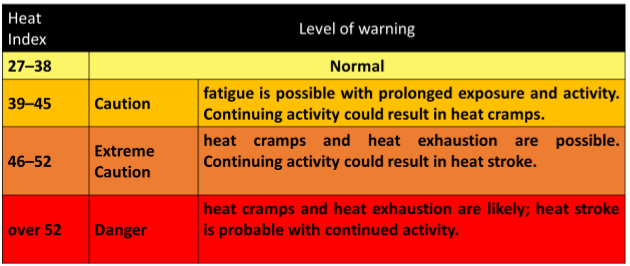
Effect of the heat index on human body is mentioned in the above table and it is prepared on the advice of the Ministry of Health and Indigenous Medical Services.
ACTION REQUIRED
Job sites: Stay hydrated and takes breaks in the shade as often as possible.
Indoors: Check up on the elderly and the sick.
Vehicles: Never leave children unattended.
Outdoors: Limit strenuous outdoor activities, find shade and stay hydrated.
Dress: Wear lightweight and white or light-colored clothing.
Note: In addition, please refer to advisories issued by the Disaster Preparedness & Response Division, Ministry of Health in this regard as well. For further clarifications please contact 011-7446491.
News
Renewable energy producers left high and dry as CEB prioritises spending on oil-fired power plants

Sri Lanka could face a serious electricity supply crisis if outstanding payments owed to renewable energy producers are not settled urgently, industry representatives have warned.
According to renewable energy sector sources, the National System Operator (Private) Company has not paid more than Rs. 10 billion due to renewable power producers for electricity supplied to the national grid between December 2025 and April 2026.
The Federation of Renewable Energy Developers said the prolonged delay in payments had placed severe financial strain on producers and threatened the continued supply of renewable power to the national system.
Speaking to The Island, Federation Vice President Prabath Wickramasinghe said the payment crisis had emerged as authorities prioritised expenditure on diesel and furnace oil generation to offset a daily electricity shortfall of nearly 150 megawatts caused by inefficiencies in coal power generation.
He said the escalating conflict in the Middle East had sharply increased global fuel prices, resulting in a steep rise in thermal power generation costs, estimated at close to or above Rs. 10 per unit.
“In this situation, greater focus on renewable energy has become essential,” Wickramasinghe said.
He noted that the issue affected not only large-scale renewable projects but also ground-mounted solar power plants, mini-hydropower projects, wind farms and biomass power stations operating across the country. According to the Federation, 389 renewable energy plants with a combined installed capacity of 1,073.9 megawatts were currently affected.
Wickramasinghe warned that continued non-payment could lead to plant owners defaulting on bank loans and other financial obligations, while also undermining investor confidence and destabilizing the renewable energy sector.
He further cautioned that the crisis could ultimately contribute to future electricity shortages if renewable energy suppliers reduce or suspend generation.
When contacted by The Island, Chairman of the National System Operator (Private) Company Dr. B.L. Pradeep Priyadarshana Perera acknowledged delays in payments and said discussions were underway with the Ministry of Finance to resolve the issue promptly.
By Sirimantha Ratnasekera

Prime Minister Dr. Harini Amarasuriya told Parliament on Wednesday that the government was planning to reform the higher education sector in line with the ongoing transformation of the primary and secondary education systems.
Responding to questions raised by Digamadulla District NPP MP Manjula Sugath Rathnayaka, the Prime Minister said a special expert committee appointed to review the higher education sector had been functioning over the past six months and was expected to submit recommendations aimed at addressing long-standing structural and administrative issues.
“A special expert committee appointed for this purpose has been in operation over the past six months, and based on the report of this panel, existing issues in the higher education sector will be identified and the necessary reforms will be implemented,” she said.
Providing details on university admissions, Dr. Amarasuriya said 281,810 students had sat the 2025 GCE A/L Examination, and out of them 176,538 were qualified for university admission. However, only 42,937 students could gain admission to state universities.
The Prime Minister said the highest number of qualified students was from the Arts stream (58,269) candidates, followed by Commerce stream (39,608), Biological Sciences (32,935), and Physical Sciences (23,012). In addition, 12,472 students were qualified in the Engineering Technology
stream, 6,043 in the Bio-Systems Technology, and 4,199 in the General Stream.

Fast bowling riches in focus as Bangladesh and Pakistan switch to Test mode

Iran says it attacked US Navy ships after they targeted Iranian tanker

Heat index likely to increase up to ‘Caution level’ in the Sabaragamuwa, Northern, North-central, North-western, Eastern provinces and in Hambantota and Monaragala districts during the daytime

Showers above 100 mm are likely at some places in the Western, Sabaragamuwa, Central, Uva, North-western provinces and in Galle and Matara districts.

Lucknow Super Giants overcome drama to keep campaign alive

Renewable energy producers left high and dry as CEB prioritises spending on oil-fired power plants

‘Dates have the highest sugar content to fight Coronavirus’

Sunday Island 27 December – Headlines

#SundayIsland 17th December – Headlines

Sunday Island – 28th March

Sunday Island Headlines – 21 March

Sunday Island – 21st February – Headlines
-
 News3 days ago
CJ urged to inquire into AKD’s remarks on May 25 court verdict
-
 News4 days ago
USD 3.7 bn H’tota refinery: China won’t launch project without bigger local market share
-

 News1 day ago
MIT expert warns of catastrophic consequences of USD 2.5 mn Treasury heist
-
 News5 days ago
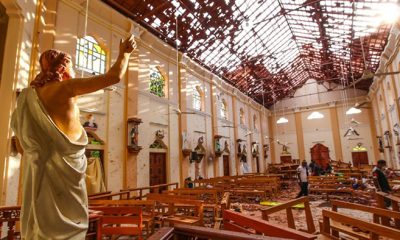
Easter Sunday Case: Ex-SIS Chief concealed intel, former Defence Secy tells court
-
 News6 days ago
Ten corruption cases set for court in May, verdict ordered in one case – President
-

 Business5 days ago
Dialog Surpasses 1,000 5G Sites, Strengthening Nationwide 5G Coverage
-

 Editorial4 days ago
Deliver or perish
-

 Editorial1 day ago
Clean Sri Lanka and dirty politics