
News
Prez in powwow with civil society: post-war national reconciliation priority

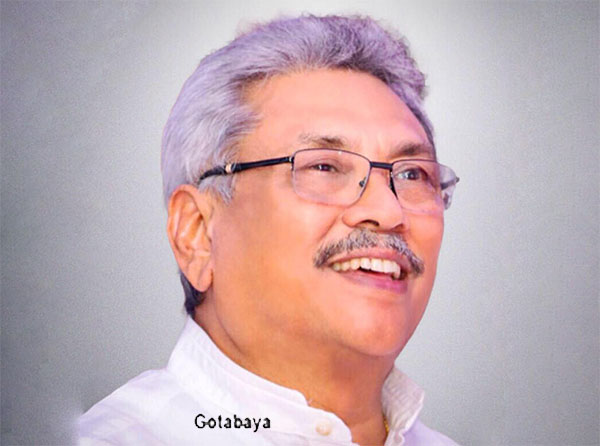
A group of civil society members under the umbrella of the Sri Lankan Collective for Consensus has discussed a range of issues, including the repealing or amending of the PTA with President Gotabaya Rajapaksa. Minister of Foreign Affairs, Dinesh Gunawardena, President’s Secretary Dr. P B Jayasundara and Foreign Secretary, Admiral Professor Jayanath Colombage had been present at the Presidential Secretariat discussion on August 3, 2021.
The civil society group presented a memorandum that set out their hopes and concerns and welcomed the opportunity to engage with members of the government on topics of post-war reconciliation, minority rights, civil society space, and governance. The group consisted of Ven. Kalupahana Piyaratana, Prof. T. Jayasingam Rev. Bishop Asiri Perera, Prof. Tudor Silva, Rev. Fr. C.G. Jeyakumar, Hilmy Ahamed, Rohana Hettiarachchi, Varnakulasingham Kamaladhas, Dr. Joe William, Sanjeewa Wimalagunarathna, Dr. Dayani Panagoda, Visaka Dharmadasa and Dr. Jehan Perera
At the outset, the civil society members expressed their support for the ideas and spirit of President Gotabaya Rajapaksa’s tweet message “We are committed to work with the @UN to ensure accountability & human dev. to achieve lasting peace & reconciliation. We are dedicated to resolving the issues within the democratic & legal frame to ensure justice & reconciliation by implementing necessary institutional reforms.” -Tweet by President Gotabaya Rajapaksa July 21, 2021
The civil society members expressed their readiness to support the President and his government’s efforts on the basis of his tweet above and called on him to bring together all political parties so that a consensual national policy on national unity and reconciliation will be framed which will be implemented by successor governments. They expressed concern with regard to civil space which they wanted the government to protect. They expressed their conviction that development will succeed best if it is accompanied by peace building and reconciliation that is successful and unites all the people through education and constructive actions.
After listening to all comments made by the civil society delegation, who had the opportunity to speak without interruption, President Rajapaksa responded to the comments made and to the contents of the memorandum. He said civil society could assist the government to take the reconciliation process forward. He said that he also wanted civil society to work in protecting the rights of children and women and that his government was committed to protecting the rights of all the people. With regard to the PTA, he said that the government was formulating a reasonable law. He said that 16 prisoners held under the PTA were released recently and the government was working on the cases involving a number of other prisoners and release would be considered in line with the legal process. He said that those in detention following the Easter Sunday attack, who were marginally involved will be released after they were rehabilitated just as 12,000 LTTE cadre had been earlier.
The President affirmed to the civil society members that he intended to make his twitter post a reality and he would be willing to work with them on reconciliation. He spoke of the need to find practical solutions to resolve conflicts such as on the takeover of land in the north and elsewhere and to facilitate improvement of the living standards of communities to make them feel as being part of Sri Lanka. He said that he was ready to address issues affecting people despite political differences. This included the release of all possible lands immediately within this year, permitting farmers to cultivate the lands within military camps and where necessary to retain lands for military purposes to pay commercial rates and acquire the lands. He also spoke of the need to enhance the people’s livelihood opportunities and improve living standards by promoting entrepreneurship.
In addressing issues of devolution of power, the President said that he had discussion with the Election Commission on conducting Provincial Council Elections and there was agreement to ensure that they had elected representatives. He said that the ruling party, the SLPP, was keen to and committed to provincial council elections as local party supporters were also keen to take part in the electoral process. In a democratic system of governance, majority consensus prevails but he said he was ready to protect the rights of all people by working through negotiations and reaching consensus.
Members of the delegation felt that they were able to freely express themselves at the meeting without a single interference or attempt to regulate their side of inputs. The meeting had the features of democratic conduct and ended with goodwill and satisfaction with the President stating he would meet other civil society organisations as many did good work although there were varied opinions about them. Throughout the meeting there was cordiality and mutual respect. The meeting concluded after an hour and twenty minutes with the prospect of future dialogue and engagement and expectation by the undersigned of concrete actions in response to the memorandum submitted to the President
MEMORANDUM TO HIS EXCELLENCY PRESIDENT GOTABAYA RAJAPAKSA ON REVIVING THE NATIONAL RECONCILIATION PROCESS, SAFEGUARD CIVIL SOCIETY SPACE AND IMPROVE GOVERNANCE
Reconciliation-related measures:
1. Repeal or amend the Prevention of Terrorism Act to ensure that any legislation on combating terrorism complies fully with the State’s international human rights and humanitarian law obligations. In the meantime, stop all arrests and detentions under this law. Put those detained under the PTA on trial speedily or release them on bail or discharge them entirely. E.g. LTTE detainees, post- Easter attack detainees and all others under the PTA.
2. Conduct provincial council elections immediately. Elected Tamil representatives who are currently marginalized in terms of power at the central government level, will be empowered at the provincial level to be decision makers.
3. Ensure an environment in which the Office on Missing Persons and the Office for Reparations can operate effectively and independently. Provide both Offices with sufficient resources and technical means to effectively fulfil their mandate. Ensure appointments are appropriate to the mission of each of the institutions.
4. Ensure the investigation and, if warranted, prosecution of longstanding emblematic cases involving alleged crimes relating to human rights violations and serious violations of international humanitarian law. Establish a truth and reconciliation commission to give a definitive account of the war, and end the speculations and divisive interpretations. The possibility of granting amnesty as in the South African TRC and in the proposed British TRC for Northern Ireland can be explored.
5. Permit the memorialization of those who died in the war without blocking them. Places of religious worship can be built in areas of battles or where large-scale loss of life occurred.
6. Reconstitute the Task Force on Historical Monuments in the Eastern Province, to include a fair representation of religious and ethnic minorities and to ensure that decisions taken do not violate the rights of people resident in those areas. Ensure that land settlement policy and take-over of traditional grazing lands does not become an excuse to re-engineer the demographics in those areas.
Civil Society-related measures:
7. Protect civil society actors, including human rights defenders, ensure a safe and enabling environment in which civil society can operate free from hindrance, surveillance, insecurity and threat of reprisals.
8. Place the National NGO Secretariat and NGOs under a civilian ministry. Currently they have been placed under the Defence Ministry which can create an erroneous impression that the government considers CSOs to be a national security threat and not a useful partner for social development and relief and humanitarian services which should receive high priority particularly during the pandemic.
Governance-related measures:
9. Repeal the 20th Amendment and replace it with a new constitutional provision that strengthens the independence of state institutions. This will include a Constitutional Council which includes members of civil society. In particular the judiciary, the police, the public service, the Bribery and Corruption commission and the Human Rights Commission need to be strengthened.
10. All elections will be on a mixed member proportional system. To ensure that there will be a minimum of 1/3 representation for women from constituencies and there will be a closed (appointed) national list where every other candidate will be a woman.
11. The Provincial Council system will be strengthened. Non-executive Governors will be appointed by the Constitutional Council. The Governors will assent to Provincial Council legislation. Taxes and revenues shall be shared between the Central Government and Provincial Councils on a rational and just basis that make the regions more attractive for investment and provincial development.
Resolving these root causes requires bold leadership, dialogue with the representatives of the ethnic and religious minorities and their political parties and the involvement of all sections of society inclusive of the opposition political parties and civil society.

Latest News
Physical development must be matched by the enrichment of people’s inner lives through aesthetics and culture – PM

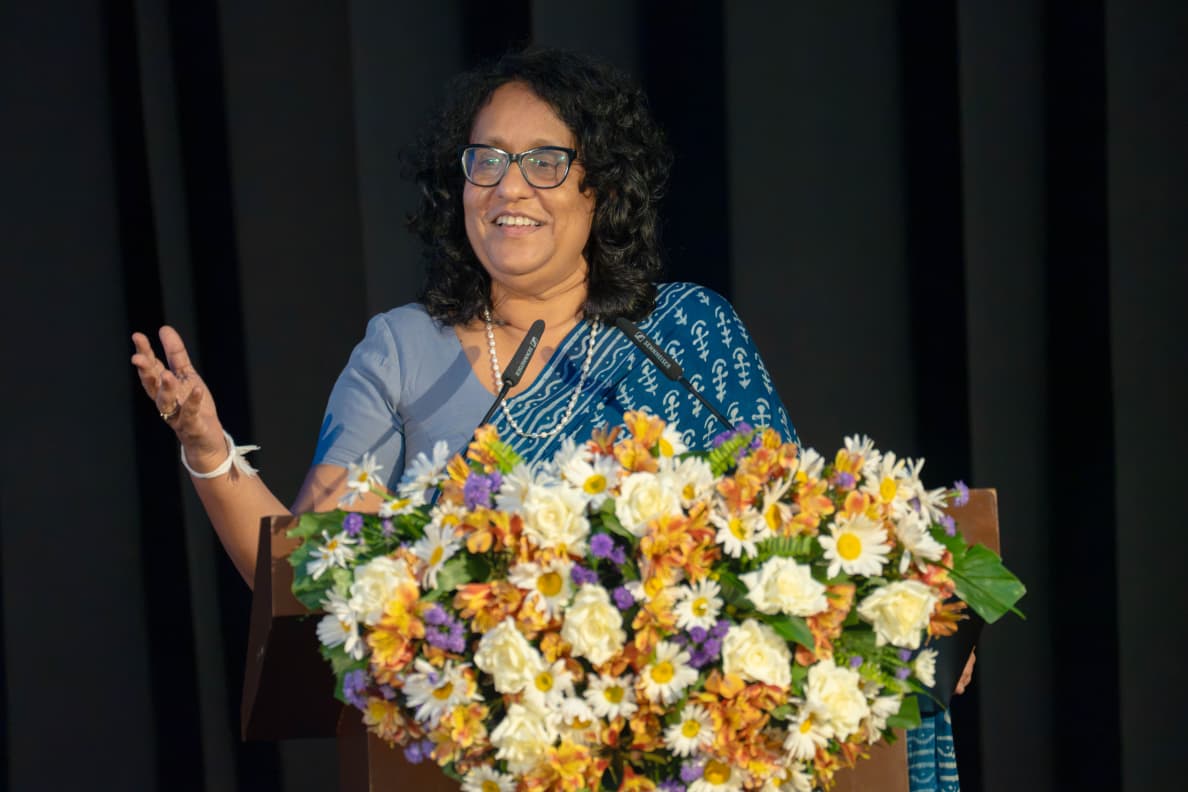
Prime Minister Dr. Harini Amarasuriya stated that while a country develops its roads, buildings and economy, the inner lives of its people must also be enriched through aesthetics, culture and creativity. Development cannot be measured solely by improvements in physical resources, and the empathy and the appreciation of the arts is a key aspiration of the new era of renaissance.
The Prime Minister made these remarks while inaugurating the ’Aluth Wessa’ Cultural Festival and Exhibition, organised jointly by the Kandy District Secretariat, the Department of Cultural Affairs and the Kandyan Cultural Center on 15 October at the Kandy District Secretariat.
During the event, the Prime Minister also presented awards to artists from the Kandy District in recognition of their outstanding contributions to the arts.
Addressing the gathering, the Prime Minister further stated: “Kandy is a place where we can best experience the value of our country’s historical, artistic and cultural heritage. The Temple of the Sacred Tooth Relic, the wood carvings of Embekka, the murals of Degaldoruwa, the Kandyan dance tradition, and the contributions of renowned artists such as Pani Bharath, Dr. Ananda Coomaraswamy and Minnette de Silva have helped shape a distinctive cultural identity unique to Kandy.
During the recent disaster, when the people of Kandy faced immense difficulties, people from districts such as Galle, Matara and Kalutara voluntarily came forward to extend tremendous support. Their empathy and commitment deserve our sincere appreciation. Following the disaster, several initiatives are already progressing rapidly to help Kandy recover and rebuild. These include restoring the Upcountry railway line, repairing damaged houses and rehabilitating historic temples that were destroyed through the Central Cultural Fund. Through our education reforms, we aspire to nurture a generation that goes beyond professional knowledge and skills, developing artistic sensitivity alongside human values and compassion.”
The event was attended by the Most Venerable Naramapanawe Ananda Thero, Anunayake of the Asgiri Chapter of the Siyamopali Maha Nikaya and Chancellor of the University of Kelaniya, along with members of the Maha Sangha and other religious leaders. Also present were Central Province Governor Dr. Suranga Fernando, Members of Parliament Jagath Manuwarana, Thanura Dissanayake, Thushari Jayasinghe and E. M. Basnayake; the Mayor and local councillors, Kandy District Secretary Indika Udawatta, Divisional Secretaries, public officials, artists, parents, and children.
(Prime Minister’s Media Division)
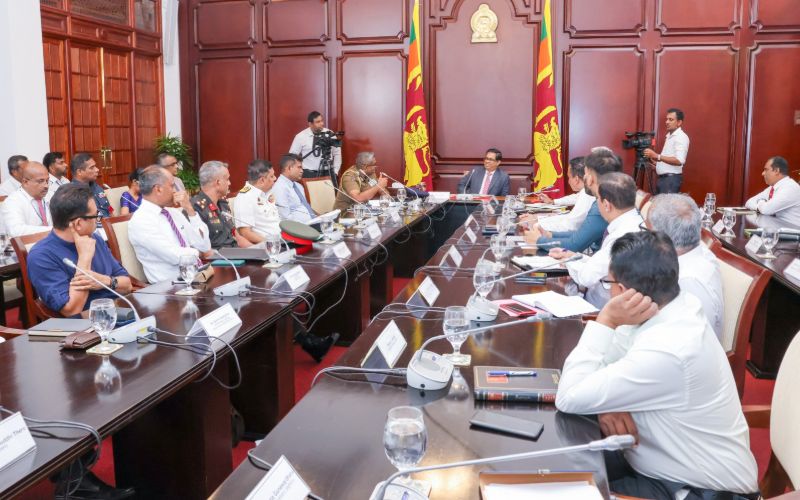
A discussion to review the operations of the 1818 hotline and progress made in its implementation was held on Thursday morning (15) at the Presidential Secretariat, under the chairmanship of Secretary to the President Dr Nandika Sanath Kumanayake. The hotline was introduced as part of the ‘A Nation United’ national operation to eradicate the illicit drug menace.
The hotline was established to enable the public to provide security authorities with accurate information on drug trafficking, distribution and any related suspicious activities taking place across the country. Members of the public anywhere in Sri Lanka can submit information through this service, with the confidentiality of informants fully protected. The information received is acted upon promptly. Operating from the ‘A Nation United’ Media Centre, the service is coordinated under the direct supervision of the Presidential Secretariat and the ‘A Nation United’ National Steering Committee. It enables members of the public to provide information to security authorities securely at any time.
The discussion also focused on the first anniversary of the ‘A Nation United’ national operation, which falls on 05 November and measures to strengthen its effectiveness in protecting future generations from the drug menace and building a safe, drug-free society.
Venerable Madovita Vajira Buddhi Thera, Director (Piriven) of the Ministry of Education, Higher Education and Vocational Education, Ravi Seneviratne, Secretary to the Ministry of Public Security and Parliamentary Affairs, Prince Senadheera, Secretary to the Ministry of Buddhasasana, Religious and Cultural Affairs, Roshan Gamage, Senior Additional Secretary to the President, Attorney-at-Law Priyantha Weerasooriya, Inspector General of Police, H. S. K. J. Bandara, Director General of the Department of Government Information, Gamini Senaratne, Commissioner-General of Buddhist Affairs, Chathuri Pintu, Director of the Department of Christian Religious Affairs, Y. Aniruthanan, Director of the Department of Hindu Religious Affairs and M. S. M. Nawaz, Director of the Department of Muslim Religious Affairs, also attended the meeting. A group of officials representing the tri-forces and other relevant government institutions were also present.
(President’s Media Division)


Marikkar claims coal losses more than twice Treasury bond scam
By Shamindra Ferdinando
The SJB has accused the NPP government of trying to create an environment conducive for the re-appointment of Kumara Jayakody who resigned on 17 April 2026 over a coal scam perpetrated in 2025.
Colombo District MP S.M. Marikkar Tuesday (13) alleged that Jayakody’s successor Anura Karunathilaka was spearheading the efforts at the behest of President Anura Kumara Dissanayake.
Addressing the media at the Opposition leader’s Office at No. 30, Sir Marcus Fernando Mawatha, Colombo 07, Marikkar said that the NPP was busy propagating a lie that the losses amounting to Rs 15.68 bn could be entirely recovered by way of penalties and funds held as deposits in line with the supplier. The Opposition MP placed the amount held by the government at Rs 16.48 bn.
Marrikar claimed that the NPP’s propaganda project to whitewash Jayakody was meant to bring Jayakody back into the Cabinet of ministers in January next year. The top SJB spokesman said that the findings of the Sectoral Oversight Committee (SOC) on Infrastructure and Strategic Development report on the losses suffered by the use of substandard coal had been used to back the government move.
The inquiry was held into procurement for 2025/2026 seasons made from Trident Chemphar, an Indian company whose selection was questioned by the National Audit Office in a special report submitted to parliament before the vote on no faith motion against Jayakody.
Marikkar said that the NPP in its haste to build a case for Jayakody’s return to the cabinet had conveniently forgotten that six of the 25 shiploads of coal ordered from Trident Chemphar were never delivered. In a desperate bid to cover the shortfall, the government paid Rs. 2,284 million above the market price in emergency procurement. As the SOC had rejected the tests conducted by an Indian company and ordered fresh tests on substandard coal, an additional Rs 26.6 mn had been paid to an Australian lab, MP Marikkar said, explaining other losses caused by the corrupt deal.
Marrikar explained how the procurement of substandard coal altogether cost the taxpayer nearly Rs 20 bn while the government engaged in a project to clear Jayakody. The former minister is also indicted in the Colombo High Court in an earlier corruption case.
Marrikar emphasized that the government should accept responsibility. Comparing the action taken in respect of 2015 and 2016 Treasury bond scams and the coal scam, MP Marikkar said that the losses caused by Trident Chemphar fraud was double the Treasury bond scam. A future government would investigate the coal scam and punish all those responsible. The NPP under any circumstances couldn’t bring back Jayakody to the cabinet as he was directly responsible for the fraud, the Colombo District lawmaker said.
At the time the UNP perpetrated Treasury bond scams, Marikkar represented the UNP parliamentary group which made desperate bids to protect the bond thieves.
The SJBer refused to answer questions regarding any other issue. Marikkar reacted angrily when a journalist sought to raise a group of SJB MPs meeting the Most Ven Thibbatuwawe Sri Sumangala Mahanayake Thera of the Malwathu Chapter in Kandy. Then the MP accused a section of the media of trying to suppress the coal scam by raising other issues. Marrikar vowed that they wouldn’t allow Jayakody’s return to the cabinet. The NPP government’s reputation had been devastated by the coal scam and current efforts to cover up the direct involvement of Minister Jayakody would not succeed, he said, warning the NPP should be prepared to face the consequences.

Asian Cup in Saudi Arabia could be postponed by a year amid Houthi attacks

Houthi missile attack on Yemeni presidential palace kills five, minister says

Physical development must be matched by the enrichment of people’s inner lives through aesthetics and culture – PM

Review of the operations of the 1818 Hotline introduced to report drug-related information

Showers in the Western, Southern, Central, Sabaragamuwa, North-Western and Northern provinces and in the Anuradhapura District

SJB: Govt. trying to reappoint Jayakody, who resigned from Cabinet amidst coal scam

‘Dates have the highest sugar content to fight Coronavirus’

Sunday Island 27 December – Headlines

#SundayIsland 17th December – Headlines

Sunday Island – 28th March

Sunday Island Headlines – 21 March

Sunday Island – 21st February – Headlines
-

 News5 days ago
Sri Lanka escalates anti-graft drive with Shiranthi’s jailing
-

 News6 days ago
NPP govt. reminded of its responsibilities as US warship leaves Colombo
-

 Latest News7 days ago
Farhan, Sadaqat help Pakistan ace 183 chase to go 1-0 up
-

 Latest News5 days ago
Farhan and Sadaqat help Pakistan seal series in style
-

 News5 days ago
Iranian ships stranded, Lanka fears US sanctions
-

 Latest News3 days ago
Nissanka’s return headlines Sri Lanka’s Test squad against Pakistan
-
 News6 days ago
Interdicted top House official Kularatne receives special recognition in Mexican Parliament
-

 Features4 days ago
Intake 16: 45 years of duty and honour