
News
Prez in powwow with civil society: post-war national reconciliation priority

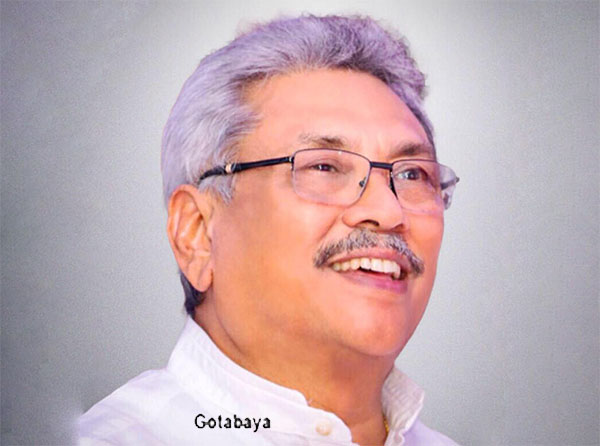
A group of civil society members under the umbrella of the Sri Lankan Collective for Consensus has discussed a range of issues, including the repealing or amending of the PTA with President Gotabaya Rajapaksa. Minister of Foreign Affairs, Dinesh Gunawardena, President’s Secretary Dr. P B Jayasundara and Foreign Secretary, Admiral Professor Jayanath Colombage had been present at the Presidential Secretariat discussion on August 3, 2021.
The civil society group presented a memorandum that set out their hopes and concerns and welcomed the opportunity to engage with members of the government on topics of post-war reconciliation, minority rights, civil society space, and governance. The group consisted of Ven. Kalupahana Piyaratana, Prof. T. Jayasingam Rev. Bishop Asiri Perera, Prof. Tudor Silva, Rev. Fr. C.G. Jeyakumar, Hilmy Ahamed, Rohana Hettiarachchi, Varnakulasingham Kamaladhas, Dr. Joe William, Sanjeewa Wimalagunarathna, Dr. Dayani Panagoda, Visaka Dharmadasa and Dr. Jehan Perera
At the outset, the civil society members expressed their support for the ideas and spirit of President Gotabaya Rajapaksa’s tweet message “We are committed to work with the @UN to ensure accountability & human dev. to achieve lasting peace & reconciliation. We are dedicated to resolving the issues within the democratic & legal frame to ensure justice & reconciliation by implementing necessary institutional reforms.” -Tweet by President Gotabaya Rajapaksa July 21, 2021
The civil society members expressed their readiness to support the President and his government’s efforts on the basis of his tweet above and called on him to bring together all political parties so that a consensual national policy on national unity and reconciliation will be framed which will be implemented by successor governments. They expressed concern with regard to civil space which they wanted the government to protect. They expressed their conviction that development will succeed best if it is accompanied by peace building and reconciliation that is successful and unites all the people through education and constructive actions.
After listening to all comments made by the civil society delegation, who had the opportunity to speak without interruption, President Rajapaksa responded to the comments made and to the contents of the memorandum. He said civil society could assist the government to take the reconciliation process forward. He said that he also wanted civil society to work in protecting the rights of children and women and that his government was committed to protecting the rights of all the people. With regard to the PTA, he said that the government was formulating a reasonable law. He said that 16 prisoners held under the PTA were released recently and the government was working on the cases involving a number of other prisoners and release would be considered in line with the legal process. He said that those in detention following the Easter Sunday attack, who were marginally involved will be released after they were rehabilitated just as 12,000 LTTE cadre had been earlier.
The President affirmed to the civil society members that he intended to make his twitter post a reality and he would be willing to work with them on reconciliation. He spoke of the need to find practical solutions to resolve conflicts such as on the takeover of land in the north and elsewhere and to facilitate improvement of the living standards of communities to make them feel as being part of Sri Lanka. He said that he was ready to address issues affecting people despite political differences. This included the release of all possible lands immediately within this year, permitting farmers to cultivate the lands within military camps and where necessary to retain lands for military purposes to pay commercial rates and acquire the lands. He also spoke of the need to enhance the people’s livelihood opportunities and improve living standards by promoting entrepreneurship.
In addressing issues of devolution of power, the President said that he had discussion with the Election Commission on conducting Provincial Council Elections and there was agreement to ensure that they had elected representatives. He said that the ruling party, the SLPP, was keen to and committed to provincial council elections as local party supporters were also keen to take part in the electoral process. In a democratic system of governance, majority consensus prevails but he said he was ready to protect the rights of all people by working through negotiations and reaching consensus.
Members of the delegation felt that they were able to freely express themselves at the meeting without a single interference or attempt to regulate their side of inputs. The meeting had the features of democratic conduct and ended with goodwill and satisfaction with the President stating he would meet other civil society organisations as many did good work although there were varied opinions about them. Throughout the meeting there was cordiality and mutual respect. The meeting concluded after an hour and twenty minutes with the prospect of future dialogue and engagement and expectation by the undersigned of concrete actions in response to the memorandum submitted to the President
MEMORANDUM TO HIS EXCELLENCY PRESIDENT GOTABAYA RAJAPAKSA ON REVIVING THE NATIONAL RECONCILIATION PROCESS, SAFEGUARD CIVIL SOCIETY SPACE AND IMPROVE GOVERNANCE
Reconciliation-related measures:
1. Repeal or amend the Prevention of Terrorism Act to ensure that any legislation on combating terrorism complies fully with the State’s international human rights and humanitarian law obligations. In the meantime, stop all arrests and detentions under this law. Put those detained under the PTA on trial speedily or release them on bail or discharge them entirely. E.g. LTTE detainees, post- Easter attack detainees and all others under the PTA.
2. Conduct provincial council elections immediately. Elected Tamil representatives who are currently marginalized in terms of power at the central government level, will be empowered at the provincial level to be decision makers.
3. Ensure an environment in which the Office on Missing Persons and the Office for Reparations can operate effectively and independently. Provide both Offices with sufficient resources and technical means to effectively fulfil their mandate. Ensure appointments are appropriate to the mission of each of the institutions.
4. Ensure the investigation and, if warranted, prosecution of longstanding emblematic cases involving alleged crimes relating to human rights violations and serious violations of international humanitarian law. Establish a truth and reconciliation commission to give a definitive account of the war, and end the speculations and divisive interpretations. The possibility of granting amnesty as in the South African TRC and in the proposed British TRC for Northern Ireland can be explored.
5. Permit the memorialization of those who died in the war without blocking them. Places of religious worship can be built in areas of battles or where large-scale loss of life occurred.
6. Reconstitute the Task Force on Historical Monuments in the Eastern Province, to include a fair representation of religious and ethnic minorities and to ensure that decisions taken do not violate the rights of people resident in those areas. Ensure that land settlement policy and take-over of traditional grazing lands does not become an excuse to re-engineer the demographics in those areas.
Civil Society-related measures:
7. Protect civil society actors, including human rights defenders, ensure a safe and enabling environment in which civil society can operate free from hindrance, surveillance, insecurity and threat of reprisals.
8. Place the National NGO Secretariat and NGOs under a civilian ministry. Currently they have been placed under the Defence Ministry which can create an erroneous impression that the government considers CSOs to be a national security threat and not a useful partner for social development and relief and humanitarian services which should receive high priority particularly during the pandemic.
Governance-related measures:
9. Repeal the 20th Amendment and replace it with a new constitutional provision that strengthens the independence of state institutions. This will include a Constitutional Council which includes members of civil society. In particular the judiciary, the police, the public service, the Bribery and Corruption commission and the Human Rights Commission need to be strengthened.
10. All elections will be on a mixed member proportional system. To ensure that there will be a minimum of 1/3 representation for women from constituencies and there will be a closed (appointed) national list where every other candidate will be a woman.
11. The Provincial Council system will be strengthened. Non-executive Governors will be appointed by the Constitutional Council. The Governors will assent to Provincial Council legislation. Taxes and revenues shall be shared between the Central Government and Provincial Councils on a rational and just basis that make the regions more attractive for investment and provincial development.
Resolving these root causes requires bold leadership, dialogue with the representatives of the ethnic and religious minorities and their political parties and the involvement of all sections of society inclusive of the opposition political parties and civil society.


By Chaminda Silva
The government’s ambitious plans to overhaul Sri Lanka’s school education system and introduce new curricula could face serious implementation difficulties, with teacher unions warning that a longstanding and severe shortage of teachers remains unresolved.
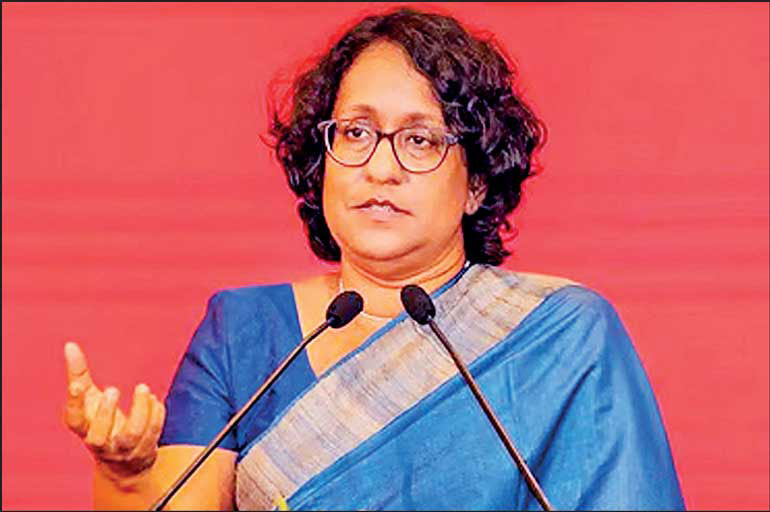
The warning came as Prime Minister Dr. Harini Amarasuriya announced yesterday that new curricula would be introduced for Grades 2 and 6 next year, while also stating that the government planned to recruit around 30,000 new teachers across the education system by February.
However, the Ceylon Teachers’ Union (CTU) questioned whether the government would be able to provide the teachers required to implement the proposed reforms, claiming that the recruitment process itself had become mired in problems.
CTU General Secretary Joseph Stalin accused the government of making misleading claims about teacher recruitment and said the shortage that had affected schools for more than a year would continue into next year.
“There is currently a severe teacher shortage in the school system,” Stalin told a press conference in Colombo yesterday.
He said the government had previously acknowledged that there were about 46,000 teacher vacancies in the school system, but the figure was later revised to around 36,000.
“Those vacancies have remained unfilled for more than a year and a half. The school system has continued to operate with a severe teacher shortage throughout this period,” he said.
Stalin questioned how the government intended to introduce new curricula while thousands of existing teaching vacancies remained unfilled.
He said the Government had initially announced plans to recruit 23,000 teachers, despite the number of vacancies being significantly higher.
Although a gazette notification, relating to the recruitment had been issued, only around 17,000 applicants had been summoned for the initial round of interviews, he added.
Stalin said interviews were expected to begin in November and that appointments would, therefore, be made only from January onwards.
“If there are more than 36,000 teacher vacancies, the Government has decided to recruit only 23,000 teachers, and only around 17,000 have been called for interviews.
Who will take responsibility for the remaining vacancies?” he asked.
He said the problem was not merely one of numbers but also involved the Government’s recruitment procedure.
According to Stalin, shortcomings and ambiguities in the gazette notification issued for the recruitment examination had contributed to the present crisis.
“We primarily believe that the lack of proper procedures in the gazette notification issued for the recruitment examinations has contributed to this crisis. The ambiguities in the notification itself have led to the recruitment process becoming a major issue,” he said.
The shortage was also affecting the transfer system, Stalin mentioned.
A large number of teachers had been unable to obtain transfers because replacements were not available, with some teachers remaining at the same school for 12 or 13 years, he claimed.
As replacements had not been recruited, such teachers would have to remain at their present schools for another year, he said.
“This is a serious crisis. However, the situation is even more critical for students who are left without teachers,” Stalin said.
He also questioned the Government’s plans to close schools with fewer than 50 students.
“We suspect that this move is to take the teachers from these schools and redeploy them to other schools to fill vacancies there.”
The union’s concerns come at a time when the Government is pushing ahead with a major overhaul of the education system.
Addressing the Badulla District Women’s Conference yesterday, Prime Minister Amarasuriya said the Government would introduce new curricula for Grades 2 and 6 next year as part of its wider education reforms.
She said a new curriculum had already been introduced for Grade 1 this year, while new curricula for Grades 2 and 6 would be introduced over the next two years.
The Prime Minister said the Government was developing a new education system aimed at securing the future of all children, with the emphasis shifting away from producing students, focused solely on examinations.
The Government’s objective was to nurture a generation capable of facing future challenges successfully and confidently, she said.
The Prime Minister also announced that interviews for the recruitment of 17,000 teachers would commence on November 20.
She said approval had also been granted to recruit 2,000 academic staff members for the university system, with that recruitment process already under way.
The Government plans to recruit approximately 30,000 new teachers across the education system by February next year, she said.
A special programme would also be implemented to improve infrastructure facilities in schools, the Prime Minister added.
The contrasting positions highlight a potentially significant gap between the Government’s education reform timetable and the capacity of the existing school system to deliver it.
While the Government has set out a timetable for introducing new curricula and recruiting tens of thousands of teachers, the CTU argues that the existing shortage, delays in recruitment and unresolved transfer problems could leave schools struggling to provide adequate teaching staff when the reforms take effect.
With the Government planning to introduce another round of curriculum changes next year, the ability to fill vacancies in time could, therefore, become a crucial test of whether its broader education reform programme can be implemented as planned.
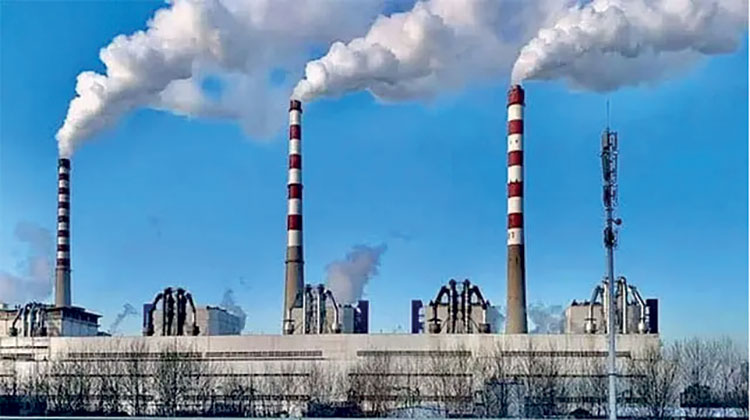
The Norochcholai coal power plant will remain disconnected from the national grid for several days following Saturday’s countrywide power failure, as authorities continue to follow safety procedures after the incident.
The National System Operator (NSO) said the 810-megawatt plant had been shut down as a precaution after the sudden power outage on October 17 and would not be reconnected to the grid until the necessary safety measures were completed.
The temporary loss of 810 MW of generating capacity would be managed through careful electricity supply arrangements to minimise the impact on consumers over the coming days, the NSO said.
It said the prevailing rainy weather was expected to help sustain hydropower generation at high levels, while a projected decline in electricity demand would further ease pressure on the system.
The countrywide blackout occurred at around 11.43 a.m. on October 17 after a generating unit disconnected from the national grid, creating an imbalance that caused the entire power system to collapse within less than 30 seconds.
Restoration efforts began shortly afterwards. By 12.11 p.m., major hydropower generating units had been brought back online and the power system was restarted simultaneously in four separate sections.
The restoration process was complicated by small-scale power generation facilities that were not under the direct control of the system control centre. However, electricity supplies were progressively restored through the activation of distribution feeders from 12.37 p.m.
By around 3 p.m., power had been restored to essential services, including major hospitals, water treatment plants and the airport.
Grid substations across the country had been reconnected by around 5 p.m., restoring electricity to the majority of consumers, the NSO said.
The operator stressed that the sudden disconnection of a generating unit as a safety measure was a normal occurrence at power plants. However, such a disconnection resulting in a complete collapse of the national power system was not considered normal.
An internal investigation has, therefore, been launched to establish the sequence of events that led to the islandwide outage and determine its underlying causes, the NSO said.
By Norman Palihawadane
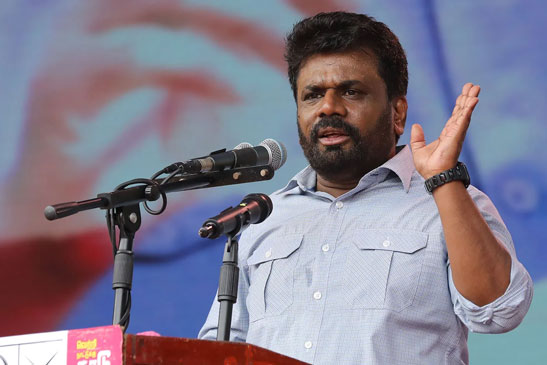
President Anura Kumara Dissanayake yesterday said a businessman, arrested with a caches of firearms, ammunition and hand grenades, had links to a politician, as authorities continued investigations into the seizure.
Addressing a public gathering in Badulla, the President said the suspect was among those being investigated in connection with operations targeting organised crime and that authorities were aware of his political connections.
He also referred to a video footage allegedly showing the suspect firing at people in the Weliweriya area, describing it as an example of the dangerous activities associated with individuals possessing illegal firearms.
The 38-year-old businessman, who is reportedly the owner of a cinema, and a relative of a politician, was arrested following a search conducted by officers of the Colombo District Crime Division at the cinema on Hanwella Road, in the Kirindiwela Police Division, on October 17.
Police said the search had been carried out based on information received by investigators.
The weapons and ammunition seized included two foreign-made pistols, a revolver, a foreign-made repeater firearm and a foreign-made 12-bore firearm.
Police also recovered hundreds of rounds of ammunition, including 398 rounds of 12-bore ammunition, 278 rounds of 9mm ammunition, 49 rounds of .32-calibre ammunition and 3,083 rounds of .22-calibre ammunition, along with two live hand grenades.
The suspect, a resident of the Millathe area, is being questioned as investigations continue.
The Police Media Division said police would seek a detention order to facilitate further questioning of the suspect and advance the investigation.
The Colombo District Crime Division is conducting further investigations into the cache of weapons and the suspect’s alleged activities and connections.

Showers or thundershowers will occur in most parts of the island after 1.00 p.m

CTU: Teacher shortage casts doubt on govt.’s education reforms

Norochcholai to remain offline for several days after blackout

President links businessman held with arms to politicians

CID probe sought into tusker’s death amid fears of elephant-killing syndicate

Bill to allow remote witness testimony in courts

‘Dates have the highest sugar content to fight Coronavirus’

Sunday Island 27 December – Headlines

#SundayIsland 17th December – Headlines

Sunday Island – 28th March

Sunday Island Headlines – 21 March

Sunday Island – 21st February – Headlines
-

 Latest News6 days ago
Nissanka’s return headlines Sri Lanka’s Test squad against Pakistan
-

 News6 days ago
Sri Lanka, India caught in US-Iran ship crisis
-
 Latest News6 days ago
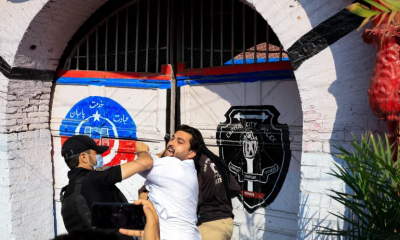
Imran Khan’s PTI braces to fight federal takeover of Khyber Pakhtunkhwa
-

 Latest News6 days ago
Missiles intercepted near Riyadh after Saudi coalition hits Yemen fuel depot
-
 News3 days ago
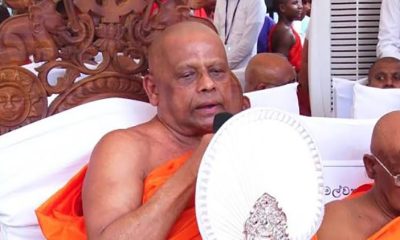
Asgiri Mahanayake calls for immediate release of Gnanasara Thera
-

 Features2 days ago
Kotahena:A Small Enclave, An Extraordinary Legacy
-
 Latest News6 days ago
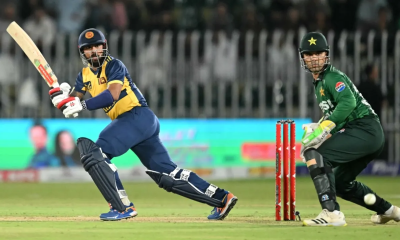
Kusal Mendis’ unbeaten 87 hands Sri Lanka consolation win
-
 News7 days ago
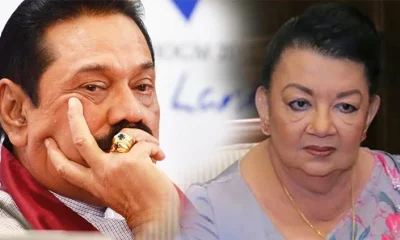
Mahinda and Shiranthi hospitalised