
News
Prez in powwow with civil society: post-war national reconciliation priority

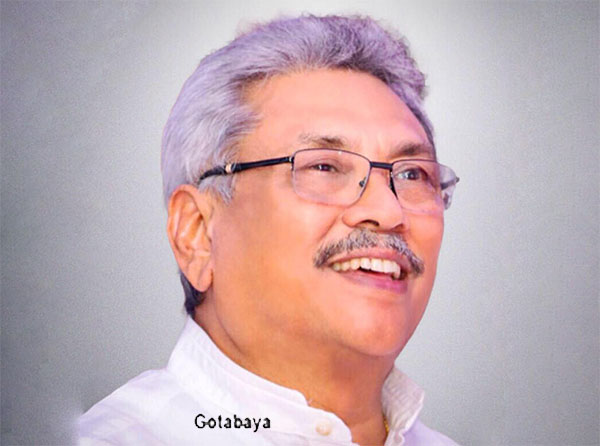
A group of civil society members under the umbrella of the Sri Lankan Collective for Consensus has discussed a range of issues, including the repealing or amending of the PTA with President Gotabaya Rajapaksa. Minister of Foreign Affairs, Dinesh Gunawardena, President’s Secretary Dr. P B Jayasundara and Foreign Secretary, Admiral Professor Jayanath Colombage had been present at the Presidential Secretariat discussion on August 3, 2021.
The civil society group presented a memorandum that set out their hopes and concerns and welcomed the opportunity to engage with members of the government on topics of post-war reconciliation, minority rights, civil society space, and governance. The group consisted of Ven. Kalupahana Piyaratana, Prof. T. Jayasingam Rev. Bishop Asiri Perera, Prof. Tudor Silva, Rev. Fr. C.G. Jeyakumar, Hilmy Ahamed, Rohana Hettiarachchi, Varnakulasingham Kamaladhas, Dr. Joe William, Sanjeewa Wimalagunarathna, Dr. Dayani Panagoda, Visaka Dharmadasa and Dr. Jehan Perera
At the outset, the civil society members expressed their support for the ideas and spirit of President Gotabaya Rajapaksa’s tweet message “We are committed to work with the @UN to ensure accountability & human dev. to achieve lasting peace & reconciliation. We are dedicated to resolving the issues within the democratic & legal frame to ensure justice & reconciliation by implementing necessary institutional reforms.” -Tweet by President Gotabaya Rajapaksa July 21, 2021
The civil society members expressed their readiness to support the President and his government’s efforts on the basis of his tweet above and called on him to bring together all political parties so that a consensual national policy on national unity and reconciliation will be framed which will be implemented by successor governments. They expressed concern with regard to civil space which they wanted the government to protect. They expressed their conviction that development will succeed best if it is accompanied by peace building and reconciliation that is successful and unites all the people through education and constructive actions.
After listening to all comments made by the civil society delegation, who had the opportunity to speak without interruption, President Rajapaksa responded to the comments made and to the contents of the memorandum. He said civil society could assist the government to take the reconciliation process forward. He said that he also wanted civil society to work in protecting the rights of children and women and that his government was committed to protecting the rights of all the people. With regard to the PTA, he said that the government was formulating a reasonable law. He said that 16 prisoners held under the PTA were released recently and the government was working on the cases involving a number of other prisoners and release would be considered in line with the legal process. He said that those in detention following the Easter Sunday attack, who were marginally involved will be released after they were rehabilitated just as 12,000 LTTE cadre had been earlier.
The President affirmed to the civil society members that he intended to make his twitter post a reality and he would be willing to work with them on reconciliation. He spoke of the need to find practical solutions to resolve conflicts such as on the takeover of land in the north and elsewhere and to facilitate improvement of the living standards of communities to make them feel as being part of Sri Lanka. He said that he was ready to address issues affecting people despite political differences. This included the release of all possible lands immediately within this year, permitting farmers to cultivate the lands within military camps and where necessary to retain lands for military purposes to pay commercial rates and acquire the lands. He also spoke of the need to enhance the people’s livelihood opportunities and improve living standards by promoting entrepreneurship.
In addressing issues of devolution of power, the President said that he had discussion with the Election Commission on conducting Provincial Council Elections and there was agreement to ensure that they had elected representatives. He said that the ruling party, the SLPP, was keen to and committed to provincial council elections as local party supporters were also keen to take part in the electoral process. In a democratic system of governance, majority consensus prevails but he said he was ready to protect the rights of all people by working through negotiations and reaching consensus.
Members of the delegation felt that they were able to freely express themselves at the meeting without a single interference or attempt to regulate their side of inputs. The meeting had the features of democratic conduct and ended with goodwill and satisfaction with the President stating he would meet other civil society organisations as many did good work although there were varied opinions about them. Throughout the meeting there was cordiality and mutual respect. The meeting concluded after an hour and twenty minutes with the prospect of future dialogue and engagement and expectation by the undersigned of concrete actions in response to the memorandum submitted to the President
MEMORANDUM TO HIS EXCELLENCY PRESIDENT GOTABAYA RAJAPAKSA ON REVIVING THE NATIONAL RECONCILIATION PROCESS, SAFEGUARD CIVIL SOCIETY SPACE AND IMPROVE GOVERNANCE
Reconciliation-related measures:
1. Repeal or amend the Prevention of Terrorism Act to ensure that any legislation on combating terrorism complies fully with the State’s international human rights and humanitarian law obligations. In the meantime, stop all arrests and detentions under this law. Put those detained under the PTA on trial speedily or release them on bail or discharge them entirely. E.g. LTTE detainees, post- Easter attack detainees and all others under the PTA.
2. Conduct provincial council elections immediately. Elected Tamil representatives who are currently marginalized in terms of power at the central government level, will be empowered at the provincial level to be decision makers.
3. Ensure an environment in which the Office on Missing Persons and the Office for Reparations can operate effectively and independently. Provide both Offices with sufficient resources and technical means to effectively fulfil their mandate. Ensure appointments are appropriate to the mission of each of the institutions.
4. Ensure the investigation and, if warranted, prosecution of longstanding emblematic cases involving alleged crimes relating to human rights violations and serious violations of international humanitarian law. Establish a truth and reconciliation commission to give a definitive account of the war, and end the speculations and divisive interpretations. The possibility of granting amnesty as in the South African TRC and in the proposed British TRC for Northern Ireland can be explored.
5. Permit the memorialization of those who died in the war without blocking them. Places of religious worship can be built in areas of battles or where large-scale loss of life occurred.
6. Reconstitute the Task Force on Historical Monuments in the Eastern Province, to include a fair representation of religious and ethnic minorities and to ensure that decisions taken do not violate the rights of people resident in those areas. Ensure that land settlement policy and take-over of traditional grazing lands does not become an excuse to re-engineer the demographics in those areas.
Civil Society-related measures:
7. Protect civil society actors, including human rights defenders, ensure a safe and enabling environment in which civil society can operate free from hindrance, surveillance, insecurity and threat of reprisals.
8. Place the National NGO Secretariat and NGOs under a civilian ministry. Currently they have been placed under the Defence Ministry which can create an erroneous impression that the government considers CSOs to be a national security threat and not a useful partner for social development and relief and humanitarian services which should receive high priority particularly during the pandemic.
Governance-related measures:
9. Repeal the 20th Amendment and replace it with a new constitutional provision that strengthens the independence of state institutions. This will include a Constitutional Council which includes members of civil society. In particular the judiciary, the police, the public service, the Bribery and Corruption commission and the Human Rights Commission need to be strengthened.
10. All elections will be on a mixed member proportional system. To ensure that there will be a minimum of 1/3 representation for women from constituencies and there will be a closed (appointed) national list where every other candidate will be a woman.
11. The Provincial Council system will be strengthened. Non-executive Governors will be appointed by the Constitutional Council. The Governors will assent to Provincial Council legislation. Taxes and revenues shall be shared between the Central Government and Provincial Councils on a rational and just basis that make the regions more attractive for investment and provincial development.
Resolving these root causes requires bold leadership, dialogue with the representatives of the ethnic and religious minorities and their political parties and the involvement of all sections of society inclusive of the opposition political parties and civil society.

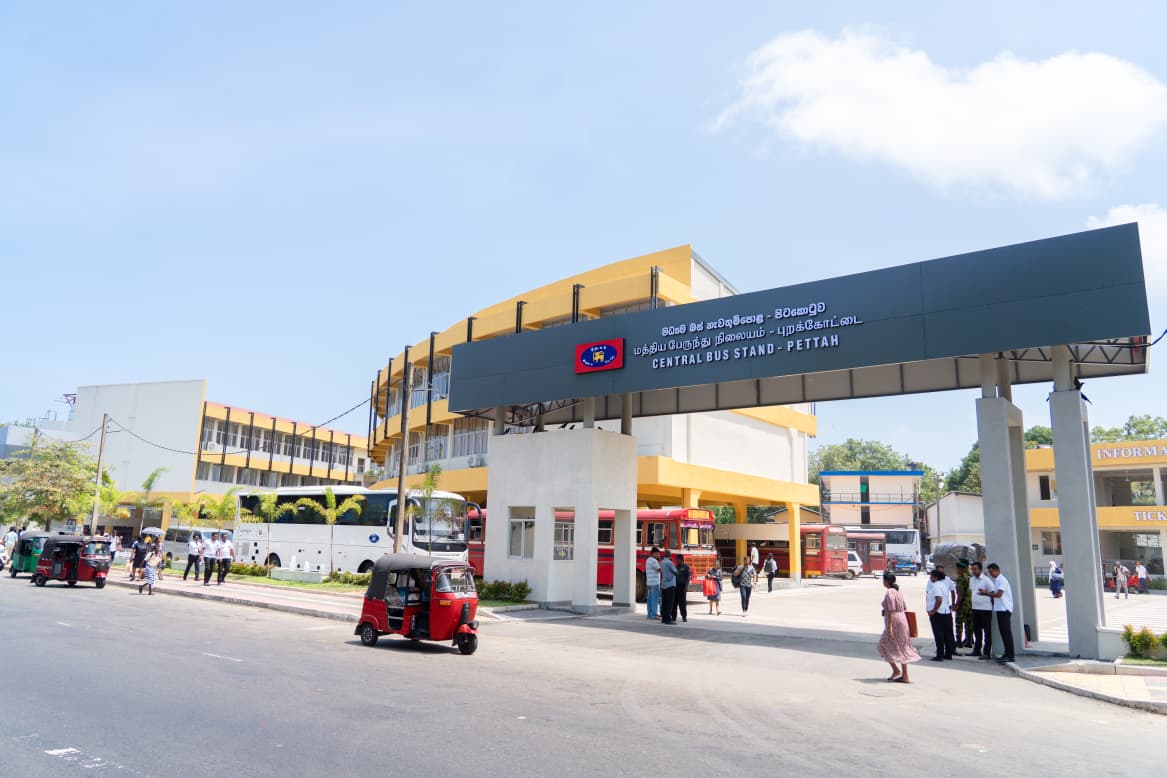
The Colombo Central Bus Stand, which has a history of over six decades and had remained without a proper maintenance for many years, has now been renovated under the current government’s development programme and vested to the public. Following that, the Prime Minister undertook an inspection tour of the newly renovated Colombo Central Bus Stand.
Originally constructed in 1964, the bus stand was refurbished with modern facilities to meet current needs and was officially reopened to the public on April 8. The primary objective of this initiative is to provide passengers with a higher-quality and more comfortable transportation service.
During the renovation process, special attention has been given to the comfort and safety of women, which was commended by the Prime Minister. In particular, a modern rest area designed to ensure privacy for nursing mothers travelling from distant areas received special praise.
The Prime Minister also reviewed the newly introduced passenger seat reservation system and information services established to assist commuters. In addition, the modern surveillance unit and other security measures installed within the premises to ensure passenger safety were also inspected.
During the visit, the Prime Minister engaged in conversations with passengers at the bus stand and inquired about their views on the newly renovated facilities and the quality of transport services.
It was emphasized that the government’s objective is to transform public transportation into a safe, technologically advanced service that can be used with convenience by all citizens.

(Prime Minister’s Media Division)
Latest News
Sun directly overhead Nagawilluwa, Galgamuwa, Sigiriya, Palugasdamana and Mankerni about 12:11 noon today (10)


On the apparent northward relative motion of the sun, it is going to be directly over the latitudes of Sri Lanka from the 05th to 15th of April in this year.
The nearest areas of Sri Lanka over which the sun is overhead today (10th) are Nagawilluwa, Galgamuwa, Sigiriya, Palugasdamana and Mankerni about 12:11 noon.

No-faith motion to be taken up today
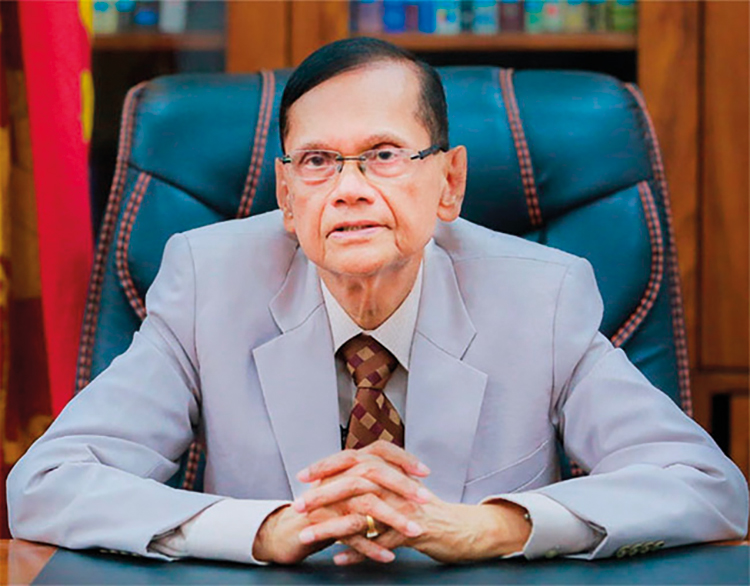
Former Foreign Minister Prof. G. L. Peiris yesterday (9) said that President Anura Kumara Dissanayake should remove Energy Minister Kumara Jayakody unless the minister stepped down on his own.Prof. Peiris, addressing a press conference called by the Opposition, said that Jayakody couldn’t under any circumstance continue to serve as a minister after the Commission to Investigate Allegations of Bribery or Corruption (CIABOC) moved the Colombo High Court against the government member over a previous financial scandal.
Pointing out that Minister Jayakody had been indicted of a corrupt deal struck during the yahapalana regime, Prof. Peiris said it was wrong for the NPP to retain him as a minister, claiming that the offence was not committed during his tenure as a Cabinet minister in the current government.
Prof. Peiris and several other Opposition members dealt with the No-Confidence Motion (NCM) against Jayakody that would be taken up today (10) with the academic calling the vote an acid test for the NPP. Having campaigned on an anti-corruption platform at presidential and parliamentary polls, the NPP couldn’t protect Jayakody though he was widely believed to be close to President Dissanayake.
As the Manager of the Procurement and Import Division of the Ceylon Fertilizer Company, Jayakody is alleged to have committed the offence of corruption, according to CIABOC.
Jayakody has been accused of causing a loss of Rs. 8,859,708 to the State by influencing and exploiting the procurement process.
Following the serving of indictments on 27 March, the judge ordered Jayakody’s release on two personal bail bonds of Rs. 1 million each. The court directed that the defendant’s fingerprints be obtained and a formal report be submitted. The case has been scheduled for a pre-trial conference on 6 May.
Prof. Peiris stressed that the CIABOC action against Jayakody is central to the NCM primarily moved over the irregularities ridden coal procurement process launched in 2025 that caused severe disruption to the power generation. Responding to The Island query after the media briefing, Prof Peiris expressed surprise that the JVP/NPP accommodated a person under investigation by the CIABOC. Having taken an utterly irresponsible decision, the JVP/NPP were now playing down the developing issue, prof. Peiris said.
The entire government parliamentary group faced the prospect of having its image tarnished by defending Jayakody, the former lawmaker said.
Prof. Peiris said that they intended to build a campaign around the issues involving the energy minister to expose the government. With yet another electricity tariff hike in the offing due to the growing demand for thermal generation as a result of coal-fired Lakvijaya power plant’s failure to meet the requirement[RA1] , the energy minister and ministry’s performances have to be examined, Prof. Peiris said.The timely release of the Auditor General’s report on controversial coal procurement should compel the government to decide on the energy minister’s fate or be prepared to face the fallout.
By Shamindra Ferdinando

Brazil bowler Laura Cardoso takes 9 Lesotho wickets in record-breaking T20 win

Zimbabwe Women set for maiden tour of Pakistan

Bangladesh advance match timings to save energy

PM on inspection tour of newly renovated Colombo Central Bus Stand

Israel to hold direct talks with Lebanon but no ceasefire, Netanyahu says

Sun directly overhead Nagawilluwa, Galgamuwa, Sigiriya, Palugasdamana and Mankerni about 12:11 noon today (10)

‘Dates have the highest sugar content to fight Coronavirus’

Sunday Island 27 December – Headlines

#SundayIsland 17th December – Headlines

Sunday Island – 28th March

Sunday Island Headlines – 21 March

Sunday Island – 21st February – Headlines
-

 Features6 days ago
Ranjith Siyambalapitiya turns custodian of a rare living collection
-

 News6 days ago
Global ‘Walk for Peace’ to be held in Lanka
-

 News4 days ago
Lankan-origin actress Subashini found dead in India
-

 Features6 days ago
Beyond the Blue Skies: A Tribute to Captain Elmo Jayawardena
-

 News2 days ago
AG: Coal procurement full of irregularities
-

 Features6 days ago
Aspects of Ceylon/Sri Lanka Foreign Relations – 1948 to 1976
-

 Business2 days ago
Hayleys Mobility introduces Premium OMODA C9 PHEV
-

 Sports2 days ago
DS to face St. Anthony’s in ‘Bridges of Brotherhood’ cricket encounter