
Editorial
Polls and tanks

Wednesday 6th October, 2021
The Provincial Councils (PCs) are likely to be under Governors’ rule indefinitely. Minister of Public Administration, Provincial Councils and Local Government Janaka Bandara Tennakoon, in answer to a question, told Parliament, yesterday, that he did not believe that the PC polls could be conducted at the present juncture, and all stakeholders would meet soon to take a final decision on the issue. His statement, which can be thought to reflect the government’s stand on the matter, came close on the heels of some media reports that India had stressed the need to hold the much-delayed PC elections. It has also been reported that the Parliamentary Select Committee (PSC) to Identify Appropriate Reforms of the Election Laws and the Electoral System is keen to have the PC polls conducted, and has given instructions to the Attorney General in that regard.
It is ironical that Chairman of the aforesaid PSC, Minister Dinesh Gunawardena, who represents the nationalistic forces that are not well disposed towards the PCs, is trying to have elections thereto held without further delay, and the TNA, which is an ardent proponent of devolution, has been instrumental in having the PC polls put off indefinitely. The TNA and the JVP, it bears recall, joined forces with the yahapalana government to amend the Provincial Council Elections Act, in 2017, in the most obnoxious manner and thereby postponed the PC elections. Several controversial sections were smuggled into the Bill at the committee stage, without judicial sanction, to delay the polls because the yahapalana government was scared of facing electoral contests. If only India had urged the TNA to desist from doing so. The TNA and its allies are now demanding that the PC polls be held!
One cannot but agree with Minister Tennakoon; the last thing the country needs amidst the current pandemic is an electoral contest. Covid-19 has been brought under control to some extent with the help of a 41-day lockdown, which entailed huge socio-economic costs, but the virus is expected to strike back sooner than expected because the people have already lowered their guard and are performing hongi with it. An election will surely worsen the health emergency and cause it to get out of hand.
Meanwhile, one should not be so naïve as to think that India is acting out of a genuine concern for anyone’s rights when it calls for the PC polls, reconciliation, etc., here. That it is driven by self-interest and nothing else when it offers solutions to Sri Lanka’s problems has become clear from Energy Minister Udaya Gammanpila’s recent statement that the Trincomalee oil tank farm had been handed over to India under the Indo-Lanka Peace Accord, which was touted as a pact aimed at solving Sri Lanka’s ethnic problem. (Oil tanks have nothing to do with ethnic reconciliation, do they?) The same goes for other powerful countries that are falling over themselves to help solve Sri Lanka’s problems, ethnic or otherwise; they too are eyeing strategic assets here.
The question is whether India has any moral right to pressure Sri Lanka to abide by the Indo-Lanka Peace Accord; it failed to disarm the LTTE in keeping with the controversial pact, having forced Sri Lanka to abandon the Vadamarachchi Operation (1987), saved Prabhakaran and taken him to New Delhi. If India had fulfilled what it had undertaken, the LTTE would have had to accept a political solution, and tens of thousands of lives could have been saved. Prabhakaran is pushing up the daisies and the Sri Lankan leaders, both political and military, who defeated the LTTE are facing war crimes allegations. Some countries are refusing to accept Sri Lanka’s former military officers as diplomats on the basis of unsubstantiated war crimes allegations. Only India has stood to gain. Going by Minister Gammanpila’s statement at issue, one may say that when the Indians came here in 1987, they had the Indo-Lanka Peace Accord, and Sri Lankans the oil tanks. Today, Sri Lankans have the Indo-Lanka Peace Accord and the Indians the oil tanks!



Saturday 14th March, 2026
Some prominent astrologers are up in arms, claiming that the JVP-NPP government has not officially recognised the list of traditional New Year auspicious times or the nekath seettuwa they have submitted. They have been holding press conferences and raking the government leaders over the coals (pun intended) for what they describe as a sinister move to devalue the cultural significance of the Sinhala and Tamil New Year. All previous governments officially endorsed the nekath seettu, according to which New Year activities are usually conducted.
The Department of Cultural Affairs has responded, saying that two groups of astrologers have submitted two different nekath seettu, and it will make a final decision after allowing public and expert views to be expressed thereon. It has also said that it, together with the Ministry of Buddhist and Religious Affairs, will continue to take necessary steps to safeguard and promote the country’s cultural values, including longstanding New Year traditions.
Sri Lankan governments want the public to do as they say, and they do as astrologers say. In the final analysis, the whole country does as astrologers say. There was a time when even military operations in the North and the East were conducted according to auspicious times. Many of them ended in disaster, and ones that were not launched according to auspicious times yielded the desired results in 2009. Interestingly, the President who provided political leadership for the country’s successful war on terror, suffered an ignominious defeat by advancing a presidential election on astrological advice. No astrologer could predict that another President would have to flee the country and resign.
Some critics of the incumbent government have claimed that it is not keen to recognise the New Year auspicious times officially as it is led by a bunch of Marxists who place no value on cultural practices. They have pointed out that Marxists generally treat astrology as superstition or a cultural phenomenon rather than a legitimate system within Marxist theory. However, Karl Marx has not made any specific reference to astrology though some Marxist scholars have taken a critical view thereof. In the 1950s, German philosopher, Theodor W. Adorno, a major Marxist influenced social theorist, wrote about astrology and horoscope columns in newspapers and magazines as part of his critique of mass culture under capitalism. He viewed astrology as a symptom of irrationalism and conformity in capitalist societies, where people are distracted from systemic social problems and instead turn to vague supernatural explanations. This view has gained currency among not only Marxists but many non-Marxist scholars and thinkers. One may recall that Voltaire also famously said, “Superstition is to religion what astrology to astronomy—the mad daughter of a wise mother. These daughters have too long dominated the earth.” This is particularly true of Sri Lanka and some other countries in this region.
If auspicious times are based on mathematically determined planetary positions, how come there are two lists of nekath. How is the government going to decide which list is correct? One can only hope that the government will not favour the group of astrologers backed by NPP politicians. There is hardly anything that Sri Lankan politicians do not politicise. Unless the government handles the nekath issue carefully and resolves it to the satisfaction of both sides, there may be what can be described as an astrologers’ war, and the people who rely on the official nekath seettuwa to conduct the New Year rituals will be confused and the political opponents of the JVP/NPP will surely weaponise the issue.
Friday 13th March, 2026
US President Donald Trump and Israeli Prime Minister Benjamin Netanyahu have not been able to stabilise the global oil market with their rhetoric and assurances. Their airstrikes on Iran’s naval ships, and mine-laying vessels, etc., have not helped make the Strait of Hormuz safe for international navigation. Iran has attacked six ships so far in that vital choke point. Oil prices began to climb again yesterday despite the release of 400 million barrels of oil, as part of a coordinated International Energy Agency action involving several countries. The US announced that it alone would release as many as 172 million barrels of oil to stabilise the market.
Having carried out successful attacks on vessels passing through the Hormuz Strait and sent the global oil market into panic mode, Iran now says it will stop attacks only on several conditions—end of US-Israeli military attacks, a binding guarantee that there will be no future strikes, recognition of Iran’s sovereign rights, and compensation for war damage. The US and Israel have ignored these conditions.
Prudence demands that Sri Lanka brace itself for an energy crisis. But the JVP-NPP government is all at sea, and its response to the crisis appears to be all over the place. It is apparently labouring under the misconception that it will be able to reduce fuel consumption and manage the crisis simply by jacking up prices. There’s no shame in rationing fuel during a global crisis, as we argued in a previous editorial comment. The previous government introduced a QR based fuel rationing system, which helped it not only overcome a crippling fuel crisis but also retain its hold on power. In fact, some economic advisors reportedly pushed for fuel rationing to prevent a crisis in early 2022, but the Rajapaksas ignored their counsel only to head for the hills with angry protesters in close pursuit a couple of months later.
Minister Wasantha Samarasinghe has claimed that recent panic buying and hoarding of fuel led to a depletion of the country’s petroleum reserves. His claim should be taken with a pinch of salt, for he is trying to justify the huge fuel price increases, but the government could have controlled that situation by resorting to QR-based fuel sales. The same method can be used to prevent many people from using extra gas cylinders to stock up on LPG at the expense of others. Some Litro agents themselves are known to hoard gas and sell it at a black market premium.
Thailand has said its energy reserves are sufficient for about 95 days, but it has already adopted emergency measures to curtail energy consumption. Many other countries have done the same. Pakistan has set an example worthy of emulation. The emergency fuel crisis management measures adopted by Pakistan include a four-day work week for state institutions, work from home for about half of employees in public and private sectors, except essential services, temporary closure of schools and universities, the introduction of online learning, 50% cut in fuel allocations for state vehicles besides the removal of around 60 percent of official vehicles off the road, restrictions on official travel and encouragement of virtual meetings in government institutions. Sri Lanka should learn from Pakistan’s fuel-saving approach.
In this country, no opening ceremony is considered complete without the presence of either the President or the Prime Minister or a Cabinet Minister. We have had Presidents, Prime Ministers and ministers travelling all over the country, attending various ceremonies and meetings all these years; the incumbent rulers are no exception. The President, the Prime Minister and ministers can inaugurate projects and attend meetings remotely, and help save a lot of fuel and millions of rupees spent on security arrangements, etc. Why should the President travel all the way from Colombo to faraway places to attend District Coordination Committee meetings when he can address them online? Government politicians and officials ought to stop running around like headless chickens and help save fuel and state funds.
It is high time the government stopped dilly-dallying and introduced QR-based fuel rationing.

Thursday 12th March, 2026
It is not possible to predict who will emerge victorious in the ongoing war in the Middle East or whether the conflict will end without a clear winner though US President Donald Trump and Israeli Prime Minister Benjamin Netanyahu would have the world believe that they will surely be the winners. The US-Israel military power is doubtlessly far superior to that of Iran, but in a war of this nature, military might alone does not guarantee a clear victory.
Difficult as it may be to predict who will win in the current Gulf conflict, the overall loser is already known; it is the world economy. Global markets are heavily reliant on President Trump’s assurance that the war will not last long, and the release of the G7 strategic oil reserves to stabilise the world oil supply. But Trump’s most intense airstrikes on Tuesday have not yielded the desired results. Iran remains defiant and has raised the stakes for the global economy by threatening to bring oil exports from the region through the Strait of Hormuz to a complete halt unless the US and Israel stop attacks. It continues to fire missiles and carry out drone attacks on US interests in the region. Trump has announced that the US will seriously consider providing security to the ships sailing through the Hormuz Strait, but whether the US is equal to the task is the question. It is being argued in some quarters that Trump and Netanyahu have already bitten off more than they can chew.
There is reason to believe that Trump went to war with Iran without a proper assessment of the ground situation. His plan was to make short work of the current Iranian regime with shock-and-awe aerial bombardments and the assassination of Iranian Supreme Leader Ayatollah Ali Khamenei, but his plan has apparently gone awry. The slain Iranian leader’s son has been elected the Supreme Leader. Trump may have expected the Iranian anti-government protesters to make the most of the ongoing bombing spree, come out in their millions and bring down their embattled regime, but they are silent today. Perhaps, they are too scared to challenge the beleaguered regime, which has warned that ‘every soldier has his finger on the trigger’ and protesters will be treated as traitors. It is also possible that the protesters are now disillusioned with the US after realising that Washington has sought to use them as a cat’s paw in its efforts to grab Iran’s oil resources.
Has the US made, in Iran, a military miscalculation similar to the one in Afghanistan? The US Intelligence community and the military estimated that Kabul was resilient enough to hold out for several months after the withdrawal of the US troops in 2021. But that city fell to the Taliban in days, causing the then US President Joe Biden to admit that the collapse had happened “more quickly than the US had anticipated”.
Iran may not have anticipated a joint US-Israel military operation of this magnitude. It remains to be seen whether Iran can sustain its missile and drone attacks vis-à-vis the US-Israeli air strikes on its arms stockpiles and military installations. However, what one gathers from the views of military analysts is that it is very unlikely that President Trump will go so far as to deploy ground troops in Iran, with about 59% of Americans opposing his war, according to opinion surveys. In its war for oil in Iraq, the US had the backing of a much broader international coalition.
Nothing could be more humiliating to the US than Washington’s call for help from Ukraine to deal with the Iranian drones. Ukrainian President Volodymyr Zelensky, whom President Trump once showed the door during a White House meeting, has confirmed that the US sought his help to defend its allies in the Persian Gulf against the Iranian drones. Did Trump start a war without a proper assessment of the enemy’s drone capability?
The enormous economic cost of the Middle East conflict will have to be borne by not only the parties thereto but also by the entire world. Trump’s assurances and the G7 responses have prevented panic in global markets, but unless the US and Israel end the war soon and take steps to keep the Strait of Hormuz functional, oil prices will soar again, pushing the world closer to a global recession. If Trump and Netanyahu stop their war midway, they will face a domestic political backlash. Trump and Netanyahu have the Epstein files and corruption charges to contend with, respectively. The Trump administration is facing midterm elections in November. Politically speaking, Trump and Netanyahu are on a tiger ride in the Middle East.
The biggest challenge before the US and Israel in the ongoing conflict is to prevent Iran from shifting the war to the economic front, and make the global economy scream.

Agha calls for ‘sportsman spirit’ after controversial dismissal

US embassy in Baghdad hit by strike as Trump says military targets ‘obliterated’ on Iran’s key oil island

Showers or thundershowers will occur at several places in the Western, Sabaragamuwa, Central, North-western and Uva provinces and in Galle, Matara, Mannar and Anuradhapura districts after 2.00 pm.

Bahrain & Saudi Arabia Grands Prix to be cancelled

Pink Floyd guitar sold for record-breaking $14.6m

Promoting Local Industries is a key priority of the Government – PM

‘Dates have the highest sugar content to fight Coronavirus’

Sunday Island 27 December – Headlines

#SundayIsland 17th December – Headlines

Sunday Island – 28th March

Sunday Island Headlines – 21 March

Sunday Island – 21st February – Headlines
-
 News5 days ago
Repatriation of Iranian naval personnel Sri Lanka’s call: Washington
-
 Features5 days ago
Winds of Change:Geopolitics at the crossroads of South and Southeast Asia
-

 News4 days ago
Prof. Dunusinghe warns Lanka at serious risk due to ME war
-

 Sports3 days ago
Royal start favourites in historic Battle of the Blues
-

 Sports2 days ago
The 147th Royal–Thomian and 175 Years of the School by the Sea
-
 News2 days ago
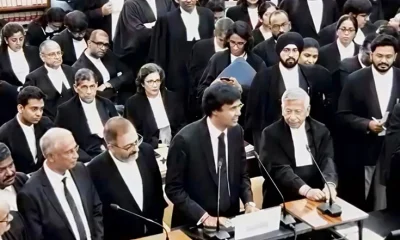
Historic address by BASL President at the Supreme Court of India
-

 News3 days ago
CEBEU warns of operational disruptions amid uncertainty over CEB restructuring
-
 Business6 days ago
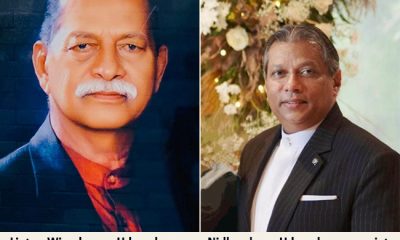
Seven decades of sartorial excellence: The legacy of Linton Master Tailors in Kandy