
Editorial
Reaping whirlwind


Saturday 14th August, 2021
We invited the Delta variant of coronavirus, and it has come. We are reaping the whirlwind, having sowed the wind. Speculation was rife yesterday that the government would impose lockdowns in response to calls from medical experts for drastic measures to curb the runaway spread of the pandemic. Instead, it opted for some travel restrictions. Why it has chosen to fight shy of closing the country may be understandable because the economy is on heart-lung machine, and cannot take any more shocks. But travel restrictions have not worked in the past.
The current wave of Covid-19 infections can be attributed to the government’s blunders such as its decision to keep the country open during the national New Year in April, and allow citizens of the countries affected by the Delta variant to arrive here even for quarantine. It also did not care to impose a quarantine curfew during the last round of lockdowns, which therefore failed to yield the desired results. However, it deserves praise for the country’s successful vaccination campaign. That it has mismanaged the pandemic control efforts does not mean others are not responsible for the unholy mess we find ourselves in. The blame for this situation should be apportioned to the public as well.
Some people see opportunities in crises. When the Easter Sunday carnage happened in 2019, the present-day leaders who were in the Opposition at the time saw an opportunity; they flogged the issue as hard as they could, and gained a lot of political mileage. They made themselves out to be saviours, and won elections by promising to protect national security. Today, on their watch, an explosive spread of Covid-19 is snuffing out many lives. Those who lost their hold on power due to the Easter Sunday attacks and are in the Opposition have seen an opportunity in the current health crisis. They are giving a running commentary on the health emergency to portray the government in a bad light, without so much as lifting a finger to help the pandemic victims. The political parties that have helped themselves to public funds have a moral responsibility to help the poor crying out for help and ensure their supporters behave responsibly.
One may recall that immediately after the 1994 regime change, which was widely expected to lead to a bloodbath with the SLFP supporters, who had undergone immense suffering at the hands of the UNP for 17 long years, unleashing violence against their political opponents, the then Prime Minister Chandrika Bandaranaike Kumaratunga swiftly converted all SLFP party offices into peace committees. Thus, she was able to rein in her supporters. Likewise, all political leaders should seriously consider turning their party offices into pandemic relief centres to look after the people who are struggling to make ends meet. They can also raise funds for essential equipment for hospitals; they have amassed enormous amounts of wealth while in power and it is time for them to part with a fraction thereof for the sake of the people who pay through the nose for maintaining them.
It’s not the time to play our national sport—the blame game. Instead, it’s the time for a concerted effort to beat the virus, which infects and kills people indiscriminately. Unless the people mend their ways and resolve to protect themselves against the virus, there will have to be costly lockdowns. Medical experts have said, according to a report we publish today, it is high time a curfew was imposed because there is a very strong probability of a deadlier variant than Delta evolving here and rendering the ongoing vaccination drive futile.
Even if the country is closed, the virus will not go away as long as people behave irresponsibly; in such an eventuality, there will be a slight drop in infections and deaths; the economy will scream; people will lose their jobs; daily-wage earners will have to starve; the government will print more money and distribute it with a generous hand, expecting votes in return at future elections, and the country’s foreign reserves will hit rock bottom. When costly lockdowns are lifted, everyone performs the hongi with the virus, which makes a comeback. Hence the need to couple lockdowns with quarantine curfews with only the vital sectors to remain open with the minimum possible number of workers.
There has been a chilling prediction that the death toll could climb to as many as 600 a day at the rate the pandemic is spreading. The only way to avert such a disastrous situation is for the public to adhere to the health regulations, and the government to ensure that they do so. If everyone resolves to do his or her bit for the country’s fight against the pandemic, and acts accordingly, perhaps there will be no need for lockdowns that entail huge socio-economic costs.



Saturday 13th June, 2026
Prime Minister and Education Minister Dr. Harini Amarasuriya has informed Parliament that as many as 267,138 students dropped out of school between 2018 and 2024. She said so in answer to a question from Opposition MP Hesha Withanage. Pointing out that figures for the period from 2018 to 2024 had been derived from annual school census reports, using an internationally recognised methodology that takes into account student enrolment figures and dropout rates from Grade One to Grade Ten, the PM added that definitive data on school dropout were not available for the period between 2010 and 2017. This is something serious. The education authorities must have such data. Otherwise, how can they formulate policies aimed at improving student participation in school education?
The Prime Minister told Parliament that the school dropout statistics were subject to the caveat that not all students who had left schools could be considered dropouts; some of them may have moved to schools in other areas, enrolled in international schools, or migrated overseas with their families while continuing their studies.
Such cases could not be separately identified under the methodology used to compile the statistics and were, therefore, included in the overall dropout figures. This points to the need for a holistic statistical analysis of the issue of students leaving school, and steps must be taken to ensure that all relevant factors are taken into account when statistics are prepared. The education authorities should be able to say how many children actually discontinued their education.
Thankfully, UNESCO has pointed out that Sri Lanka continues to perform better than most South Asian countries in keeping children in school though thousands still leave the education system annually. Using available data for 2024, some researchers have argued that Sri Lanka’s school dropout rate is about 0.7 per cent of the government-school student population. Regional comparisons show Nepal and Sri Lanka among the stronger performers on school retention, while Bangladesh has made substantial progress and Pakistan continues to struggle with high dropout rates. India, too, has worked hard to bring down the national school dropout rate. However, the bar must be set higher, and action should be taken to prevent school dropouts completely. It is hoped that the Prime Minister, as an academic and researcher, will address this issue, and ensure that the education authorities will fulfil the need for high-quality, policy-relevant statistics.
Prime Minister Dr. Amarasuriya has said a range of factors have contributed to students leaving the formal education system. According to media reports quoting her answer in Parliament, they include personal circumstances, school-related issues, family and economic difficulties, social influence, as well as students opting for alternative educational pathways and training opportunities. Researchers inform us that mong the main causes of school dropout in Sri Lanka are poverty, poor academic achievement, lack of perceived relevance of education, family difficulties, child labour, even early marriage or pregnancy in some cases, and inequalities in educational opportunities. From a policy perspective, as researchers have pointed out, addressing these issues requires not only financial support for vulnerable families but also improvements in school quality, vocational pathways, counselling services and community support systems.
The need for a multi-pronged strategy to address the root causes of the school dropout issue cannot be overemphasised. This should figure high on the incumbent government’s agenda.

Friday 12th June, 2026
Government politicians are giving a running commentary of the investigations into the Easter Sunday terror attacks. They usually do so in Parliament and at media briefings to generate headlines and distract attention from burning issues.
Minister of Public Security Ananda Wijepala has told Parliament that investigators have gathered sufficient evidence to establish the involvement of former State Intelligence Service Director Major General (Retd.) Suresh Sallay, in a conspiracy linked to the 2019 carnage. Other JVP/NPP politicians also come out with what can be described as teasers about the CID’s Easter Sunday terror probe, making one wonder if the outcome of investigations is known to the government in advance.
The claim that Sallay was involved in the Easter Sunday bombings is still an unsubstantiated allegation, but going by government politicians’ claims about the investigations into the terror attacks, it is obvious that they are privy to information that the police must keep confidential to ensure the integrity of the probe. It is unbecoming of crime investigators to share such information with politicians, who use it to gain propaganda mileage.
Minister Wijepala has also claimed that Sallay declined to disclose the passwords for his personal computer and mobile phone. He described Sallay’s alleged non-cooperation as an attempt to obstruct the investigative process. Isn’t it naïve to expect a former spy chief who was aware that he was living under the microscope to store in his mobile phone or personal computer any information that could be used against him? On the other hand, in this day and age, gaining access to password-protected computers and phones is child’s play.
When prominent ruling party members declare that proving a serious charge against someone is only a matter of time, and some high-profile arrests are imminent, how can investigators led by a person at their beck and call be expected to factor in contradictory evidence that can be used to challenge his political masters’ assertions and public statements? Won’t the investigators be compelled to suppress such evidence lest they should embarrass their political leaders, provide grist for their political rivals and, most of all, fall from grace as a result? Instances abound where the police fall victim to confirmation bias, cherry-pick evidence and build cases backward in outcome-driven investigations. Initial police investigation that fitted information to the theory that the death of popular rugby player Wassim Thajudeen was due to a car crash is a case in point.
In this country, police officers do not stand up to the powers that be in the name of truth, justice and fair play; instead, they stand to attention before politicians in power. One may recall that in 2016, the then IGP Pujith Jayasundera was caught on camera, at a public meeting, answering a telephone call from someone whom he reverentially called ‘sir’ and assuring that a certain person would not be arrested. Submissiveness can become institutionally contagious. A fish is said to rot from the head down. A Yahapalana era audio clip of a telephone conversation between CID Director SSP Shani Abeysekera and Deputy Minister Ranjan Ramanayake is available in the digital space. Abeysekera is heard offering to wash pots and pans in Ramanayake’s kitchen over some matter.
There is no gainsaying that the Easter Sunday terror attacks, which claimed more than 275 lives and left many others seriously injured, must be probed thoroughly. Justice must be done to the victims. But what’s the world coming to when a government brings its own party members out of retirement, elevates them to key positions in the police and the public security sector and assigns them to conduct high-profile criminal investigations and declares suspects guilty even before they are indicted. Most of all, its leader, President Anura Kumara Dissanayake, orders the detention of suspects under the Prevention of Terrorism Act and predicts judicial decisions accurately?
Political affiliations and prejudices of crime investigators have a corrosive effect on the integrity of the probes they conduct.

Thursday 11th June, 2026
The law finally caught up with former Deputy Minister Sarana Gunawardena, who caused losses to the state through some questionable deals, two decades ago. He was found guilty on four counts of corruption charges and sentenced to 16 years of rigorous imprisonment by the Colombo High Court, on Tuesday. The Commission to Investigate Allegations of Bribery or Corruption (CIABOC) had filed four cases against him for causing losses to the state coffers during his tenure as Chairman of the Development Lotteries Board during the Mahinda Rajapaksa government, in 2006. The CIABOC stated that he had acted in a manner that provided an undue advantage to some individuals when obtaining vehicles on rent for the institution.
When Gunawardena committed those offences, he may not have thought he would have to face the consequences of his actions. He is not alone in having enriched himself at the expense of the public; many are those who have amassed colossal amounts of ill-gotten wealth through corrupt means while in power. It is hoped that all of them will be brought to justice.
The deterrent sentence handed down to Gunawardena must have gladdened the hearts of all those who dream of a country free from bribery and corruption. The economic cost of corruption in Sri Lanka has not been estimated. But corruption has obviously hindered economic progress. The IMF and the World Bank have pointed out that corruption discourages foreign direct investment, increases cost of public infrastructure, reduces efficiency of state-owned enterprises, and weakens competition and productivity. So, a strategy to develop the economy consists in a truly national effort to battle bribery and corruption with might and main.
The CIABOC went all out to bring Gunawardena to justice, and it deserves praise for its relentless efforts. Does this mean that the culture of impunity is over and the rule of law has finally been restored under the present dispensation? The answer is in the negative. Most corruption cases that have culminated in convictions were filed prior to the 2024 regime change.
It is imperative that the CIABOC act swiftly and decisively in the case against former Energy Minister Kumara Jayakody, whom it has indicted on two counts: facilitating a private company to make undue financial profits and causing a loss of over Rs 8.8 million to the state while serving as the procurement manager of the Lanka Fertiliser Company in 2016. The CIABOC has not been entirely free from allegations of selective efficiency in handling corruption cases. Jayakody was not arrested. He obtained bail after indictment.
Over the last year and a half or so, the CIABOC has successfully prosecuted several former ministers. In April 2025, the Colombo High Court sentenced former Chief Minister of the North Central Province S. M. Ranjith Samarakoon and his secretary to 16 years RI for obtaining fuel fraudulently and causing losses to the state. In May 2025, the Colombo High Court Trial-at-Bar sentenced former Minister Mahindananda Aluthgamage and former Sathosa Chairman and ex-Minister Nalin Fernando to 20 years RI and 25 years RI, respectively, for causing a loss of Rs. 53 million to the state by using public funds to purchase 14,000 carrom boards and 11,000 checkers boards purportedly for schools and sports clubs in the run-up to the 2015 presidential election.
Perhaps, the severity of the offences, committed by Aluthgamage, Fernando and Ranjith, pales into insignificance in comparison to that of the coal procurement scam, which is believed to have caused staggering losses amounting to Rs. 10 billion to the state coffers. We reported on Monday that the use of diesel to keep the oil-fired power plants running to compensate for the Norochcholai generation loss due to the use of substandard coal had cost Rs. 4.5 billion in April 2026 alone. As we reported on Monday (08), according to power sector data, coal-based electricity generation in April 2026 was 27 GWh lower than in April 2025, a development that has sparked concerns among energy experts and economists over the mounting financial burden of diesel replacement on the country’s already strained power sector.
President Anura Kumara Dissanayake has sought to obfuscate the issue of substandard coal imports by appointing a presidential commission of inquiry to probe all coal purchases since 2009. His modus operandi is like “using a loincloth to control dysentery”, as a popular local saying goes. There’ll be hell to pay when the JVP/NPP politicians responsible for the coal scam and other rackets lose power. It will then be their turn to be hauled up before courts and bussed to prison so that they will be in the exalted company of Aluthgamage, Fernado, Ranjith and others.

Mismatch in batting firepower could dictate the outcome again

Landslide Early Warnings issued to the districts of Kalutara, Nuwara Eliya and Ratnapura

INS Sharda departs Colombo concluding replenishment visit

Special Dengue Prevention Week declared in Colombo District from June 15 to 21

The leader of the indigenous Vedda community Uru Warige Wannila Aththo Meets Prime Minister Dr. Harini Amarasuriya

SpaceX IPO debuts in US markets, Musk becomes world’s first trillionaire

‘Dates have the highest sugar content to fight Coronavirus’

Sunday Island 27 December – Headlines

#SundayIsland 17th December – Headlines

Sunday Island – 28th March

Sunday Island Headlines – 21 March

Sunday Island – 21st February – Headlines
-

 News7 days ago
Women’s T20 World Cup 2026 warm-up: Chamari Athapaththu’s 94 helps Sri Lanka beat Pakistan
-

 News7 days ago
Lankan-Canadian inducted to Toronto Sports Hall of Fame
-

 Editorial6 days ago
Probe Sallay’s complaint
-
 News4 days ago
Local firms move millions of dollars overseas for phantom imports: Govt.
-
 News2 days ago
CIABOC summons Yoshitha over his participation in British Navy training programme
-

 Editorial7 days ago
Prez in the dock
-

 Features7 days ago
Entering MIT for my Ph.D program, coping with harsh Boston winter and breasting the tape
-
 Midweek Review4 days ago
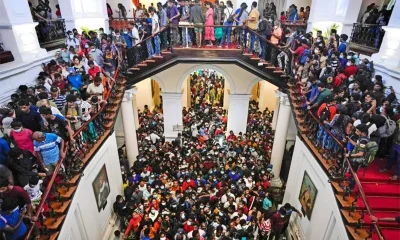
July 09: An inexcusable overall security failure and exceptional contingency plan