
News
Poaching Indian fishers turn violent, attack Navy personnel in SL waters

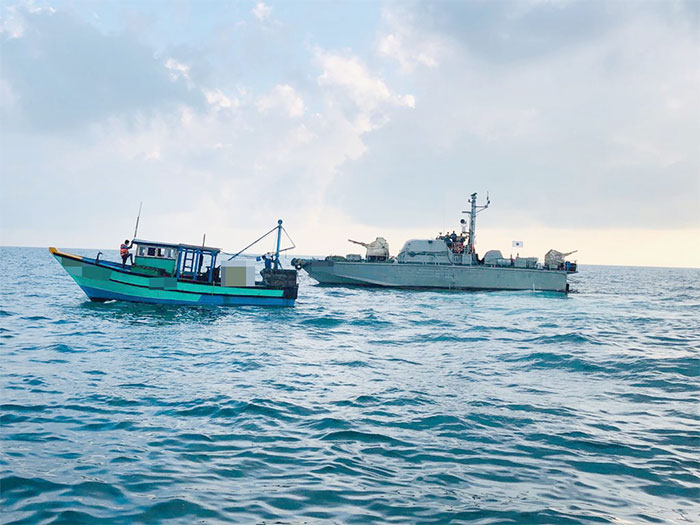
… attackers among 25 arrested along with two trawlers
By Shamindra Ferdinando
Poaching Indian fishers on Saturday night (Dec 09) caused injuries to two sailors in Sri Lankan waters off Point Pedro.
Authoritative sources said that Indian fishers attacked them with sticks and then threw boiling water in a bid to thwart SLN boarding one of the poaching vessels. Two Navy personnel had to be admitted to hospital following the incident, sources said, adding that the Indian fishing fleet reacted aggressively to recent arrests in the northern seas.
Responding to queries, sources said that Indian trawlers engaged in dangerous maneuovers close to SLN vessels to discourage them from coming closer to poaching trawlers. Sources said that the SLN was taking countermeasures in line with overall measures to curb illegal fishing, which is increasingly depriving local fishermen of their catch.
Asked whether those who had been involved in the attack on the sailors were taken into custody, sources said that in spite of the incident, SLN managed to take two trawlers and 25 fishers into custody. The arrested included those who attacked the sailors, sources said. “Two of them jumped overboard and at one time we feared the worst. Fortunately, they were rescued.”
Sources acknowledged that the developing situation couldn’t be tackled by firing warning shots. It would be the responsibility of India to prevent large-scale crossing of the Indo-Lanka maritime boundary almost on a daily basis, sources said, alleging that Tamil Nadu seemed to have stepped up poaching.
Those who had been apprehended, along with the poaching trawlers, were handed over to the Mailadi Fisheries Inspector at the Kankesanthurai harbor for legal action.
Navy headquarters said that so far this year 33 Indian poaching trawlers had been taken into custody along with 220 fishers.
The Fisheries Ministry said that the government in October this year requested UN intervention to prevent continuing poaching here by the large Indian fishing fleet.
Fisheries Minister Douglas Devananda made the request on behalf of the Wickremesinghe-Rajapaksa government. A statement issued by the Fisheries Ministry on 16 Oct., quoted Devananda as having told UN Resident Coordinator in Colombo Marc-André Franche that the invasion of Sri Lankan waters was a serious problem.
The UN veteran, who had served in Libya as Resident Representative of the UN Development Programme before taking over the top job here, was quoted as having assured that the issue would be looked into and brought to the notice of New Delhi. Similarly about two years ago Devananda raised the issue with the US Embassy here, but there has been no favourable result to date.
Sources said that India would have to be apprised of the developing situation and unless tangible measures were taken to rein in the poaching fleet untoward incidents could happen. In response to the new situation, SLN has strengthened patrols and issued instructions on how to handle sudden developments.
Meanwhile, sources said that the fisheries communities in the northern and eastern regions found fault with the government for not taking sufficient measures to discourage poaching by the Indian fleet. The government should take up this matter at the highest level, sources said, adding that India couldn’t absolve itself of the responsibility of thwarting organized violation of the Indo-Lanka maritime boundary.
Sometimes quite large clusters of trawlers move very close to land creating an extremely hostile environment, sources said.
Asked whether the latest developments had been brought to the notice of the Indian High Commission in Colombo, sources said that the outgoing High Commissioner Gopal Baglay undertook a three-day visit to Northern Province from 29 November to 1 December 2023.
Baglay donated deep freezers to 15 fishermen’s cooperatives in the Jaffna region. Interacting with representatives of the cooperatives at Pasaiyoor, the High Commissioner assured that India strived to bring benefits of scientific research and expertise for commercially sustainable development of fisheries in Sri Lanka, including in the Northern Province, so that the benefits could directly reach the fishermen and the common people.
But, unfortunately, India continued to ignore the situation caused by large scale continuing invasion of Sri Lankan waters by its well organized fishing fleet in hundreds of vessels, sources said.

Latest News
Advisory for Severe Lightning for the Western and Sabaragamuwa provinces and Galle and Matara districts


Advisory for Severe Lightning
Issued by the Natural Hazards Early Warning Centre at 12.00 noon 07 February 2026 valid for the period until 11.00 p.m. 07 February 2026
Thundershowers accompanied with severe lightning are likely to occur at some places in the Western and Sabaragamuwa province and in Galle and Matara districts.
There may be temporary localized strong winds during thundershowers.
The general public is kindly requested to take adequate precautions to minimize damages caused by lightning activity.
ACTION REQUIRED:
The Department of Meteorology advises that people should:
Seek shelter, preferably indoors and never under trees.
Avoid open areas such as paddy fields, tea plantations and open water bodies during thunderstorms.
Avoid using wired telephones and connected electric appliances during thunderstorms.
Avoid using open vehicles, such as bicycles, tractors and boats etc.
Beware of fallen trees and power lines.
For emergency assistance contact the local disaster management authorities.

The Indian Naval Ship (INS) GHARIAL which made a port call in Colombo, departed the island on 06 Feb 26.
The Sri Lanka Navy bade a customary farewell to the departing ship at the Port of Colombo, following naval traditions.
During the ship’s port call, the crew took a sightseeing tour of key attractions in Colombo.
The visit also featured the handover of ten temporary Bailey Bridges, which were brought by INS GHARIAL, in coordination with the High Commission of India in Sri Lanka.
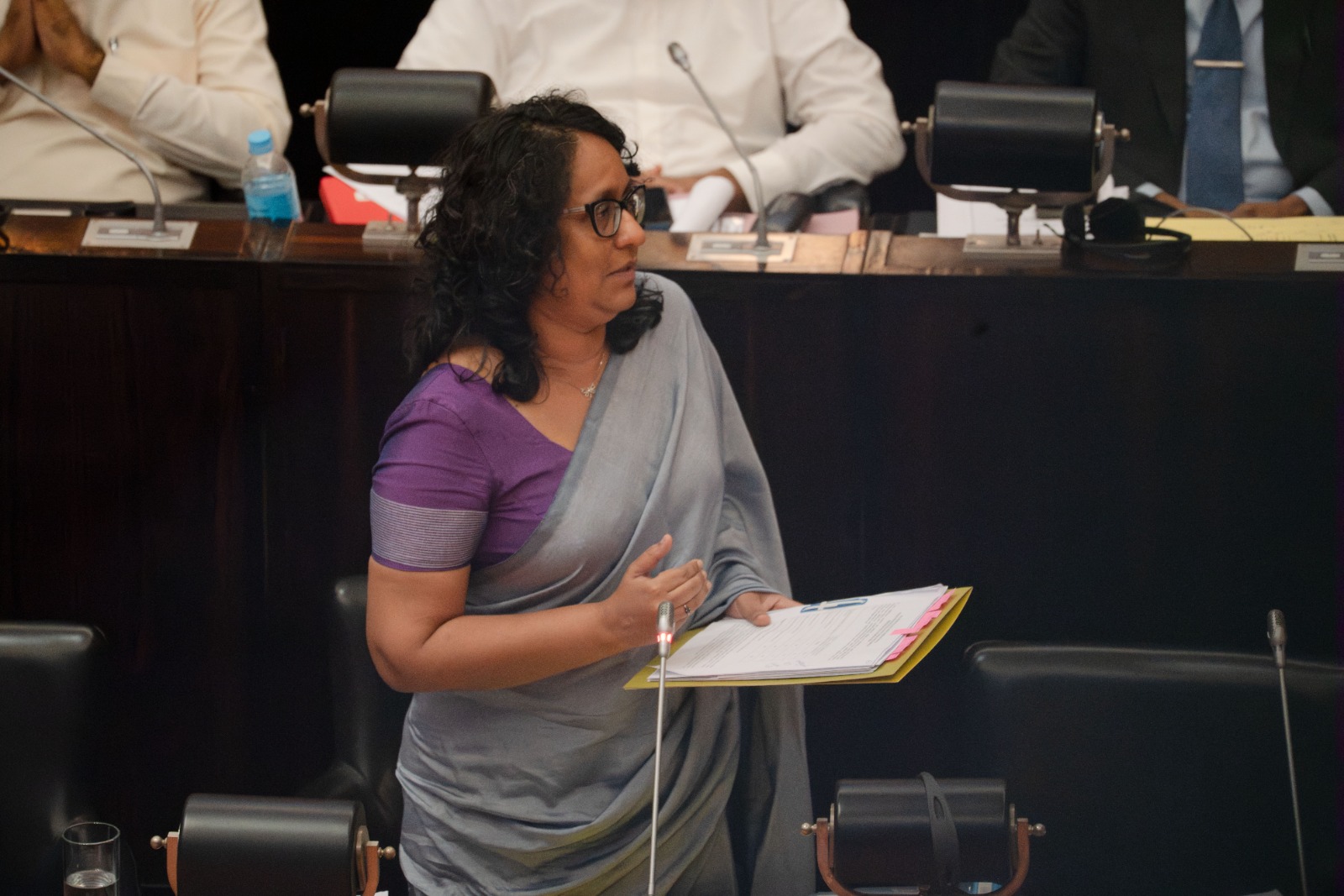
Prime Minister Dr. Harini Amarasuriya stated that the Ministry of Education has already commenced the distribution of Smart Boards required for the new education reforms, and that the collection of funds from parents at school level for this purpose must be stopped immediately. She further emphasized that no decision has been taken to curtail free education or to close the Jayewardenepura Faculty of Dental Sciences.
The Prime Minister made these remarks in response to a question raised in Parliament on Thursday [05th February] by the Leader of the Opposition, Sajith Premadasa.
Elaborating further, the Prime Minister stated,
“Although the Leader of the Opposition has not traditionally upheld free education as a policy, I appreciate your stance on the matter at this juncture. However, I urge that questions should not be raised based on social media content or unverified rumours in Parliament. No decision has been taken to curtail free education or to close the Jayawardenepura Faculty of Dental Sciences. The Medical Faculty of the Wickramarachchi University of Indigenous Medicine had commenced operations without regulatory approval and had introduced course work, resulting in students being placed in a vulnerable situation. Necessary action is currently being taken based on the recommendations of a report submitted by an expert committee appointed to examine the issue. This this is not a political decision, but one guided by expert opinion”.
“Arrangements are underway to distribute the required Smart Boards to schools during this year, and there is no need to collect funds from parents for this purpose. If any such collections are taking place, they must be stopped immediately. The Secretary to the Ministry of Education has already issued a directive instructing schools not to collect funds from parents”.
“The subject Information Technology will not be taught as a separate subject for Grades 1 to 5. However, recognizing the need to prepare students for a globally advancing technological world, discussions have been initiated based on expert advice on how to provide age-appropriate technological awareness to students. Decisions will be made after carefully considering child protection concerns and expert recommendations. The curriculum-related decisions will not be made politically, but by subject experts.
Based on the requests made by the universities and higher education institutions recruitment for essential academic vacancies is currently being carried out under the Cabinet approval. Although thirty years have passed since the establishment of the teacher service, further measures are required to enhance its quality. Existing issues relating to teacher promotions, considering the practical difficulties in evaluation processes and non-compliance with service minute provisions are being addressed alongside other challenges. The government is presently focused on formulating a systematic plan to ensure quality education.”
Responding to a question raised by the Member of Parliament Kader Mastan, the Prime Minister stated,
“Several programmes have been introduced based on government policy decisions to fulfill the basic needs of schoolchildren. These include the provision of school textbooks, uniforms, and the “Suraksha” health insurance scheme. Additionally, voucher schemes have been introduced to support the purchase of sanitary products for girls in Grades 6 to 13. Midday meals are also being provided for primary school students, and financial assistance is extended to students who pass the Grade 5 Scholarship Examination but do not receive bursaries. The Ministry of Education is in the process of gathering further information with the intention of expanding these programmes”.
The Prime Minister also announced that the 2025 G.C.E. Ordinary Level Examination is scheduled to be held from February 17 to 26. Although this period coincides with the observance of Ramadan, relevant authorities have confirmed that it will not pose an obstacle to the conduct of the examination. Furthermore, it has been decided to hold the Grade 5 Scholarship Examination and the G.C.E. Advanced Level Examination before August each year, and the G.C.E. Ordinary Level Examination in December. From 2026 onwards, efforts will be made to conduct examinations in accordance with this revised annual examination calendar.
[Prime Minister’s Media Division]

US wants Russia and Ukraine to end war by June, says Zelensky

Hetmyer heroics, Shepherd hat-trick headline West Indies’ opening day win over Scotland

USA bowl, India pick Siraj with Bumrah out unwell

Colorado funeral home director sentenced to 40 years for corpse abuse

Scotland opt to field against West Indies

Faheem Ashraf drags unconvincing Pakistan over the line after big scare

‘Dates have the highest sugar content to fight Coronavirus’

Sunday Island 27 December – Headlines

#SundayIsland 17th December – Headlines

Sunday Island – 28th March

Sunday Island Headlines – 21 March

Sunday Island – 21st February – Headlines
-

 Business5 days ago
SLIM-Kantar People’s Awards 2026 to recognise Sri Lanka’s most trusted brands and personalities
-

 Business19 hours ago
Zone24x7 enters 2026 with strong momentum, reinforcing its role as an enterprise AI and automation partner
-

 Business7 days ago
Altair issues over 100+ title deeds post ownership change
-

 Business7 days ago
Sri Lanka opens first country pavilion at London exhibition
-

 Business6 days ago
All set for Global Synergy Awards 2026 at Waters Edge
-
 Business5 days ago
API-first card issuing and processing platform for Pan Asia Bank
-
 Business7 days ago
ESOFT UNI Kandy leads the charge in promoting rugby among private universities
-

 Editorial3 days ago
All’s not well that ends well?