
Features
Pitfalls and exclusions in academic recruitment


 A public university relies on its teachers in fulfilling its responsibilities to the wider community. While teaching remains the chief responsibility of the academic staff, they also conduct research and play a central role in keeping the university a vibrant space where they and students can freely participate in conversations that concern not just routine classroom education but also society at large. The broader intellectual culture and intellectual integrity of a university thus depend on how its academics perform their functions. Therefore, universities should take the task of recruiting their academics seriously. It is important to ensure that this task is done responsibly, transparently and credibly through a fair, thorough and multi-phased evaluation process.
As both an applicant and a member of selection panels for recruitment, I hold that the recruitment procedures, currently in place in our university system, require radical reforms. Echoing some of the concerns raised by Kaushalya Perera in her Kuppi article on recruitment in March 2026, I focus on the limitations I have observed and experienced, specifically in the recruitment of Lecturer (Probationary) and Senior Lecturer positions. The article also aims to explore how these shortcomings could be addressed.
The Advertisement
Recruitment for Lecturer (Probationary) and Senior Lecturer positions is done through an open-advertisement which also involves an interview with shortlisted candidates. Advertisements are finalised in line with a template issued by the Registrar’s Office. Generally, an initial draft, prepared by the Registrar’s Office, is sent to the relevant academic departments for revisions. The revisions have to be made within the template provided, which allows space for the mention of only specialisation requirements.
It should be noted that not all revisions to the advertisement, suggested by the Department Head, are accepted in the next round. Deans, Vice Chancellors and Registrars, who have very little understanding of the disciplines associated with the position, sometimes reject the changes proposed by the Department. Technocratic in their thinking, they don’t recognise that an academic programme can be taught by persons with specialisation in another overlapping discipline. For instance, a position in English, at a university in Sri Lanka, is very well suited to not just those who have postgraduate qualifications in literary studies but also those who are from the disciplines of Applied Linguistics, Cultural Studies or Translation Studies, as these areas are taught as sub-fields of English studies at most universities in the country. These disciplinary overlaps, even when pointed out by Heads, are often overlooked by our administrators.
In place of this process, dominated by academic administrators and registrars, the advertisement should ideally emerge, from the relevant department, in the form of a comprehensive job description. It should mention the nature of the position advertised, the kind of teaching (and research) expected, how the position relates to other positions in the department, in terms of specialisation and workload, and the ways in which the recruited candidate would contribute to overall institutional development.
There can be no one-size-fits-all model when it comes to recruitment. Individual departments vary in size, strength and specialisation requirements. Departments with sizable academic staff may want to emphasise specialisation during recruitment, whereas smaller departments may prefer generalists who can handle a wide-array of courses. Specifying the rationale for the requirements included in the job description may help potential applicants get an understanding of the position advertised and the selection panel to conduct the evaluation process in a fair manner.
Review of Applications
Once applications are received, we sometimes find promising candidates but with qualifications that don’t carry in their title the name of the discipline or the department in which the position is advertised. Sometimes the disciplines or fields of specialisation that appear in the advertisement and the ones that appear in the qualifications are not identical in nomenclature, even though the research undertaken by the applicant during their graduate studies is strongly relevant to the position advertised. Even when such applications are accompanied by strong and relevant publications, our system does not view them positively. Instead, nomenclatural differences are used to reject promising candidates. Such differences are also used as a pretext when universities want to exclude a candidate for their cultural background, political beliefs or other reasons. Even if academic departments recognise such applications, at the next stage, the administrators of the university try to veto them. We lose inter-disciplinary scholars of high academic standing because of the high-handedness of university administrators.
Selection Panels
Selection panels for academic positions typically comprise the Vice Chancellor, the Dean of the Faculty, the Head of the Department, two academics nominated by the Senate and two members of the University Council. In the case of programmes/disciplines jointly housed under a single department, if the Head comes from a discipline other than the one in which the position is advertised, they may not be able to contribute in an informed manner to the recruitment process. However, some Heads refuse to appoint nominees from the relevant discipline in their place as they view sitting on selection panels as their exclusive privilege.
Sometimes university Senates do not take the appointment of Senate nominees seriously. These appointments are decided in a hurry without serious deliberations at senate meetings packed with numerous agenda items. Sometimes even if the relevant department has suitable academics to serve as Senate nominees, the Senate chooses academics from other departments or disciplines who do not have a nuanced understanding of the requirements of the position advertised and its disciplinary parameters. Sometimes specialists in the relevant discipline may not be available at a university. On such occasions, Senates tend to fill up the positions with academics from other disciplines, instead of inviting external nominees from other universities. At a state university in Sri Lanka, I was interviewed thrice for academic positions by selection panels that comprised not even one specialist from the relevant discipline.
The Marking Scheme
The marking schemes used in recruitment have their own drawbacks. Publications are sometimes evaluated for their quantity rather than quality. The opinion of the subject specialist is not sought or taken seriously when a candidate’s research is evaluated. This is why our universities are saddled with academics who engage in plagiarism or predatory publishing. The evaluation process should be tightened in such a way to bar the entry of those who lack academic integrity.
It is worrying to see that marking schemes and schemes of recruitment penalise applicants who have excelled in their graduate studies and are well-reputed for their recent research and publications just because they did not earn a first-class or second-class upper-division pass at the undergraduate level. Our narrow focus on a candidate’s first degree prevents us from giving due recognition to how that person has gained intellectual depth over the years. Some marking rubrics, which allocate points for eye-contact and posture during the interview, dilute the seriousness associated with the academic position, de-prioritise scholarship and turn the interview process into a stage performance.
Cultural Credibility
In recruitment, many universities look for cultural credibility (a term that I borrow from the work of Sulaxana Hippisley) as an unwritten requirement. Some departments are reluctant to hire applicants who are not their alumni. Some selection panels discriminate against candidates from certain ethnic or religious backgrounds. In some departments, women are rejected because they are likely to go on maternity leave or have more domestic responsibilities than men. Gender and sexual minorities have to mute and censor their identities at interviews because they are likely to face rejection if they openly declare their orientation. We have no policies and procedures in place to ensure recruitment is conducted in an inclusive way that sees diversity as a strength.
The Way-forward
When recruitment fails, the entire intellectual culture of that university takes a hit, and several generations of students are affected. Some of the current problems, related to quality in our higher education system, stem from bad recruitment policies and practices. Instead of trying to address these issues through rigorous and inclusive recruitment practices, we try to seek solutions via band-aids like quality assurance and workshops on curriculum writing and pedagogy for university academics.
In developing alternative recruitment policies and practices, we have to demand that the needs and expectations of individual departments are heard. Our selection panels should include more subject specialists than administrators and council nominees. Most of the evaluation should be completed before the interviews, and interviews should be treated as opportunities to get to know candidates in person and pose clarifying questions rather than as occasions for full-scale evaluation. We have to be open and receptive to new, inter-disciplinary scholarship and cultural, ethnic and gender diversity. If we are unwilling to introspect and bring about these reforms and revise our marking schemes, we will continue to recruit the wrong candidates and thereby fail our students and the wider community.
Mahendran Thiruvarangan is a Senior Lecturer attached to the Department of Linguistics & English at the University of Jaffna.
(Kuppi is a politics and pedagogy happening on the margins of the lecture hall that parodies, subverts, and simultaneously reaffirms social hierarchies.)
by Mahendran Thiruvarangan


 It shouldn’t come as a surprise that there is a growing number of ‘UN Sceptics’ in our midst. One of the prime causes for this trend seems to be the UN’s apparent helplessness in the face of escalating bloodshed and war.
In this connection today’s Gaza, Lebanon and invasion-shattered Ukraine come easily to mind. With regard to the phenomenal amount of civilian blood being spilled in these war zones in particular, the UN has been largely helpless and has proved incapable of being an effective promoter of peace and conflict resolution. The perception of the UN’s impotence should, therefore, only be expected.
But such scepticism has its origins in a superficial reading of current developments in international politics. It fails to take account of all the dimensions of thinking that matter in an assessment of the UN’s apparent failings.
The UN chief and his team have no choice but to act within the confines of the organizational structures they have inherited. They cannot do much to change existing mandates, rules and regulations, for example, provided the envisaged changes receive the sanction of the powers that matter in the prevailing political order. In other words, UN reform must await the consent and facilitation of the foremost powers or the Permanent Members of the UN Security Council.
Modern world history continually demonstrates the almost impossibility of the major powers thinking and acting consensually on law and order matters of the first importance. Just two cases in point are the Gaza and Ukraine. Whereas in both these instances ending human suffering ought, under normal circumstances, be the priority of the foremost powers, they have been motivated more by Realpolitik or power politics calculations rather than by humanity.
One set of ground realities that proves the above premise is the reluctance by the Trump administration to rein-in Israel completely to allow a measure of respite to be relished by the traumatized Gaza civilians who have been subjected to untold suffering over the months. The administration is also proving tolerant of the Netanyahu regime in its current no-holds-barred military onslaughts on Southern Lebanon. In the latter situation too Lebanese civilians are being subjected to hardships of a nightmarish kind.
In the latter instances, the Trump administration’s need to back the Netanyahu regime steadfastly takes precedence over humanitarian considerations. That is, the US’ policy of maintaining the West Asian power balance in its favour emerges as a preeminent requirement.
The latter observation raises the fundamental question of whether the ruling strata of the world’s foremost powers are heirs to civilizational values of any kind. If humanity is not an overriding consideration for these power elites, the continuous bloodletting in contemporary theatres of war should not come as a surprise.
Moreover, one should not be surprised if UN reform happens to be more or less stillborn. After all, the big powers would not want a restructured UN system in which their power would be diluted or badly compromised since having a stranglehold over the present world political order is among their foremost priorities.
Even in the case of the ongoing US-Iran hostilities, Realpolitik is most evident. For both sides to the conflict, it is not humanity that most counts but the consideration that the power they possess should not be compromised. Hence the on-and-off hostilities that have rendered peace negotiations most difficult to sustain.
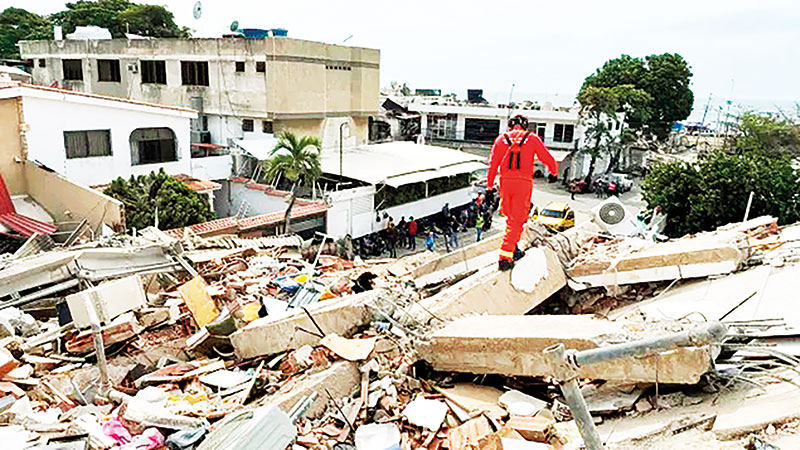
However, it would be most misleading to contend, based on the above developments, that the UN system is suffering prolonged impotence. The present suffering of Venezuela substantiates this most graphically. In the latter instance, the UN is playing an inestimably vital role in providing succour to the earthquake devastated country.
In fact the UN is proving the live wire in the co-ordination of all rescue and rehabilitation efforts. Minus the guidance and encouraging assistance of the UN, Venezuela would be in far worse shape than it is in at present.
Reports indicate that the UN Office for the Coordination of Humanitarian Affairs, for instance, is overseeing the operations of over 70 international urban search and rescue teams, including more than 2,300 personnel, who are working alongside the local authorities to trace and provide relief to the quake-affected. Besides, the rescuers come from multiple countries, including Brazil, Canada, Chile, Ecuador, Germany, Spain, the US, France, Syria and Turkiye.
The above is convincing proof of what the UN and its agencies could achieve effectively in humanitarian crises of the most devastating kind. Here is also proof of what could be achieved if the often feuding big powers of the UN Security Council think it wise to sit together in accord and consider as to how their weighty presence in the UN system could be placed at the service of humanity.
The present Permanent Members of the UNSC are mainly representative of the international political and economic order which came into being in the immediate aftermath of World War Two. They by no means represent fully the contemporary world politico-economic order and, therefore, cannot be expected to work equitably towards fulfilling the legitimate needs of present day publics.
Accordingly, while there is no denying that the UN system, as it stands, leaves much to be desired, the world community would do much better to address very earnestly as to how the UN could be reformed and energized to serve humanity better. It is a ‘systemic issue’ and unrelated to any personalities helming the UN at present.
Democratization of the UN needs to be part of the reform process. Countries, such as, India, Indonesia and Brazil, for example, could be considered as knowing much more than the present Permanent Members of the UNSC, the ‘pulse’ of the contemporary world, particularly that of its Southern half. If these major Southern countries are inducted into the UNSC there is bound to be a more balanced representation of the world’s legitimate interests.
Consequently, there could be less international friction and war. Meanwhile, the UN agencies need to be consistently strengthened and sustained to implement their humanitarian programmes without interruption. These projects are the only hope as it were of the less fortunate peoples of the world.
The needs of the world’s hungry and destitute ought to be managed systematically and the UN is best at this at present but the latter is also efficient at bringing all progressive, pro-people organizations along with it in such efforts and this is being proved in Venezuela. Critics of the UN need to take notice of these exemplary collective projects.

 Yes, coconut oil is in every Sri Lankan kitchen for cooking, frying, etc., and our grandmas have been using it for beauty, long before it became “trendy”.
OK, from me, it’s a simple, no-fuss coconut oil week for you:
For Hair:
Warm 02 tablespoon virgin coconut oil until it’s just lukewarm. Massage into scalp with fingertips, for 05 minutes, then through the lengths. Wrap with a warm towel, or shower cap, for 30 minutes, or overnight if you can. Wash with your usual shampoo.
How often: 01-02 times a week is plenty. Grandma wasn’t wrong.
For Skin:
After a shower, while skin is still slightly damp, rub a tiny bit of oil on rough spots. A little goes a long way — it’s thick!
Tip:
Don’t use it on acne-prone face skin. For some people it can clog pores. Use it more on body, hands, feet.
For Lips:
Dab the tiniest bit of coconut oil on lips before bed. Wakes up softer.
For Under-Eyes or Cuticles:
Use your ring finger to pat a rice-grain amount around dry cuticles or under eyes. Be super gentle. If it stings, or you get bumps, stop.
Pre-Wash Scalp Soother:
If your scalp feels tight/itchy from weather changes, massage a little warm oil, for 15 minutes, before shampooing. Rinse well.
A few important notes for my readers:
Patch test first: Dab a bit of coconut oil on your inner arm and wait 24 hours. Even natural things can irritate.
Quality matters: Go for virgin/cold-pressed coconut oil from the kitchen shelf. No fragrance, no additives.
The smell alone will take you back to grandma’s kitchens, won’t it? Warm, nutty, familiar.

 It’s not only our entertainers who are in the spotlight, overseas, but Sri Lankans, in general, as well.
The Sri Lankan Sports Club Scotland (SLSC) is a very good example. The club, with Hashan Hettiarachchi, as the President, continues to make a significant impact across Glasgow, and beyond, serving as a vibrant hub for sports, culture, and community engagement, within the Sri Lankan diaspora.
As a registered Scottish charity, SLSC was established with a clear purpose: to provide a formal foundation that supports and unites the Sri Lankan community, while fostering integration, wellbeing, and cultural pride.
Through its growing programmee of activities, the organisation creates opportunities for people of all ages, and backgrounds, to connect, participate, and thrive.
The club’s efforts have been recognised through funding support from the UK’s National Lottery, enabling SLSC to deliver a range of initiatives, focused on sports development, cultural enrichment, and community engagement.
-
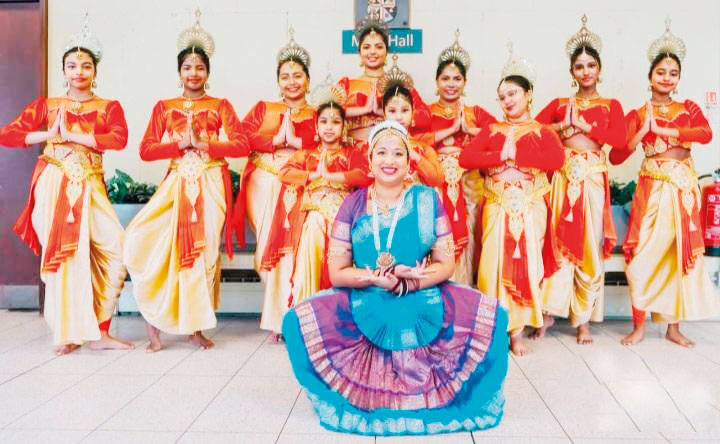
- Sinhala and Tamil New Year
-
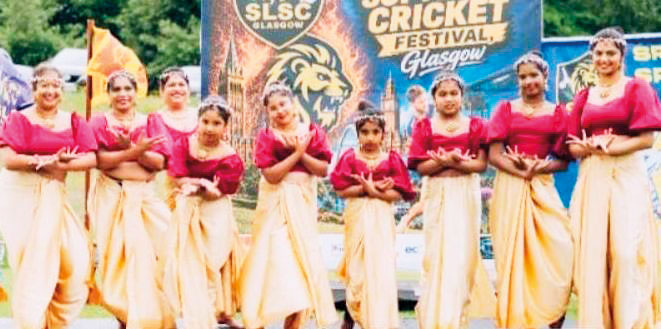
- Traditional wear at Cricket Festival
This support has helped transform ambitious ideas into successful community-driven events that have attracted widespread participation and support.
Over the past year, SLSC has proudly delivered a highly successful Sri Lankan Independence Day celebration, bringing together families and community members to commemorate the nation’s heritage and achievements.
The club also organised a memorable community concert, featuring renowned Sri Lankan artiste Krishantha Erandake, providing an opportunity for people to celebrate their cultural roots, through music and entertainment.

Trophies given at the cricket festival
Sport remains at the heart of the organisation’s mission. SLSC has successfully hosted large-scale badminton and cricket tournaments, welcoming participants from across Scotland and beyond.
These events not only promote healthy lifestyles and sporting excellence but also strengthen friendships and community bonds through shared experiences.
Alongside its sporting and cultural programmes, SLSC is committed to preserving Sri Lankan heritage for future generations.
Through traditional dance classes and cultural education programmes, young people are given the opportunity to learn, appreciate, and celebrate the rich traditions of their ancestral homeland.
These initiatives ensure that cultural knowledge and practices continue to flourish within Scotland’s diverse multicultural landscape.
As the organisation continues to grow, SLSC remains dedicated to creating inclusive opportunities that bring communities together, celebrate diversity, and inspire the next generation. With strong community support, dedicated volunteers, and ongoing partnerships, the future looks bright for one of Scotland’s most active and impactful Sri Lankan community organisations.
For SLSC, success is measured not only by the events it delivers, but by the lasting connections it creates and the positive difference it makes within the community every day.

Hope fit but Roach doubtful as West Indies eye series win

National Institute of Health Sciences celebrates a century of revolutionizing Public Healthcare Training in Sri Lanka – PM

IT, Electrical and Electronics sectors key to achieving 7–8% economic growth in coming years -President

Sri Lanka Cricket confirm dates for India Tests; tour to begin on August 15

Google must pay €4.1bn fine for using Android to ‘block’ rivals

England’s top three and South Africas quicks, both best in class, prepare for semi-final fight

‘Dates have the highest sugar content to fight Coronavirus’

Sunday Island 27 December – Headlines

#SundayIsland 17th December – Headlines

Sunday Island – 28th March

Sunday Island Headlines – 21 March

Sunday Island – 21st February – Headlines
-
 News4 days ago
LAWASIA warns against ad hoc initiative to increase judges’ retirement ages
-
 News5 days ago
Another 1,132 Sri Lankan Personnel to be deployed for United Nations Peacekeeping Missions
-

 News7 days ago
Kelaniya emerges as highest ranked Lankan uni in Times Higher Education Sustainability Impact Ratings
-
 News3 days ago
Chamuditha to seek removal of injunction on Youtube programme
-

 Business6 days ago
Month-end profit-takings drive stock trading; indices up
-
 Features5 days ago
People’s Bank expands digital banking network with 125th cheque deposit kiosk
-
 Features3 days ago
Climate action to bring South Asia together
-

 News6 days ago
FSP complains of irregularities in a Guinness World Record event held in Sri Lanka