
Editorial
Pavithra’s jumbo task


Friday 21st July, 2023
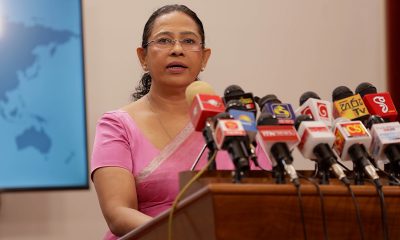
Minister of Wildlife and Forest Resources Conservation Pavithra Wanniarachchi finds herself in an unenviable position. The two sectors under her purview are perennially in crisis, and sorting them out is a Sisyphean task, which no minister has been equal to all these decades. Among the intractable problems she is facing are the fast receding forest cover and the ever-worsening human-elephant conflict (HEC); the two issues are interconnected.
Minister Wanniarchchi has undertaken to formulate a policy and work out a strategy to resolve HEC, according to media reports. She is right in having done so, and deserves encouragement and support, given the gravity of the situation. Researchers have pointed out that since 2019, HEC has left 125 people and 370 elephants dead in Sri Lanka, which has recorded the highest annual elephant deaths and second-highest human deaths due to HEC. The human death rate has increased by approximately 42% over the previous three decades, we are told. Year 2022 was particularly bad for humans and elephants in this country with 145 people and 133 elephants being killed.
The number of elephant deaths in Sri Lanka averages one a day, according to the conservation web portal, Mongabay, and the leading cause thereof is human intervention. Scores of elephants suffer violent deaths at the hands of humans, who resort to cruel methods such as shooting, electrocution and hiding improvised explosive devices in food bait, in dealing with marauding wild elephants.
There are a significant number of Sri Lankan experts who have done extensive research on HEC, and they are willing to help save humans and elephants. It is hoped that Minister Wanniarachchi will enlist their support and ensure their active participation in the formulation of policies.
The intensification of HEC and the resultant high death tolls have come as no surprise. A study conducted by a group of experts in 2019 has found that humans inhabit about 70% of the elephant range in Sri Lanka, and nearly 40 percent of land outside the protected areas is shared by humans and elephants. Rapid deforestation has caused elephant habitats to shrink rapidly, driving wild jumbos to invade villages, destroy cultivations, houses and human lives and run the risk of being killed in the process.
It defies comprehension why in this day and age, when technology has enabled things that were considered impossible a few years ago, we cannot save elephants from moving trains, which kill quite a few of them every year. We should be able to find a technological solution to the problem of train-elephant collisions.
There have been some half-hearted attempts to resolve HEC during the past so many years but they did not reach fruition as there was no consensus among the stakeholders on a strategy to be adopted. Most experts have been working in silos, but their research has yielded valuable data, which can be utilised to mitigate, if not end, HEC. If Minister Wanniarachchi cares to bring them together and ensure that they make a concerted effort to break the back of HEC, it will be possible to save the precious lives of humans and elephants.
The success of any strategy to resolve HEC will hinge on the conservation of forests and the reforestation of denuded areas to ensure that the elephant habitats will be preserved. This is one of the reasons why we opposed President Gotabaya Rajapaksa’s decision to transfer the authority over ‘peripheral’ forests from the Forest Department to the District Secretaries purportedly to promote rural agriculture. The ulterior motive behind that move was to allow government supporters to grab land, which has to be kept free from human activity to ensure the wellbeing of forests. Unfortunately, what we feared is happening.
Most of all, it is hoped that Minister Wanniarachchi has overcome her unhealthy fascination with the occult, which she amply demonstrated by helping promote a shaman’s herbal concoction as a cure for Covid-19, and dropping pots containing ‘miracle water’, into a river to rid the country of pandemic while she was the Minister of Health. Otherwise, it may be difficult to adopt a scientific approach to resolving HEC.









Monday 22nd December, 2025
Maan Pharmaceuticals Ltd., the manufacturer of Ondansetron, which has been withdrawn from hospitals here pending a probe, is reported to have asked the Sri Lankan health authorities to have the drug tested by an internationally accredited laboratory. The use of nine other Maan products too has been suspended in Sri Lanka over quality concerns. Maan’s reaction has come as no surprise; all companies ardently defend their products. However, its concerns should be heeded. The National Medicines Regulatory Authority (NMRA) and the Ministry of Health ought to furnish irrefutable evidence in support of their decision to suspend the use of the drugs at issue. The manner in which the NMRA has carried out its duties and functions, especially granting approval for drugs and investigating complaints of their quality, over the years, does not inspire public trust.
The subtext of what has been reported of the Maan’s letter to the Sri Lankan health authorities is worth taking note of. It can be argued that in corporate newspeak, Maan has questioned the competence of the NMRA to test its products. As Maan would have us believe that its products meet international standards, it should be asked to state whether it has gained access to stringent regulatory destinations, such as the US and EU, and, if not, why.
It is being argued in some quarters that the degradation of pharmaceuticals can happen due to improper storage and transport. Maan’s aforesaid letter reportedly has reference to drug storage here. There are allegations that the Sri Lankan health authorities leave imported drugs in freight containers under inappropriate conditions for extended periods. However, the phials of Ondansetron which were tested at the Kandy National Hospital and found to be affected by microbial contamination had been stored properly and their seals were intact, according to media reports, quoting doctors. Thus, the contamination of the drug points to issues in manufacturing and packaging rather than storage and transport.
Meanwhile, a news item in this newspaper today reveals the pivotal importance the pharmaceutical industry has assumed in the Indian economy; India’s pharmaceutical exports have crossed USD 30 billion. Therefore, some critics of the Indian pharmaceutical products are of the view that India will do everything in its power to protect the interests of its drug companies, including Maan. But the fact remains that India itself has cracked down on some of its pharmaceutical companies involved in scandals. It severely dealt with the Indian companies that manufactured contaminated cough syrups which killed 66 children in Gambia in 2022 and 22 children in India in September 2025.
In the greed-driven corporate world, profits take precedence over human life, and there is hardly anything that Big Pharma spares in pursuing profit maximisation. As we pointed out in a previous comment, the World Health Organization has revealed that at least one in 10 medical products in low-and middle-income countries fails to meet quality standards or is falsified. This shows the enormity of the problem of fake and substandard drugs. Hence the need for robust mechanisms to protect patients.
All issues related to substandard and falsified drugs and their adverse effects in this country boil down to the failure of successive governments to address multiple problems pertaining to drug regulation and testing and find long-term solutions. Flaws in regulatory oversight and the absence of proper testing facilities have helped corrupt politicians and bureaucrats enrich themselves by turning this country into a dumping ground for poor-quality and fake medicines. Health Minister Dr. Nalinda Jayatissa himself has said that not all drugs approved by the NMRA undergo rigorous testing, and thorough tests are conducted on drugs only when there are complaints about their quality.
Most of all, the NMRA has to be cleansed, as a national priority. Its history is replete with numerous scandals, including allegations of corrupt drug registrations, data manipulation, issues with substandard and fake medicines leading to patient deaths prompting investigations, suspensions, legal action, and internal turmoil with officials resigning amidst claims of threats and cover-ups.

Sri Lanka has a very ‘promising’ government and a perennially protesting Opposition. The government makes various promises, which are like piecrusts made to be broken. The Opposition in a perpetual state of agitation bursts into protests at the drop of a hat. The two sides have been clashing in Parliament instead of sinking their political differences and cooperating at least in the aftermath of a disaster.
The Opposition has requested Speaker Dr. Jagath Wickramaratne to appoint a Parliamentary Select Committee (PSC) to probe the government’s alleged failure to mitigate the impact of Cyclone Ditwah despite repeated warnings issued by the Meteorology Department and the Irrigation Department. The government is determined to avoid a fate similar to that which befell the Yahapalana government following the Easter Sunday terror attacks, which became the undoing of that dysfunctional regime. It is therefore very unlikely to meet the Opposition’s demand at issue. Even if it agrees to appoint a PSC to probe its own alleged lapses, by any chance, it will not allow an Opposition MP to chair the committee and will go all out to frustrate its rivals’ efforts to ruin its political future.
Interestingly, some of the key Opposition members are former Yahapalana MPs who sought to derail a PSC probe into the 2015 Treasury bond scam. They craftily appointed a member of the JVP, which was a Yahapalana partner in all but name, as the Chairman of that PSC, and incorporated a slew of footnotes into the committee report in a bid to dilute it.
In this country, PSCs rarely help get to the bottom of the issues they probe. The PSC on the Treasury bond scam went out of its way to clear the then Prime Minister Ranil Wickremesinghe’s name, and helped the UNP scapegoat former Central Bank Governor Arjuna Mahendran and throw him to the wolves. In 2012, Mahinda Rajapaksa government turned a PSC probe into a witch-hunt against then Chief Justice Dr. Shirani Bandaranayake, who was subsequently wrongfully impeached. The PSC that investigated the Easter Terror attacks (2019) gathered a lot of valuable information but its findings, conclusions and recommendations were tainted by a glaring political bias.
Going by the government’s determined bid to let its MP Asoka Ranwala off the hook, following a road accident, how ruthless the JVP-led NPP will be in warding off threats to its political survival is not difficult to imagine. The Opposition can go on shouting until it is blue in the face but it will not be able to have the government’s alleged failure to heed disaster warnings and save lives investigated properly as long as the JVP/NPP is in power.
What we are witnessing on the political front, especially in Parliament, is like a drunken brawl at a funeral. The government and the Opposition are fighting while the country is mourning those who perished in recent floods and landslides.
What the political parties represented in Parliament ought to do at this juncture is to get their priorities right. They must stop clashing and make a concerted effort to carry out post-disaster rebuilding operations and strengthening the economy. They must not lose sight of the rapid depreciation of the rupee, and the disconcerting forecasts of an economic slowdown. The much-advertised revenue bubble, created by an unprecedented increase in vehicle imports, is about to burst, and the possibility of the country having a rupee crisis to contend with again cannot be ruled out. Foreign reserve targets are far from achieved, and there is a pressing need to boost the forex inflow and ensure that the country will be able to honour its pledge to resume foreign debt repayment in 2028.
All political parties have done precious little for the disaster victims. They have been only visiting the welfare centres and distributing relief materials collected from the considerate public. They ought to engage in post-disaster rebuilding actively. Reconstruction is a labour-intensive task. The self-righteous political leaders should mobilise their community level organisation for post-disaster rebuilding. Sadly, they have not even helped clean flood-hit houses.
Saturday 20th December, 2025
Disciplinary action has reportedly been taken against several police officers for their alleged failure to conduct a proper investigation into a recent accident caused by NPP MP Asoka Ranwala in Sapugaskanda. This move, we believe, has the trappings of a diversionary tactic. The police would have incurred the wrath of the government if they had conducted a breathalyzer test on Ranwala and produced him before a Judicial Medical Officer immediately after the crash where an infant, his mother and grandmother were injured.
Ranwala was subjected to a blood alcohol test more than 12 hours after the accident, according to media reports. The police would not have dragged their feet of their own volition. They were obviously made to do what they did. The law applies equally only to ordinary people. Will the police top brass explain why no disciplinary action was taken against the police officers who unashamedly sided with a group of JVP members involved in grabbing an office of the Frontline Socialist Party (FSP) in Yakkala in September 2025. After turning a blind eye to that blatant transgression, the police provided security to the JVP members who were forcibly occupying the FSP office. Thankfully, a judicial intervention made them leave the place. The current rulers claim they have not placed themselves above the law, unlike their predecessors. A wag says they have placed the law below them instead!
Having made a mockery of its much-advertised commitment to upholding the rule of law by intervening to prevent Ranwala from undergoing an alcohol test immediately after the aforesaid accident, the government is making attempts at face-saving. Curiously, blood samples obtained from Ranwala have been sent to the Government Analyst for testing! The government seems to have a very low opinion of the intelligence of the public, who voted for it overwhelmingly, expecting a ‘system change’.
It is being argued in some quarters that the disciplinary inquiry against the police officers has been scripted, and the charges against them will be dropped when the issue fizzles out. This argument is not without some merit, but there is a possibility of the government going to the extent of trying to clear its name at the expense of the police officers concerned if push comes to shove.
Successive governments have scapegoated police personnel and other state employees to safeguard their interests, and the incumbent administration is no exception; it has already sought to shift the blame for its failure to mitigate the impact of Cyclone Ditwah to the Meteorological Department, which, it has claimed, did not warn it about the extreme weather events fairly in advance. Opposition Leader Sajith Premadasa told Parliament on Thursday that the government had muzzled some senior officials of the Meteorological Department.
Some leaders of the incumbent government are bound to face legal action for their commissions and omissions when they lose power, and the state officials pandering to their whims and fancies will have to do likewise.
The public officials who are at the beck and call of politicians and carry out illegal orders should realise that they run the risk of being left without anyone to turn to in case they have to face legal action for their transgressions. Their ruthlessly self-seeking political masters will not scruple to sacrifice them.

Duffy, Ajaz rip through West Indies as New Zealand seal series 2-0

Financial contributions received for ‘Rebuilding Sri Lanka’ Fund

UNICEF representatives and PM discuss rebuilding schools affected by the Disaster

A few showers may occur in the Uva province and in Ampara, Batticaloa, Matale, Nuwara-Eliya, and Hambantota districts

NMRA laboratory lacks SLAB accreditation

Air quality deteriorating in Sri Lanka

‘Dates have the highest sugar content to fight Coronavirus’

Sunday Island 27 December – Headlines

#SundayIsland 17th December – Headlines

Sunday Island – 28th March

Sunday Island Headlines – 21 March

Sunday Island – 21st February – Headlines
-

 Midweek Review6 days ago
How massive Akuregoda defence complex was built with proceeds from sale of Galle Face land to Shangri-La
-

 News5 days ago
Pope fires broadside: ‘The Holy See won’t be a silent bystander to the grave disparities, injustices, and fundamental human rights violations’
-

 News5 days ago
Pakistan hands over 200 tonnes of humanitarian aid to Lanka
-

 Business4 days ago
Unlocking Sri Lanka’s hidden wealth: A $2 billion mineral opportunity awaits
-

 News6 days ago
Burnt elephant dies after delayed rescue; activists demand arrests
-

 Editorial6 days ago
Colombo Port facing strategic neglect
-

 News4 days ago
Army engineers set up new Nayaru emergency bridge
-

 News6 days ago
Sri Lanka, Romania discuss illegal recruitment, etc.