
News
Pathfinder demands early action by Colombo to halt ecological disaster being caused by Tamil Nadu in Palk Bay, Gulf of Mannar


Recently, Kachchativu Island has attracted attention not only from fisherfolk of India and Sri Lanka but also from political leaders of both nations and the judiciary. President Anura Kumara Dissanayake’s visit to Kachchativu in September marked a significant milestone. For the first time in history, the leader of Sri Lanka expressed interest in the ongoing debate over the island — an issue settled decades ago after lengthy negotiations. Meanwhile, India’s Chief Justice Surya Kant, who was in Colombo just weeks before his appointment, while not explicitly mentioning Kachchativu or illegal fishing activities by Indian fishers in Sri Lankan waters, emphasised that environmental cooperation is not a matter of charity or diplomacy; it is a necessity for survival.
Focusing on Palk Bay and the Gulf of Mannar, which are currently under severe stress from overfishing, destructive trawling, and unregulated coastal activities, as well as recurring confrontations between Indian trawlers and Sri Lankan fishers, he said the situation exemplifies a deeper ecological tragedy-competition for an exhausted resource base. Looking ahead, he added that “the time has come for India and Sri Lanka to pioneer a regional model of environmental constitutionalism.” Among the suggestions he made were establishing a Joint Commission on Marine Ecology and creating data-sharing protocols for pollution and fisheries management between the two countries.
It has been over half a century since India and Sri Lanka established the International Maritime Boundary Line (IMBL) through two bilateral agreements in 1974 and 1976. These agreements—signed, ratified, and recognised internationally—not only defined sovereign maritime boundaries but also definitively confirmed Sri Lanka’s ownership of Kachchativu Island once and for all. These two agreements did not provide for traditional fishing rights for Indian fishermen to fish in Sri Lankan waters. Following these agreements, Sri Lankan fishermen withdrew from their traditional fishing grounds around the Wadge Bank, located south of Kanya Kumari and the southern part of Pedro Bank, north of the Jaffna Peninsula, which came under Indian control. However, Indian fishermen have continued to demand “traditional fishing rights” in Sri Lankan waters.
Despite these agreements, reached after lengthy and intense negotiations, the issue of Kachchativu and illegal fishing persists, not due to any ambiguity in law or diplomacy, but because of a calculated political and economic interest in sustaining them. Tamil Nadu’s persistence in raising the issue is less about sovereignty and more about securing access to the rich fishing grounds around Kachchativu — and, unsurprisingly, far beyond that island.
According to reports this year, by mid-July, Sri Lanka had detained 24 Indian trawlers and taken into custody 181 fishermen for illegally entering Sri Lankan waters, fishing without licences, and engaging in bottom trawling. On 5th, 6th and 9th August, 31 fishermen were taken into custody, and on 28th September, another 12 were apprehended. These arrests continued in October, netting 47 fishermen and five trawlers, and in November, 49 fishermen and five fishing vessels.
The Real Issue: Industrial-Scale Poaching
Although Tamil Nadu’s claims suggest the dispute centres on fishing rights near Kachchativu, Indian trawlers frequently encroach into Sri Lankan waters well beyond the vicinity of that island. Their illegal activities have been observed along the northern, north-western, and even eastern coasts of Sri Lanka. It appears that Kachchativu is merely a distraction; the real issue lies in the pursuit of unsustainable and illegal bottom trawling in Sri Lankan waters, driven by profit.
Bottom trawling harms the marine environment. It not only harvests mature fish and prawns but also damages seabed habitats, kills juvenile marine life, and creates wasteful bycatch, accounting for about 30 per cent of the total catch. The damage is long-lasting and may take decades to repair, if it can be repaired at all. The fish catch in the northern peninsula, which was 35,000 MT in 1995, dropped to 17,000 MT in 1923—once a thriving industry in the conflict-affected Northern Province—serves as a silent reminder of the destruction caused.
Political Opportunism Across the Palk Strait
When a few of the hundreds of Indian trawlers that trespass into Sri Lankan waters are seized and the offenders are arrested, protests flare up in Tamil Nadu, from where most of the intruders originate. These protesters appeal to the state government, which then petitions New Delhi, demanding decisive action to recover Kachchativu Island. What took place during the 2024 Lok Sabha elections was turning Kachchativu, a non-issue, into a political football, not to score goals but to garner votes.
Sri Lanka, by comparison, has remained notably restrained and consistent. Over the past fifty years, the only activities undertaken by the Sri Lankan state on Kachchativu Island have been the renovation of St. Anthony’s Church and the organisation of annual church celebrations held in March, attended by pilgrims from Tamil Nadu and Sri Lanka.
Time for a Science-Based Solution
By the way, what has Sri Lanka done in the past half-century since asserting its rightful claim to the island? Absolutely nothing! That is strange behaviour after extensive, painstaking negotiations over the maritime boundary and the ownership of Kachchativu. Is it due to a lack of imagination or simply lethargy?
Although sovereignty over Kachchativu has been established, concerns about the health of the Palk Bay ecosystem persist, as Indian Chief Justice Kant highlighted. It is now essential to shift the debate from profits and politics to science and sustainability. Sri Lankan institutions must take the lead in achieving that goal.
Several years ago, the Pathfinder Foundation proposed establishing a marine research station on Kachchativu Island to make productive use of the currently barren land. This could be realised through collaboration with national organisations such as the Department of Fisheries, the National Aquatic Resources Research and Development Agency (NARA), and Sri Lankan universities. India has numerous research stations along its coastline, including regional centres of the Central Marine Fisheries Research Institute (CMFRI), the Gulf of Mannar Biosphere Research Units, and others. A research station in Kachchativu, among others, could:
Quantify the impact of illegal bottom trawling.
Monitor marine biodiversity and ecological degradation.
Document migratory patterns and spawning areas.
Make recommendations to arrest the deterioration of marine ecosystems and improve fish stocks.
Facilitate dialogue grounded in scientific evidence.
The old argument — that Kachchativu lacks basic facilities like power, water, and sanitation — no longer holds water. Today, solar power, desalination units, Battery Energy Storage Systems (BESS), and environmentally friendly sanitation systems are both cost-effective and easy to deploy. The island, covering 1.15 sq km, though small, is large enough for a low-impact scientific outpost and modular research laboratories to research and develop proposals to enhance fish stocks in the area.
Furthermore, research carried out at this station could be shared with Indian counterparts to enhance understanding of sustainability, transparency, and scientific diplomacy. A well-organised, collaborative framework could establish joint marine conservation initiatives and even future agreements for seasonal, well-regulated artisanal fishing that does not involve bottom trawling.
Conclusion: Act Before It’s Too Late
India and Sri Lanka could benefit greatly from maritime cooperation and avoid substantial losses resulting from ecological collapse and ongoing bilateral tensions. Instead of insisting on revisiting a settled agreement, both countries—especially their coastal communities—would gain more from science-based management of the Palk Bay ecosystem.
Sri Lanka must avoid allowing political expediency to jeopardise regional stability and marine sustainability. It should exercise decisive leadership to seize the current opportunity. Pathfinder Foundation remains ready to help steer that course, grounded in legal principles, supported by scientific evidence, and driven by long-term national interests.
This is a Pathfinder perspective. Can read more on the web www.pathfinderfoundation.org and communicate with us at pm@pathfinderfoundation.org.





President Anura Kumara Dissanayake has appointed Air Chief Marshal Kolitha A. Gunathilake (Retd.) as the new Chancellor of General Sir John Kotelawala Defence University.
The letter of appointment was presented to Air Chief Marshal Kolitha A. Gunathilake (Retd.) by Secretary to the President Dr Nandika Sanath Kumanayake at the Presidential Secretariat on Monday (05) afternoon.
Air Chief Marshal Kolitha A. Gunathilake(Retd.) has served as Commander of the Sri Lanka Air Force and as Chief of Defence Staff.
(PMD)
By Shamindra Ferdinando
The government is coming under pressure from civil society organisations to formulate a clear ‘mechanism’ to deal with requests for presidential pardons.
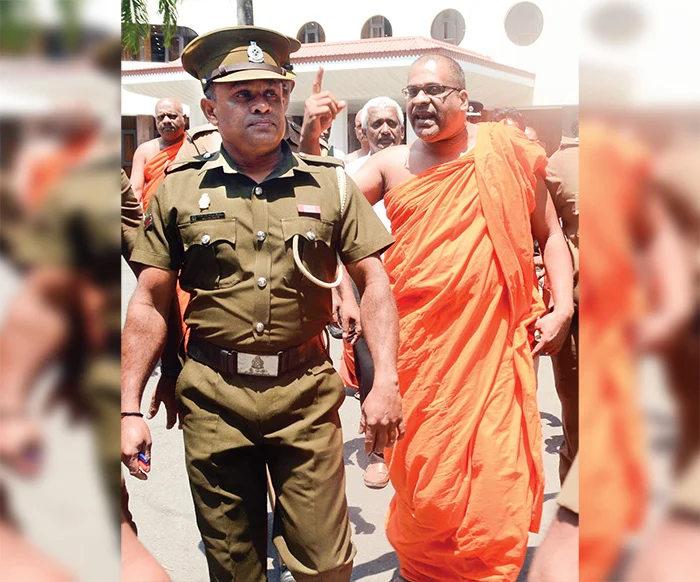
Representing civil society organisations, Gamini Viyangoda yesterday flayed the NPP government for the delay in taking action against Ven. Galagoda Aththe Gnanasara Thera, after the Supreme Court declared the 2019 presidential pardon granted to him by President Maithripala Sirisena null and void. He said successive Presidents had abused their executive power to release convicted persons from prison.
Purawesi Balaya activist Viyangoda pointed out that the Supreme Court ruled that President Sirisena had acted arbitrarily and failed to independently consider the relevant materials before exercising his executive power.
The Court of Appeal, in August 2018, sentenced Gnanasara Thera, General Secretary of the Bodu Bala Sena (BBS), to six years rigorous imprisonment for contempt of court over his conduct during proceedings concerning missing journalist Prageeth Ekneligoda. Viyangoda said that those who had been affected by the monk’s conduct have the right to know on what basis the President released him, in May 2019.
The Court of Appeal yesterday (05) ordered the relevant authorities to enforce the remaining period of imprisonment imposed on the Thera.
Gnanasara Thera, who had been subject to an open warrant for his arrest, was produced before the Court of Appeal, today, by prison officials.
Having considered the submissions made before it, the Court of Appeal directed the Commissioner General of Prisons to take the necessary steps to enforce the remaining period of the sentence imposed on Gnanasara Thera. Police on Saturday (03) apprehended the monk at a forest monastery in Kalutara. The Colombo Magistrate’s Court on Sunday (04) ordered the Thera to be remanded in custody till Monday.
Appearing for Gnanasara Thera, Attorney-at-Law Iresh Seneviratne, together with Attorney-at-Law Pasan Karunaratne, told the court yesterday that his client had been experiencing severe mental distress and had therefore gone to an ‘Aranya Senasanaya’, where he had been staying.
Viyangoda said that examination of presidential pardons, executed over the years, would reveal how successive leaders exploited the executive power to appease their own. Responding to The Island queries, Viyangoda said that Sirisena, in Sept. 2019, just two months before the presidential election, granted Jude Shramantha Jayamaha a Presidential pardon.
Jude Shramantha Jayamaha was sentenced to 12 years by the High Court, but the Court of Appeal revised that sentence to death, in July 2012, which the Supreme Court later upheld. Viyangoda said that though the Supreme Court, in June 2024, declared that the particular Presidential action was illegal and arbitrary, law enoforcement authorities were yet to take tangible measures to enforce the court directive.
Viyangoda stressed that no President should exercise the right to pardon a convicted on his or her own without following laid out procedures. According to him, Sirisena appeared to have simply ordered the monk, and the convicted murderer, released in response to appeals received by him. A comprehensive investigation could identify those who had been involved in these wrongdoings.
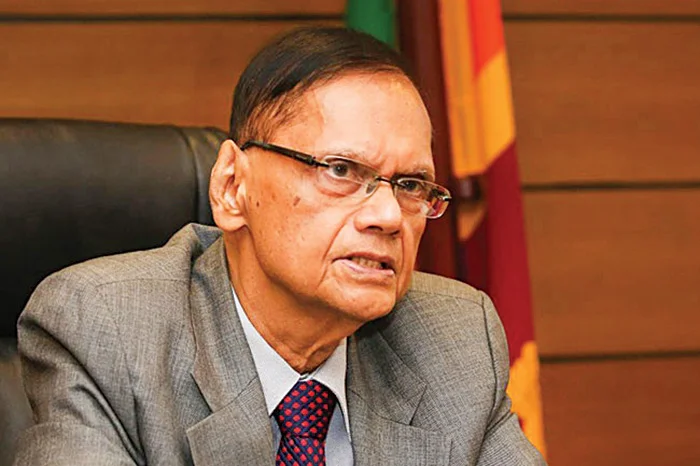
Convenor of Janathawadi Joint Opposition, Prof. G. L. Peiris, yesterday (05) emphasised the responsibility on the part of the government and others to act cautiously when making representations in respect of Sivarasa Anojan facing death sentence in Saudi Arabia over a controversial social media post.
Addressing the media at former President Ranil Wickremesinghe’s Flower Road Office, Prof. Peiris emphasised that whatever representations should be made through the Foreign Ministry.
The one-time External Affairs Minister warned of dire consequences of political party leaders, members of Parliament and civil society making direct representations and trying to get in touch with various Saudi authorities over the phone.
Prof. Peiris said that those who intervened on behalf of Anojan should keep in mind that Sri Lanka should be mindful of the Saudi way of governance and sensitivities.
The former Minister questioned the circumstances Sri Lanka was left out of the recent BRICS summit held in New Delhi. He recalled how former President Wickremesinghe discussed Sri Lanka’s entry into BRICS with Russian President Putin and received an invitation for the Summit there but as a result of the change of government, in Sept. 2024, Sri Lanka ignored that invitation.
That resulted in Sri Lanka being left out from the New Delhi summit, Prof. Peris said.
Prof. Peiris pointed out the absurdity in sending the Foreign Secretary to the BRICS Summit in Russia instead of the President, PM or the Foreign Minister to represent the country.
Referring to the forthcoming conclusion of the current IMF programme, initiated during Wickremesinghe’s time, Prof. Peiris said that Sri Lanka lost a great opportunity to benefit from BRICS by failing to represent the country at a higher level at the Russian summit.
The BRICS nations established the New Development Bank (NDB), originally called the BRICS Development Bank, Prof. Peiris said.
Dismissing NPP government’s explanation regarding Iranian ships awaiting necessary supplies but deprived by US imposed restrictions, the former Minister strongly criticised the administration’s response. According to him, this government responded in a similar manner when the US sank an unarmed Iranian frigate just outside Sri Lankan territorial waters in March this year.
Prof. Peiris declared that the government’s assertion that the US restrictions weren’t only directed at Sri Lanka but all Iranian vessels in other regions as well was not acceptable (SF)

Harmanpreet Kaur steps down as India captain

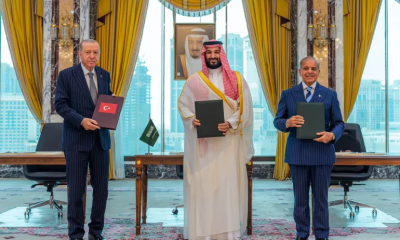
Turkiye, Pakistan agree Saudi Arabia military deployment under Mecca pact

Rumesh Tharanga among nominees announced for World Athlete of the Year 2026
New Chancellor appointed to General Sir John Kotelawala Defence University

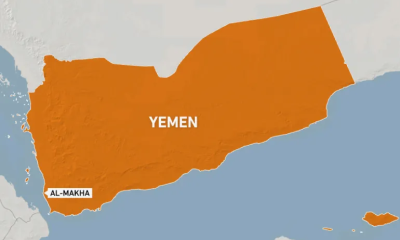
Yemen government forces claim recapturing Mocha from Houthis

Showers above 75 mm are likely at some places in the Western, Sabaragamuwa, Central, and Southern provinces after 1.00 pm

‘Dates have the highest sugar content to fight Coronavirus’

Sunday Island 27 December – Headlines

#SundayIsland 17th December – Headlines

Sunday Island – 28th March

Sunday Island Headlines – 21 March

Sunday Island – 21st February – Headlines
-

 Latest News6 days ago
Gold winner Tharanga gets brand-new Honda Vezel from SLAAJ
-

 News6 days ago
US-assisted ‘Ice’ detection: NPC to examine IGP’s move to transfer drug-busting team
-

 Features7 days ago
Why Sri Lanka needs an Inclusive Civic Nationalism – urgently
-

 Editorial5 days ago
Colombo Port drug bust: The plot thickens
-

 News7 days ago
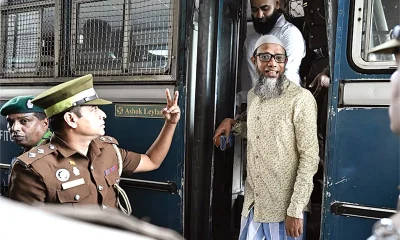
Civil society activist accuses govt. of favouring Ven. Gnanasara
-
 Midweek Review7 days ago
Dappula’s Easter Sunday ‘grand conspiracy’ claim demolished
-

 Editorial7 days ago
When crime bosses rise above law and shrines
-
Editorial6 days ago
Drug busting, transfers and trust deficit