
Features
Pastor Moses shows the power of a free lunch

by Munza Mushtaq
It’s just past noon, and on the sweltering rooftop of the Bethany Church in Rajagiriya, Sri Lanka, Pastor Moses Akash de Silva and a team of volunteers are grating piles of carrots while K.D. Iranie hovers over a large pan, stirring a spicy fish curry atop a makeshift firewood cooker.
Ms. Iranie, who’s in her 60s, has served as the main cook for the church’s community kitchen since Pastor Moses started the project in June. “I come all five days a week,” she says. “Seeing the people getting a delicious meal makes me so happy. … I am doing what God wishes me to do.”
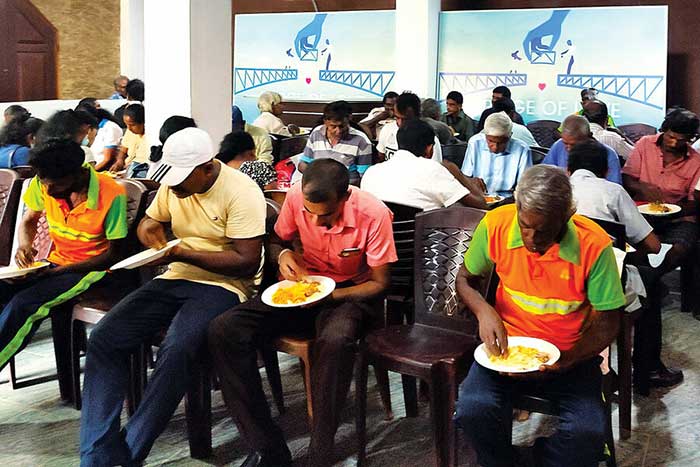
At 12:30 p.m. sharp, after trays of fresh food are carried down four flights of steps, Pastor Moses signals a volunteer to open the church’s grilled gates. At least a hundred men, women, and children eagerly file in, following the aromas of turmeric-infused fluffy yellow rice, fish and pumpkin curries, carrot sambol, and papadums. More will arrive with time. For many, this is their first proper meal in days.
Sri Lanka’s worst-ever economic crisis has left nearly 30% of its 22 million people food insecure, according to the World Food Program, with food inflation soaring to 73% in November. The Voice Community Kitchen helps out by providing some 6,000 free lunches every week across roughly two dozen locations throughout Sri Lanka, while also bringing together different ethnoreligious communities that have historically struggled to find common ground. Pastor Moses says the initiative was born of pragmatism, compassion toward all Sri Lankans, and a desire to model the same generosity he experienced as a young person.
“I have gone for days without food, so I understand how these people feel,” he says. “It does not matter to us what religion they are from, or if they have family, or what they do. If they are hungry, they are welcome to eat at our community kitchen.”
Raised in an orphanage in the hill capital of Kandy, Pastor Moses moved to Colombo at age 17 seeking better opportunities. He lived at a bus stop for three days before finding work as a cleaner at a polyethylene factory. It’s there he met the senior pastor of Bethany Church, Dishan de Silva, who took him in.
Pastor Moses explains with a bright smile how he lived with the senior pastor for seven years, eventually adopting his mentor’s surname. He still goes by Pastor Moses to honor the name given to him at the orphanage.
Senior Pastor de Silva founded the Voice for Voiceless Foundation in 2015 and later handed over the reins to Pastor Moses, who has since spearheaded multiple charitable initiatives as the foundation’s national director. The community kitchen idea came to him earlier this year when Voice Foundation volunteers were distributing dry rations to families on the outskirts of Colombo.
“In one house we met a mother with a 2-year-old child who had been surviving on ripened breadfruit and water spinach for three days due to the shortage of cooking gas in the market,” he says. “That was when we thought, there was no point giving dry rations if people were unable to cook.”
So they started cooking up meals themselves. Many of the current community kitchens are based in schools, while others, such as the flagship Bethany Church program in a Colombo suburb, serve lunch every day to a mix of children and adults. At least 60% of the people who come to the kitchen do not eat breakfast or dinner due to financial hardship, according to the Voice Foundation.
There is only one rule at the Voice Foundation’s community kitchens: Guests can eat as much as they want, but they can’t take food outside the premises. At the Bethany Church, there is not a single garbage bin. According to Pastor Moses, there’s no need – there are never leftovers.
“The community kitchen attracts different people from different walks of life, including beggars, street cleaners, security guards, and anyone else who needs a meal,” Pastor Moses says.
N.K. Karunawathie works at a bank nearby. Even as the cost of living skyrockets, her salary has remained stagnant, meaning her family can “no longer afford three meals a day,” she says.
To help make ends meet, she and her husband, both Buddhists, have been visiting the Voice Community Kitchen since it started this summer. “My husband and I come here daily for lunch. … This is a very meritorious gesture by the church,” Ms. Karunawathie says.
Most of the funding for the Voice Foundation’s activities, including the community kitchens, comes from Sri Lankans living locally and overseas. The organization has also partnered with several supermarkets to collect unsold vegetables.
For a small country, Sri Lanka frequently faces religious-based conflict. Apart from a quarter-century-long war with the Liberation Tigers of Tamil Eelam, which strained the relationship between the majority Buddhists and minority Hindus, the country has also seen a rise in attacks against Muslims since 2013. The Easter Sunday bombings in 2019 further exacerbated tensions.
Mehdi Ghouse started volunteering at the kitchen months ago after learning about the project on social media.
“It doesn’t matter that I am Muslim, or this project is run by the church. What matters is the satisfaction we all get when we see people eating and leaving happy,” he says.
Not only are all religions welcome at the Voice Community Kitchen, but experts also say such initiatives could be key to improving ethnoreligious engagement and lead to better conflict mediation in the future.
“It has been said with a degree of cynicism that the way to a hungry man’s heart is through his stomach,” says Dr. Jehan Perera, executive director of the National Peace Council, a Colombo-based educational and advocacy organization. He believes that community kitchens are one way to build trust between different ethnoreligious groups, even amid economic and political turmoil.
“The economic crisis affects all ethnic and religious communities the same. So this is a good opportunity to forge bonds of community solidarity and overcome the challenges of the past,” he says.
For Pastor Moses, the community kitchen’s mission is simple: Feed the hungry. But he does hope the work will have a ripple effect by inspiring generosity among all who engage with the project.
“I am who I am because of the upbringing I had in the orphanage and the help I got throughout the years since I came to Colombo,” he says. “I hope others who volunteer here and those who I have taken under my wings will follow my footsteps by serving the people.”
(Christian Science Monitor)

 It shouldn’t come as a surprise that there is a growing number of ‘UN Sceptics’ in our midst. One of the prime causes for this trend seems to be the UN’s apparent helplessness in the face of escalating bloodshed and war.
In this connection today’s Gaza, Lebanon and invasion-shattered Ukraine come easily to mind. With regard to the phenomenal amount of civilian blood being spilled in these war zones in particular, the UN has been largely helpless and has proved incapable of being an effective promoter of peace and conflict resolution. The perception of the UN’s impotence should, therefore, only be expected.
But such scepticism has its origins in a superficial reading of current developments in international politics. It fails to take account of all the dimensions of thinking that matter in an assessment of the UN’s apparent failings.
The UN chief and his team have no choice but to act within the confines of the organizational structures they have inherited. They cannot do much to change existing mandates, rules and regulations, for example, provided the envisaged changes receive the sanction of the powers that matter in the prevailing political order. In other words, UN reform must await the consent and facilitation of the foremost powers or the Permanent Members of the UN Security Council.
Modern world history continually demonstrates the almost impossibility of the major powers thinking and acting consensually on law and order matters of the first importance. Just two cases in point are the Gaza and Ukraine. Whereas in both these instances ending human suffering ought, under normal circumstances, be the priority of the foremost powers, they have been motivated more by Realpolitik or power politics calculations rather than by humanity.
One set of ground realities that proves the above premise is the reluctance by the Trump administration to rein-in Israel completely to allow a measure of respite to be relished by the traumatized Gaza civilians who have been subjected to untold suffering over the months. The administration is also proving tolerant of the Netanyahu regime in its current no-holds-barred military onslaughts on Southern Lebanon. In the latter situation too Lebanese civilians are being subjected to hardships of a nightmarish kind.
In the latter instances, the Trump administration’s need to back the Netanyahu regime steadfastly takes precedence over humanitarian considerations. That is, the US’ policy of maintaining the West Asian power balance in its favour emerges as a preeminent requirement.
The latter observation raises the fundamental question of whether the ruling strata of the world’s foremost powers are heirs to civilizational values of any kind. If humanity is not an overriding consideration for these power elites, the continuous bloodletting in contemporary theatres of war should not come as a surprise.
Moreover, one should not be surprised if UN reform happens to be more or less stillborn. After all, the big powers would not want a restructured UN system in which their power would be diluted or badly compromised since having a stranglehold over the present world political order is among their foremost priorities.
Even in the case of the ongoing US-Iran hostilities, Realpolitik is most evident. For both sides to the conflict, it is not humanity that most counts but the consideration that the power they possess should not be compromised. Hence the on-and-off hostilities that have rendered peace negotiations most difficult to sustain.
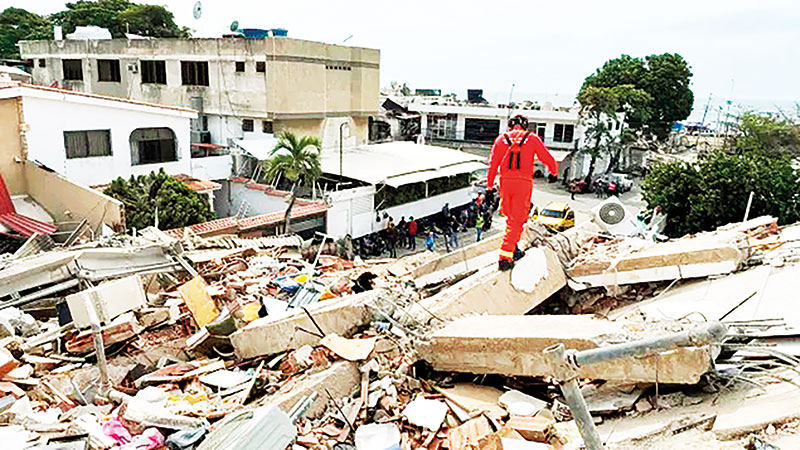
However, it would be most misleading to contend, based on the above developments, that the UN system is suffering prolonged impotence. The present suffering of Venezuela substantiates this most graphically. In the latter instance, the UN is playing an inestimably vital role in providing succour to the earthquake devastated country.
In fact the UN is proving the live wire in the co-ordination of all rescue and rehabilitation efforts. Minus the guidance and encouraging assistance of the UN, Venezuela would be in far worse shape than it is in at present.
Reports indicate that the UN Office for the Coordination of Humanitarian Affairs, for instance, is overseeing the operations of over 70 international urban search and rescue teams, including more than 2,300 personnel, who are working alongside the local authorities to trace and provide relief to the quake-affected. Besides, the rescuers come from multiple countries, including Brazil, Canada, Chile, Ecuador, Germany, Spain, the US, France, Syria and Turkiye.
The above is convincing proof of what the UN and its agencies could achieve effectively in humanitarian crises of the most devastating kind. Here is also proof of what could be achieved if the often feuding big powers of the UN Security Council think it wise to sit together in accord and consider as to how their weighty presence in the UN system could be placed at the service of humanity.
The present Permanent Members of the UNSC are mainly representative of the international political and economic order which came into being in the immediate aftermath of World War Two. They by no means represent fully the contemporary world politico-economic order and, therefore, cannot be expected to work equitably towards fulfilling the legitimate needs of present day publics.
Accordingly, while there is no denying that the UN system, as it stands, leaves much to be desired, the world community would do much better to address very earnestly as to how the UN could be reformed and energized to serve humanity better. It is a ‘systemic issue’ and unrelated to any personalities helming the UN at present.
Democratization of the UN needs to be part of the reform process. Countries, such as, India, Indonesia and Brazil, for example, could be considered as knowing much more than the present Permanent Members of the UNSC, the ‘pulse’ of the contemporary world, particularly that of its Southern half. If these major Southern countries are inducted into the UNSC there is bound to be a more balanced representation of the world’s legitimate interests.
Consequently, there could be less international friction and war. Meanwhile, the UN agencies need to be consistently strengthened and sustained to implement their humanitarian programmes without interruption. These projects are the only hope as it were of the less fortunate peoples of the world.
The needs of the world’s hungry and destitute ought to be managed systematically and the UN is best at this at present but the latter is also efficient at bringing all progressive, pro-people organizations along with it in such efforts and this is being proved in Venezuela. Critics of the UN need to take notice of these exemplary collective projects.

 Yes, coconut oil is in every Sri Lankan kitchen for cooking, frying, etc., and our grandmas have been using it for beauty, long before it became “trendy”.
OK, from me, it’s a simple, no-fuss coconut oil week for you:
For Hair:
Warm 02 tablespoon virgin coconut oil until it’s just lukewarm. Massage into scalp with fingertips, for 05 minutes, then through the lengths. Wrap with a warm towel, or shower cap, for 30 minutes, or overnight if you can. Wash with your usual shampoo.
How often: 01-02 times a week is plenty. Grandma wasn’t wrong.
For Skin:
After a shower, while skin is still slightly damp, rub a tiny bit of oil on rough spots. A little goes a long way — it’s thick!
Tip:
Don’t use it on acne-prone face skin. For some people it can clog pores. Use it more on body, hands, feet.
For Lips:
Dab the tiniest bit of coconut oil on lips before bed. Wakes up softer.
For Under-Eyes or Cuticles:
Use your ring finger to pat a rice-grain amount around dry cuticles or under eyes. Be super gentle. If it stings, or you get bumps, stop.
Pre-Wash Scalp Soother:
If your scalp feels tight/itchy from weather changes, massage a little warm oil, for 15 minutes, before shampooing. Rinse well.
A few important notes for my readers:
Patch test first: Dab a bit of coconut oil on your inner arm and wait 24 hours. Even natural things can irritate.
Quality matters: Go for virgin/cold-pressed coconut oil from the kitchen shelf. No fragrance, no additives.
The smell alone will take you back to grandma’s kitchens, won’t it? Warm, nutty, familiar.
 It’s not only our entertainers who are in the spotlight, overseas, but Sri Lankans, in general, as well.
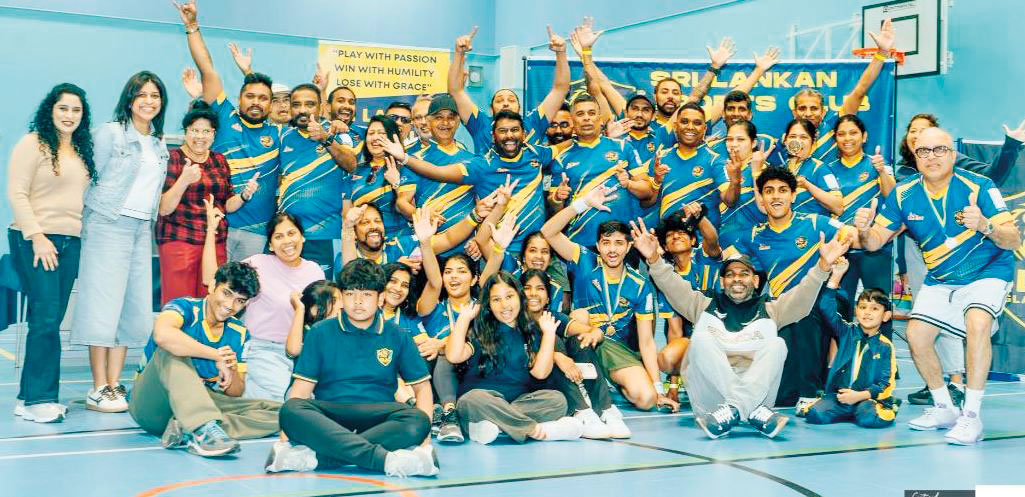
The Sri Lankan Sports Club Scotland (SLSC) is a very good example. The club, with Hashan Hettiarachchi, as the President, continues to make a significant impact across Glasgow, and beyond, serving as a vibrant hub for sports, culture, and community engagement, within the Sri Lankan diaspora.
As a registered Scottish charity, SLSC was established with a clear purpose: to provide a formal foundation that supports and unites the Sri Lankan community, while fostering integration, wellbeing, and cultural pride.
Through its growing programmee of activities, the organisation creates opportunities for people of all ages, and backgrounds, to connect, participate, and thrive.
The club’s efforts have been recognised through funding support from the UK’s National Lottery, enabling SLSC to deliver a range of initiatives, focused on sports development, cultural enrichment, and community engagement.
-
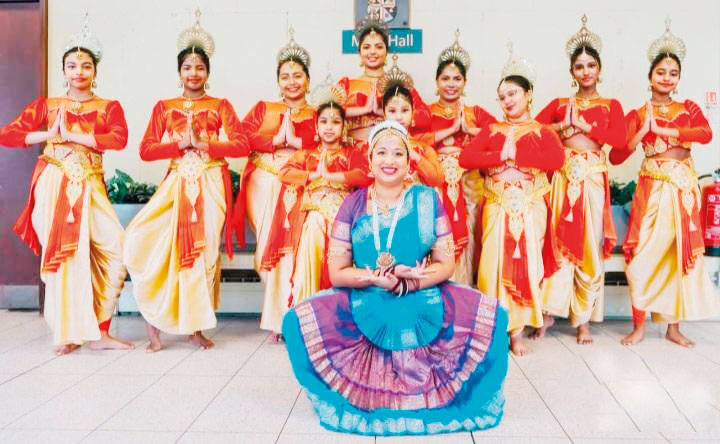
- Sinhala and Tamil New Year
-
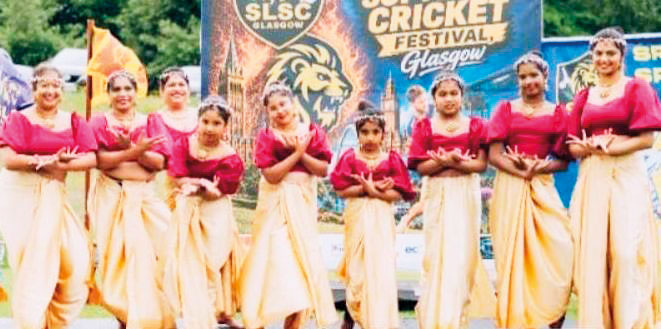
- Traditional wear at Cricket Festival
This support has helped transform ambitious ideas into successful community-driven events that have attracted widespread participation and support.
Over the past year, SLSC has proudly delivered a highly successful Sri Lankan Independence Day celebration, bringing together families and community members to commemorate the nation’s heritage and achievements.
The club also organised a memorable community concert, featuring renowned Sri Lankan artiste Krishantha Erandake, providing an opportunity for people to celebrate their cultural roots, through music and entertainment.
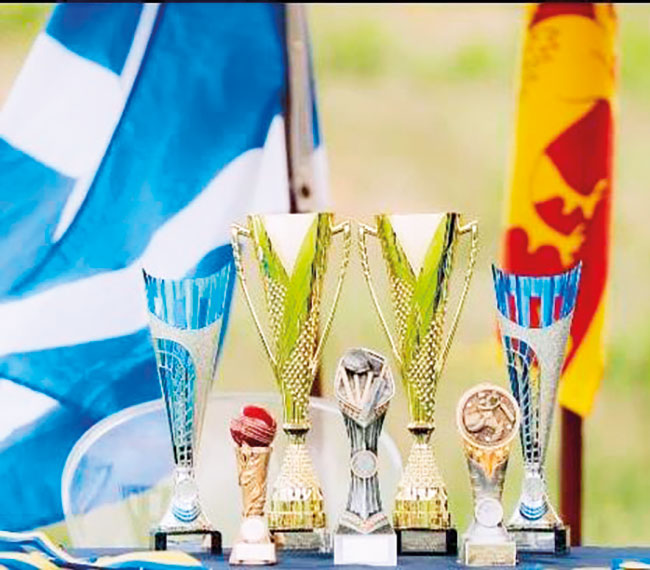
Trophies given at the cricket festival
Sport remains at the heart of the organisation’s mission. SLSC has successfully hosted large-scale badminton and cricket tournaments, welcoming participants from across Scotland and beyond.
These events not only promote healthy lifestyles and sporting excellence but also strengthen friendships and community bonds through shared experiences.
Alongside its sporting and cultural programmes, SLSC is committed to preserving Sri Lankan heritage for future generations.
Through traditional dance classes and cultural education programmes, young people are given the opportunity to learn, appreciate, and celebrate the rich traditions of their ancestral homeland.
These initiatives ensure that cultural knowledge and practices continue to flourish within Scotland’s diverse multicultural landscape.
As the organisation continues to grow, SLSC remains dedicated to creating inclusive opportunities that bring communities together, celebrate diversity, and inspire the next generation. With strong community support, dedicated volunteers, and ongoing partnerships, the future looks bright for one of Scotland’s most active and impactful Sri Lankan community organisations.
For SLSC, success is measured not only by the events it delivers, but by the lasting connections it creates and the positive difference it makes within the community every day.

Hope fit but Roach doubtful as West Indies eye series win

National Institute of Health Sciences celebrates a century of revolutionizing Public Healthcare Training in Sri Lanka – PM

IT, Electrical and Electronics sectors key to achieving 7–8% economic growth in coming years -President

Sri Lanka Cricket confirm dates for India Tests; tour to begin on August 15

Google must pay €4.1bn fine for using Android to ‘block’ rivals

England’s top three and South Africas quicks, both best in class, prepare for semi-final fight

‘Dates have the highest sugar content to fight Coronavirus’

Sunday Island 27 December – Headlines

#SundayIsland 17th December – Headlines

Sunday Island – 28th March

Sunday Island Headlines – 21 March

Sunday Island – 21st February – Headlines
-
 News4 days ago
LAWASIA warns against ad hoc initiative to increase judges’ retirement ages
-
 News5 days ago
Another 1,132 Sri Lankan Personnel to be deployed for United Nations Peacekeeping Missions
-

 News7 days ago
Kelaniya emerges as highest ranked Lankan uni in Times Higher Education Sustainability Impact Ratings
-
 News3 days ago
Chamuditha to seek removal of injunction on Youtube programme
-

 Business6 days ago
Month-end profit-takings drive stock trading; indices up
-
 Features5 days ago
People’s Bank expands digital banking network with 125th cheque deposit kiosk
-
 Features3 days ago
Climate action to bring South Asia together
-

 News6 days ago
FSP complains of irregularities in a Guinness World Record event held in Sri Lanka