
News
Parliament passed 26 Bills in 2025

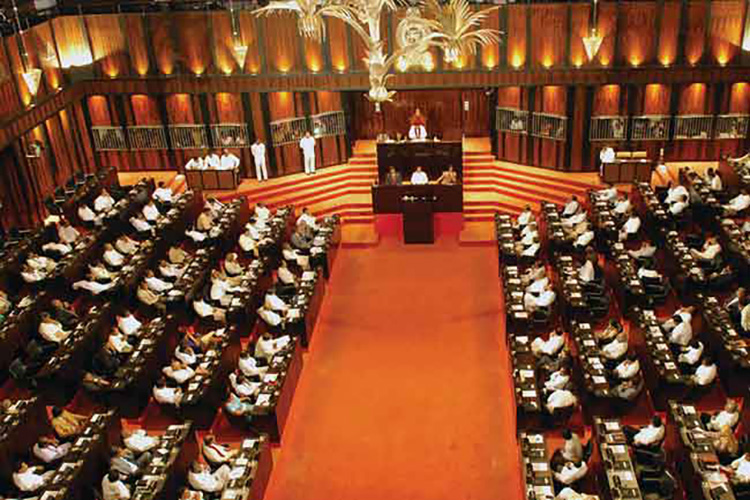
Parliament passed 26 Government Bills during the First Session of the Tenth Parliament in the one-year period from January 1 to December 31, 2025, according to official records.
The legislation covered a wide range of fiscal, governance, social welfare and regulatory reforms, including amendments to key revenue laws, labour protections and sector-specific statutes.
Among the Acts passed were the Local Authorities Elections (Special Provisions) Act No. 01 of 2025; Inland Revenue (Amendment) Act No. 02 of 2025; and the Appropriation Act No. 03 of 2025. Parliament also approved amendments to the Value Added Tax Act, the Code of Criminal Procedure, the Companies Act and the Bills of Exchange Act.
Fiscal and economic measures featured prominently, with the passage of the Budgetary Relief Allowance of Workers Act No. 10 of 2025, the National Minimum Wage of Workers Act No. 11 of 2025, the Social Security Contribution Levy (Amendment) Act No. 24 of 2025, and the Betting and Gaming Levy (Amendment) Act No. 25 of 2025.
Key regulatory and institutional reforms included the Proceeds of Crime Act No. 05 of 2025, the Gambling Regulatory Authority Act No. 17 of 2025, the National Audit (Amendment) Act No. 19 of 2025, and the National Building Research Institute Act No. 20 of 2025. Parliament also repealed the Foreign Loans Act through Act No. 06 of 2025 and the Presidents’ Entitlements Act through Act No. 18 of 2025.
Other measures enacted during the year included amendments to the Sri Lanka Electricity Act, Samurdhi Act, Rubber Control Act and Personal Data Protection Act, as well as legislation giving effect to the Convention Against Doping in Sports.
The legislative programme for 2025 concluded with the passage of the second Appropriation Act No. 23 of 2025 and the Strategic Development Projects (Amendment) Act No. 26 of 2025, rounding off a year of extensive parliamentary activity.

News
PM opens ‘Silver Age Center,’ an Elder Care, Training and Research Centre built with modern facilities in Kataragama

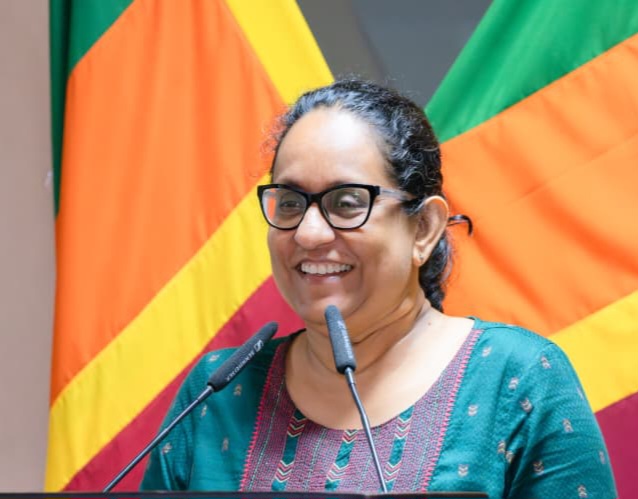
Prime Minister Dr. Harini Amarasuriya stated that a society must be built where all senior citizens can lead lives of safety, freedom, happiness, health, mobility, and spiritual well-being, with their rights safeguarded. She further emphasized that this is a responsibility shared by both the government and society.
The Prime Minister made these remarks on Tuesday (31st of March) while virtually participating in the opening of the ’Silver Age Center,’ an Elder Care, Training and Research Centre constructed with modern facilities in Kataragama. The event was held at the Ministry of Rural Development, Social Security and Community Empowerment, located in the new Sethsiripaya building.
During the event, the Prime Minister was presented with a draft of regulations and guidelines related to the regulation of institutions that provide residential care for senior citizens, by representatives of the National Council for Senior Citizens.
Expressing her views further, the Prime Minister stated:
“This project, which commenced in 2022, had been halted due to various reasons. However, we have now resumed the project and are pleased to hand it over to the public today.
One of the key commitments of our policy is to create a society that ensures safety and protects the rights of all. Everyone, from the young to the elderly, deserves to enjoy these rights, freedom, and happiness.
A significant portion of our population is rapidly transitioning into senior age. However, the age of 60 still represents an active stage of life where individuals can contribute meaningfully to society and the economy. Senior citizens have needs, as well as abilities and valuable experience. We must recognize that they can continue to engage with society and remain active contributors.
Institutions that provide services for senior citizens play a vital role, and maintaining them is a social responsibility. It is essential to ensure the rights and provision of necessary services for all senior citizens, whether they live within families, independently, or in institutional settings.
We must ensure access to healthcare, transportation, lifelong learning, freedom, happiness, and spiritual well-being for senior citizens, while safeguarding their rights.
We should move beyond the traditional concept of ’elders homes’ and instead develop institutions that cater to the diverse needs of senior citizens, enabling them to spend their later years with dignity and respect.”
The opening of the ’Silver Age Center,’ Elder Care, Training and Research Centre, was carried out by Deputy Minister of Trade, Commerce, Food Security and Cooperative Development, R. M. Jayawardhana, along with regional public representatives and government officials. The occasion was attended virtually by the Minister of Rural Development, Social Security and Community Empowerment, Dr. Upali Pannilage; Secretary to the Ministry, Sampath Manthrinayake; and other ministry officials.
(Prime Minister’s Media Division)

Warm Weather Advisory
Issued by the Natural Hazards Early Warning Centre
Issued at 3.30 p.m. on 01 April 2026, valid for 02 April 2026.
The Heat index, the temperature felt on human body is likely to increase up to ‘Caution level’ at some places in the Western, Sabaragamuwa, Southern, Eastern, North-western, Northern and North-central provinces and in Monaragala district.
The Heat Index Forecast is calculated by using relative humidity and maximum temperature and this is the condition that is felt on your body. This is not the forecast of maximum temperature. It is generated by the Department of Meteorology for the next day period and prepared by using global numerical weather prediction model data.

Effect of the heat index on human body is mentioned in the above table and it is prepared on the advice of the Ministry of Health and Indigenous Medical Services.
ACTION REQUIRED
Job sites: Stay hydrated and takes breaks in the shade as often as possible.
Indoors: Check up on the elderly and the sick.
Vehicles: Never leave children unattended.
Outdoors: Limit strenuous outdoor activities, find shade and stay hydrated.
Dress: Wear lightweight and white or light-colored clothing.
Note:
In addition, please refer to advisories issued by the Disaster Preparedness & Response Division, Ministry of Health in this regard as well. For further clarifications please contact 011-7446491.
News
Atmospheric conditions will be favorable for afternoon thundershowers in most parts of the island over the next few days from today (02 April)

WEATHER FORECAST FOR 02 APRIL 2026
Issued at 05.30 a.m. on 02 April 2026 by the Department of Meteorology
Atmospheric conditions will be favorable for afternoon thundershowers in most parts of the island over the next few days from today (02 April)
Misty conditions can be expected at some places in the Central, Sabaragamuwa and Uva provinces during the early hours of the morning.
Showers or thundershowers will occur at several places in the Western, Central, Sabaragamuwa, Southern, Uva, North-western and North-central provinces after 2.00 p.m. Fairly heavy showers above 50 mm are likely at some places in the Western, Central and Sabaragamuwa provinces and in Kurunegala district. Showers may occur in the Southern province and in Ampara, Batticaloa and Monaragala districts in the morning too.
The general public is kindly requested to take adequate precautions to minimize damages caused by temporary localized strong winds and lightning during thundershowers.

PM opens ‘Silver Age Center,’ an Elder Care, Training and Research Centre built with modern facilities in Kataragama


Atmospheric conditions will be favorable for afternoon thundershowers in most parts of the island over the next few days from today (02 April)

Sri Lanka cannot procure Russian oil before US sanctions return – Champika

Japanese boost for public transport here

2025 GCE AL: 62% qualify for Uni entrance; results of 111 suspended

‘Dates have the highest sugar content to fight Coronavirus’

Sunday Island 27 December – Headlines

#SundayIsland 17th December – Headlines

Sunday Island – 28th March

Sunday Island Headlines – 21 March

Sunday Island – 21st February – Headlines
-

 Features5 days ago
A World Order in Crisis: War, Power, and Resistance
-

 News6 days ago
Energy Minister indicted on corruption charges ahead of no-faith motion against him
-

 Sports6 days ago
SLC to hold EGM in April
-

 Opinion6 days ago
When elephants fight, it is the grass that suffers
-
 Latest News7 days ago
A strong Technical and Vocational Education and Training (TVET) system equips individuals with practical, relevant, and future-oriented skills helping to innovate responsibly towards a greener and sustainable future – PM
-

 Features6 days ago
Lest we forget
-
 Business6 days ago
Pan Asia Bank empowers export sector as Strategic Partner of NCE Export Awards
-

 News2 days ago
Tariff shock from 01 April as power costs climb across the board