
Features
Parliament, its institutions, library,photo gallery, décor and much else

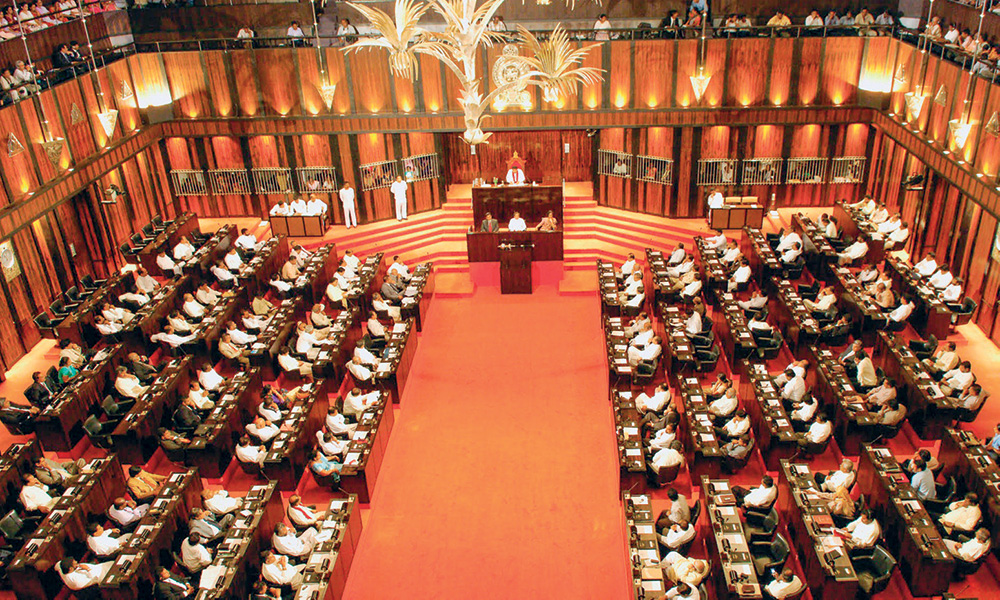
MPs used to call Speaker’s wig the “Walas Toppiya”, hard to make out the difference between peons nd backbenchers when sashes were removed
Parliament also has two “Oversight Committees” which play an important role in the management of public finances. The older one is COPA- the Committee on Public Accounts [previously known as the Public Accounts Committee]. Later another committee called the Committee on Public Enterprises [COPE] was set up to oversee state owned enterprises. In both cases the committee relies on the reports of the Auditor General regarding the activities, particularly financial management, of Government Ministries and Departments and in the latter case of state owned enterprises or Corporations.
In the early Parliaments the tradition was for a member of the Opposition to head the PAC. By common consent Bernard Soysa of the LSSP was appointed to this position. He was very fair and being a personal friend of JRJ, he could immediately bring any explosive situation to the leader’s attention. I had many good memories of my encounters with Bernard in the old Parliament when I was a Permanent Secretary.
The number of Ministries were small then and so were the number of MPs in the PAC. We were treated to cakes and tea in the anteroom and were called in after an internal discussion among the PAC members and the Auditor-General and his representatives. They were very courteous and our explanations were listened to and after some questioning, which included banter, we were excused with a warning not to come before the PAC in the future.
This was not an idle piece of advice because a Permanent Secretary as Chief Financial Officer of a Ministry has every opportunity to explain the circumstances which led to the administrative decision queried by the Auditor General. After the preliminary audit of departmental accounts, as mandated by Parliament, its findings are submitted to the relevant Ministry Secretary for his observations and, if necessary, remedial actions. If the Secretary’s response is satisfactory the AG is empowered to strike it off his report to Parliament.
If the matter at hand is serious the AG may directly contact the Secretary concerned to request him to investigate and report back to him. If his staff reports on a trivial matter the AG has the authority to keep it out of his report. But if none of these opportunities are used by the Secretary, or if there is suspicion of maladministration or fraud, it is reported as a paragraph in the AG’s report and the PAC has to adjudicate in that matter.
It can instruct the Secretary to take remedial legal action and include its recommendations in the PAC Chairmans report to Parliament which if necessary can be debated on. One major complaint about COPA and COPE is that being an instrument of the legislature, it has no executive power and has to depend on external authorities to exercise their powers to implement its recommendations. It can recommend but it has no effective executive power. Thus while there is a great hulabaloo about its findings in the media, the PAC is in reality helpless as a watchdog. This watchdog has no teeth.

Trotsky with Max Shachtman
When I was a member of the UNP caucus after Gamini Dissanayake’s death, I was helpless as my party did not even appoint me as a member of either COPA or COPE. My experience as a reporting officer both as a Permanent Secretary and international civil servant was not even considered when UNP members were recommended to man those organizations. Actually there was not much competition among MPs to join these committees. Even so by some “hidden hand” I and others who were in Gammi’s camp and the DUNF were excluded from such duties.
Though I was kept busy with my electorate work and contact with organizations like Rotary, Sarvodaya, ICES and “think tanks” an uncomfortable feeling, which periodically strikes politicians, began to nag me and I got to thinking about other options open to me if I was to continue in the political arena.
Let me now walk you through the Parliament that I entered in 1994 and the hopes we had with Gamini as our leader. As a veteran in the House by then having entered Parliament as a young man in 1970 – he was a master of tactics which he showed by first winning over those who had supported Ranil in the leadership contest. When he was asked to nominate a MP for a tour of Sweden he immediately chose Ranjit Madduma Bandara who had recently married.
“Let me give Ranjit a honeymoon gift” he told me after we discussed the possible choices for the tour. He was quick to extend the hand of friendship to Ranil particularly because he wanted a united UNP for his impending run for the Presidency. There was opposition from some friendly quarters to his candidature as CBK, who was the PM, would have an advantage in the election that year. It was going to be a difficult fight. But Gamini was determined to contest come hell or high water as he wanted to unify the party through his campaign. His view was that even if he lost he would become the undisputed leader of the UNP who would wrest power from CBK in the next Presidential contest in the year 2000.
Looking back
If the UNP had won the General election of 1994 and Gamini Dissanayake had become the Prime Minister he would have made me a senior cabinet minister. In fact on the last day of his life at a public rally in Kundasale for the Presidential contest he pointed me out to the audience and said that when he won the Presidency he had the power to appoint the Prime Minister and I would certainly be a candidate for the post.
This could have been the usual glad handing and “bucking up” of colleagues which is normal in political meetings. But it was an indication that he had faith in me especially after I had succeeded in getting him back to the UNP from the political wilderness by negotiating with President Wijetunga. At the end of the meeting while getting into the helicopter he told several people assembled there that I would head his campaign in Kandy district so that he could concentrate on other areas to gather votes.
Nevertheless beginning a Parliamentary career in the Opposition, as it happened to me, had many attractions. I can honestly make such a statement when looking back on my 26 years of Parliamentary life, of which 16 were spent as a Minister and 10 as a member of the Opposition. My first five years in Parliament were spent in the Opposition as a UNP MP. It was a memorable and invaluable introduction to Parliamentary practice. On reading biographies of famous British parliamentarians, I found that such years in the wilderness seemed to be an experience which was enjoyed by many eminent politicians.
Besides I was in the happy position of being somewhat familiar with Parliamentary practice due to my career as a senior public official. As a Director of Information and later a Permanent Secretary in charge of media, I would spend much time in the officials box following debates of the political giants of the time. I had been entertained in the Parliament restaurant by Ministers, as well as Prime Ministers, when we turned up to brief them on official matters which were taken up in Parliament. My friends from school and university Bertram Tittawella and Nihal Seneviratne were Clerks to the House and I enjoyed having meals at their table with them after official business was concluded.
More serious were the sessions with the Public Accounts Committee then presided over by the courteous but hawk eyed Bernard Soysa, who probed the financial affairs of Ministries as highlighted in the Auditor General’s report. Many years later when I was the Chairman of the PAC myself I remembered the courteous but firm approach of Bernard and tried to emulate him.
Parliament building
The new Parliament building designed by Geoffrey Bawa was an architectural wonder. I remembered the helicopter rides taken with him over the proposed Kotte site when I was deputed by my Minister Ananda Tissa de Alwis in the early days to represent him in the project committee that supervised the construction of the new Parliament. We flew over empty tracts of land which were like lush islands surrounded by water. Thanks to Geoffrey Bawa’s genius it was redesigned and a magnificent building influenced by traditional architecture was built under the JRJ administration.
As a rookie MP I would spend time walking along its corridors which led to rooms specially designed for the President, Prime Minister, Ministers, the Leader of the Opposition and party leaders. The Speaker rightly had a floor to himself and his administrative staff. There were rest rooms and billiard tables and a cordoned off area on the second floor with many armchairs positioned side by side where MPs could smoke, exchange gossip and conspire while looking across the man made lake which surrounds the building. Later when WJM Lokubandara became Speaker he added an ayurvedic spa where MPs could get a quick massage before entering the chamber.
Photo Gallery
Another interesting feature was the picture gallerywhere photos of previous representatives were assembled under plaques denoting their name and the particular State Council or Parliament they represented. From time to time visitors, particularly relatives of the “great men”, could be seen keenly identifying their relatives or representatives. New MPs were invited by the Speaker to visit a parliamentary photographer who would take a specially posed picture for the photo gallery.
After 1956 sartorial fashions of MPs changed dramatically to include a majority of “national” dressed representatives [probably of the SLFP] while the UNP and the LSSP members appeared in western dress. All MPs obeyed the Speaker’s order that they should appear in formal dress. But how to define “formal” dress was the question. It was Sarath Muttetuwegama – the popular MP from the Communist party, who solved this problem. He invented a shirt with a closed collar and long sleeves which looked dignified enough to pass muster. This dress was much less cumbersome than western dress and the “national” worn by SWRD Bandaranaike [with other colourful variations] It became so popular that it was identified as a “politician’s garb” and was known sarcastically as “kapati coat”.
Of late there has been another sartorial twist and even representatives from the boondocks wear western dress. They have earned enough money and can afford to go to the best tailors in town. Another source of amusement was the long wig worn by the Speaker on ceremonial occasions. Many Speakers who were provincial lawyers were happy to imitate their professional superiors like Supreme Court judges and “Silks”. The Speaker’s wig was known among rural MPs as the “Walas Toppiya”.
Another sartorial change in Parliament took place after the CBK victory and her appointment as Prime Minister. The more “socialistic” government MPs were lobbied by the Parliamentary peons to abolish the “Bapane”or red sash denoting minor office in colonial times, which they were expected to wear in the chamber. For some reason the peons thought that this was infra dig and a relic of the colonial past. Their request to JRJ for sartorial relief fell on deaf years but “young radicals” supporting CBK prevailed on the Speaker KB Ratnayake, a great Kachcheri man who loved the “Bapane”, to give in.
As a result now it is often difficult to distinguish backbenchers from peons. Both categories happily face TV cameras together for Parliamentary broadcasts. However there is an irony here. While the “Bapane” disappeared from Parliament it is still clearly in evidence among the officials of the Dalada Maligawa in Kandy. They still wait on the Diyawadana Nilame and march behind him in the procession. Minor officials at the sacred Bo tree in speaker KB Ratnayake’s beloved Anuradhapura, still wear the “Bapane” on ceremonial occasions.
Korale flags
Most MPs are not really interested in the architectural gems created by Bawa and his colleagues. For instance the walls of the debating chamber are decorated with the regional flags of ancient kings which were embossed on silver sheets by skilled artisans. These flags were made after meticulous research and tended to add to the beauty of the chamber though they are hardly noticed by the voluble representatives of those “Korales”. The mace which symbolizes the integrity of the legislature was designed with a traditional lotus motif on top. The “quorum bell” that calls MPs to the chamber takes the sound of the “Salalihiniya-” a bird associated in Sinhala poetry with ancient Jayawardenapura where the Parliament is now located.
From time to time a drama is enacted when an indignant MP [On many occasions it was Vasudeva Nanayakkara] attempts to wrench the mace from the grasp of a burly Sergeant-at-Arms in full view of TV cameras. Without the mace in place the regular proceedings of the House comes to a standstill. The Speaker warns the errant MP that he will be expelled from the chamber. When there is a fracas in Parliament the Sergeant at Arms immediately runs to the Speaker’s podium to protect the mace. The ensuing scuffle, now stylist thanks to Vasudeva Nanayakkara’s antics, is sure to hit the front pages of the following day’s newspapers.
Library
The Parliament library built up from the time of the State Council is undoubtedly one of the best in the country, particularly in respect of politics, economics and parliamentary practice. However most of the books are in English attesting to a time when the elite of days gone by dominated the legislature. Now books in the library are rarely read. Most MPs now come to the library to read local language newspapers or write letters in private. But, for me the Parliament library was a treasure trove. It probably has the best collection of left, particularly Trotskyite, literature in the country.
I could imagine MPs like Leslie Goonewardene or Bernard Soysa ordering these books and journals which influenced the decisions of the LSSP. Philip Gunawardene would have been another voracious reader. In the first few months as a MP I spent my spare time in the library going through Trotskyite writings which we had only heard of in Doric de Souza’s lectures. To me it was a fascinating discovery especially the numerous publications of the Fourth International and its different theoretical factions.
When NM Perera called for an alliance with the SLFP in 1968 the theoreticians of the Fourth International (FI) strongly opposed that move. The LSSP split on that issue and Edmund Samarakkody, Bala Tampoe and Merill Fernando formed the Revolutionary LSSP which had the blessings of the FI and its Paris headquarters. During my stay in Paris I had met one of those theoreticians – Michel Pablo. By that time Pablo had been rejected by the majority of the Trotskyites as he had backed Messali Hadj in Algeria. Hadj had been unmasked as a traitor by the Algerian revolutionaries like Ben Bella, Boumedienne and Ferhat Abbas who led the insurrection against the French imperialists.
After the French left Algeria Michel Pablo had been expelled and his office in Algiers was burnt down. In Paris when I met him I found that he was paranoid, constantly reminding me that he was being “tailed” by the French Police. Of the Sri Lankan Samasamajists he could only remember Leslie Goonewardene whose “nom de guerre” in the underground period was Tilak. The Pablo faction were proponents of a United Front strategy and had much influence on the LSSP of the sixties.
I made another important discovery in my researches in the library. Someone had ordered books and journals issued by the Trotskyite groups in America in the early forties. My guess is that the reader was Philip Gunawardene whose contacts as a student in the US included radicals like his teacher in Wisconsin, Professor Scott Nearing who influenced both Philip and Jaya Prakash Narayan, who played a role as a revolutionary within the Indian Congress and later in the Praja Socialist Party.
Philip would have been encouraged by his State Council colleague NM Perera, whose wife Selina Peeris had visited the east coast of the US, worked with the Trotskyite groups there and was on the way to Mexico to personally meet Trotsky when he was brutally murdered by a Stalinist agent. Trotsky had been driven out of Prinkipo island in the sea of Marmara by the NKVD and was forced to relocate in a remote Scandinavian village.
Again he was driven out by the Stalinists and thanks to the intervention of the communist artist Diego Rivera, Trotsky was given refuge in Mexico. At this stage of history American Trotskyites were quite influential among leftist groups. They helped in setting up the John Dewey Commission to inquire into Stalin’s allegations against Trotsky. After a prolonged inquiry Trotsky was exonerated by the Commission. As is to be expected the ‘T group’ split upinto factions on theoretical and personal issues.
The Parliament library had collected journals of several US factions including the Shachtman group which led to the famous cartoon, “Shachtman is a Shachtmanite”, encapsulating the bitter factional rivalry among the US leftists. This US connection of the LSSP has not been described in detail before in the writings on Sri Lankan left politics. A good introduction to the leftists of New York at that time can be found in Warren Beatty’s prize winning movie “Reds” made in Hollywood.
The library also held publications of later Trotskyites who were grouped around the New Left Review. The NLR edited by Robin Blackburn, whom I had met in Canada while he was on a lecture tour of campuses there, was sympathetic to the JVP and supported the 1971 insurrection. Two of the best essays on the JVP of the early seventies are by Fred Halliday and Tamara Deutscher, wife of Isaac Deutscher, a hero of the Trots for his brilliant biography of Trotsky. She wrote a “letter from Colombo” for the NLR supporting Wijeweera’s 1971 insurrection that was shaking up the Sirimavo government which included old comrades in the Fourth International like NM and Colvin.
I learnt later that she was staying in Leslie Goonewardene [Tilak’s] home when the insurrection broke out. Of all of Mrs Bandaranaikes Ministers it was Leslie, together with TB Subasinghe, who was most sympathetic to the JVP and spoke out for a soft response to the insurrectionists at Cabinet meetings, unlike NM who called the JVP a CIA front.
(Excerpted from vol. 3 of the Sarath Amunugama autbiography) ✍️

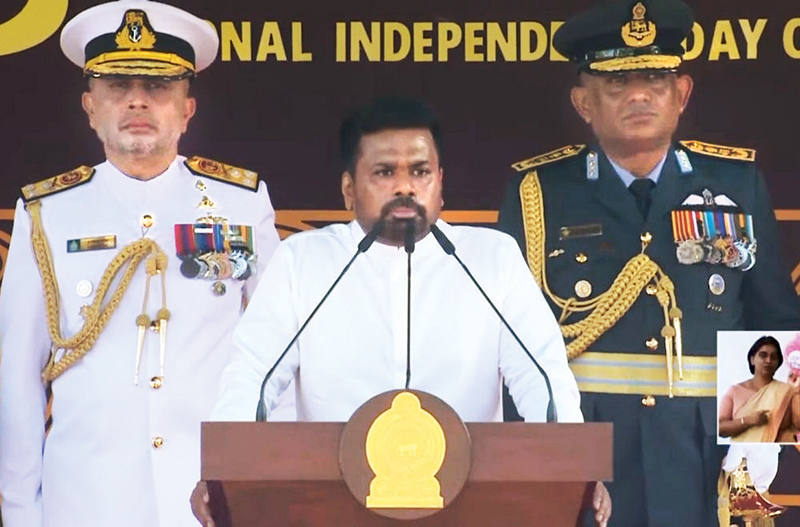
“The main theme of this year’s Independence Day is “Rebuilding Sri Lanka,” so spoke President Anura Kumara Dissanayaka as he ceremonially commemorated the island’s 78th independence anniversary. That was also President AKD’s second independence anniversary as President. Rebuilding implies that there was already something built. It is not that the NPP government is starting a new building on a vacant land, or whatever that was built earlier should all be destroyed and discarded.
Indeed, making a swift departure from NPP’s usual habit of denouncing Sri Lanka’s entire post independence history as useless, President AKD conceded that “over the 78 years since independence, we have experienced victories and defeats, successes and failures. We will not hesitate to discard what is harmful, nor will we fear embracing what is good. Therefore, I believe that the responsibility of rebuilding Sri Lanka upon the valuable foundations of the past lies with all of us.”
Within the main theme of rebuilding, the President touched on a number of sub-themes. First among them is the he development of the economy predicated on the country’s natural resources and its human resources. Crucial to economic development is the leveraging of our human resource to be internationally competitive, and to be one that prioritises “knowledge over ignorance, progress over outdated prejudices and unity over division.” Educational reform becomes key in this context and the President reiterated his and his government’s intention to “initiate the most transformative era in our education sector.”
He touched on his pet theme of fighting racism and extremism, and insisted that the government “will not allow division, racism, or extremism and that national unity will be established as the foremost strength in rebuilding Sri Lanka.” He laid emphasis on enabling equality before the law and ensuring the supremacy of the law, which are both necessary and remarkable given the skepticism that is still out there among pundits
Special mention was given to the Central Highlands that have become the site of repeated devastations caused by heavy rainfall, worse than poor drainage and inappropriate construction. Rebuilding in the wake of cyclone Ditwah takes a special meaning for physical development. Nowhere is this more critical than the hill slopes of the Central Highlands. The President touched on all the right buttons and called for environmentally sustainable construction to become “a central responsibility in the ‘Rebuilding Sri Lanka’ initiative.”. Recognizing “strong international cooperation is essential” for the rebuilding initiative, the President stated that his government’s goal is to “establish international relations that strengthen the security of our homeland, enhance the lives of our people and bring recognition to our country on a new level.”
The President also permitted himself some economic plaudits, listing his government’s achievements in 2025, its first year in office. To wit, “the lowest budget deficit since 1977, record-high government revenue after 2006, the largest current account balances in Sri Lanka’s history, the highest tax revenue collected by the Department of Inland Revenue and the sustained maintenance of bank interest rates at a long-term target, demonstrating remarkable economic stability.” He was also careful enough to note that “an economy’s success is not measured by data alone.”
Remember the old Brazilian quip that “the economy is doing well but not the people.” President AKD spoke to the importance of converting “the gains at the top levels of the economy … into improved living standards for every citizen,” and projected “the vision for a renewed Sri Lanka … where the benefits of economic growth flow to all people, creating a nation in which prosperity is shared equitably and inclusively.”
Rhetoric, Reform and Reality
For political rhetoric with more than a touch of authenticity, President AKD has no rival among the current political contenders and prospects. There were pundits and even academics who considered Mahinda Rajapaksa to be the first authentic leadership manifestation of Sinhala nationalism after independence, and that he was the first to repair the rupture between the Sri Lankan state and Sinhala nationalism that was apparently caused by JR Jayewardene and his agreement with India to end the constitutional crisis in Sri Lanka.
To be cynical, the NPP or AKD were not the first to claim that everything before them had been failures and betrayals. And it is not at all cynical to say that the 20-year Rajapaksa era was one in which the politics of Sinhala nationalism objectively served the interests of family bandyism, facilitated corruption, and enabled environmentally and economically unsustainable infrastructure development. The more positive question, however, is to ask the same pundits and academics – how they would view the political authenticity of the current President and the NPP government. Especially in terms of rejecting chauvinism and bigotry and rejuvenating national inclusiveness, eschewing corruption and enabling good governance, and ensuring environmental stewardship and not environmental slaughter.
The challenge to the NPP government is not about that it is different from and better than the Rajapaksa regime, or than any other government this century for that matter. The global, regional and local contexts are vastly different to make any meaningful comparison to the governments of the 20th century. Even the linkages to the JVP of the 1970s and 1980s are becoming tenuous if not increasingly irrelevant in the current context and circumstances. So, the NPP’s real challenge is not about demonstrating that it is something better than anything in the past, but to provide its own road map for governing, indicating milestones that are to be achieved and demonstrating the real steps of progress that the government is making towards each milestone.
There are plenty of critics and commentators who will not miss a beat in picking on the government. Yet there is no oppositional resonance to all the criticisms that are levelled against the government. The reason is not only the political inability of the opposition parties to take a position of advantage against the government on any issue where the government is seen to be vulnerable. The real reason could be that the criticisms against the government are not resonating with the people at large. The general attitude among the people is one of relief that this government is not as corrupt as any government could be and that it is not focused on helping family and friends as past governments have been doing.
While this is a good situation for any government to be in, there is also the risk of the NPP becoming too complacent for its good. The good old Mao’s Red Book quote that “complacency is the enemy of study,” could be extended to be read as the enemy of electoral success as well. In addition, political favouritism can be easily transitioned from the sphere of family and friends to the sphere of party cadres and members. The public will not notice the difference but will only lose its tolerance when stuff hits the fan and the smell becomes odious. It matters little whether the stuff and the smell emanate from family and friends, on the one hand, or party members on the other.
It is also important to keep the party bureaucracy and the government bureaucracy separate. Sri Lanka’s government bureaucracy is as old as modern Sri Lanka. No party bureaucracy can ever supplant it the way it is done in polities where one-party rule is the norm. A prudent approach in Sri Lanka would be for the party bureaucracy to keep its members in check and not let them throw their weight around in government offices. The government bureaucracy in Sri Lanka has many and severe problems but it is not totally dysfunctional as it often made out to be. Making government efficient is important but that should be achieved through internal processes and not by political party hacks.
Besides counterposing rhetoric and reality, the NPP government is also awash in a spate of reforms of its own making. The President spoke of economic reform, educational reform and sustainable development reform. There is also the elephant-in-the-room sized electricity reform. Independence day editorials have alluded to other reforms involving the constitution and the electoral processes. Even broad sociopolitical reforms are seen as needed to engender fundamental attitudinal changes among the people regarding involving both the lofty civic duties and responsibilities, as well as the day to day road habits and showing respect to women and children using public transport.
Education is fundamental to all of this, but I am not suggesting another new module or website linkages for that. Of course, the government has not created 78 reform modules as I say tongue-in-cheek in the title, but there are close to half of them, by my count, in the education reform proposals. The government has its work cut out in furthering its education reform proposals amidst all the criticisms ranged against them. In a different way, it has also to deal with trade union inertia that is stymieing reform efforts in the electricity sector. The government needs to demonstrate that it can not only answer its critics, but also keep its reform proposals positively moving ahead. After 78 years, it should not be too difficult to harness and harmonize – political rhetoric, reform proposals, and the realities of the people.
by Rajan Philips
Features
Our diplomatic missions success in bringing Ditwah relief while crocodiles gather in Colombo hotels
The Sunday newspapers are instructive: a lead story carries the excellent work of our Ambassador in Geneva raising humanitarian assistance for Sri Lanka in the aftermath of Ditwah. The release states that our Sri Lankan community has taken the lead in dispatching disaster relief items along with financial assistance to the Rebuilding Sri Lanka fund from individual donors as well as members of various community organizations.
The International Federation of Red Cross and Red Crescent Societies In Geneva had initially launched an appeal for Swiss francs CHF 5 million and the revised appeal has been tripled to CHF 14 million to provide life saving assistance and long term resilience building for nearly 600,000 of the most vulnerable individuals; the UN office for Coordination of Humanitarian Affairs has contributed US$4.5 million; the WHO has channeled US$175,000; In addition, our mission is working closely with other UN and International organizations in Geneva for technical support to improve disaster preparedness capacity in the long term in Sri Lanka such as through enhanced forecasting to mitigate risks and strengthen disaster preparedness capacities.
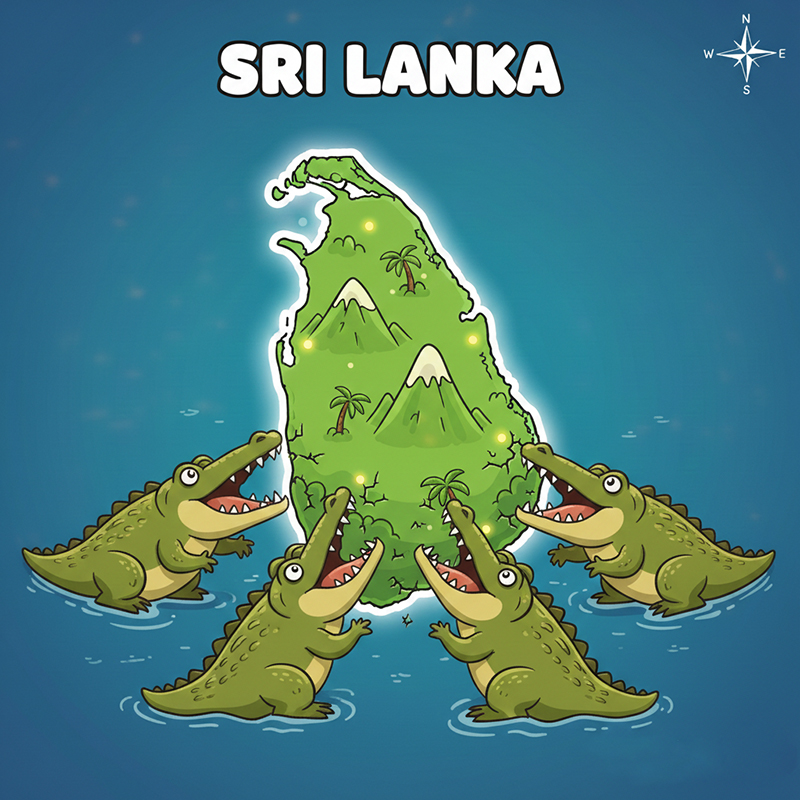
In stark contrast it is ironic to see in the same newspaper, a press release from a leading think tank in Colombo giving prominence to their hosting a seminar in a five star hotel to promote the extraction of Sri Lanka’s critical minerals to foreign companies under the guise of “international partners”. Those countries participating in this so called International Study Group are Australia, India, Japan and the US, all members of a regional defence pact that sees China as its main adversary. Is it wise for Sri Lanka to be drawn into such controversial regional arrangements?
This initiative is calling for exploitation of Sri Lanka’s graphite, mineral sands, apatite, quartiz, mica and rare earth elements and urging the Government to introduce investor friendly approval mechanisms to address licencing delays and establish speedy timelines. Why no mention here of the mandatory Environment Impact Assessment (EIA) or traditional public consultations even though such extraction will probably take place in areas like Mannar with its mainly vulnerable coastal areas? Is it not likely that such mining projects will renew commotion among poor mainly minority communities already badly affected by Ditwah?
It would be indeed pertinent to find out whether the think tank leading this initiative is doing so with its own funds or whether this initiative is being driven by foreign government funds spent on behalf of their multinational companies? Underlying this initiative is the misguided thinking defying all international scientific assessments and quoting President Trump that there is no global climate crisis and hence environmental safeguards need not be applied. Sri Lanka which has experienced both the tsunami and cyclone Ditwah is in the eye of the storm and has been long classified as one of the most vulnerable of islands likely to be effected in terms of natural disasters created by climate change.
Sri Lanka’s mining industry has so far been in local hands and therefore it has been done under some due process protecting both local workers involved in handling hazardous materials and with some revenue coming to the government. What is now being proposed for Sri Lanka is something in the same spirit as President Donald Trump visualized for redeveloping Gaza as a Riviera without taking into consultation the wishes of the people in that land and devoid of any consideration for local customs and traditions. Pity our beautiful land in the hands of these foreigners who only want to exploit our treasure for their own profit and leave behind a desolate landscape with desperate people.
by Dr Sarala Fernando
Features
The Architect of Minds – An Exclusive Interview with Professor Elsie Kothelawala on the Legacy of Professor J. E. Jayasuriya
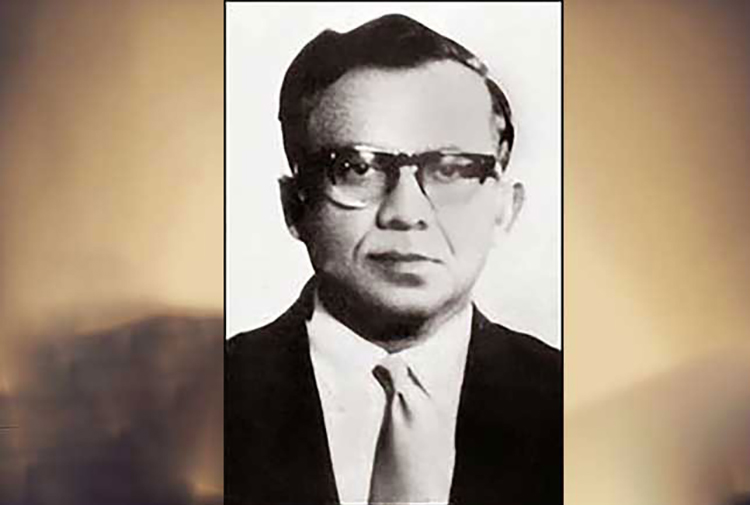
This year marks a significant milestone as we commemorate the 35th death anniversary of a titan in the field of education, Professor J. E. Jayasuriya. While his name is etched onto the covers of countless textbooks and cited in every major policy document in Sri Lanka, the man behind the name remains a mystery to many. To honour his legacy, we are joined today for a special commemorative interview. This is a slightly expanded version of the interview with Professor Elsie Kothelawala. As a former student who rose to become a close professional colleague, she offers a rare, personal glimpse into his life during his most influential years at the University of Peradeniya.
Dr. S. N. Jayasinghe – Professor Kothelawala, to begin our tribute, could you tell us about the early years of Professor J. E. Jayasuriya? Where did his journey start?
Prof. Elsie Kothelawala – He was born on February 14, 1918, in Ahangama. His primary education actually began at Nawalapitiya Anuruddha Vidyalaya. He then moved to Dharmasoka College in Ambalangoda and eventually transitioned to Wesley College in Colombo. He was a brilliant student, in 1933, he came third in the British Empire at the Cambridge Senior Examination. This earned him a scholarship to University College, Colombo, where he graduated in 1939 with a First-Class degree in Mathematics.
Q: – His professional rise was meteoric. Could you trace his work life from school leadership into high academia?
A: – It was a blend of school leadership and pioneering academia. At just 22, he was the first principal of Dharmapala Vidyalaya, Pannipitiya. He later served as Deputy Principal of Sri Sumangala College, Panadura.
A turning point came when Dr. C.W.W. Kannangara invited him to lead the new central school in the Minister’s own electorate, Matugama Central College. Later, he served as Principal of Wadduwa Central College. In 1947, he traveled to London for advanced studies at the Institute of Education, University of London. There, he earned a Post Graduate Diploma in Education and a Master of Arts in Education. Upon returning, he became a lecturer in mathematics at the Government Teachers’ Training College in Maharagama. He joined the University of Ceylon’s Faculty of Education as a lecturer in 1952 and later, in 1957, he advanced to the role of Professor of Education. Professor J. E. Jayasuriya was the first Sri Lankan to hold the position of Professor of Education and lead the Department of Education at the University of Ceylon.
The commencement of this department was a result of a proposal from the Special Committee of Education in 1943, commonly known as the Kannangara Committee.
Q: – We know he left the university in 1971. Can you tell us about his work for the United Nations and UNESCO?
A: – That was a massive chapter in his life. After retiring from Peradeniya, he went global. He moved to Bangkok to serve as the Regional Advisor on Population Education for UNESCO. He spent five years traveling across Asia, to countries like Pakistan, the Philippines, Indonesia, and Malaysia, helping them build their educational frameworks from the ground up.
Even after that, his relationship with the United Nations continued. He returned to Sri Lanka and served as a United Nations Advisor to the Ministry of Education for two years. He was essentially a global consultant, bringing the lessons he learned in Sri Lanka to the rest of the world.
Q: – How did you personally come to know him, and what was the nature of your professional relationship?
A: – I first encountered him at Peradeniya during my Diploma in Education and later my MA. He personally taught me Psychology, and I completed my postgraduate studies under his direct supervision. He was notoriously strict, but it was a strictness born out of respect for the subject. The tutorials were the highlight. Every day, he would select one student’s answer and read it to the class. It kept us on our toes! He relied heavily on references, and his guidance was always “on point.” After my MA, he encouraged me to apply for a vacancy in the department. Even as a lecturer, he supervised me, I had to show him my lecture notes before entering a hall.
Q: – He sounds quite imposing! Was there any room for humor in his classroom?
A: – He had a very sharp, dry wit. Back then, there was a fashion where ladies pinned their hair in high, elaborate piles. He once remarked, “Where there is nothing inside, they will pile it all up on the outside.” Needless to say, that hairstyle was never seen in his class again!
Q: – Looking at the 1960s and 70s, what reforms did he promote that were considered innovative for that time?
A: – As Chairman of the National Education Commission (1961), he was a visionary. He promoted the Neighborhood School Concept to end the scramble for prestige schools. He also proposed a Unified National System of education and argued for a flexible school calendar. He believed holidays should vary by region, matching agricultural harvest cycles so rural children wouldn’t have to miss school.
Q: – One of his major contributions was in “Intelligence Testing.” How did he change that field?
A: – He felt Western IQ tests were culturally biased. He developed the National Education Society Intelligence Test, the first standardized test in national languages, and adapted the Raven’s Non-Verbal Test for Sri Lankan children. He wanted to measure raw potential fairly, regardless of a child’s social or linguistic background.
Q: – How would you describe his specific contribution to the transition to national languages in schools?
A: – He didn’t just support the change, he made it possible. When English was replaced as the medium of instruction, there was a desperate lack of materials. He authored 12 simplified Mathematics textbooks in Sinhala, including the Veeja Ganithaya (Algebra) and Seegra Jyamithiya (Geometry) series. He ensured that “language” would no longer be a barrier to “logic.”
Q: – After his work with the UN and UNESCO, why did he become known as the “Father of Population Education”?
A: – While in Bangkok, he developed the conceptual framework for Population Education for the entire Asian region. He helped dozens of countries integrate population dynamics into their school curricula. He saw that education wasn’t just about reading and writing, it was about understanding the social and demographic realities of one’s country.
Q: – Madam, can you recall how Professor Jayasuriya’s legacy was honoured?
A: – Professor Jayasuriya was truly a unique personality. He was actually one of the first Asians to be elected as a Chartered Psychologist in the U.K., and his lectures on educational psychology and statistics were incredibly popular. During his time at the University of Ceylon, he held significant leadership roles, serving as the Dean of the Faculty of Arts and even as acting Vice Chancellor. His impact was so profound that the Professor J. E. Jayasuriya Memorial Lecture Theatre at the Faculty of Education in Peradeniya was named in his honor.
Beyond his institutional roles, he received immense recognition for his service, including honorary D. Lit and D. Sc degrees from the University of Colombo and the Open University, respectively. Perhaps his most global contribution was his ‘quality of life’ approach to population education developed for UNESCO in the mid-1970s. As O. J. Sikes of UNFPA noted in the International Encyclopedia on Education, it became the predominant teaching method across Asia and is still considered the fastest-growing approach to the subject worldwide.
Q: – Finally, what is the most profound message from his life that today’s educators and policymakers should carry forward?
A: – The lesson is intellectual integrity. When the government’s 1964 White Paper distorted his 1961 recommendations for political gain, he didn’t stay silent, he wrote Some Issues in Ceylon Education to set the record straight.
He believed education was a birthright, not a competitive filter. Today’s policymakers must learn that education policy should be driven by pedagogical evidence, not political expediency. As our conversation came to a close, Professor Elsie Kothelawala sat back, a reflective smile on her face. It became clear that while Professor J. E. Jayasuriya was a man of rigid logic, and uncompromising discipline, his ultimate goal was deeply human, the upliftment of every Sri Lankan child.
Thirty-five years after his passing, his presence is still felt, not just in the archives of UNESCO or the halls of Peradeniya, but in the very structure of our classrooms. He was a pioneer who taught us that education is the most powerful tool for social mobility, provided it is handled with honesty. As we commemorate this 35th memorial, perhaps the best way to honor his legacy is not just by remembering his name, but by reclaiming his courage, the courage to put the needs of the student above the convenience of the system.
Professor Jayasuriya’s life reminds us that a true educator’s work is never finished, it lives on in the teachers he trained, the policies he shaped, and the national intellect he helped ignite.
by the Secretary J.E.Jayasuriya Memorial Foundation : Dr S.N Jayasinghe

Ireland opt for an extra batter as they ask Sri Lanka to bat

England bat; Nepal hand debut to Sher Malla

Seifert and Phillips conquer Afghanistan spin to script convincing New Zealand win

Thailand votes as reformists, conservatives vie for power

Afghanistan to bat first against New Zealand

‘I’d like to play on flat tracks’ – Shanaka links Sri Lanka’s batting woes to spin-friendly pitches at home

‘Dates have the highest sugar content to fight Coronavirus’

Sunday Island 27 December – Headlines

#SundayIsland 17th December – Headlines

Sunday Island – 28th March

Sunday Island Headlines – 21 March

Sunday Island – 21st February – Headlines
-
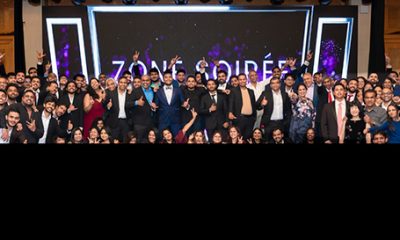
 Business2 days ago
Zone24x7 enters 2026 with strong momentum, reinforcing its role as an enterprise AI and automation partner
-

 Business6 days ago
SLIM-Kantar People’s Awards 2026 to recognise Sri Lanka’s most trusted brands and personalities
-
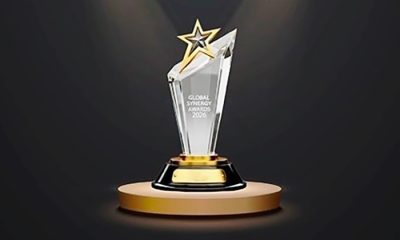
 Business7 days ago
All set for Global Synergy Awards 2026 at Waters Edge
-
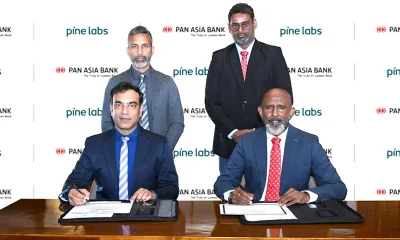
 Business6 days ago
API-first card issuing and processing platform for Pan Asia Bank
-
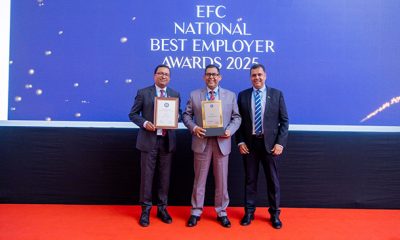
 Business2 days ago
HNB recognized among Top 10 Best Employers of 2025 at the EFC National Best Employer Awards
-

 Business2 days ago
GREAT 2025–2030: Sri Lanka’s Green ambition meets a grid reality check
-

 Editorial4 days ago
All’s not well that ends well?
-

 Features4 days ago
Phew! The heat …