Connect with us

Latest News

“Our ultimate goal is to restore national sovereignty through economic stability and self-reliance” -President

Published

on

President Anura Kumara Disanayake, delivering the keynote address at the international conference “Sri Lanka’s Road to Recovery: Debt and Governance” in Colombo today (16), declared that by 2028 Sri Lanka will have laid the foundation for a stable and self-reliant economy, one capable of independently meeting its external debt obligations. Emphasizing that true sovereignty cannot exist amidst economic collapse, he asserted, “Our ultimate goal is to restore national sovereignty through economic stability and self-reliance.” He urged public officials and citizens alike to contribute to this national endeavour, stressing that the ongoing reform process demands a collective and sustained effort.

The conference, a landmark event jointly hosted by the Ministry of Finance, the Central Bank of Sri Lanka and the International Monetary Fund (IMF), drew global attention as it examined the country’s recovery from economic crisis, the progress of debt restructuring and future challenges under the IMF’s Extended Fund Facility (EFF) programme.
The President acknowledged that while a degree of macroeconomic stability has been restored, Sri Lanka must not be lulled into complacency. “Surface-level stability is not enough,” he stated. “We must deepen this stability through structural reforms that reshape the foundations of our economy.” He also noted several achievements of the current administration within a relatively short timeframe, expressing confidence in continuing this trajectory towards lasting political, economic and social stability.
This conference was held to reflect on Sri Lanka’s experiences, lessons learned and progress made during the debt restructuring process, as well as to discuss the progress and upcoming challenges related to the Extended Fund Facility programme with the International Monetary Fund.
Central Bank Governor Dr. Nandalal Weerasinghe echoed these sentiments, crediting the IMF and international partners for their support in Sri Lanka’s turnaround from a historic crisis that culminated in a sovereign default in 2022. Recalling the severity of the crisis, marked by hyperinflation, shortages and institutional erosion, Dr. Weerasinghe attributed the collapse to years of fiscal mismanagement and unchecked vulnerabilities.
“Stabilization was just the first step,” he noted. “The real test lies in sustaining growth through structural change.”
He highlighted the progress made under the EFF programme, including: Taming inflation – now back to single digits; Rebuilding external balances – including rare current account surpluses and reserve growth; Improving fiscal discipline – with narrowing deficits and emerging primary surpluses.
Dr. Weerasinghe further underlined the importance of governance reforms, pointing to new legislation such as the Central Bank Act, the Public Financial Management Act and the Anti-Corruption Act as pillars of long-term institutional credibility.
Urging stakeholders to maintain policy consistency, empower the private sector and protect the vulnerable, he emphasized: “Sri Lanka’s transformation must be domestically driven, with strong institutions and united public commitment.”
Delivering a pivotal message, IMF First Deputy Managing Director Dr. Gita Gopinath commended Sri Lanka’s hard-won gains but reminded attendees of the cost borne by the people, particularly the most vulnerable.
 “The key lesson from this crisis is that it must never happen again,” she said, stressing the need for continued reforms targeting structural weaknesses such as unsustainable subsidies and inefficient pricing mechanisms. Though socially painful, she insisted such changes are essential for resilience.
She also cautioned against “reform fatigue,” highlighting that half of Sri Lanka’s 16 past IMF programmes faltered due to reversals. “This time must be different,” Dr. Gopinath urged. “Success should be measured not just by numbers but by whether this becomes Sri Lanka’s last IMF programme.” She called for inclusive governance, civil society engagement and equitable policymaking that reaches beyond Colombo, reaffirming the IMF’s commitment while urging national ownership of the recovery path.
Following is the full speech delivered by President Anura Kumara Disanayake;
“A few years ago, our country faced the consequences of the most severe economic crisis in its history. At that juncture, we were confronted with two possible paths: either to continue along the same failed and destructive route, or to choose a new path that would enable us to rebuild and uplift our nation.
Today, we can proudly state that the path we chose has brought significant victories to our country. That success required responsibility and commitment from the political leadership. Moreover, critical responsibilities were borne by state institutions such as the Central Bank and the Ministry of Finance. However, the greatest contribution came from the public, who bore the brunt of these reforms. They made immense sacrifices and endured hardships to help rescue the nation from this crisis.
At present, our country has achieved a level of economic stability. We have reached the stage where debt restructuring is nearing completion and for a notable period, we have been able to maintain stability in the value of the dollar. Furthermore, we have been able to generate expected state revenue and build up foreign reserves. These indicators reflect strong macroeconomic stability. Nevertheless, the deep wounds of the crisis have not yet healed. We must understand that the crisis is not yet resolved in its entirety.
Therefore, while surface-level stability has been established, it is imperative to further solidify this stability and to elevate the economy to a higher level. This requires the implementation of new reforms and transformations within the economic system. I would like to draw attention to a few critical factors in this regard.
To ensure economic stability and recovery, we need a strong public service. However, the expenditure we currently incur to maintain the public service is excessive and unsustainable. Our goal must be to provide an efficient public service at minimal cost to the citizen. We have already decided that certain state institutions should be closed.
 These institutions were established in response to socio-economic needs of a bygone era, which are no longer relevant. Some institutions are now obsolete and therefore, must be restructured or dissolved.
Additionally, we have multiple institutions performing overlapping functions. These must be consolidated. Some state institutions also require a redefinition of their objectives and goals.
Hence, we are committed to implementing a robust transformation of the state apparatus. For this to be successful, inefficiency and more importantly, corruption and bribery must be eradicated from the public sector.
Recent news reports highlight the depth of the current crisis: the Inspector General of Police is in hiding; the Commissioner General of Prisons has been imprisoned; officers from the Department of Motor Traffic and the Department of Immigration and Emigration have been arrested. This raises serious concerns about the state of our institutions. Inefficiency, bribery and corruption significantly contributed to this crisis. Corruption is not merely about immediate transactions, it resulted in vital projects being neglected and unnecessary ones being implemented, which continue to burden us today.
Thus, to overcome this crisis, enhancing institutional efficiency and decisively combating corruption are essential. We are committed, as a government, to this cause.
We believe that the state should retain a certain degree of involvement in sectors that are sensitive to the economy. Sri Lanka’s energy and financial markets are relatively small, which poses the risk of monopolies forming. To counter this, the state must maintain a presence in key sectors.
However, such state institutions must not become burdens on the public. For instance, entities like the Ceylon Electricity Board and the Ceylon Petroleum Corporation are closely tied to both the economy and people’s daily lives. While we believe the government must retain oversight over these entities, they must not impose excessive costs on the public.
Prices must reflect actual production costs. The price of a unit of electricity must correspond to the cost of its generation. We are committed to upholding this principle.
At the same time, we are prepared to strengthen the necessary mechanisms to reduce production costs. Services should be provided to citizens at a cost equivalent to their actual expense.
However, we are aware that there are low-income groups who cannot afford even these costs. While we implement economic reforms and await the benefits to reach the people, we cannot simply ask them to endure the hardship in silence. The state must provide relief to these groups during this transitional period. This is the responsibility of a just government.
In every society, there are segments of the population that are disconnected from economic activity, be they the elderly, the disabled, or individuals whose circumstances prevent them from participating in the economy. It is the duty of the state to protect such groups. Talking about economic development while abandoning these communities is futile. This is a question of humanity, justice and fairness.
We therefore support a policy of providing well-targeted assistance to vulnerable communities. This assistance is not to be politicised. We view it as a matter of social justice and social protection. Based on our past experiences, welfare programmes have often been politicised. But I assure you, we will never use social protection schemes for political gain.
On another note, while we have achieved stability in several sectors, there are others where progress must be expedited. Firstly, we must attract direct foreign investment (FDI). Looking back over the past several decades, we have failed to attract sufficient FDI due to the prevailing global and local economic conditions. This must change.
However, the challenge of attracting investment does not come from a place of economic strength, but from rebuilding after collapse. Our financial market lost credibility and we experienced a situation where people could not afford daily necessities. Foreign reserves hit rock bottom. We are now in the process of recovery.
Yet, is this recovery sufficient to attract investment? I believe we must offer certain incentives to investors. Given the current context, we must focus on creating a more attractive environment for investment, which may include offering strategic relief. We are in discussions with the International Monetary Fund in this regard.
In addition, we face the question: how do we revitalise our national economy and production? Many small and medium enterprises (SMEs) collapsed during the economic downturn. Over 90% of them failed not due to internal mismanagement, but due to the broader economic collapse. Therefore, we must provide targeted relief to help them recover.
Thirdly, while economic growth is important, economic expansion is equally critical. Rural communities have become marginalised and excluded from the mainstream economy. While urban economic indicators may appear positive, they do not reflect the realities of those left behind.
For economic growth to deliver real benefits to the people, economic expansion must be pursued. I believe we must launch initiatives to integrate citizens from remote areas into the economic system. Therefore, to maintain the current stability and to transition to a stronger state, we have a tremendous task ahead of us.
We must be deeply grateful for the support extended by the International Monetary Fund in implementing this programme, as well as for the patience and endurance shown by our citizens, especially if they felt unfairly affected during this process. As I have previously stated, it is our aim to make this the final programme undertaken with the IMF’s Extended Fund Facility. We are hopeful of achieving this goal. By the year 2028, we aspire to build a stable economy with sufficient growth to service our debt independently.
A state cannot maintain sovereignty where the economy has collapsed. A nation cannot retain independence when its economy is in ruin. Whether we like it or not, we have already lost a degree of our sovereignty and independence. Therefore, the ultimate outcome must be the restoration of our national sovereignty and self-reliance. This requires a strenuous and unwavering effort.
It is not a task we can abandon. There is a clear mission to accomplish, and in pursuing that, I expect the commitment of the political leadership, the responsibility of public officials and the cooperation of the people.”


Latest News

SCG curator ‘really happy’ with pitch for final Ashes Test

Published

on

By

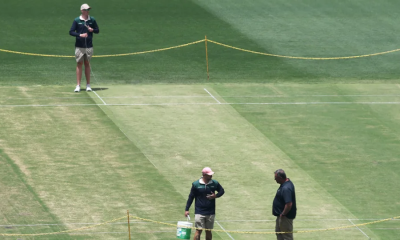
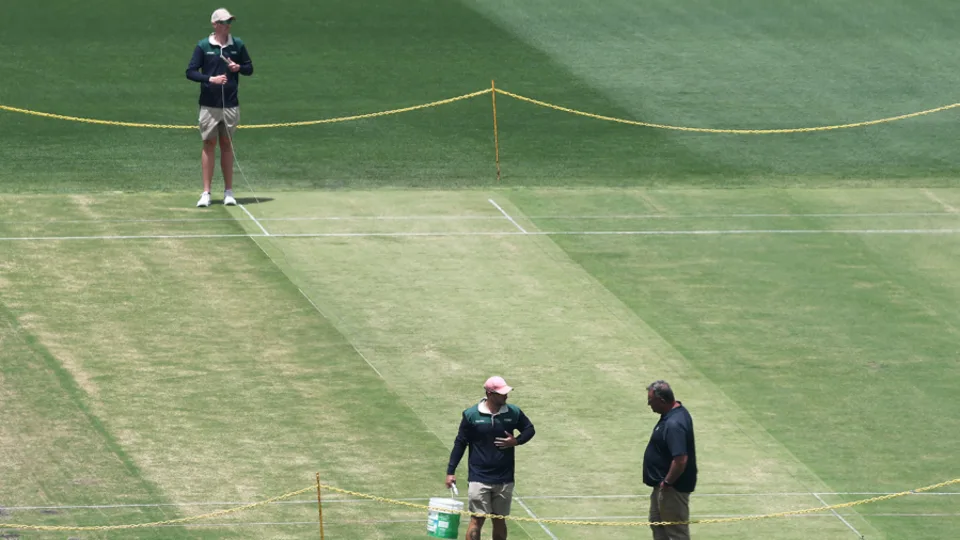
The pitch at the SCG has been the centre of much attention [Cricinfo]

Todd  Murphy is firming to play his first home Test, after the SCG’s head curator declared the pitch’s green covering would be near-irrelevant come day one.

With administrators still on edge after last week’s two day debacle in Melbourne, an extremely green SCG surface raised eyebrows in Sydney on Thursday.

But chief curator Adam Lewis insisted on Friday that should not be a concern, and he was hopeful Sydney would extend into a fifth day.

“You want to see green tinge three days out,” Lewis said.  “If you’re not seeing any live grass three days out, then that’s when it’s a worry, … I’m really comfortable with where we’re sitting.

“We had a little bit of sun this morning. They’re saying a bit more sun tomorrow. That will take the greenness out of the pitch. We’re really happy with the pitches at the moment. We’re looking good.”

Lewis admitted he felt for MCG counterpart Matt Page last week, but said he felt no external pressure to ensure the fifth Test in Sydney went the distance.

It’s estimated that Cricket Australia (CA) has lost in the vicinity of AUD15 million in profits this summer, with the opening Test in Perth also finishing inside two days.

Even Prime Minister Anthony Albanese joked at a function with teams on Thursday night that they had to ensure the game went to day three, in order to support the McGrath Foundation fundraiser.

One of the hardest grounds in the world to bowl on between 2014 and 2023, last year’s SCG Test was over in just two-and-a-half days.

Lewis said that his ground staff would go with 6mm of grass this year compared to 7mm last season, while also reducing its density. That in itself generally acts to flatten out the wicket and produce less movement, while also inviting the chance of spin late in the match.

“We just thought … we could thin our density out a little bit,” Lewis said. “That’s what we’ve done this year. We’ve practised that in the Shield matches and we’ve received very good marks.”

CA CEO Todd Greenberg said he too was confident the SCG Test would last the distance.

“I’ve had more phone calls and conversations about wickets and millimetres of grass than I thought I’d ever have,” Greenberg said. “But I’m hopeful and confident we will have a long and productive Test match here.”

All of which should spell good news for Murphy. Australia’s coaching staff had a prolonged conversation around the pitch on Friday morning, after leaving Murphy out and going with four quicks at the MCG.

Murphy then spent most of Friday’s training session bowling to Australia’s top order, while Alex Carey also had an extended run keeping to him.

With seven Tests to his name overseas, Murphy would be expected to come in for Jhye Richardson if he does play in Sydney.

England have promised to take the attack to Murphy, who played two Tests during the 2023 Ashes were he conceded 4.72 an over.

“Whoever plays, I think that’s the mantra of our team, is to try and put pressure on people,” opener Zak Crawley, said. “Todd’s a very good bowler, but I can envisage us trying to put some pressure on him, like we would all their bowlers.

That’s going to come with some risks, and if it’s turning it’s definitely going to be a threat. But I think we’ll try and put pressure on all their bowlers.”

The other question for Australia will be whether Cameron Green remains in the side, after Beau Webster was spotted fielding in the gully during slips training on Friday. Green has averaged 18.66 with the bat in this series. The SCG was the scene of Webster’s debut a year ago against India.

[Cricinfo]

Continue Reading

Latest News

Palestine was the deadliest place to be a journalist in 2025: Media union

Published

on

By

A woman displays a memorial sign of slain Palestinian Al Jazeera journalist Anas al-Sharif as people demonstrate, during a general strike called by Spanish unions in solidarity with Palestinians in Gaza, in Madrid, Spain, October 15, 2025 [Aljazeera]

Palestine was the deadliest place to work as a journalist in 2025, with the Middle East as a whole the most dangerous region for media professionals, according to a global journalist union.

The International Federation of Journalists (IFJ) said the region accounted for 74 deaths last year – more than half of the 128 journalists and media workers killed – in a new report released on Wednesday.

The Middle East was followed by Africa with 18 deaths, Asia Pacific (15), the Americas (11) and Europe (10), according to the report. The vast majority of those killed were men, but the list included 10 women.

“128 journalists killed in a single year is not just a statistic; it is a global crisis. These deaths are a brutal reminder that journalists are being targeted with impunity, simply for doing their job,” IFJ General Secretary Anthony Bellanger said.

Palestinian journalists were the biggest cohort of victims: 56 Palestinian media professionals were killed in 2025. Yemen followed, with 13 deaths, Ukraine, with eight, and Sudan, with six, according to the IFJ.

The Paris-based media union cited Israel’s killing of Al Jazeera journalist Anas al-Sharif as the most “emblematic” of the 56 journalists murdered in Palestine last year covering Israel’s genocidal war on Gaza. Al-Sharif, 28, was killed on August 10 alongside several colleagues when Israeli forces struck a media tent outside Gaza City’s al-Shifa Hospital.

The attack also killed Al Jazeera correspondent Mohammed Qreiqeh, Al Jazeera camera operators Ibrahim Zaher and Mohammed Noufal, freelance camera operator Momen Aliwa and freelance journalist Mohammed al-Khalidi.

IFJ also cited an Israeli strike in early September on a Yemeni newspaper office as “one of the worst-ever attacks on a media office”. Thirteen journalists and media workers at the Houthi-affiliated “26 September” newspaper were killed, along with more than 20 other people.

Another nine deaths were ruled as accidents, while others – including two journalists in Syria and two in Iran – were “targeted and killed” because of their work, IFJ said.

While the Middle East was the deadliest region for the third year in a row in 2025, the Asia Pacific accounted for the largest number of journalists and media workers behind bars. Most cases in 2025 were in China and Hong Kong, which together accounted for 143 journalists, followed by 49 in Myanmar and 37 in Vietnam.

Europe was another detention hotspot last year, accounting for 149 imprisoned journalists. IFJ attributed the figure, up 40 percent from a year earlier, to “intensified repression in Azerbaijan and Russia”.

[Aljazeera]

Continue Reading

Latest News

Donald Trump pauses US tariff hike on furniture, cabinets for one year

Published

on

By

[pic Aljazeera]

United States President Donald Trump has said that he will delay the implementation of tariffs on upholstered furniture, kitchen cabinets and vanities for one year, amid growing concerns over cost-of-living issues.

Trump signed an order on Wednesday night, during the New Year’s Eve holiday, pausing a planned 50 percent tariff on cabinets and vanities and a 30 percent tariff on upholstered furniture.

But the order maintained the 25 percent tariff he put in place for those products in September.

The US president had previously described the furniture tariffs as a step to “bolster American industry and protect national security”.

Polls indicate that rising prices and the cost of living are major concerns for people in the US as the country approaches its 2026 midterm elections, scheduled for November.

Voters hold President Trump’s policies, and tariffs in particular, at least partly responsible for their economic woes. A Politico poll released in December found that 30 percent of respondents cited tariffs as the primary reason prices were high, and 32 percent said that Trump bears “full responsibility” for the state of the economy.

A majority of respondents cited the cost of living as a top issue facing the country, while 32 percent cited the state of the economy. Democratic politicians have sought to hammer Trump and his Republican Party on affordability concerns, which Trump has waved away as a “hoax” perpetuated by his political rivals.

The Italian foreign ministry said on Thursday that the US had also agreed to slash proposed import duties on pasta products from 13 companies.

Previously, the Trump administration had threatened the pasta companies with additional tariffs of 92 percent, in addition to import taxes on European Union products.

Italy’s foreign ministry said that the US Commerce Department had agreed to bring that rate down to 2.26 percent for La Molisana and 13.98 percent for Garofalo, two Italian food companies the administration had accused of undercutting other pasta producers through unfairly low prices.

The other companies will face a rate of 9.09 percent.

“The recalculation of the duties is a sign that US authorities recognise our companies’ constructive willingness to cooperate,” the foreign ministry said.

[Aljazeera]

Continue Reading

Trending