Connect with us

Latest News

“Our ultimate goal is to restore national sovereignty through economic stability and self-reliance” -President

Published

on

President Anura Kumara Disanayake, delivering the keynote address at the international conference “Sri Lanka’s Road to Recovery: Debt and Governance” in Colombo today (16), declared that by 2028 Sri Lanka will have laid the foundation for a stable and self-reliant economy, one capable of independently meeting its external debt obligations. Emphasizing that true sovereignty cannot exist amidst economic collapse, he asserted, “Our ultimate goal is to restore national sovereignty through economic stability and self-reliance.” He urged public officials and citizens alike to contribute to this national endeavour, stressing that the ongoing reform process demands a collective and sustained effort.

The conference, a landmark event jointly hosted by the Ministry of Finance, the Central Bank of Sri Lanka and the International Monetary Fund (IMF), drew global attention as it examined the country’s recovery from economic crisis, the progress of debt restructuring and future challenges under the IMF’s Extended Fund Facility (EFF) programme.
The President acknowledged that while a degree of macroeconomic stability has been restored, Sri Lanka must not be lulled into complacency. “Surface-level stability is not enough,” he stated. “We must deepen this stability through structural reforms that reshape the foundations of our economy.” He also noted several achievements of the current administration within a relatively short timeframe, expressing confidence in continuing this trajectory towards lasting political, economic and social stability.
This conference was held to reflect on Sri Lanka’s experiences, lessons learned and progress made during the debt restructuring process, as well as to discuss the progress and upcoming challenges related to the Extended Fund Facility programme with the International Monetary Fund.
Central Bank Governor Dr. Nandalal Weerasinghe echoed these sentiments, crediting the IMF and international partners for their support in Sri Lanka’s turnaround from a historic crisis that culminated in a sovereign default in 2022. Recalling the severity of the crisis, marked by hyperinflation, shortages and institutional erosion, Dr. Weerasinghe attributed the collapse to years of fiscal mismanagement and unchecked vulnerabilities.
“Stabilization was just the first step,” he noted. “The real test lies in sustaining growth through structural change.”
He highlighted the progress made under the EFF programme, including: Taming inflation – now back to single digits; Rebuilding external balances – including rare current account surpluses and reserve growth; Improving fiscal discipline – with narrowing deficits and emerging primary surpluses.
Dr. Weerasinghe further underlined the importance of governance reforms, pointing to new legislation such as the Central Bank Act, the Public Financial Management Act and the Anti-Corruption Act as pillars of long-term institutional credibility.
Urging stakeholders to maintain policy consistency, empower the private sector and protect the vulnerable, he emphasized: “Sri Lanka’s transformation must be domestically driven, with strong institutions and united public commitment.”
Delivering a pivotal message, IMF First Deputy Managing Director Dr. Gita Gopinath commended Sri Lanka’s hard-won gains but reminded attendees of the cost borne by the people, particularly the most vulnerable.
 “The key lesson from this crisis is that it must never happen again,” she said, stressing the need for continued reforms targeting structural weaknesses such as unsustainable subsidies and inefficient pricing mechanisms. Though socially painful, she insisted such changes are essential for resilience.
She also cautioned against “reform fatigue,” highlighting that half of Sri Lanka’s 16 past IMF programmes faltered due to reversals. “This time must be different,” Dr. Gopinath urged. “Success should be measured not just by numbers but by whether this becomes Sri Lanka’s last IMF programme.” She called for inclusive governance, civil society engagement and equitable policymaking that reaches beyond Colombo, reaffirming the IMF’s commitment while urging national ownership of the recovery path.
Following is the full speech delivered by President Anura Kumara Disanayake;
“A few years ago, our country faced the consequences of the most severe economic crisis in its history. At that juncture, we were confronted with two possible paths: either to continue along the same failed and destructive route, or to choose a new path that would enable us to rebuild and uplift our nation.
Today, we can proudly state that the path we chose has brought significant victories to our country. That success required responsibility and commitment from the political leadership. Moreover, critical responsibilities were borne by state institutions such as the Central Bank and the Ministry of Finance. However, the greatest contribution came from the public, who bore the brunt of these reforms. They made immense sacrifices and endured hardships to help rescue the nation from this crisis.
At present, our country has achieved a level of economic stability. We have reached the stage where debt restructuring is nearing completion and for a notable period, we have been able to maintain stability in the value of the dollar. Furthermore, we have been able to generate expected state revenue and build up foreign reserves. These indicators reflect strong macroeconomic stability. Nevertheless, the deep wounds of the crisis have not yet healed. We must understand that the crisis is not yet resolved in its entirety.
Therefore, while surface-level stability has been established, it is imperative to further solidify this stability and to elevate the economy to a higher level. This requires the implementation of new reforms and transformations within the economic system. I would like to draw attention to a few critical factors in this regard.
To ensure economic stability and recovery, we need a strong public service. However, the expenditure we currently incur to maintain the public service is excessive and unsustainable. Our goal must be to provide an efficient public service at minimal cost to the citizen. We have already decided that certain state institutions should be closed.
 These institutions were established in response to socio-economic needs of a bygone era, which are no longer relevant. Some institutions are now obsolete and therefore, must be restructured or dissolved.
Additionally, we have multiple institutions performing overlapping functions. These must be consolidated. Some state institutions also require a redefinition of their objectives and goals.
Hence, we are committed to implementing a robust transformation of the state apparatus. For this to be successful, inefficiency and more importantly, corruption and bribery must be eradicated from the public sector.
Recent news reports highlight the depth of the current crisis: the Inspector General of Police is in hiding; the Commissioner General of Prisons has been imprisoned; officers from the Department of Motor Traffic and the Department of Immigration and Emigration have been arrested. This raises serious concerns about the state of our institutions. Inefficiency, bribery and corruption significantly contributed to this crisis. Corruption is not merely about immediate transactions, it resulted in vital projects being neglected and unnecessary ones being implemented, which continue to burden us today.
Thus, to overcome this crisis, enhancing institutional efficiency and decisively combating corruption are essential. We are committed, as a government, to this cause.
We believe that the state should retain a certain degree of involvement in sectors that are sensitive to the economy. Sri Lanka’s energy and financial markets are relatively small, which poses the risk of monopolies forming. To counter this, the state must maintain a presence in key sectors.
However, such state institutions must not become burdens on the public. For instance, entities like the Ceylon Electricity Board and the Ceylon Petroleum Corporation are closely tied to both the economy and people’s daily lives. While we believe the government must retain oversight over these entities, they must not impose excessive costs on the public.
Prices must reflect actual production costs. The price of a unit of electricity must correspond to the cost of its generation. We are committed to upholding this principle.
At the same time, we are prepared to strengthen the necessary mechanisms to reduce production costs. Services should be provided to citizens at a cost equivalent to their actual expense.
However, we are aware that there are low-income groups who cannot afford even these costs. While we implement economic reforms and await the benefits to reach the people, we cannot simply ask them to endure the hardship in silence. The state must provide relief to these groups during this transitional period. This is the responsibility of a just government.
In every society, there are segments of the population that are disconnected from economic activity, be they the elderly, the disabled, or individuals whose circumstances prevent them from participating in the economy. It is the duty of the state to protect such groups. Talking about economic development while abandoning these communities is futile. This is a question of humanity, justice and fairness.
We therefore support a policy of providing well-targeted assistance to vulnerable communities. This assistance is not to be politicised. We view it as a matter of social justice and social protection. Based on our past experiences, welfare programmes have often been politicised. But I assure you, we will never use social protection schemes for political gain.
On another note, while we have achieved stability in several sectors, there are others where progress must be expedited. Firstly, we must attract direct foreign investment (FDI). Looking back over the past several decades, we have failed to attract sufficient FDI due to the prevailing global and local economic conditions. This must change.
However, the challenge of attracting investment does not come from a place of economic strength, but from rebuilding after collapse. Our financial market lost credibility and we experienced a situation where people could not afford daily necessities. Foreign reserves hit rock bottom. We are now in the process of recovery.
Yet, is this recovery sufficient to attract investment? I believe we must offer certain incentives to investors. Given the current context, we must focus on creating a more attractive environment for investment, which may include offering strategic relief. We are in discussions with the International Monetary Fund in this regard.
In addition, we face the question: how do we revitalise our national economy and production? Many small and medium enterprises (SMEs) collapsed during the economic downturn. Over 90% of them failed not due to internal mismanagement, but due to the broader economic collapse. Therefore, we must provide targeted relief to help them recover.
Thirdly, while economic growth is important, economic expansion is equally critical. Rural communities have become marginalised and excluded from the mainstream economy. While urban economic indicators may appear positive, they do not reflect the realities of those left behind.
For economic growth to deliver real benefits to the people, economic expansion must be pursued. I believe we must launch initiatives to integrate citizens from remote areas into the economic system. Therefore, to maintain the current stability and to transition to a stronger state, we have a tremendous task ahead of us.
We must be deeply grateful for the support extended by the International Monetary Fund in implementing this programme, as well as for the patience and endurance shown by our citizens, especially if they felt unfairly affected during this process. As I have previously stated, it is our aim to make this the final programme undertaken with the IMF’s Extended Fund Facility. We are hopeful of achieving this goal. By the year 2028, we aspire to build a stable economy with sufficient growth to service our debt independently.
A state cannot maintain sovereignty where the economy has collapsed. A nation cannot retain independence when its economy is in ruin. Whether we like it or not, we have already lost a degree of our sovereignty and independence. Therefore, the ultimate outcome must be the restoration of our national sovereignty and self-reliance. This requires a strenuous and unwavering effort.
It is not a task we can abandon. There is a clear mission to accomplish, and in pursuing that, I expect the commitment of the political leadership, the responsibility of public officials and the cooperation of the people.”


Latest News

Trump unhurt after shots fired at White House correspondents’ dinner

Published

on

By

US President Donald Trump speaks during a news conference at the White House in Washington, DC, on April 25, 2026 [Aljazeera]

United States President Donald Trump was evacuated from the White House correspondents’ dinner in Washington, DC, after shots were fired outside the event.

Trump was rushed offstage at the Washington Hilton hotel on Saturday evening after gunfire broke out outside the ballroom where the annual media gala was taking place.

The president, First Lady Melania Trump, and Trump’s Cabinet were unharmed in the attack.

In a news conference after the incident, Trump said a man armed with multiple weapons had charged a security checkpoint and was “taken down” by the Secret Service.

Trump described the suspect as a “very sick person” and a “thug” who had attacked the US Constitution.

A Secret Service officer was shot in the attack, but he was saved by his bulletproof vest and was “doing great”, Trump said.

“As you know, this is not the first time in the past couple of years that our republic has been attacked by a would-be assassin who sought to kill,” the president said.

“In light of this evening’s events, I ask that all Americans recommit with their hearts in resolving our differences peacefully,” Trump said.

Asked by a reporter if he believed he was the target of the attack, Trump responded: “I guess”.

SS
Agents draw their guns at the Washington Hilton in Washington, DC, on April 25, 2026 [Aljazeera]

The Secret Service said the shooting had occurred at a “screening area” and that one individual was in custody.

“The condition of those involved is not yet known, and law enforcement is actively assessing the situation,” the agency said.

Shortly before his news conference, Trump posted images on Truth Social of the suspect face down on the ground, as well as a clip of a surveillance video showing a man running past security personnel, who then drew their guns and opened fire.

Jeanine Ferris Pirro, the US attorney for the District of Columbia, said the suspect would be charged with using a firearm during a crime or violence and assault on federal officers using a dangerous weapon.

FBI director Kash Patel said officers had begun examining the suspect’s background and urged members of the public with any relevant information to come forward.

“No piece of information is too small; no piece of information is inadequate. We will evaluate it all,” Patel said.

Multiple US media outlets identified the suspect as Cole Tomas Allen, 31, of Torrance, California.

Trump, a ferocious critic of journalists who has sued multiple media outlets, had been due to speak at the annual celebration of press freedom for the first time as president.

Footage from the dinner’s venue showed Trump and other attendees taking cover behind their table after shots rang out, as people yelled “Get down!” and “Stay down!”

Trump was then rushed from the scene as heavily armed members of his security detail swarmed the table.

Al Jazeera producer Chris Sheridan said he heard what he believed to be five gunshots outside the ballroom.

“We could smell the powder. We immediately dove to the ground. It was directly behind me,” Sheridan said.

“I couldn’t tell how many feet away, but it was definitely behind the doors to the entrance to the ballroom.”

Sheridan said that while there was “airport-level” security around the ballroom itself, anyone with a ticket to the dinner could enter the hotel and descend to the lower level where the ballroom is located.

“You could have gotten down to the lower level, the ballroom level, and been outside,” he said.

Trump 3
Armed commandos stand by as special guests are evacuated from the back of the Washington Hilton in Washington, DC, on April 25, 2026 [Aljazeera]


World leaders including Indian Prime Minister Narendra Modi, Japanese Prime Minister Sanae Takaichi and Mexican President Claudia Sheinbaum condemned the attack and expressed their relief that Trump was unharmed.

“Violence has no place in a democracy and must be unequivocally condemned,” Modi said in a post on X.

Trump has been targeted in multiple assassination attempts, including a near-miss shooting during his 2024 presidential campaign.

Thomas Crooks fired eight shots at Trump during a campaign event in Butler, Pennsylvania, killing one bystander and wounding the then-candidate’s right ear, before he was shot dead by the Secret Service.

“Today, we need levels of security that probably nobody has ever seen before,” Trump said at Saturday’s news conference, before pledging to reschedule the press dinner.

“We’re not going to cancel things out, because we can’t do that,” Trump said.

“We wanted to stay tonight. I will tell you, I fought like hell to stay… But it was protocol. They said, ‘Please, sir.’”

[Aljazeeera]

Continue Reading

Latest News

Sooryavanshi ton in vain as Sunrisers Hyderabad raze a 229 chase

Published

on

By

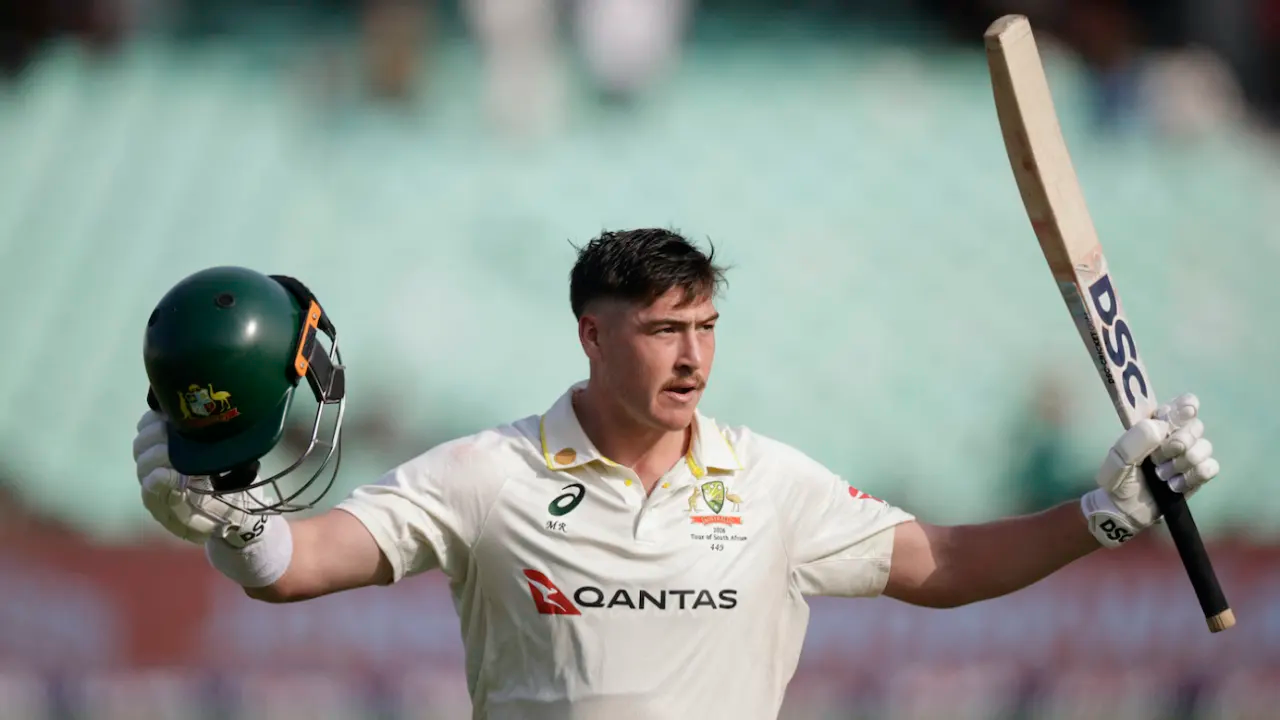
Vaibhav Sooryavanshi salutes after hitting a century [Cricinfo]

Twelve days after defeating Rajasthan Royals [RR] by nullifying Vaibhav Sooryavanshi, Sunrisers Hyderabad [SRH] defeated them in spite of an astonishing innings from the boy wonder.

Sooryavanshi scored his second IPL hundred, getting there off just 36 balls, and struck a six every third ball before his dismissal. The rest of RR’s batting, however, struggled around him. Sooryavanshi made 103 off 37 balls, and his colleagues and extras combined to score 125 off 83.

It wasn’t clear at the innings break whether 228 for 6 would be enough for RR, on a day when Punjab Kings (PBKS) had broken the T20 record by chasing down 265 with an over to spare. It wasn’t, and this was because SRH were able to fire at both ends where RR only went from one. A red-hot Jofra Archer dismissed Travis Head in the first over, but Abhishek Sharma and Ishan Kishan quickly took over, enjoying their share of luck in a match where the two teams combined to put down seven chances (there had been nine drops in the Delhi Capitals-PBKS game).

Individually, neither Abhishek nor Kishan matched Sooryavanshi for pace of scoring. Together, though, they comfortably outscored Sooryavanshi and Dhruv Jurel, who had put on RR’s biggest partnership – 112 off 62 balls for the second wicket. Abhishek and Kishan put on 132 off just 55, and when Donovan Ferreira broke their partnership, SRH needed just nine an over in the last 10. They got home with an over and a half to spare.

Praful Hinge had made an eye-catching debut in the reverse fixture, taking a match-winning four-for that began with the wicket of Sooryavanshi. On this day, Sooryavanshi had his revenge. He faced five balls of Hinge in the first over of the match, after SRH had chosen to bowl. First a dot – a play and miss. And then 6, 6, 6, 6. Hinge began short and kept getting gradually fuller, and Sooryavanshi put everything away: a pull, a whip over backward square leg, and two clean, flowing hits down the ground.

It took until the last ball of the second over for Sooryavanshi to get on strike again, and now he was facing Pat Cummins – playing his first competitive game since the Adelaide Ashes Test in December – for the first time in his life. Cummins bowled a good short ball, angling across the left-hander and climbing, but Sooryavanshi picked the length in a flash and swatted it for another six, well in front of square. He had faced six balls and hit five sixes.

Sooryavanshi was never going to keep up that rate of scoring, but he didn’t slow down by much at all. He finished the powerplay on 51 off 16, along the way getting to a 15-ball half-century for the third time this season, and getting to 1000 runs in fewer balls than anyone in T20 history. He had also enjoyed one major slice of luck, Aniket Verma putting him down off Eshan Malinga on the leg-side boundary, when he was on 32.

Sooryavanshi kept hitting boundaries at an absurd rate even when the fields spread, showing he could innovate to disrupt bowlers’ plans: a reverse-swat over backward point, for instance, forced left-arm wristspinner Shivang Kumar into a fuller, straighter follow-up that he launched over wide long-on for six.

Another attempt at innovation – he opened up and shaped to reverse-scoop – led to his wicket off a Sakib Hussain yorker in the 14th over, but he had hit his Bihar team-mate for 6, 4, 6 before that to bring up his century. It was only his second-quickest century in the IPL – his maiden hundred, against Gujarat Titans last year, had come off 35 balls.

He now has the second and third quickest centuries in the history of the IPL. He’s only 15.

While the Sooryavanshi whirlwind raged at one end, SRH’s bowlers found life significantly easier at the other. Jurel struggled for fluency early on, and despite a late flurry of boundaries only managed 51 off 35. Riyan Parag, enduring a miserable season, was out for 7 of 9, bowled by a terrific Cummins yorker with late tail.

Cummins and Eshan Malinga used the yorker brilliantly at the back end of the innings, and only Ferreira (33 off 16) managed to break free of SRH’s post-Sooryavanshi shackles.

Archer produced a chance with the first ball of SRH’s innings, his pace, bounce, constricting line, and angle from over the wicket producing a nervy jab and edge from Travis Head. Jurel, diving left, put it down.

There were two plays and misses in the next three balls (one was adjudged wide), and then a bit of width that Head carved for six. But just when Jurel may have wondered how costly his miss would be, Archer bowled another Test-match jaffa, squaring Head up, and this time the edge settled nicely in Jurel’s gloves.

The drama wasn’t done yet; the last ball of the over was a searing bouncer, and Kishan, taking his eyes off the ball while looking to fend it away, edged it for six over fine leg.

That proved to be a bit of a sign in the early exchanges. There was luck early on for Abhishek too; an edge over slip in the second over off Nandre Burger, and two missed chances – one from Shimron Hetmyer who lost the ball in its flight, one from Ravindra Jadeja who put down a sitter – in the fourth and fifth overs.

Either side of those chances, the two left-handers peppered the boundary, particularly by piercing or going over the off-side ring when the bowlers offered width. Some of this was down to mis-executed plans: Tushar Deshpande, for instance, looked to hide the ball away from their hitting arc with protection square and behind square on the off side, but he didn’t quite find the line control on the day.

The presence of two left-handers also meant RR went with the part-time offspin of Parag and Ferreira before either of their frontline spinners. By the time Ravi Bishnoi and Jadeja came on in the 11th and 12th overs, the match was nearly done, and they ended up bowling just an over each. Heinrich Klaasen (29 off 24) and Nitish Kumar Reddy (36 off 18) took SRH to the doorstep of their target before both fell late in the chase.

Brief scores:
Sunrisers Hyderabad 229 for 5 in 18.3 overs (Abhishek Sharma 57, Ishan  Kishan 74, Heinrich Klassen 29, Nitish Kumar Reddy 36; Jofra Archer 2-34, Brijesh Sharma 2-44,Donovan Ferreira 1-14) beat Rajasthan Royals 228 for 6 in 20 overs  (Yashasvi Jaiswal 10, Vaibhav Sooryavanshi 103, Dhruv Jurel 51, Donovan Ferreira 33, Shimron Hetmyer 11; Praful Hinge 1-49, Pat Cummins 1-27, Eshan Malinga 2-38, Sakib Hussain 1-62, Nitish Kumar Reddy 1-20) by five wickets

[Cricinfo]

Continue Reading

Latest News

Prabhsimran, Shreyas upstage Rahul’s 152* to mow down record T20 chase

Published

on

By

KL Rahul became the first Indian batter to score 150 in the IPL [cRICINFO]

Punjab Kings (PBKS) overpowered Delhi Capitals (DC) and pulled off the highest successful T20 chase in an IPL bash where 265 met 264. They mowed down the target with six wickets and seven balls to spare. The opening blitz from Priyansh Arya and Prabhsimran Singh – they hit 116 together in the powerplay – and captain Shreyas Iyer’s chancy yet composed 71 not out off 36 balls upstaged KL Rahukl’s unbeaten 152 off 67 balls on a flat Delhi pitch.

Before the start of the chase, ESPNcricinfo’s Forecaster had PBKS’ win probability pegged at 14.83%. It zoomed up to 65.35% after Arya and Prabhsimran went on a ruthless boundary-hitting spree in the powerplay. Both openers fell in successive overs to spin, but Shreyas then took charge of the chase and increased that count to 100%.

Rahul’s knock could’ve been cut short on 12 had Shashank Singh not dropped a regulation catch at deep square leg. Shashank lost his shape and ended up knocking the ball away to the boundary. After dropping at least three chances in their previous game against Lucknow Super Giants (LSG), Shashank spilled another chance on Saturday, leaving coach Ricky Ponting upset in the dugout.

Shashank fumbled again in the fifth over of the powerplay, running to his right from sweeper cover and letting the ball roll into the boundary. By the time the powerplay ended, DC ran away to 68 for 1, their highest powerplay score this season.

Rahul was responsible for 35 of those from 16 balls, having repeatedly hit the ball over the top. Rana was also quick off the blocks, moving to 22 off 13 balls. Prabhsimran and Arya later made those powerplay scores look pedestrian.

In the past, Rahul often slowed down after the powerplay, but on Saturday, he didn’t allow the momentum to let up. He step-hit Yuzvendra Chahal for six over long-on in the seventh over and proceeded to step out of his crease and pick the legspinner away for back-to-back fours in the 11th over. By then, Rahul had already raised his half-century off 26 balls. He got another life on 51 when he popped up a return catch, but Vijaykumar Vyshak couldn’t hold onto it.

Rahul went on to bring up his fastest IPL century, off 47 balls. He reached the landmark with a drilled drive down the ground off Marco Jansen in the 15th over. He celebrated by crossing his arms in the form of an ‘X’ and had more than 28,000 fans at the Arun Jaitley Stadium celebrating with him.

At the other end, Nitish Rana looked set to bring up a hundred of his own until Xavier Bartlett had him caught by Shreyas at mid-off for 91 off 44 balls to snap a 220-run stand – the highest for DC. In the 11 balls prior to his dismissal, Rana had cracked 44 off the Australia quick, including a sequence of 6,4,4,4,4,6 in the 12th over that cost PBKS 28 runs.

Rana wasn’t as fluent against Chahal, but Rahul had made up for it at the other end. Rahul went from 100 to 150 in just 19 balls. He got there with a superbly controlled upper cut off a lifter from Arshdeep Singh on the penultimate ball of the innings.

Rahul became the first Indian to score 150 or more in the IPL and third overall behind only Chris Gayle’s 175* against Pune Warriors India (PWI) in 2013 and Brendon McCullum’s 158* against Royal Challengers Bangalore (RCB) in 2008. He batted through 20 overs and vaulted DC to their highest total. At the innings break, Rahul was so knackered that he was panting for breath through his interview on a 41-degree day in Delhi.

Prabhsimran and Delhi boy, Arya, then left the crowd breathless in the chase with their unfettered assault in the powerplay. It began with Arya pumping a fairly blameless length delivery on off from Auqib Nabi over midwidcket for six and ended with four by Prabhsimran, which propelled PBKS to 116 for 0 in six overs. It was the second-highest powerplay score in the history of the IPL, falling nine short of levelling the record set by Sunrisers Hyderabad (SRH) against DC at this very venue in 2024.

PBKS had passed fifty in the third over when Arya crunched Axar Patel for six and then Prabhsimran muscled them past hundred in the final over of the powerplay with an over full of fours against seamer Mukesh Kumar.

DC clawed back into the contest when their spinners Axar and Kuldeep Yadav dismissed PBKS’ openers in the seventh and eighth overs. Kuldeep struck again in the tenth over when he stormed through Cooper Connolly’s defences with a zippy wrong’un, leaving PBKS at 145 for 3 in the tenth over. Shreyas then managed the chase so well that PBKS ended up winning with more than an over to spare.

Shreyas got cracking when he pumped legspinner Vipraj Nigam into the sight screen in the 11th over. Nigam had come into the DC side as a concussion sub for Lungi Ngidi, who was taken to the hospital in an ambulance after suffering a blow to his head while attempting a catch off Arya at mid-off. Nigam created a chance to dismiss Shreyas on 28, but Karun Nair, who came in as a fielding sub, dropped a sitter at long-off in the 15th over. Two balls later, Nair dropped Shreyas once again, this time at long-on off Kuldeep.

Lungi Ngidi banged his head on the ground while he looked to take a catch [Cricinfo]

Shreyas went 4,6,6 off the next three legal balls to tilt the game PBKS’ way. The second six over long-on brought Shreyas a half-century off 26 balls. He also lined up T Natarajan for a brace of sixes to rush PBKS home along with Shashank.

Brief scores:
Punjab Kings 265 for 4 in 18.5 overs (Priyansh Arya 43, Prabhsimran Singh 76, Cooper Connolly 17, Shreyas Iyer  71*, Nehal Wadhera 25, Shashank Singh 19*; Axar Patel 1-44, Kuldeep Yadav 2-46, Vipraj Nigam 1-24) beat Delhi Capitals 264 for 2 in 20 overs  (Pathum Nissanka 11, KL Rahul 152*, Nitish Rana, 91; Arshdeep 1-49, Xavier Bartlett 1-69) by six wickets

[Cricinfo]
Continue Reading

Trending