
News
Opposition urges IMF to act on Lanka’s governance failures


The people’s United Opposition yesterday appealed to the IMF to take tangible action to rein in the Lankan government. Following a meeting with IMF Mission in Colombo yesterday, the group issued the following statement:
“As leaders or representatives of several groups in the Opposition, we are seeking an urgent appointment to meet with you on any date between 16 and 18 June to focus on some critical issues.
“Our purpose is to bring to your immediate attention a severe and rapidly growing concern among the general public of Sri Lanka. As the citizens who ultimately bear the sole legal and financial obligation to service and repay international lenders, the public is growing increasingly alarmed by the state’s failure to safeguard national revenue and borrowed funds.
“While we acknowledge the IMF’s contribution and assistance in stabilizing Sri Lanka’s macroeconomic framework, we refuse to accept a reality where these gruelling stabilization efforts, along with the heavy taxes extracted from the public, are exploited, mismanaged, or outright wasted by a corrupt or incompetent state administration.
“While ordinary citizens continue to absorb the heavy personal impact of elevated direct taxes, expanded indirect levies, and high utility tariffs, a series of highly publicized, colossal public finance leakages, operational failures, and procurement anomalies have emerged within the state apparatus. These incidents point to a catastrophic collapse of internal controls and governance safeguards across multiple state organs:
“Procurement and Tender Violations in Energy: The recent Special Audit Report on the 2025/2026 coal procurement exposed direct violations of mandatory bidding registrations and quality controls, costing the state billions of rupees in avoidable overconsumption losses.
“High-Premium Petroleum Procurement: Serious transparency concerns have emerged regarding the Ceylon Petroleum Corporation’s (CPC) procurement structures, highlighted by the highly publicized disclosure regarding “door-to-door” refined petroleum deliveries to Sri Lanka reaching as high as USD 286 per barrel due to combined spot pricing, inflated premiums, and logistical overrides. This massive premium structure represents a severe fiscal drain on state-owned utilities and directly contradicts the cost-recovery and efficiency mandates agreed upon under the IMF framework.
“Irregularities in International Tech Procurement (The Biometric E-Passport Dispute): Of grave concern to international trade credibility are the systemic irregularities surrounding the 5-million e-passport procurement system. This process triggered severe diplomatic and commercial friction after formal complaints were lodged by international stakeholders, including Poland, regarding a lack of competitive transparency, irregular extensions, and altered tender parameters. The resulting procedural deadlock and subsequent legal disputes have severely disrupted essential state document issuance, revealing a failure to manage high-value international digital infrastructure contracts objectively.
“Asymmetric Information Leakage in Vehicle Import Duties: Of critical concern to revenue integrity is the recent public scandal involving the premature leakage of upcoming tax and tariff increases on vehicle imports. Evidence strongly suggests that details of the impending fiscal adjustments were leaked to select large, well-connected automotive importers prior to the official gazette. This insider access triggered a massive, last-minute surge in the opening of Letters of Credit (LCs) by these specific entities, allowing them to legally lock in shipments under older, lower tariff rates, actively suppressing billions of rupees in anticipated state customs revenue.
“Bypassing of Customs Safeguards (The “Red Channel” Releases): Parallel to this is the irregular clearance of 323 high-risk containers from the Colombo Harbour without undergoing mandatory physical inspections. Despite being explicitly flagged by the Risk Management System (RMS) under the “Red Channel,” these shipments were cleared via an extraordinary internal committee override. The Sri Lanka Customs Officers’ Union has publicly stated they cannot verify the contents, creating immense exposure to customs revenue evasion, while the Parliamentary Select Committee inquiry remains completely inconclusive.
“State Treasury and Postal Department Cyber Breaches: The diversion of USD 2.5 million from the Treasury’s External Resources Department (ERD)—initially intended for bilateral debt repayment to the Government of Australia—alongside the unchecked loss of USD 625,000 via email spoofing within the Department of Posts across consecutive fiscal years, highlights an intensely compromised internal transaction environment lacking elementary verification protocols.
“Flawed Automated Banking and Welfare Systems: The execution of duplicate internal payment files through the state banking system led to an erroneous remittance of over Rs. 263 million to Road Development Authority (RDA) contractors. This operational vulnerability was further mirrored by the duplicate manual batch disbursement of Rs. 248 million to Aswasuma welfare recipients, illustrating how political deadlines continue to bypass automated institutional risk controls.
“Whether these incidents are framed by state authorities as genuine operational “mistakes” or serve as a convenient pretext for internal corruption, the fundamental takeaway remains identical: the state currently lacks the internal financial controls and enforcement willpower necessary to safeguard public funds and state revenues.
“When the IMF prioritizes aggressive revenue-extraction targets without demanding equal accountability on how those funds are protected and spent, it inadvertently creates a moral hazard. Allowing the state to hide behind the excuse of “system glitches,” “port congestion,” or “insider leakages” dilutes the core objectives of the IMF’s own Governance Diagnostic assessment for Sri Lanka.
“Fund cannot maintain a passive stance while public revenue leaks through systemic vulnerabilities. We request that the IMF actively intervene by applying direct structural pressure on the government, ensuring that adherence to strict expenditure safeguards, policy confidentiality, procurement transparency, and anti-corruption measures are treated as rigid prerequisites for ongoing disbursements.
“The citizens of Sri Lanka cannot be expected to fund a leaking bucket. True economic recovery requires that structural discipline applies to government spending just as stringently as it applies to public taxation.
“Thank you for your unstinted support, objective analysis, and continued attention to the governance framework of Sri Lanka.”



Latest News
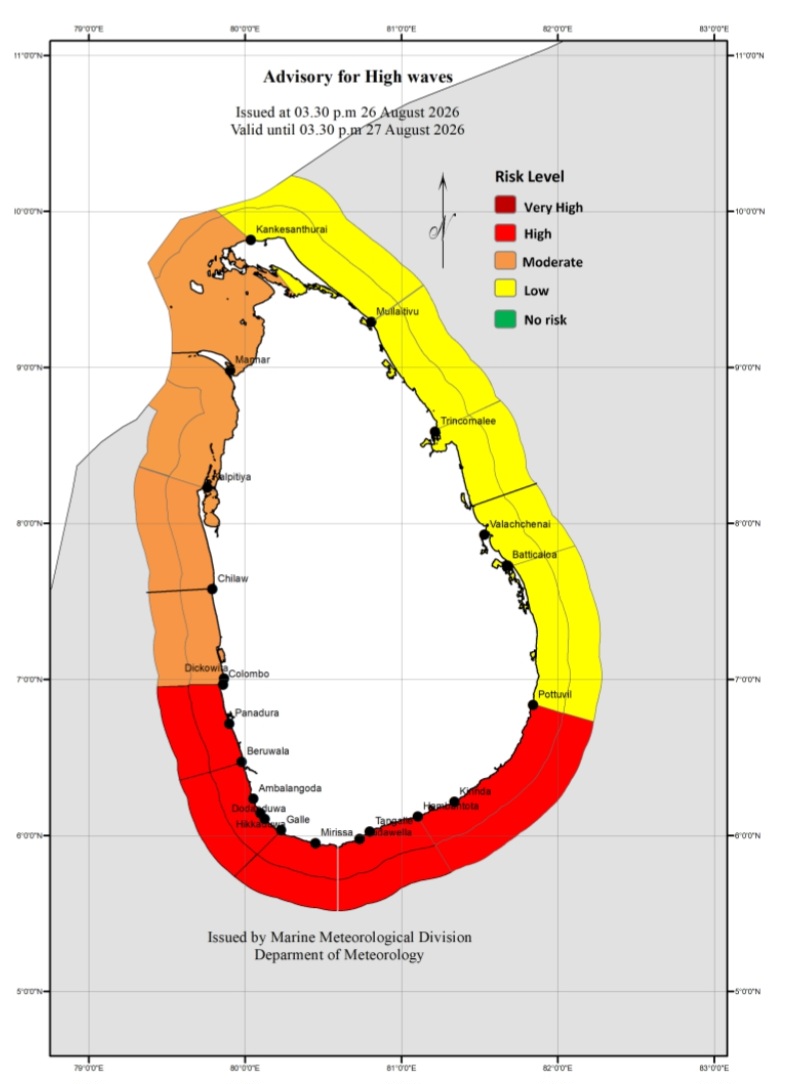
Advisory for High Waves for the sea areas extending from Colombo to Pottuvil via Galle, Matara and Hambantota

Advisory for High Waves
Issued by the Natural Hazards Early Warning Centre Issued at 03.30 p.m. on 26 August 2026 Valid for the period until 03.30 p.m. 27 August 2026
An advisory for high waves has been issued for the sea areas extending from Colombo to Pottuvil via Galle, Matara and Hambantota and naval and fishing communities engaged in activities in the aforementioned sea areas, as well as coastal communities living in the aforementioned nearshore areas, are advised to remain vigilant in this regard
The swell waves (about 2.0 m – 3.0 m) height (This is not for land area) may increase in the sea areas off the coast extending from Colombo to Pottuvil via Galle, Matara and Hambantota. There is a possibility that near shore sea areas off the coast extending from Beruwala to Matara via Galle, may experience surges due to swell waves.
News
We must create social awareness to ensure the physical and mental well-being of children with disabilities – PM
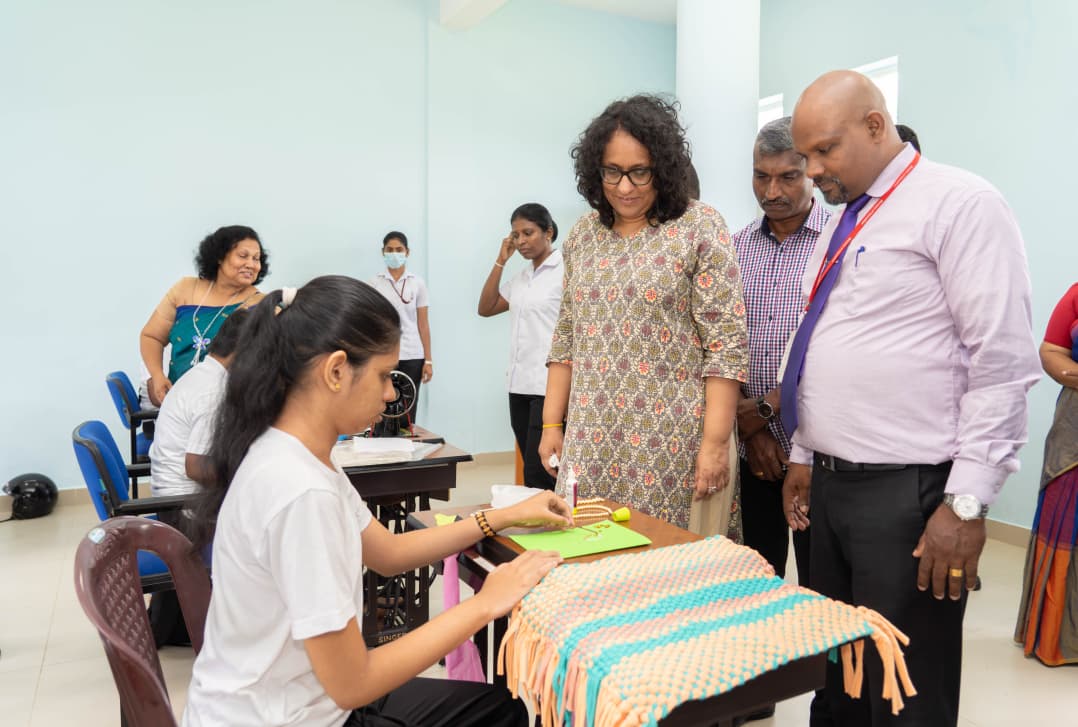
Prime Minister Dr. Harini Amarasuriya stated that, given their particular vulnerability children with disabilities require protection, and stressed the need to foster social awareness to protect them from negative social influences while promoting their physical and mental well-being. She emphasized the need to implement awareness programmes for parents, teachers and other members of society towards this end.
The Prime Minister made these remarks on Tuesday [August 25] while visiting and observing the National Institute of Special and Inclusive Education – Shishyodaya, located in Veniwelkola.
The purpose of the Prime Minister’s visit was to observe the institutional structure and gain an understanding of the areas that require further development.
The Prime Minister emphasized that a systematic mechanism should be established to transform the institution, which was established in 2019 outside the basic standards and plans for Inclusive Education, into an institution that provides quality education to children and fulfills the targeted objectives of inclusive education. She also proposed appointing a special committee to make the necessary recommendations in this regard.
The Prime Minister further stated that steps would be taken in coordination with the Ministry of Health to address the shortage of therapists and medical professionals required to provide clinical services to students at the institution. She also stressed that the maintenance of equipment and buildings should be carried out properly using the financial allocations provided for such purposes.
The Prime Minister further noted that finding sustainable solutions to the issues faced by the institution is essential, while immediate interventions should be made to address issues that can be resolved without delay. The welfare of the teachers serving at the institution was also discussed during the visit.
Member of Parliament Anura Panagoda, Chairman of the Homagama Pradeshiya Sabha Kasun Rathnayake, Secretary to the Ministry of Education, Higher Education and Vocational Education Nalaka Kaluwewa, ministry officials, parents and students were present.
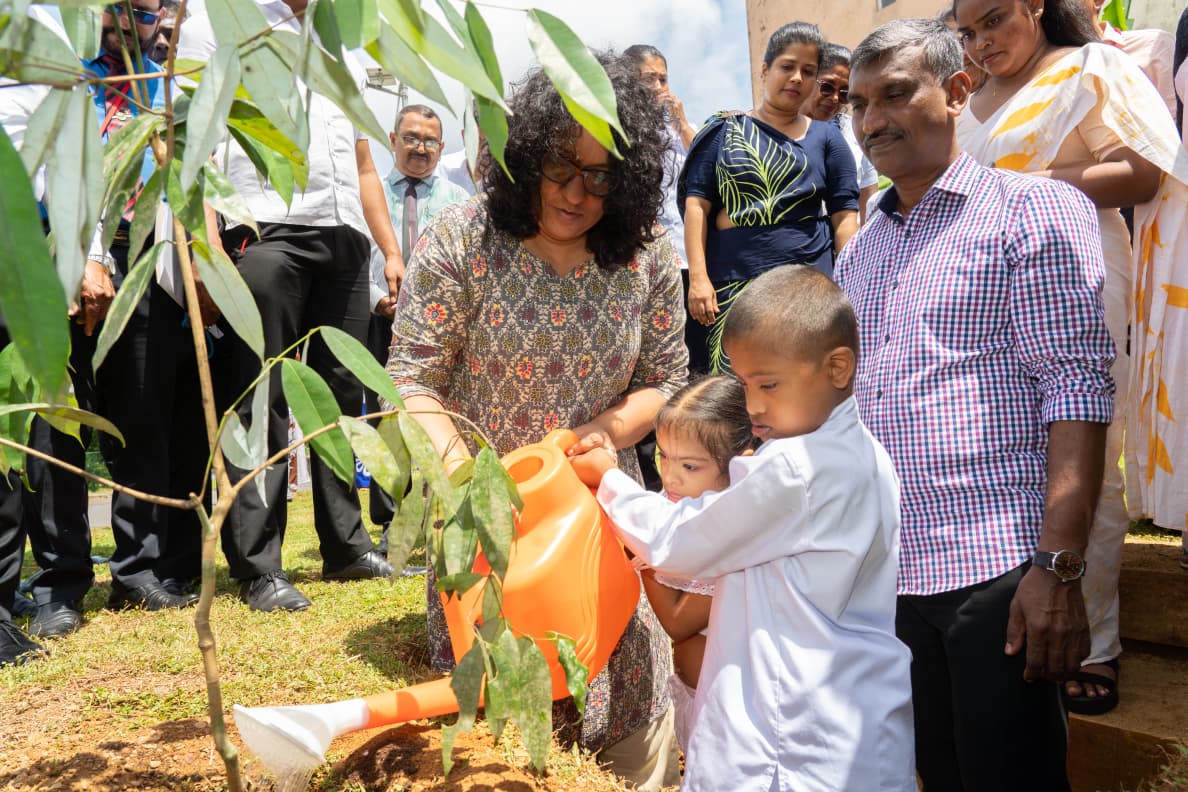
[Prime Minister’s Media Division]

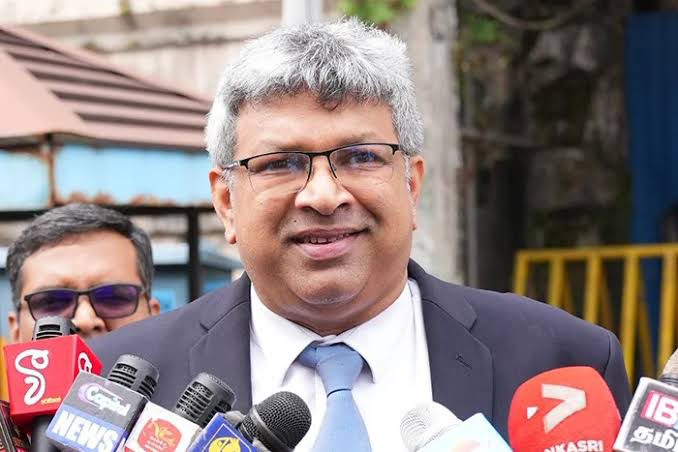
By Shamindra Ferdinando
Justice and National Integration Minister Harshana Nanayakkara said yesterday that the government would proceed with both the 22nd Amendment to the Constitution, and the Judicature (Amendment) Bill, because the government could not achieve its goal by increasing the retirement ages of a section of the judges.
The Attorney-at-Law declared that the government would go ahead with both Bills, whatever the obstacles. The Minister was responding to The Island query whether the government would go ahead with the Judicature (Amendment) Bill that hadn’t been so far challenged in the Supreme Court, pending the decision on the controversial 22nd Amendment facing tough legal challenge.
Nanayakkara emphasised the importance of the enactment of both Bills. The 22nd Amendment seeks to increase the retirement ages of Supreme Court judges to 67 from 65 and Court of Appeal judges from 63 to 65. The Judicature (Amendment) Bill seeks to increase the retirement ages of the High Court judges to 63 from 61, and that of the District court judges and and Magistrates to 62.
Minister Nanayakkara said that the enactment of both Bills simultaneously would make a significant contribution to improve the overall situation, particularly dealing with a backlog of 1.1 million cases.
Joint Opposition and the Bar Association of Sri Lanka (BASL), too, acknowledged that petitions against the Judicature (Amendment) Bill were yet to be filed.

At least eight killed, hundreds missing after Nepal flash flood

India close in despite Sooriyabandara, Kamindu fifties

Advisory for High Waves for the sea areas extending from Colombo to Pottuvil via Galle, Matara and Hambantota

We must create social awareness to ensure the physical and mental well-being of children with disabilities – PM

BCCI AGM set for September 18 in Mumbai

Three franchises sold in Afghanistan Premier League T20

‘Dates have the highest sugar content to fight Coronavirus’

Sunday Island 27 December – Headlines

#SundayIsland 17th December – Headlines

Sunday Island – 28th March

Sunday Island Headlines – 21 March

Sunday Island – 21st February – Headlines
-
 News6 days ago
Country’s first woman Surveyor General appointed
-

 Business5 days ago
SriLankan Airlines makes ShakthiSAT Mission possible for talented Sri Lankan student
-

 Sports7 days ago
Tharanga, Weber headline stellar Lausanne javelin field
-

 Features6 days ago
Medical education in Sri Lanka: Then and now
-
 Business7 days ago
Mannar’s offshore opportunity: the dollar question behind Sri Lanka’s oil and gas search
-
 Latest News5 days ago
Imran Khan moved to private hospital amid deteriorating health
-

 Latest News6 days ago
Government has declared 21, 22 and 23 August 2026 as national days of mourning
-
Latest News5 days ago
Tharanga edges out Chopra in 88m javelin battle