
News
Opposition urges IMF to act on Lanka’s governance failures


The people’s United Opposition yesterday appealed to the IMF to take tangible action to rein in the Lankan government. Following a meeting with IMF Mission in Colombo yesterday, the group issued the following statement:
“As leaders or representatives of several groups in the Opposition, we are seeking an urgent appointment to meet with you on any date between 16 and 18 June to focus on some critical issues.
“Our purpose is to bring to your immediate attention a severe and rapidly growing concern among the general public of Sri Lanka. As the citizens who ultimately bear the sole legal and financial obligation to service and repay international lenders, the public is growing increasingly alarmed by the state’s failure to safeguard national revenue and borrowed funds.
“While we acknowledge the IMF’s contribution and assistance in stabilizing Sri Lanka’s macroeconomic framework, we refuse to accept a reality where these gruelling stabilization efforts, along with the heavy taxes extracted from the public, are exploited, mismanaged, or outright wasted by a corrupt or incompetent state administration.
“While ordinary citizens continue to absorb the heavy personal impact of elevated direct taxes, expanded indirect levies, and high utility tariffs, a series of highly publicized, colossal public finance leakages, operational failures, and procurement anomalies have emerged within the state apparatus. These incidents point to a catastrophic collapse of internal controls and governance safeguards across multiple state organs:
“Procurement and Tender Violations in Energy: The recent Special Audit Report on the 2025/2026 coal procurement exposed direct violations of mandatory bidding registrations and quality controls, costing the state billions of rupees in avoidable overconsumption losses.
“High-Premium Petroleum Procurement: Serious transparency concerns have emerged regarding the Ceylon Petroleum Corporation’s (CPC) procurement structures, highlighted by the highly publicized disclosure regarding “door-to-door” refined petroleum deliveries to Sri Lanka reaching as high as USD 286 per barrel due to combined spot pricing, inflated premiums, and logistical overrides. This massive premium structure represents a severe fiscal drain on state-owned utilities and directly contradicts the cost-recovery and efficiency mandates agreed upon under the IMF framework.
“Irregularities in International Tech Procurement (The Biometric E-Passport Dispute): Of grave concern to international trade credibility are the systemic irregularities surrounding the 5-million e-passport procurement system. This process triggered severe diplomatic and commercial friction after formal complaints were lodged by international stakeholders, including Poland, regarding a lack of competitive transparency, irregular extensions, and altered tender parameters. The resulting procedural deadlock and subsequent legal disputes have severely disrupted essential state document issuance, revealing a failure to manage high-value international digital infrastructure contracts objectively.
“Asymmetric Information Leakage in Vehicle Import Duties: Of critical concern to revenue integrity is the recent public scandal involving the premature leakage of upcoming tax and tariff increases on vehicle imports. Evidence strongly suggests that details of the impending fiscal adjustments were leaked to select large, well-connected automotive importers prior to the official gazette. This insider access triggered a massive, last-minute surge in the opening of Letters of Credit (LCs) by these specific entities, allowing them to legally lock in shipments under older, lower tariff rates, actively suppressing billions of rupees in anticipated state customs revenue.
“Bypassing of Customs Safeguards (The “Red Channel” Releases): Parallel to this is the irregular clearance of 323 high-risk containers from the Colombo Harbour without undergoing mandatory physical inspections. Despite being explicitly flagged by the Risk Management System (RMS) under the “Red Channel,” these shipments were cleared via an extraordinary internal committee override. The Sri Lanka Customs Officers’ Union has publicly stated they cannot verify the contents, creating immense exposure to customs revenue evasion, while the Parliamentary Select Committee inquiry remains completely inconclusive.
“State Treasury and Postal Department Cyber Breaches: The diversion of USD 2.5 million from the Treasury’s External Resources Department (ERD)—initially intended for bilateral debt repayment to the Government of Australia—alongside the unchecked loss of USD 625,000 via email spoofing within the Department of Posts across consecutive fiscal years, highlights an intensely compromised internal transaction environment lacking elementary verification protocols.
“Flawed Automated Banking and Welfare Systems: The execution of duplicate internal payment files through the state banking system led to an erroneous remittance of over Rs. 263 million to Road Development Authority (RDA) contractors. This operational vulnerability was further mirrored by the duplicate manual batch disbursement of Rs. 248 million to Aswasuma welfare recipients, illustrating how political deadlines continue to bypass automated institutional risk controls.
“Whether these incidents are framed by state authorities as genuine operational “mistakes” or serve as a convenient pretext for internal corruption, the fundamental takeaway remains identical: the state currently lacks the internal financial controls and enforcement willpower necessary to safeguard public funds and state revenues.
“When the IMF prioritizes aggressive revenue-extraction targets without demanding equal accountability on how those funds are protected and spent, it inadvertently creates a moral hazard. Allowing the state to hide behind the excuse of “system glitches,” “port congestion,” or “insider leakages” dilutes the core objectives of the IMF’s own Governance Diagnostic assessment for Sri Lanka.
“Fund cannot maintain a passive stance while public revenue leaks through systemic vulnerabilities. We request that the IMF actively intervene by applying direct structural pressure on the government, ensuring that adherence to strict expenditure safeguards, policy confidentiality, procurement transparency, and anti-corruption measures are treated as rigid prerequisites for ongoing disbursements.
“The citizens of Sri Lanka cannot be expected to fund a leaking bucket. True economic recovery requires that structural discipline applies to government spending just as stringently as it applies to public taxation.
“Thank you for your unstinted support, objective analysis, and continued attention to the governance framework of Sri Lanka.”



MONETABRIEF –Sri Lanka plans to hire 121,000 state workers to fill identified vacancies over the next year as part of plans to return tax money to the economy President Anura Kumara Dissanayake has said.
For many years employment was restricted to the state service.
“We will not hire in a ad hoc manner (hithoo hithoo vidiyater),” President Dissanayake told a public rally in Akuressa.
“A committee under the Prime Minister and asked each agency what the vacancies were. Was it essential? Will these people stay with no work? We will hire 121,000 to the state service in that manner. This year. We have not hired all.”
“10,000 for the Police. 23,000 teachers. Then a young person in the village will get a job. A teacher will be there. They will get an economic strength. They will join the police.
“Next year we will give a special allowance to police in the budget. They work 18 hours. They will get a uniform with a batton and kid. When the jobs are created, economic opportunities will be created.
“Then the benefits that the economy got will to the people.”
When Sri Lanka defaulted around 80 percent of the tax revenues went to pay state worker salaries and pensions after rising to 50 percent when the stimulus for economic growth (potential output targeting) initially started.
With more money in the Treasury capital expenditure will also be increased to 2,000 billion rupees in the 2027 budget.
Sri Lanka is planning to build some expressways with domestic financing which may trigger more imports and require higher interest rates to maintain external stability.
Opposition leader Sajith Premadasa also pushed to hire more unemployment graduate in parliament transferring more taxes collected from the people to able bodied population.
Analysts had warned that ‘revenue based fiscal consolidation’ was a spurious doctrine as spending will catch up to match revenue.
Generally called Parkinson’s Second Law, the phenomenon was articulated by Nortcote C Parkinson in an article in the Economist magazine in 1955 when he was working at the Raffles University campus in Singapore (now NUS).
Sri Lanka went on a revenue based fiscal consolidation drive from 2015 and eventually defaulted as ‘policy support’ intensified with aggressive central bank activism under a 5 percent inflation target after the agency was taught by the IMF to calculate potential output targeting.
In Sri Lanka politicians are against printing money but macro-economists support high inflation and monetary depreciation. When people are impoverished by depreciation and the high inflation target of the central bank, Aswesuma (income support) benefits are increased.
In 2026 the rupee collapsed to 330 to the US dollar from 300 a year earlier as the government ran a budget surplus.
Macro-economists who cut rates had blamed budget deficits for external trouble since money printing to suppress interest rates started in 1952. What is now called ‘rate cuts’ were not invented at the time.
Meanwhile another method of spending money in the Treasury was to give subsidies, President Dissanayake said. The subsidies will however be targeted to the deserving.
These included persons affected by kidney disease, orphans in care who will get 5,000 rupee a month deposited into their accounts and 2 million rupee when they leave the home to build a house.
The time in the care home had been extended from 18 to 21 years, he said.
It was not a good idea to give subsidies to all, President Disssanayake said.
However, even in rich countries there were a section of the population that had to be supported and others who faced sudden crises in their lives.
Politicians in Sri Lanka are against money printing and pushing up the cost of living, but are unable to do anything as the central bank is independent and has a 5-7 percent.
The International Monetary Fund has supported Sri Lanka’s controversial 5-7 inflation target which was to have been revised in October, delivering a blow to advocates who want monetary stability, free trade and democratic rule for the country.
The central bank exceeded its target and pushed up inflation to 8 percent in 2026.
Though opposed inflation and being prepared to raised taxes, politicians in a democratic set up dominated by are they are under pressure to spend, whenever tax revenues increase.
Macro-economists also push politicians to engage in capital spending not for benefits that come after a project is completed, as in the classical period, but for the instant gratification of the ‘multiplier effect’ of Keynesian stimulus or what is called ‘policy support’ by the IMF.
The thinking of macro-economists well-articulated in ‘revenue based fiscal consolidation’ which was rejects the classical ‘spending based consolidation’ match political needs.
Many western nations including the US, which has been in the grip of stimulus advocates over over 20 years are now drifting towards debt crises with uncontrollable inflation under so-called ample reserve regimes operated by central banks.
Sri Lanka first started to go to the IMF in the 1960s as US macro-economists in particular started to push ‘full employment’ policies leading to the collapse of the Bretton Woods a few year later.
“Past experience in Ceylon, which is in line with experience in virtually all parts of the world, is that in a democratic set up political and other pressures are heavily on the side of more and more spending by the government,” B R Shenoy, a classical economist told the then Ceylon government in a policy document in 1966.
“When Revenues increase, under the weight of these pressures, expenditures too increase to meet, or even exceed, Revenue collections. In Ceylon during the past seven years Revenues rose by 45 per cent and Expenditures charged to Revenues by 48 per cent.
“There is a real danger that any programme for increased Revenue collections may be attended by a corresponding increase in the consumption expenditures of the government, and little may be left of the additional Revenues to cover Budget deficits.”
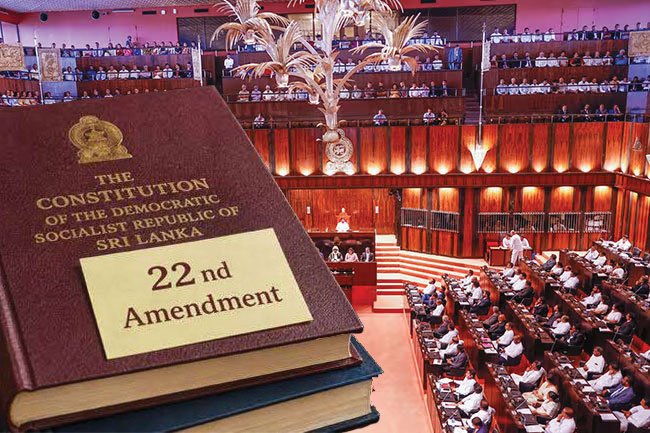
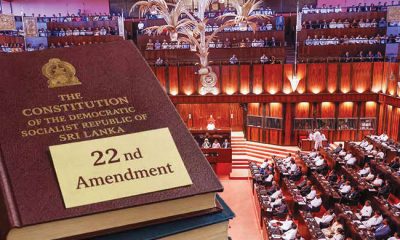
The government secured the required two-thirds majority in Parliament on Friday to pass the Twenty-Second Amendment to the Constitution Bill, despite opposition from the SJB, the ITAK, the SLPP, the SLMC, and other opposition parties.
The Bill received 158 votes in favour and 63 against. The Judicature (Amendment) Bill was also passed by the same margin.
The two Bills were passed following a two-day parliamentary debate and several hours of voting, with Opposition MPs calling for separate divisions on clauses of the Judicature (Amendment) Bill during the Committee Stage. The final vote on that Bill was announced around 8.08 p.m.
The 22nd Amendment provides for increasing the retirement age of Supreme Court judges from 65 to 67 and that of Court of Appeal judges from 63 to 65. The Chief Justice would retire at 67 or after six years in office, whichever comes first.
The Supreme Court determined that the constitutional amendment did not require a referendum and could be passed with a special two-thirds majority. It also determined that the Judicature (Amendment) Bill could be passed by a simple majority.
The Bills were presented for their Second Reading on Thursday by Justice and National Integration Minister Harshana Nanayakkara.
The SJB mounted a strong protest against the legislation, with its MPs wearing black in Parliament yesterday and party members staging a demonstration at Polduwa Junction, Battaramulla.
Opposition Leader Sajith Premadasa and several SJB politicians participated in the protest held under the theme “No to 22, which destroys democracy”.
ITAK and SLMC MPs voted against the Bills alongside the SJB.NDF MPs Ravi Karunanayake and Faizer Musthapha and SJB Badulla District MP Nayana Wasalathilaka were absent during the voting.
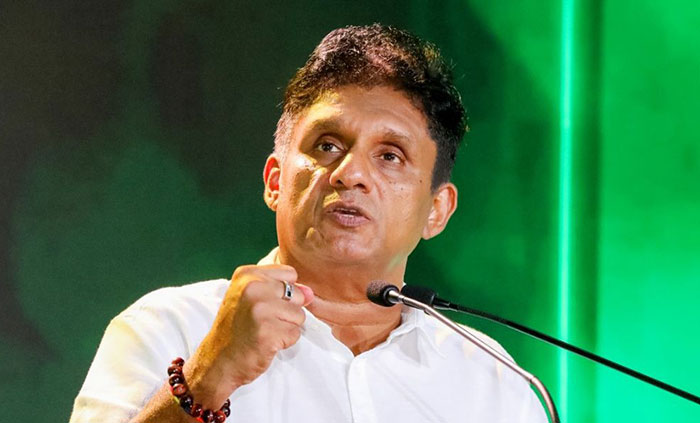
Opposition Leader Sajith Premadasa yesterday likened the Government’s justification of the proposed 22nd Amendment to Hans Christian Andersen’s “The Emperor’s New Clothes”, claiming that the amendment would undermine judicial independence, democracy and the separation of powers.
Speaking in Parliament during the debate on the 22nd Amendment, Premadasa said the Government portrayed the constitutional amendment as a measure aimed at protecting democracy, but alleged that its actual effect would be to strengthen executive influence over the Judiciary.
He said the amendment would erode public confidence in judges and turn the Judiciary into a “tool and puppet” of the Executive.
Premadasa recalled the constitutional changes introduced through the 17th, 18th, 19th, 20th and 21st Amendments, arguing that executive powers had been repeatedly reduced and restored under successive governments.
He also criticised politicians who had supported several of those amendments while continuing to receive public support at elections.
The Opposition Leader referred to the impeachment of former Chief Justice Shirani Bandaranayake and accused those who had supported her removal of later taking positions in favour of judicial independence.
He also referred to a court order concerning the holding of local government elections, saying some politicians who had previously defended judicial independence had subsequently called for judges who issued the order to be summoned before a Parliamentary Select Committee.
Premadasa said the Samagi Jana Balawegaya had consistently defended judicial independence in both instances.
He also questioned the Government’s proposal to extend the retirement age of senior judges, saying no proper study had been conducted to justify the measure. He referred to a 2023 Asian Development Bank study, claiming that extending judges’ retirement age had not been identified as a solution to problems facing the Judiciary.
The Opposition Leader further questioned the Government’s position that a referendum was unnecessary for the 22nd Amendment, recalling arguments made by President Anura Kumara Dissanayake in support of a referendum during the 20th Amendment process.
The Supreme Court has determined that the 22nd Amendment Bill does not require approval at a referendum under Article 83 of the Constitution, while requiring certain textual changes to the Bill.
Premadasa also accused the Government of departing from its manifesto pledge to abolish the executive presidency and alleged that it was instead seeking to increase executive influence over state institutions.
He urged the Government to withdraw the Bill, alleging that it would weaken checks and balances and move the country towards one-party rule.

Buttler out of Oval decider as Lawrence earns ODI call-up

Showers will occur in the Western, Eastern, Uva and Sabaragamuwa provinces and in Galle, Matara, Kandy and Nuwara-Eliya districts.

Nor’easter brings flooding as New York and New Jersey declare emergency 2 hours ago

Trump rejects Iran deal to reopen Strait of Hormuz in seven days

Govt plans to hire 121,000 state workers, redistribute tax revenue

Parliament clears 22A amid protests

‘Dates have the highest sugar content to fight Coronavirus’

Sunday Island 27 December – Headlines

#SundayIsland 17th December – Headlines

Sunday Island – 28th March

Sunday Island Headlines – 21 March

Sunday Island – 21st February – Headlines
-

 News4 days ago
Mastermind Naufer Moulavi among 15 found guilty
-
 News6 days ago
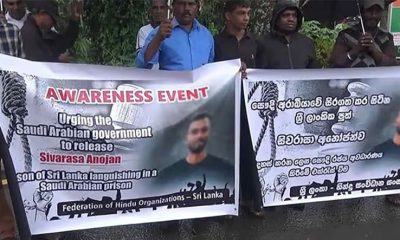
Hatton youth protest against reported death sentence for Lankan in Saudi Arabia
-
 News5 days ago
Protest against setting up of cement factory in highly populated area near BIA
-
 News6 days ago
Mahaweli rises as heavy rain triggers flood, landslide fears
-

 Latest News7 days ago
Landslide Red Alerts issued to the districts of Kandy, Kegalle and Nuwara Eliya
-

 Midweek Review4 days ago
Thileepan’s fast unto death: An authentic narrative that many missed
-
 Latest News3 days ago
Showers above 100 mm are likely at some places in the Western, Sabaragamuwa, Central and North-western provinces and in Galle and Matara Districts
-

 Editorial4 days ago
Big Bad Bills