
Business
Oil prices surge after surprise move to cut output

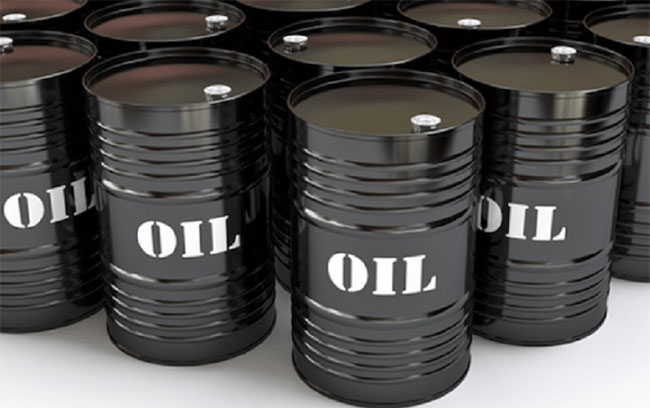
BBC reported that oil prices have surged after several of the world’s largest exporters announced surprise cuts in production.
The price of Brent crude oil is trading close to $85 a barrel after jumping by almost 6%.vEconomists warned that higher oil prices could make it harder to bring down the cost of living. But the RAC motoring group said it does not expect petrol prices to rise unless the higher oil price is sustained over several days.
Brent crude prices rose after Saudi Arabia, Iraq and several Gulf states said on Sunday they were cutting output by more than one million barrels of oil a day. In addition, Russia said it will extend its cut of half a million barrels per day until the end of the year.

Business
IT, Electrical and Electronics sectors key to achieving 7–8% economic growth in coming years -President
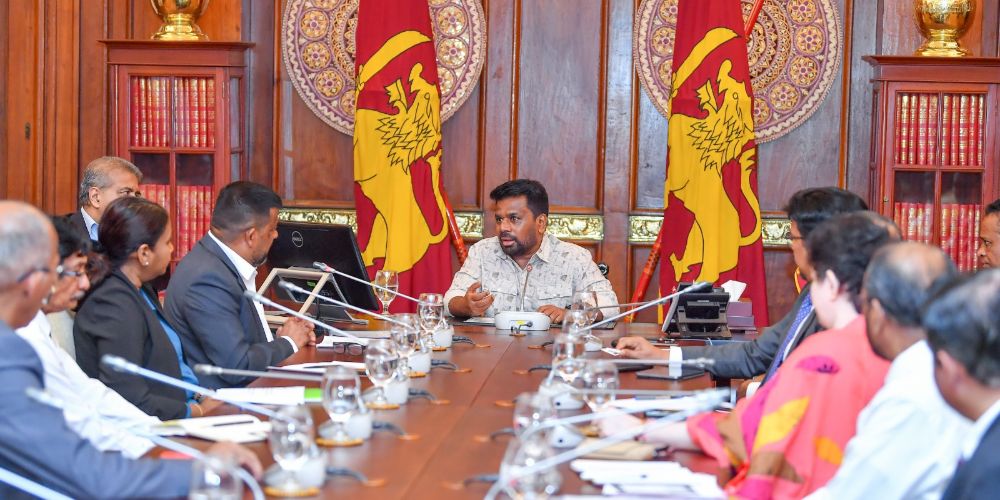
President Anura Kumara Dissanayake stated that the Government aims to increase Sri Lanka’s economic growth from its current level of around 5 per cent to 7–8 per cent over the coming years, emphasising that the information technology, electrical and electronics sectors will play a pivotal role in achieving this target.
The President made these remarks while addressing a discussion with leading investors and industrialists from the information technology, electrical and electronics sectors, held on Wednesday (1 July) morning at the Presidential Secretariat.
Highlighting that Sri Lanka’s future can only be secured by strengthening domestic industries, the President invited entrepreneurs to work in partnership with the Government to unlock the country’s true economic potential. The President also requested that they submit, at the earliest opportunity, proposals for developing their respective sectors together with a report outlining the key challenges currently facing the industries.
The President further stated that the Government intends to allocate Rs. 2 trillion for capital expenditure next year to accelerate economic growth. He noted that the Government expects the export sector to make the maximum possible contribution towards meeting the country’s growing demand for foreign exchange resulting from this investment.
The discussion focused extensively on the significant contribution that the information technology, electrical and electronics sectors could make towards increasing Sri Lanka’s export earnings and foreign currency inflows.
It was highlighted that the information technology sector, currently Sri Lanka’s third-largest export revenue earner, has the potential to generate US$5 billion in annual export earnings. Likewise, the electrical and electronics sector, which currently generates approximately US$500 million in export revenue, has the potential to increase this figure to US$2 billion annually.
Participants also discussed Sri Lanka’s potential to establish itself as a global brand in the information technology, electrical and electronics sectors. Attention was drawn to the country’s highly skilled workforce in both industries and the need to further improve facilities and infrastructure to support their continued growth.
Representatives of the business community briefed the President on a number of challenges affecting the sectors, including the complexities involved in importing electronic components, obstacles faced by companies operating in the Colombo Port City when conducting transactions through the banking system and difficulties encountered in promoting locally manufactured products within the domestic market. The discussion also focused on removing these barriers and introducing the necessary legislative and regulatory reforms.
Attention was also paid to establishing a special unit representing relevant parties to directly receive the issues and suggestions of industrialists and provide prompt solutions to them.
Business representatives were also briefed on a range of Government initiatives already planned to expand support and infrastructure for these sectors.
Meanwhile, Deputy Minister of Digital Economy Eranga Weeraratne outlined plans to establish a Virtual Special Economic Zone and a data centre, introduce a Green Channel mechanism to remove Customs-related obstacles to the import of electronic equipment required for research and development (R&D) and address banking and credit card limitations affecting overseas payments for essential services such as cloud computing and Software as a Service (SaaS). He also noted that the Government is considering alternative incentive schemes to help retain skilled professionals and reduce the migration of talent overseas.
Among those present were Minister of Labour and Deputy Minister of Finance and Planning Anil Jayantha Fernando; Secretary to the Ministry of Finance, Planning and Economic Development Dr..Harshana Suriyapperuma, Chief Advisor to the President on Digital Economy Dr. Hans Wijayasuriya, Senior Additional Secretary to the President Roshan Gamage; Secretary to the Ministry of Industry and Entrepreneurship Development Thilaka Jayasundara; Chairman of the Export Development Board Mangala Wijesinghe; Shehani Seneviratne and other representatives of the Sri Lanka Association for Software and Services Companies (SLASSCOM); Chairman of the Sri Lanka Electronic Manufacturers and Exporters Association (SLEMEA) Gamini Ranasinghe; former Chairman Dr Ajith Pasqual; Managing Director of VARIOSYSTEMS (Pvt) Ltd Thevan Satheeswaran; Managing Director of GPV Lanka Chandana Dissanayake; together with a large number of leading entrepreneurs and representatives from the information technology, electrical and electronics industries.
[PMD]

Governance failures and corruption allegations
The International Monetary Fund (IMF) said on Tuesday that while governance and anti-corruption reforms remain a cornerstone of Sri Lanka’s economic reform programme, the Fund does not conduct its own investigations into allegations of corruption or governance failures. Instead, it relies on Sri Lanka’s institutional mechanisms to establish the facts.
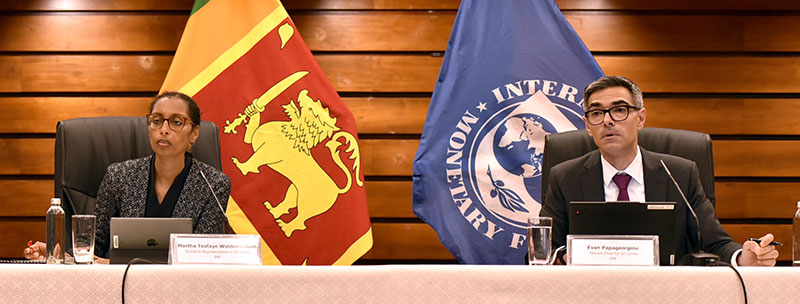
The clarification came at the conclusion of an IMF mission to Colombo from June 24 to 30, led by Evan Papageorgiou, which reviewed the country’s progress under the Extended Fund Facility (EFF) programme.
Responding to a question from The Island Financial Review on how the IMF assesses serious public allegations involving corruption, public procurement or strategic sectors such as energy exports, Papageorgiou said the Fund’s role is not that of an investigative agency.
“We don’t conduct investigations,” he said. “We rely on Sri Lankan institutional findings such as CIABOC. There are state mechanisms for it and we rely on them.”
His response provides an important insight into how the IMF balances its growing emphasis on governance reforms with respect for domestic institutions, a question that has attracted increasing public interest as Sri Lanka implements one of the Fund’s most governance-focused reform programmes.
Elaborating on the IMF’s position, Martha Woldemichael, IMF Resident Representative in Colombo, explained that the IMF’s governance work is conducted through a structured diagnostic framework that examines the functioning of key state institutions rather than investigating individual allegations.
“We focus on what we call state functions,” Woldemichael said. She noted that the IMF’s Governance Diagnostic Assessment identifies priority areas such as fiscal governance and anti-money laundering and combating the financing of terrorism (AML/CFT), with recommendations designed to strengthen institutional safeguards and reduce opportunities for corruption.
Her remarks suggested that the IMF’s focus remains on strengthening systems, transparency and institutional resilience rather than determining culpability in individual cases.
The comments assumed significance because governance and anti-corruption reforms are central to Sri Lanka’s IMF-supported programme, as the multilateral lender has repeatedly stressed.
Earlier, presenting the mission’s findings, Papageorgiou said Sri Lanka’s economic recovery had faced fresh headwinds from the conflict in the Middle East, which contributed to higher energy prices, slower tourism growth and weaker reserve accumulation.
Headline inflation increased from 1.6 percent year-on-year in February to 5.5 percent in May following higher energy prices, while the Central Bank of Sri Lanka responded by raising policy interest rates by 100 basis points and deploying macroprudential measures.
He noted that the government had introduced temporary, on-budget relief measures, including fuel, electricity and fertiliser subsidies, along with targeted cash transfers for vulnerable households.
Despite these pressures, the IMF maintained that Sri Lanka should stay the course on reforms to preserve macroeconomic stability.
Papageorgiou said the authorities remained committed to restoring the primary fiscal surplus target of 2.3 percent of GDP in 2027. He called for continued efforts to improve tax compliance, broaden the tax base and strengthen public financial management.
He also stressed the importance of accelerating state-owned enterprise reforms, maintaining cost-reflective energy pricing, improving spending execution for post-cyclone reconstruction and expanding well-targeted social protection for vulnerable groups.
On debt management, the IMF observed that while Sri Lanka’s debt restructuring is nearing completion, efforts to strengthen the capacity of the Public Debt Management Office should be accelerated to support prudent borrowing practices and facilitate the country’s eventual return to international capital markets.
Papageorgiou added that monetary policy should remain cautious and data-driven amid continuing global uncertainty, while exchange rate flexibility, stronger cybersecurity and enhanced anti-money laundering safeguards would remain essential to protecting financial stability.
Looking beyond macroeconomic management, he reiterated that stronger governance reforms, a fairer and more efficient tax system, trade liberalisation, labour market reforms and an improved investment climate would be necessary to achieve durable and inclusive economic growth.
Asked separately whether the IMF would consider a successor programme after the current Extended Fund Facility expires, Papageorgiou declined to speculate, saying the immediate priority was the successful implementation of the existing programme. His remarks suggest that discussions on any successor arrangement are more likely to take place closer to the programme’s scheduled conclusion in March 2027.
The IMF said Sri Lanka’s overall programme performance will be formally evaluated during the Seventh Review of the Extended Fund Facility, with the timing of that mission to be announced later.
An independent analyst who closely follows Sri Lanka’s IMF programme told The Island Financial Review that, in his view, it is unlikely the IMF would undertake any scrutiny of the reported US$2.5 million loss linked to the January 2026 sovereign debt payment, as the Fund relies on Sri Lanka’s institutional framework and oversight mechanisms to address such issues.
By Sanath Nanayakkare
In geo-politics and geo-economics we often discuss, debate and analyze many Traps such as Thucydides Trap, Middle-Income Trap, Debt Trap, De-coupling Trap, Resource Trap (more powerful nation would endeavor to extract critical natural endowments from a less developed nation to advance and fuel economy), Weaponization of Inter-dependence Trap, SME Trap, Education Trap, Poverty Trap, Status-Seeker Trap and Inequality Trap amongst others. These are concepts which could have menacing geo-economic and geo-political impingements, leading the less developed nation/s to be trapped at the same level of economic development or even retrogress development.
Many of the developing nations as well as least developed nations have got entangled in the so-called “Image Trap”. In other words, historically, since the Egyptian or Chinese civilization, let alone the Roman Civilization, well over six millennia ago, no country has ever developed, economically or commercially, without changing, enhancing or “aggrandizing” its image nationally, regionally and globally. This particular “Image Trap” is mostly inherent and has to be addressed by the political leaders, corporates, academia and civic society, amongst others. Image Trap could be described as the manner in which neighboring countries, region and global community view and profile a particular nation and their impression, perception, grasp and standing of that country.
How to break the Image Trap:
In this context, it is imperative to accentuate that the political leaders, policy makers and corporates, amongst others, have a dominant and fundamental role to play in aggrandizing and boosting the image and profile of a given nation. When a given country advances its governance, internal security and safety, rule of law, macro and micro economy and infrastructure, connectivity, commercial advancement and tourism, external trade, competitiveness, socio-economic indicators, travel documents (passport), and overall standards of living of the populace in all provinces leading to higher GDP and GDP per capita. This, in turn, raises the integral image and perception of the country. It is vital to realize the fact that the rise of image and profile and economic expansion including human capital of a given country, do occur concurrently and in unison.
In order to enlighten the complexity and seminal nature of Image Trap, the author would be selectively choosing India, Singapore and Japan since the author served as the Deputy Ambassador/Senior Diplomat and South Korea and Vietnam as the Ambassador.
Re-branding of Perception with illustrations:
With regard to India, when the author was a young student studying in Los Angeles, US in 1980s, people generally used to ask the typical question of where the author had come from. The author had the usual response that he hailed from Sri Lanka and the follow- up question was, where was Sri Lanka? The author used to say it was at the tip of India. Most often, one who broached the question would remark “India is a poor, poverty-stricken nation infested with sicknesses, starvation and misery and do they have food to eat and clothes to wear!” This was only about four decades ago, before India liberalized the economy in 1991 with “LPG Reforms”. Since then, less than three decades later, the remarks in North America and West would be, “It’s a country with exceptional potential, promise and economic opportunities and commercial vistas with some of the smartest people in the world, particularly in the sphere of IT”.
Today, some of the largest global corporates are headed by Indian CEOs including Microsoft, Alphabet (Google), FedEx, IBM, Novartis, Palo Alto Networks, Barclays Bank, Adobe, Micron, You Tube, Chanel and the World Bank as well as the presence of eminent scientists, medical specialists and academia including both the former Dean and current Dean of Harvard Business School, Cornell, Booth School of Chicago, Georgetown and Kings College of London, amongst others.
Today, Indian based IITs and IIMs academic institutions have become global iconic brands competing unequivocally with US based “Ivy Leagues”, as Harvard and Yale, since most of the Indian CEOs and academics were birthed from these institutions.
The total market cap. of the equity/stock market of India is well over USD five trillion (USD 5,000 billion), and the sixth largest in the world, and in year 2002, it was hovering only around USD 100 billion. When Tata Steel acquired UK/Netherland based Corus Steel and Jaguar Land Rover, they changed Indian economy epoch-makingly. These are self-explanatory of the rise of India and change of Image.
Transformation of Image by Japan and Singapore:
In 1945, Japan was reduced to absolute economic desolation with the end of WWII but in 1968, Japan became the second largest economy in the world, in less than a generation. It could maintain this status for 42 years until China surpassed in 2010. It invested in manufacturing and in economic activity with pertinacious and unmatched dedication and loyalty by its populace and successive Governments, which the world would not have seen before.
In 1965 when Singapore gained the independence from the British Raj, it’s GDP per capita was around USD 500, which was quite decent at that period. The country, woefully, lacked no natural endowments, any economically impactful industries or even land. It only had strategic location, human capital and a visionary leader, Lee Kuan Yew. Singapore focused on its strategic location and invited and wooed global players from the West and other developed nations. Whilst heavily invested in human capital, education, petro-chemicals and FDIs, Singapore focused resolutely on manufacturing and trade, thus boasting exports of nearly USD one trillion in 2025. The country, geographically, is only equivalent to the Urban area of city of Colombo or 1/90th the size of Sri Lanka.
Today, it’s amongst the three wealthiest countries in the world in terms of GDP per capita, which is over USD 90,000 or higher than any of the G-7 nations and consistently has the strongest passport in the world.
Geo-economic Statecraft of South Korea and Vietnam:
South Korea and Vietnam share parallels as both were devastated by two brutal and “feral” military conflicts in 1950s and 1960s. South Korea was the poorest in Asia in 1960s whilst after the Vietnam War, Vietnam was also one of the poorest countries in the world in mid-1970s to 1980s. South Korea was fixated on manufacturing, trading globally, innovation, education, FDIs and most significantly extraordinarily clean Government, amongst others. South Korea recorded unparalleled growth and fostered Chaebols or top most corporates beginning in 1970s such as Samsung, SK Group, Hyundai, Lotte and LG, amongst others. Today, South Korea has two of the three “Trillion-dollar market cap.” corporates of Asia i.e. Samsung and SK Hynix, and in the same league as “Magnificent-7 Corporates”.
The transformation and “transmogrification” of South Korea from a backward agriculture dependent and under-developed nation to one of the most innovative and advanced economies is often being defined as the “Miracle on Han River”.
The ascendence of Vietnam during the last three decades was too due to attraction of FDIs and foreign corporates and marked increase of two-way trade, manufacturing, tourism, SMEs and services. In 1980, total exports of Vietnam were around USD 800 million similar to Sri Lanka in the same year and in 2025, the exports were USD 475 billion with bilateral trade much larger than GDP. Today, Vietnam is often described as “China plus One” or “Mecca for investments, trade, manufacturing and tourism”.
Unexplored and Unexploited Potential and Vistas of Sri Lanka:
All these countries have a common denominator for their economic advancement and to be able to breach the “Image Trap”. These countries, to varying degrees, had exceptional quantum of dedication, nationalism, fidelity, loyalty and national pride and identity. Further, they deliberately desisted from belittling or making disparaging statements or remarks of their respective countries except on specific issues. Primarily, they had “unconquerable and unyielding” attachment and pride for their country and did not engage in denouncing or excoriating the political leaders and policies but focused on long- term vision, image and development.
In order to break the “Image Trap”, any country needs to have good governance, rule of law, controlled inflation and stable economy, investment on human resources (education), FDIs and exports, political and economic stability, zero or minimal degree of corruption and nepotism, and transparency, which would boost the image, profile and perception of the country.
Today, Sri Lanka is well-poised and well-positioned to transform the image and profile of the country, as it endured nearly two decades ago as a war and terrorism-stricken unsafe nation, to a country with palpable promise, hopeful and encouraging future and economic development to be characterized as the “Miracle on Kelani River” in the foreseeable future.
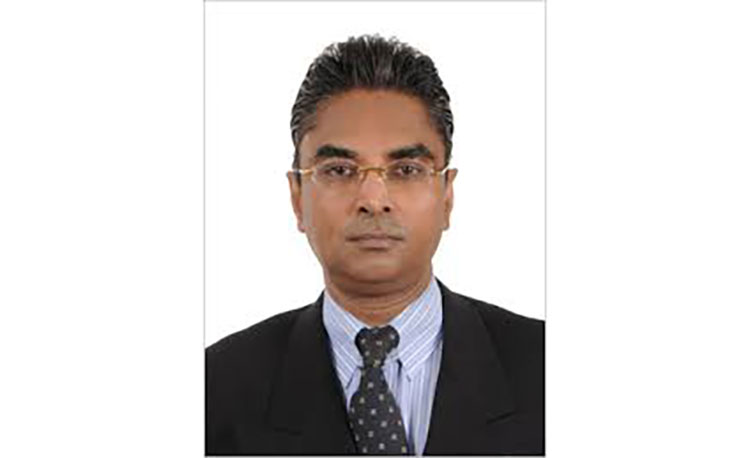
The Writer is a former career Ambassador, Professor of International Economics with specialization on Geo-politics and Strategic Negotiations and earned PhD from Indian Institute of Technology (IIT) Delhi as well as a Senior Fellow at Harvard. He could be reached on mendissaj24@gmail.com
By Prof. A Saj U Mendis, PhD

Hope fit but Roach doubtful as West Indies eye series win

National Institute of Health Sciences celebrates a century of revolutionizing Public Healthcare Training in Sri Lanka – PM

IT, Electrical and Electronics sectors key to achieving 7–8% economic growth in coming years -President

Sri Lanka Cricket confirm dates for India Tests; tour to begin on August 15

Google must pay €4.1bn fine for using Android to ‘block’ rivals

England’s top three and South Africas quicks, both best in class, prepare for semi-final fight

‘Dates have the highest sugar content to fight Coronavirus’

Sunday Island 27 December – Headlines

#SundayIsland 17th December – Headlines

Sunday Island – 28th March

Sunday Island Headlines – 21 March

Sunday Island – 21st February – Headlines
-
 News4 days ago
LAWASIA warns against ad hoc initiative to increase judges’ retirement ages
-
 News6 days ago
Another 1,132 Sri Lankan Personnel to be deployed for United Nations Peacekeeping Missions
-

 News7 days ago
Kelaniya emerges as highest ranked Lankan uni in Times Higher Education Sustainability Impact Ratings
-
 News3 days ago
Chamuditha to seek removal of injunction on Youtube programme
-

 Business6 days ago
Month-end profit-takings drive stock trading; indices up
-
 Features5 days ago
People’s Bank expands digital banking network with 125th cheque deposit kiosk
-
 Features3 days ago
Climate action to bring South Asia together
-

 News6 days ago
FSP complains of irregularities in a Guinness World Record event held in Sri Lanka