
News
Oblates re-enter field of education in Anuradhapura

By Fr. Emmanuel Fernando OMI
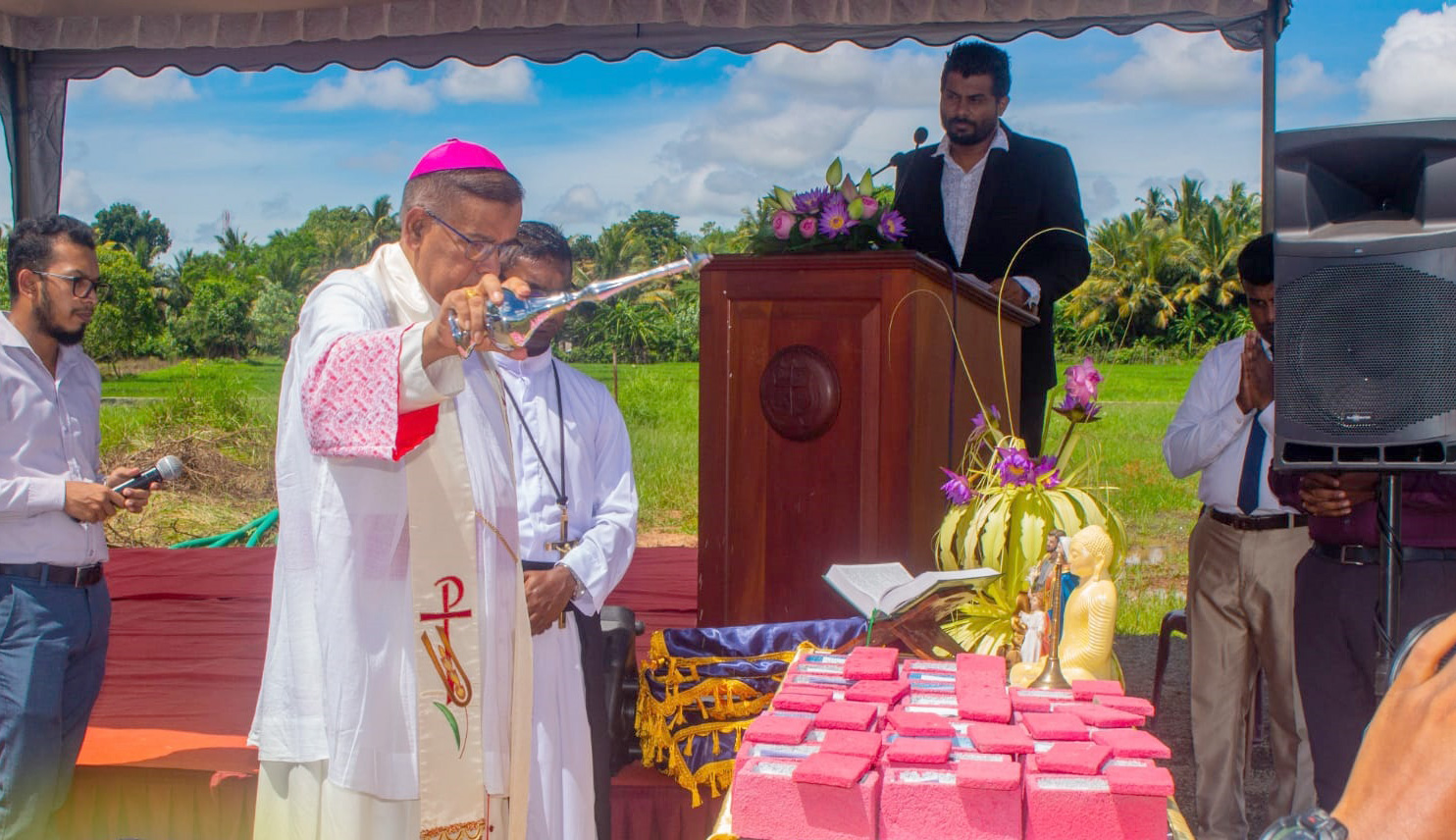
May 15, 2024, is an unforgettable day in the history of the Oblates in Sri Lanka since it was on that day the foundation stones were blessed and laid for the construction of the new Mazenod College at Sravasti Pura, Anuradhapura. The day began at 10.30 a.m with the prayer recited by Fr. Emmanuel Fernando OMI, invoking God to bless the Foundation stones for the construction of the new College.
On that occasion Fr. Shane de Rosairo, OMI, the Vice-Rector of Mazenod College, in his welcome speech said: “I am delighted to see that we are joined by a wide array of esteemed guests and well-wishers in our audience this morning, who truly add joy and colour to the ambience of this glorious occasion. It is indeed a Red-letter day for Mazenod College family of Anuradhapura as this this day will go down in history of Sri Lanka as a quantum leap in the journey that Mazenod College has been treading so far since its humble inauguration at Rajabima Oblate Centre, Anuradhapura, on January 7 in 2019.” He pointed out that Mazenod College at Anuradhapura , the brain-child of the Oblate Congress held in September 2018, is an actualization of the timely need for holistic education felt by the Oblates in Sri Lanka, making a comeback to the field of education in Sri Lanka.
Batagolle Pangnarathna Thero, Teacher of Presidents; College and of Jayanthi Temple, speaking at the function of the Blessing and Laying the Foundation Stone of the new Mazenod College at Anuradhapura said he very much appreciated the spirit and the attitude of Fr. Dileepa Jayamaha OMI in the way he assists the Buddhist children studying at Mazenod College, by his insistence on attending Daham Pasala in the temples.
Bishop Norbert Andradi OMI, in his speech, mentioned that the Catholic Church continues to impart education to children of all Religions through their Schools and that the Holy Family Sisters and the Oblates had been pioneers in this field already in Anuradhapura many years ago through their schools namely Holy Family Convent (which is now Swarnapali Balika Vidyalaya) and through St. Joseph’s College. Bishop Norbert mentioned that the Catholic schools insist also on discipline and good behaviour in the students.
Bishop Norbert Andradi recited the prayers and blessed the foundation stones for the construction of the buildings of Mazenod College and they were laid by Fr. Roshan Silva, the Provincial Superior, Bishop Norbert Andradi, the Bishop of Anuradhapura, Batagolle Pangnarathna Thero, Frs. James Jayasinghe, the Vice-Provincial of the Oblates of Colombo, Anton Grecian OMI, the Provincial Treasurer. Among the others who laid foundation stones were: Frs. Shane de Rozayro OMI, Emmanuel Fernando OMI, Alec Roy Fernando, the Vicar General of the diocese of Anuradhapura, Sr. Irene Fernando, Sr. Mala Fernando HF, Major T.R.C.S Thennakoon, 212 Infantry Bridge, Mr Rasike Melroy Vasana (our contractor, Chief Engineer RDA), Major General Nishantha Manage, Mr. Shiroman Joison, Deputy Principal, Gateway College, Negombo,Mr. Punchirala Rathnayake, the President of farmers Association.
Fr. Dileepa Jayamaha OMI, the Rector of Mazenod College in his ‘Thanksgiving speech’, said classes began on 07 January, 2019 with 33 children and three teachers in the Rajabima Oblate Centre, at Jayanthi Mawatha, Anuradhapura. Fr. Dileepa noted that the Oblates had been committed to the education of children in Sri Lanka since 1847. For example, the Oblates began St. Patrick’s College, Jaffna, St. Henry’s College at Ilavalai, in the Northern Province, St. Joseph’s College at Anuradhapura, St. Joseph’s College at Trincomalee and also De Mazenod College,Kandana and St. Joseph’s College, St. Peter’s College , and Aquinas University in Colombo. Mindful of the Oblate contribution to education of children in the past, the Oblates at a Congress in 2018 decided to recommence their commitment to education of children.
Having recommenced education at Mazenod College, our Oblate Superiors with foresight bought a spacious plot of land to promote holistic education. Unfortunately, the Oblates had to face some difficulties about that plot of land. In sorting out the difficulties with the various Departments, Buddha Sasana and Christian Affairs Ministry, several Government Departments and the Farmers’ Society of Sravasti Pura, Anuradhapura had been of great assistance to obtain the needed authorization from the Agrarian Department in November 2023. Fr. Dileepa said that he was very grateful to all the members in the above-mentioned Government Ministries, the Departments and to the members of the Farmers’ Society. He was very grateful also to Bishop Norbert Andradi OMI for his kind assistance.
Fr. Dileepa Jayamaha OMI was very grateful also to the Venerable Buddhist monks, our neighbours and the parents of our students for the trust they have placed in us. Rooted in such a loving trust, we promise to be faithful.
At present, there are 378 students (boys and girls), of whom 297 Buddhists, 44 Catholics, 21 Christians, 14 Muslims and two Hindus. Having children at Mazenod College, Anuradhapura, representing all our Religions in Sri Lanka, He said, “We commit ourselves to journey together, in a spirit of affection and solidarity in our apostolate of holistic education, embodying sports and other useful skills. To achieve the above-mentioned objectives, everyone’s cooperation is needed.”
Concluding his speech, Fr. Dileepa thanked the Venerable monks who were present, R and V Construction Company Mr and Mrs Rasike Melroy and their trustworthy workers, Duminda Pathirana and co-workers, the priests, the Religious Sisters, the Rev. Brothers, the teachers, the parents and the students.
Very Rev. Fr. Roshan Silva OMI, the Provincial Superior of the Oblates of Colombo Province addressing the audience praised the untiring commitment of Fr. Dileepa Jayamaha OMI to the apostate of education of the children through Mazenod College since its inception in 2019. He praised the collaborative spirit of Fr.
Shane de Rosayro OMI. He mentioned that it was during administration of the former Oblate Provincial Council that Fr. Irwin Morais OMI, the Provincial and Fr. Christy Silva OMI, the Oblate treasurer, that this project was initiated and that he, as Oblate Provincial together with his Councillors, is committed to the realization of this project.The beautiful dances and the songs of the students on stage captured the attention of the audience which responded with a big ovation.





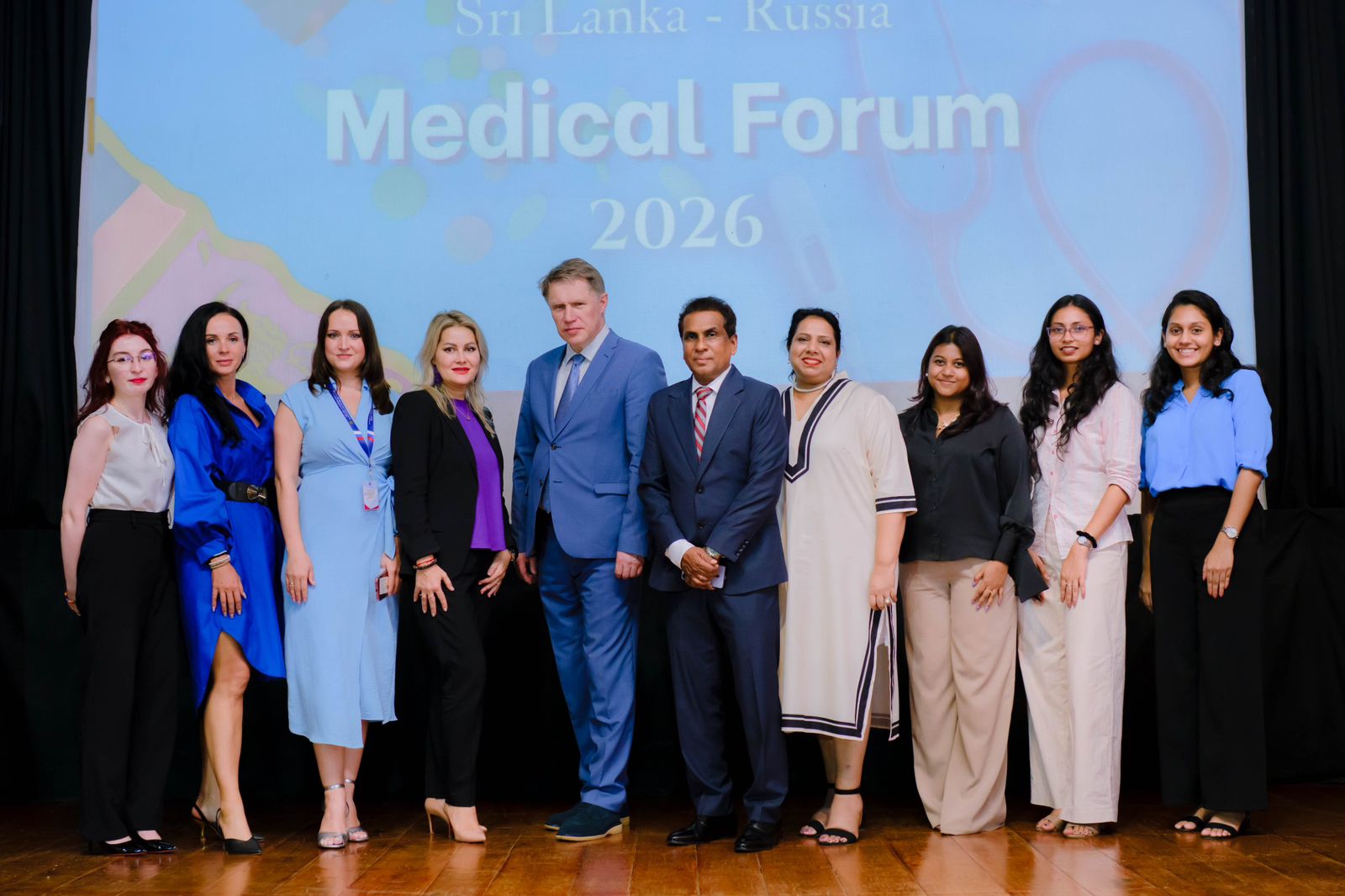
Mikhail Murashko, Minister of Health of the Russian Federation, officially visited the Russian House in Colombo to attend the Sri Lanka–Russia Medical Forum, where members of the Sri Lanka Russia Business Council and graduates from the Association of Sri Lankan Graduates from Socialist countries (ASLGSC) attended.
This historic gathering was graced by rectors and representatives from several world-class Russian medical institutions, including Kursk State Medical University, Sechenov First Moscow State Medical University, and Tver State Medical University, among others.
The forum commenced with an address by Minister Murashko, during which Russian medical graduates in attendance raised pertinent questions regarding medical and pharmaceutical sector opportunities in Sri Lanka.
Levan Dzhagaryan, Ambassador of the Russian Federation to Sri Lanka and the Maldives, together with Madam Maria L. Popova, Counsellor of the Embassy of the Russian Federation in Sri Lanka & the Maldives and Director of the Russian House in Colombo, graced the occasion. Both officials expressed strong support for continued collaboration and future initiatives between the two nations.
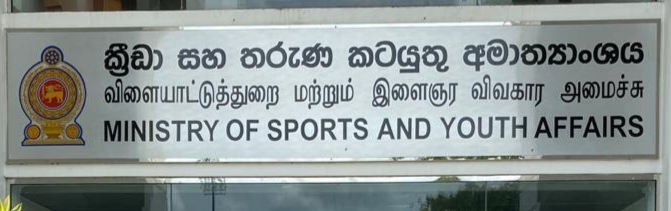
The official appointment letters for the members of the newly established “Cricket Transformation Committee” (CTC) were handed over on Monday (04) by the Minister of Youth Affairs and Sports, Sunil Kumara Gamage.
The following members received their letters of appointment at the Ministry premises:
Sidath Wettimuny
Thushira Radella
Prakash Schaffter
Ms. Avanthi Colombage
The Ministry also noted that veteran cricketers Roshan Mahanama and Kumar Sangakkara, who are key members of the committee, are currently overseas. Their official appointments will be formalised immediately upon their arrival in Sri Lanka.
The Cricket Transformation Committee has been mandated to oversee the administration and drive structural reforms within Sri Lanka Cricket (SLC) in accordance with the powers vested in the Minister under the Sports Act No. 25 of 1973.
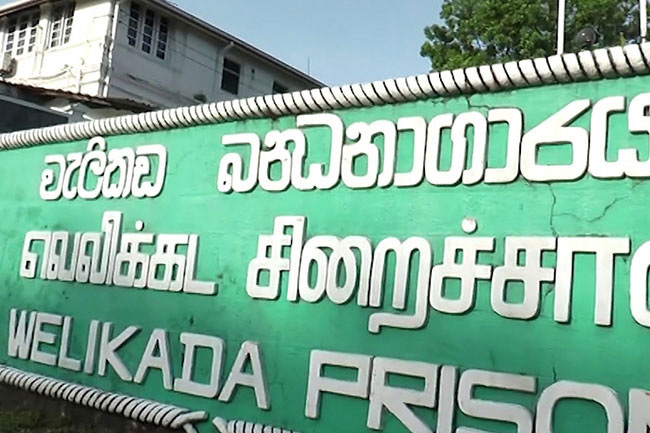
Three prison guards attached to the Welikada Prison have been arrested by Borella Police following the death of an inmate on Monday (04).

Minister of Health of the Russian Federation attends the Sri Lanka–Russia Medical Forum

Members of Sri Lanka Cricket Transformation Committee Officially Appointed

Three prison guards arrested following the death of an inmate

Showers or thundershowers will occur at most places of the island after 1.00 pm.

CJ urged to inquire into AKD’s remarks on May 25 court verdict

ITAK MPs representing East take their woes to Canadian HC

‘Dates have the highest sugar content to fight Coronavirus’

Sunday Island 27 December – Headlines

#SundayIsland 17th December – Headlines

Sunday Island – 28th March

Sunday Island Headlines – 21 March

Sunday Island – 21st February – Headlines
-
 News7 days ago
Treasury chief’s citizenship details sought from Australia
-

 News6 days ago
Rooftop Solar at Crossroads as Sri Lanka Shifts to Distributed Energy Future
-
 News5 days ago
“Three-in-one blood pressure pill can significantly reduce risk of recurrent strokes”
-

 News7 days ago
Central Province one before last in AL results
-

 Sports7 days ago
Well done AKD!
-

 News2 days ago
USD 3.7 bn H’tota refinery: China won’t launch project without bigger local market share
-
 News5 days ago
Alarm raised over plan to share Lanka’s biometric data with blacklisted Indian firm
-
 News3 days ago
Easter Sunday Case: Ex-SIS Chief concealed intel, former Defence Secy tells court